

Quick note: when you buy through our links, we may earn a small commission — no extra cost to you, and it helps us keep the content coming.
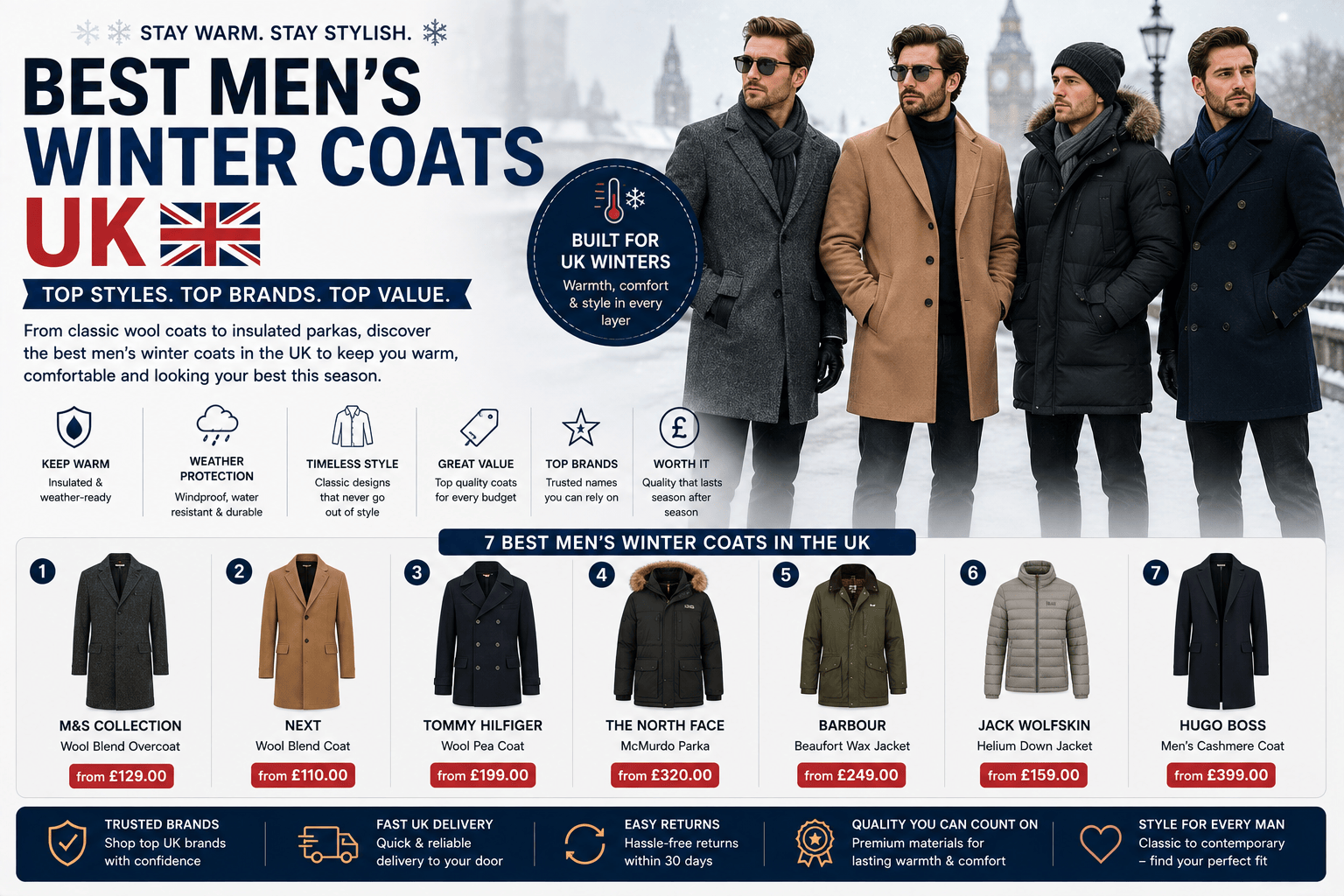
Here is the thing nobody tells you about buying a winter coat: fit matters more than price. I learned this the hard way after spending £280 on a beautiful charcoal overcoat that bunched at the shoulders and made me look like I’d borrowed it from a larger friend. Wore it twice. A £95 quilted jacket I grabbed in a January sale three years ago is still going strong because it actually fits my frame. Buy the coat that fits, not the coat that impresses on the hanger.
So what are we actually talking about here? Ten styles of men’s winter coats that cover everything from the morning commute to a weekend on the moors, across budgets from £45 to £320. Not every coat works for every person. The wool overcoat that looks brilliant on your colleague might make you look like you’re drowning. The puffer that keeps your mate warm in Edinburgh might have you sweating through the Jubilee line. Knowing what you actually need is half the battle.
What Does Your Coat Actually Need to Do?
Before anything else, think about your week. Not an imagined version of your week where you’re striding purposefully through a photogenic city — your actual week, with the commute, the errands, the occasional weekend walk that turns into a proper slog through mud. City commuters want something that handles layering without bulk, doesn’t look absurd in a heated office, and can take a bit of drizzle without immediately looking ruined. If you’re more countryside than city, you need real insulation, real water resistance, and pockets deep enough to actually use. And if your life sits somewhere in between — which, honestly, most people’s does — you want a coat that can flex across both without looking like it’s trying too hard. The good news: that coat exists, and we’ll get to it.
The 10 Best Men’s Winter Coats Right Now
1. The Classic Wool Overcoat
Your dad was right about this one.
A proper wool overcoat in charcoal or navy works with jeans, chinos, a suit, basically anything with a collar. The length matters — somewhere between mid-thigh and knee is the sweet spot. Too long and you’re cosplaying a Victorian detective; too short and you might as well wear a thick jumper. Wool breathes, insulates, and genuinely improves with age and wear. The catch is maintenance: it needs occasional dry cleaning and proper hanging, not a damp peg by the front door. Think of it as an investment piece. Buy it well once and wear it for a decade.

Classic wool overcoat for smart-casual to formal occasions, versatile across seasons
2. The Puffer Jacket
Modern puffers are nothing like the puffy monstrosities from 2005. They’re slimmer, more technical, and a lot easier to wear with actual outfits. What to look for: a decent fill weight (higher is warmer), a water-resistant outer shell, and a cut that doesn’t make you look spherical from the side. Black and navy are the safe bets, but forest green or slate grey can look genuinely good if you want something slightly less default. The practical case for puffers is strong — they pack down small, most are machine-washable, and they layer brilliantly under a longer coat when temperatures properly drop. If you only own one winter layer, make it a puffer.

Lightweight, packable insulation for urban commuting and casual winter wear
3. The Quilted Jacket
Think of a quilted jacket as the puffer’s slightly more grown-up sibling. The structure is better, the silhouette is cleaner, and it doesn’t have that slightly inflatable quality that some puffers still can’t shake. Quilted jackets work with almost any winter outfit — jeans and boots, chinos and a jumper, even over a shirt if you’re going somewhere casual-smart. Warm enough for most of the UK winter (the Scottish Highlands in February might require a rethink), good pockets, and they layer well both over and under other pieces. The pattern adds a bit of visual interest without screaming for attention, which is exactly what you want from a coat.

Modern quilted design for smart-casual layering and everyday winter wear
4. The Bomber Jacket
Bombers are having a moment, and it’s deserved. The shorter length — hitting around the hip — works better with slim trousers than a long overcoat does, and there’s a slightly military quality to a good bomber that looks intentional rather than accidental. The key is fabric weight: a thin bomber is basically a windbreaker, which is useless in January. Go for a wool blend, a heavy cotton, or a technical material, and you’ve got something with real warmth. What makes bombers genuinely useful is their range — equally at home with joggers and clean trainers as they are with dark chinos and Chelsea boots. (Actually, that’s probably the broadest style range of any coat on this list.)

Versatile shorter-length jacket for casual to smart-casual winter styling
Jack & Jones, Mens And College Wool Blend Short Bomber Jacket In Crockery £45 (44% OFF — was £79.99)
5. The Duffel Coat
Is a duffel coat the most underrated option on this list?
Probably yes. People see the toggles and assume they’re old-fashioned, which is a mistake. A good duffel in a neutral wool is the kind of coat that makes strangers ask where you got it. They work brilliantly over a chunky jumper, they have real hood coverage for proper rain, and they carry a certain quiet confidence that a standard overcoat doesn’t quite match. Not the warmest option if the temperature genuinely tanks, but for British winters — which are mostly damp and grey rather than actually arctic — they’re more than adequate. Buy a decent one and it’ll outlast most other coats you own by years.
6. The Technical Jacket
For anyone who actually spends time outside rather than just walking between buildings. Technical jackets — Gore-Tex or similar, taped seams, proper waterproofing, ventilation zips — are built to perform rather than look good, which means you have to choose carefully. Avoid anything with too many colour-blocked panels or neon accents; stick to solid black, navy, or slate and they read as smart enough for everyday use. They’re lighter than they look, pack down well, and will genuinely keep you dry in a way that a wool overcoat simply won’t. The tradeoff is that they can look a bit utilitarian if you’re not deliberate about the rest of your outfit.

Performance-focused jacket for active outdoor use and serious weather protection
7. The Wool Blazer Coat
A bulked-up blazer, basically. Structured, sharp, works for the office and for drinks afterwards without needing a change. The fit has to be right — clean across the shoulders, no pulling when you lift your arms, lapels that sit flat. It won’t keep you as warm as a puffer, but if you’re moving between heated buildings rather than standing on a windswept platform, you probably don’t need maximum insulation. What you do need is something that looks deliberate, and a well-cut wool blazer coat absolutely does that.

Smart wool blazer-style coat for professional and smart-casual winter occasions
8. The Hooded Parka
Parkas get dismissed as too casual or too dad-ish, which is unfair. A good parka — well-fitted, neutral colour, hood that actually covers your head rather than flapping uselessly behind you — is one of the most practical things you can own for a British winter. The length gives you real coverage, the hood means you don’t need to carry an umbrella, and the pocket situation is usually excellent. The fit is everything here; a baggy parka looks genuinely terrible, but a parka that sits properly on your shoulders and tapers slightly at the hip looks sharp and functional at the same time. Olive, navy, and black are the colours to go for.

Practical hooded parka with weather protection for casual everyday winter wear
Mountain Warehouse, Men’s Mountain Warehouse Mens Fern Water Resistant Padded Parka £89.84
9. The Leather Jacket
A commitment, but worth it. The leather jacket is the only coat on this list that actively gets better the older it gets — proper leather develops character, softens in the right places, and starts to look like it belongs to you rather than just sitting on you. Go for heavier leather rather than thin or bonded versions, and make sure it’s lined properly for warmth. Black is classic; brown is warmer-looking; oxblood is for people who know exactly what they’re doing with their wardrobe. One honest caveat: leather isn’t waterproof unless specifically treated, so this is more a coat for cold-and-dry days than cold-and-wet ones. For London, that’s maybe half of winter. Still worth owning.

Quality lined leather jacket for smart-casual style with longevity and character
10. The Hybrid Jacket
For the person who runs warm, moves a lot, or just finds a standard puffer too stiff. Hybrid jackets combine stretchy, breathable panels with targeted insulation in the places that matter — chest, back, shoulders — while keeping the sides and arms more flexible. They’re lighter than they look, pack down smaller than a traditional puffer, and have a cleaner profile that reads as normal rather than sporty. Commuters tend to love them for exactly this reason: you can actually move your arms on a crowded train without feeling like you’re inside a sleeping bag.

Lightweight hybrid design combining stretch fabric and strategic insulation for active wear
Hugo Boss, Men’s BOSS Green J Urbanex Mens Padded Hybrid Jacket £222.27
What Separates a Good Coat from a Frustrating One
Water resistance comes first. Not full waterproofing necessarily, but enough that rain beads off rather than soaks straight through — check the fabric specs before buying, because manufacturers are inconsistent about labelling this clearly.
After that, insulation type shapes everything else about the coat’s weight, packability, and price. Down is warm and compressible but expensive and useless when wet. Synthetic fill is cheaper, still warm, and keeps working even if you get caught in the rain. Wool insulates naturally and breathes well but adds weight. None of these is the wrong answer — it depends what you’re using the coat for and how much you want to spend.
Pockets. This should not be controversial, and yet here we are. Two deep hand pockets that actually fit your hands are the baseline. An interior chest pocket is a bonus. Any coat with shallow, decorative-only pockets is telling you something about how seriously its designer thought about real use.
Check seams before you buy. Rough finishing or visible fraying on the seams of a new coat means it won’t last two seasons. Run your fingers along the inside seams — they should be clean, flat, and properly finished. A coat that starts unravelling in March is not a bargain at any price.
Where to Actually Buy
For reliable mid-range options, Marks & Spencer, Next, and John Lewis are consistent — not exciting, but well-made and easy to return. Reiss and Boden are worth trying if you want something with a bit more personality without going full designer pricing. Uniqlo’s technical jackets punch well above their price point and are worth a serious look. For outdoor and performance gear, Regatta and Mountain Warehouse offer good value, and their sizing tends to be generous enough that layering underneath isn’t a problem.
Online, ASOS and Zalando are fine for browsing across brands, and both have returns policies that make trying things at home genuinely low-risk. If you can hold on until late December or early January, most retailers cut winter coat prices by 30–50% in the post-Christmas sales. That’s the right time to buy a coat you’ve had your eye on for a while.
My actual recommendation: if you can only buy one coat this winter, skip the leather and the duffel and go for a well-fitting quilted jacket in navy or charcoal. It works everywhere, handles most British weather, and won’t leave you sweating on the Tube or freezing at a bus stop. Everything else on this list is worth owning eventually — but that’s the one that earns its place in your wardrobe from day one.
Frequently Asked Questions
What is the warmest type of men’s winter coat?
Down puffers and parkas with high fill-power insulation give you the most warmth for the weight. If you run cold or spend serious time outside in January, those are your best bet. Wool overcoats are warm too, but they’re more ‘looks smart at the bus stop’ than ‘surviving a Scottish hillside’.
How much should I spend on a men’s winter coat?
Honestly, anywhere from £80 to £250 gets you something genuinely good. Below £80 and you’re gambling on quality. Above £250 and you’re paying for brand name more than extra warmth. The sweet spot for most people is £100–£180 — that’s where fit, materials, and durability actually align.
Should my winter coat be waterproof or water-resistant?
For UK winters, water-resistant is usually enough. Full waterproofing matters if you’re hiking or spending hours outside in heavy rain, but for commuting and daily life, a water-resistant finish that lets rain bead off is plenty. Check the fabric specs before buying.
What length winter coat suits shorter men?
Hip-length or just below the hip works best if you’re on the shorter side. Knee-length overcoats can visually cut your height and make you look a bit swamped. Bomber jackets and shorter quilted styles are particularly good for creating a cleaner, longer-looking silhouette.
Can I wear the same coat for work and weekends?
A well-chosen wool overcoat or structured quilted jacket absolutely pulls double duty. The trick is avoiding anything too casual (heavy logos, overly sporty details) or too formal (full-length black overcoats look odd with jeans). Charcoal, navy, or camel mid-length coats are the most versatile across both contexts.



 No products in the cart.