

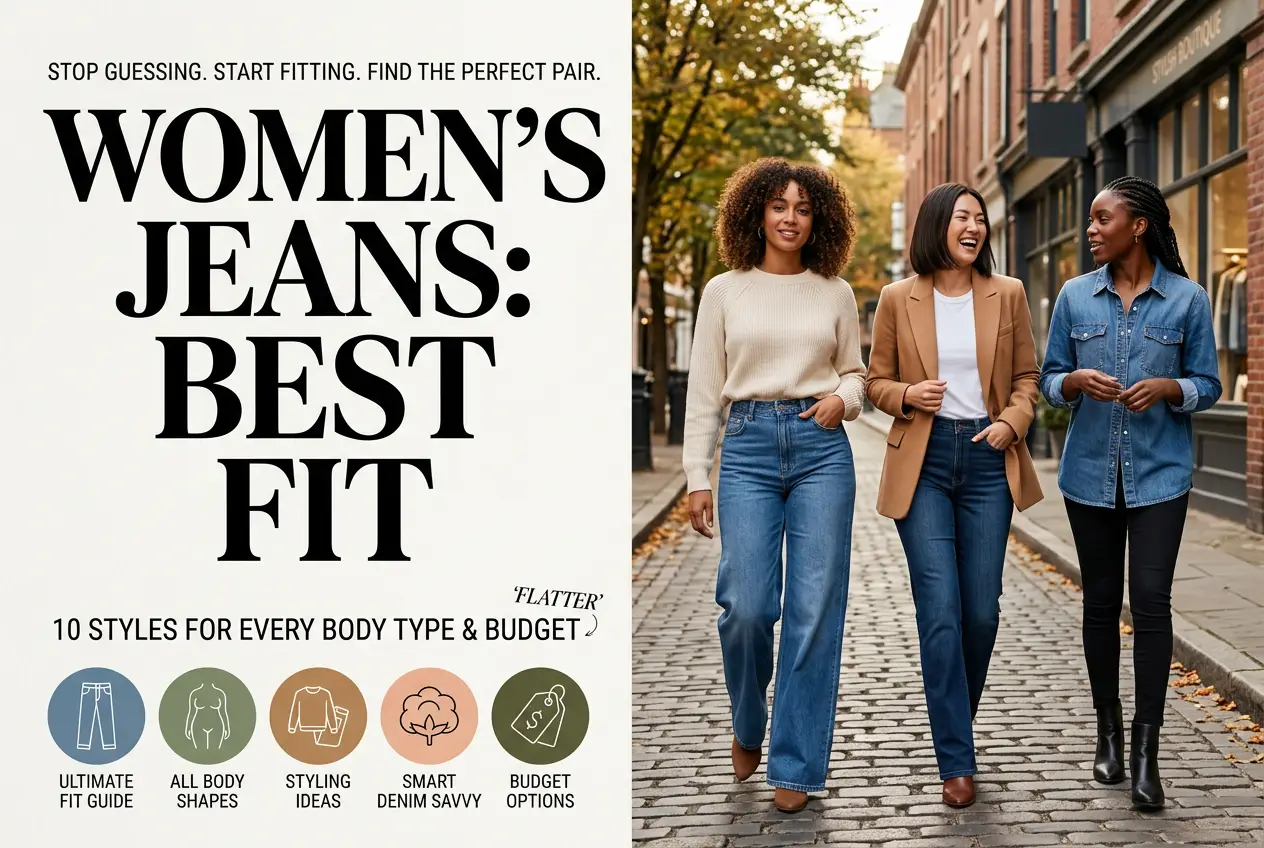
I’ve owned roughly 23 pairs of jeans. Four of them actually fit. That’s not a shopping failure so much as the inevitable result of buying without really understanding what I was looking for — and here’s the thing I wish someone had told me earlier: once you crack the fit formula for your specific body, you’ll probably buy the same style in three washes and never look back.
This guide is for anyone who’s stood in a changing room under fluorescent lighting, tried on six pairs, and left with nothing. The women’s jeans best fit question isn’t really about size. It’s about cut, rise, and proportion.
Does Your Body Shape Actually Matter?
Yes. Not because some shapes are better than others — obviously they’re not — but because denim is a structured fabric and different cuts interact with different proportions in very predictable ways. A pair that fits brilliantly on someone with narrow hips will gap dramatically at the waist on someone curvier, and neither person is wrong. It’s just geometry.
Pear shapes carry more weight through the hips and thighs with a comparatively narrower waist. The goal is balance: jeans that are fitted through the waist but give you room in the hip and thigh, then flare or widen at the hem to match the volume up top. Bootcut, flare, and wide-leg styles all do this well. Skinny jeans can work but often feel tight in the thigh before they fit the waist.
Apple shapes have a fuller midsection with slimmer legs. High-waisted cuts are genuinely transformative here — they sit above the widest point rather than cutting across it, which smooths everything out. Skinny or tapered legs work because they don’t add unnecessary bulk below the knee, which keeps the eye moving downward rather than stalling at the hip.
Hourglass figures have defined waists with fuller busts and hips in roughly equal measure. The challenge isn’t finding something that fits — it’s finding something that fits in both places simultaneously, because most jeans are cut for a flatter body. Look specifically for styles labelled ‘curvy fit’ or cuts with at least 2% elastane. Mid-rise tends to work better than high-rise here, which can feel restrictive across the hips.
Straight or rectangular shapes have minimal waist definition and balanced proportions from shoulder to hip, which actually means a lot of freedom. Straight-leg, slim-fit, and boyfriend cuts all work. The one thing to consider is whether you want the jeans to add some visual shape — in which case a higher rise with a slightly tapered leg can create the illusion of a waist — or whether you just want clean, unfussy lines.
Once you’ve placed yourself roughly in one of these categories, rise becomes the next decision. High-rise sits at or above your natural waist. Mid-rise sits just below it. Low-rise sits well below the hip — less popular now than it was in 2004, and for good reason. The practical test: if you’re pulling your waistband up every time you stand, or you feel restricted when sitting, the rise is off. Try a different one before you blame the brand.

High-waisted jeans suit apple shapes and provide a smoothing effect through the midsection
M&S, High Waisted Cropped Slim Fit Jeans Soft Khaki female £28
Bootcut and flare styles balance pear-shaped proportions by adding volume at the ankle
We the Free, Double Knot High-Rise Straight Bootcut Jeans at Free People in Aegean £108
The High Street Is Better Than You Think
Brands like Topshop, River Island, and M&S have quietly closed the gap on premium denim over the past few years — better cuts, more size options, and fabrics that actually hold their shape past the first wash. You’re not getting the same longevity as a £150 pair, but if you’re trying out a new cut or just need something that works right now without a painful outlay, the high street genuinely delivers.
Two things to check before buying: the elastane percentage (you want at least 2-3% for stretch recovery, otherwise the knees go baggy by lunchtime) and the seam reinforcement at stress points. Flip the jeans inside out in the shop. If the crotch seam looks flimsy, it probably is.
Straight-leg mid-rise jeans from high-street brands offer versatile everyday wear at accessible prices
Karen millen, Women’s Rigid Denim High Rise Straight Leg Jeans in Mid Blue Size:… £79

Skinny jeans with stretch fabric from affordable brands provide all-day comfort without breaking the budget
Wide-leg cropped styles from high-street retailers offer contemporary styling for varied body shapes
M&S, Mid Rise Straight Leg Ankle Length Jeans Light Indigo female £26
Spending More Isn’t Always Spending Better
There is a specific kind of realisation that happens around the 40th wear of a genuinely good pair of jeans — they still look like they did the day you bought them, the dye hasn’t faded into something sad and grey, and the fabric hasn’t gone baggy at the knees despite being washed a dozen times. That’s what you’re actually paying for with premium denim. Better cotton, better dye processes, and more rigorous fit testing that makes sizing more consistent from pair to pair.
Actually, that’s not quite right — you’re also paying for the cut itself. Premium brands tend to do more extensive fitting across different body types before a style goes to production, which means fewer unpleasant surprises in the changing room.
But a £180 pair that gaps at the waist is still a worse purchase than a £45 pair that fits perfectly. Price and fit are separate questions. Answer the fit question first.
Premium curvy-fit jeans accommodate fuller hips and thighs while maintaining a fitted waist

High-quality premium jeans in slim silhouettes offer superior fabric and construction for long-term wear
River Island, Womens Slim Jeans Indigo High Rise Split Hem £10 (76% OFF — was £42)
What are you actually going to wear them with?
The cut you choose should connect directly to how you plan to style the jeans. Skinny jeans tuck cleanly into ankle boots and balance out oversized or voluminous tops. Wide-leg jeans need a fitted top or cropped layer — pair them with anything equally billowy and you’ll look like you’re wearing a duvet. Straight-leg is genuinely the most versatile cut in existence and works with almost every top length and shoe style you already own.
Cropped jeans are worth talking about separately. The hem needs to land at exactly the right point — just grazing the top of your shoe, or sitting a centimetre or two above your ankle bone. Too long and it looks like you’ve been caught mid-growth-spurt. Too short and it reads as accidental. I spent an embarrassing amount of time getting this wrong before I started paying attention to it.
One thing nobody mentions enough: don’t automatically hem jeans that are slightly too long. Cuffing — rolling the hem once or twice — works beautifully on straight-leg and wide-leg styles, it’s very much having a moment right now, and you can undo it if you change your mind. Hemming is permanent. Cuffing is not.
Cropped ankle jeans work with heels, loafers, and trainers for versatile styling from casual to smart-casual
M&S, Mid Rise Straight Leg Ankle Length Jeans Medium Indigo female £26

Classic straight-leg jeans are the foundation piece that works with almost any top and styling direction
Paulo Due, Women’s Classic Straight Leg Denim Jeans in Mid Blue Size: 18 Mid… £29
Washing Them Into the Ground
Washing jeans too often is the fastest route to faded, shapeless denim that looks tired after six months.
Most denim holds up best when washed every five to seven wears. Spot-clean minor marks with a damp cloth — it genuinely works for most everyday spills and saves a full wash cycle. When you do put them in the machine, turn them inside out (protects the outer surface and colour), use cold water, and wash with similarly dark colours for the first few washes in case the dye runs. Skip the tumble dryer entirely. Heat is the enemy of denim longevity; it causes shrinkage, breaks down elastane, and speeds up fading faster than almost anything else. Hang them to dry instead, ideally not in direct sunlight which has the same bleaching effect as heat. If the knees or thighs start to bag out between washes, a quick steam or a light press with an iron on a low heat will pull the fabric back into shape — not a permanent fix, but it’ll tide you over.
Small repairs matter more than people realise. A loose hem or a tiny tear at a seam is a ten-minute fix. Leave it for three months and it becomes a much bigger problem.
The Four Pairs You Actually Need
You do not need 23 pairs. You need four.
The everyday pair should fit perfectly, feel comfortable enough to wear multiple days running, and match your body shape. This is your most-worn item of clothing, possibly full stop, so it has to be genuinely good rather than just acceptable. Mid-rise straight-leg works for most people, but go with whatever cut you’ve identified as your best fit.
The dressier pair is dark denim — black or deep indigo — in a slimmer cut that transitions from day to evening without looking like you forgot to change. Pair it with a blazer and loafers and it reads as intentional rather than casual.
The comfortable pair is higher-rise, more stretch, possibly wider in the leg. Travel jeans. Work-from-home jeans. The pair you reach for when you want to look like a person without putting in much effort.
The trend piece is optional but worth having — something that feels current rather than timeless, whether that’s a wide-leg cut, a lighter wash, or something more distressed. Don’t spend a lot here. Trends move and you’ll want to replace it in a couple of years anyway.

Everyday mid-rise jeans with stretch provide comfort and flattery for regular rotation
EGO, Women’s Straight Leg Denim Mid Rise Jeans in Cream Size: 6 Cream 6 £34 (11% OFF — was £38)
Dark indigo slim-fit jeans transition from day to evening and pair well with dressier tops and shoes
M&S, High Waisted Cropped Slim Fit Jeans Dark Indigo female £28
The size on the label is irrelevant. Seriously — a size 10 at one brand can fit completely differently to a size 10 somewhere else, and chasing a number is a reliable way to walk out empty-handed. Try things on based on cut and rise, not the tag. When something fits your body, feels comfortable when you sit down, and doesn’t require constant adjustment, that’s your answer. The brand and the price and the number inside the waistband are all secondary to that one simple test. Buy it in two colours and be done with it.
Hey savvy shoppers! When the items in our articles catch your eye and you decide to buy through our links, we may earn a small commission at no extra cost to you. Think of it as a way of supporting us in bringing you the best content!
Frequently Asked Questions
How do I know which jeans cut suits my body shape?
Start by identifying whether you carry more weight in your hips, midsection, or have fairly even proportions top to bottom. Pear shapes generally do well in bootcut or wide-leg styles that balance the hip-to-waist ratio. Apple shapes tend to suit high-waisted cuts that smooth the midsection. Hourglass figures usually need some stretch built into the fabric so the jeans follow curves without pulling. Straight shapes have the most flexibility and can wear almost any cut well.
How often should I wash my jeans?
Most denim does best when washed every five to seven wears rather than after every use. Overwashing speeds up colour fading and breaks down the fabric. For minor marks, spot-cleaning with a damp cloth usually does the job. When you do wash, turn them inside out in cold water and skip the dryer entirely.
Is it worth spending more on premium denim?
It depends entirely on whether the fit works for you. A £180 pair that gaps at the waist is a worse investment than a £35 pair that fits perfectly. That said, premium denim generally uses better-quality cotton, more consistent sizing, and construction that holds up over years rather than months. If you find a premium brand that genuinely fits your body, it tends to pay for itself.
What does rise mean and which should I choose?
Rise is the distance from the crotch seam to the waistband. High-rise sits at or above your natural waist, mid-rise sits just below it, and low-rise sits well below. The practical test is simple: if you’re constantly tugging your waistband up or feeling restricted when you sit, the rise is wrong for your proportions. Comfort should be the deciding factor, not what’s trending.
How many pairs of jeans do I actually need?
Realistically, four pairs cover most situations. An everyday pair in a flattering cut, a darker slim-fitting pair for evenings or smarter occasions, a comfortable high-stretch pair for travel or relaxed days, and one trend-led piece if that appeals to you. Everything beyond that is genuinely optional, though a lighter wash for summer is a nice addition.



 No products in the cart.