

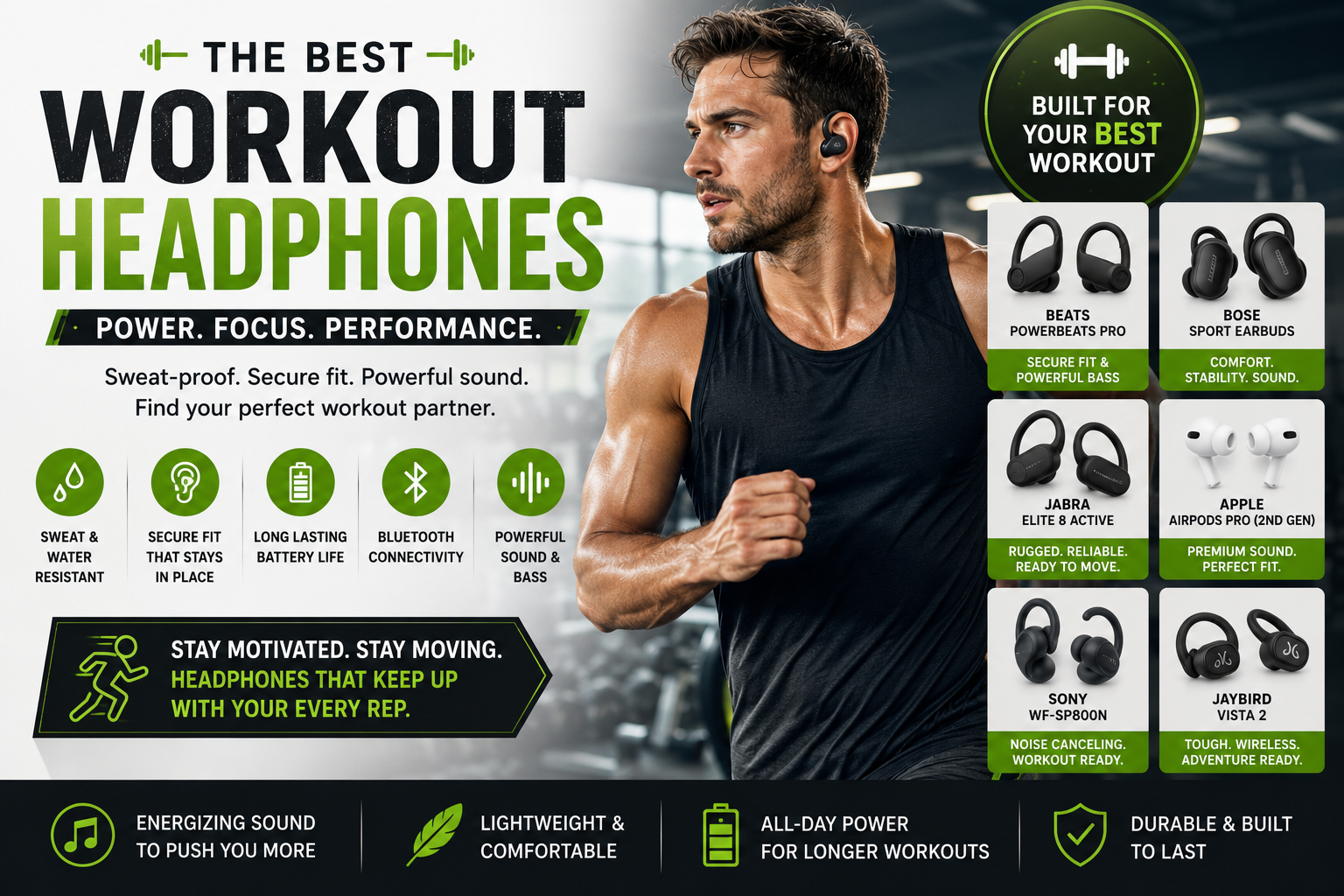
Music makes you work out 16% longer on average. That’s the finding, and honestly, once you’ve experienced a perfectly-timed bass drop mid-sprint, the number feels conservative. But here’s what that statistic doesn’t tell you: none of it matters if your headphones are sliding out of your ears by mile two, or if sweat has quietly destroyed the internals by month three.
The right pair removes friction entirely. No fiddling with fit. Never sudden disconnects. No worrying whether this week’s long run will finally kill your investment. That peace of mind is worth more than most people account for when they’re standing in a shop comparing spec sheets.
Why Most Headphones Fail at the Gym
Sweat is corrosive. It contains salt and electrolytes that will eat through electronics if you’re not careful — and most consumer headphones aren’t built with this in mind. Your commute earbuds might survive a year of daily use, but three sweaty gym sessions a week is a completely different stress test. I’ve gone through two pairs this way before I started paying attention to IP ratings and post-workout care, and both times I assumed the headphones were just cheap. They weren’t. I just wasn’t wiping them down.
Beyond corrosion, there’s the fit problem. A bud that sits comfortably on your sofa will move during explosive movements — box jumps, burpees, a hard sprint interval. The ear canal shifts slightly when your jaw moves and when impact travels up through your body. Headphones engineered for commuting don’t account for any of this. Sport-specific designs do, whether through stabilizing fins, over-ear hooks, or ear tip materials that grip rather than slide.
Your body naturally wants to match the rhythm it’s hearing, which is why tempo matters so much during training — a 140-BPM track genuinely feels different on the treadmill than a 90-BPM one, and your pace will drift toward whatever you’re listening to whether you intend it to or not. When your headphones keep cutting out or shifting around, you’re not just annoyed. You’re actively undermining the physiological effect you’re trying to create.

entry-level workout earbuds that balance comfort, security, and durability
Apple, AirPods 4 Wireless Earbuds White £94.99 (24% OFF — was £124.99)

premium workout earbuds with active noise cancellation for focused training
Apple, AirPods 4 Active Noise Cancelling Wireless Earbuds White £101.99 (43% OFF — was £179.99)

closed-back design for gym sessions where cable isn’t an issue
Earbuds vs. Over-Ears vs. Bone Conduction — Which Actually Works?
True wireless earbuds dominate the fitness market for obvious reasons: compact, cable-free, and modern ones hit 8–10 hours on a charge without much trouble. The catch is fit. If you’ve got smaller ear canals, finding a pair that doesn’t migrate outward during a hard run takes some trial and error. When they do fit properly, though, they’re nearly invisible — you stop thinking about them entirely, which is exactly what you want.
Over-ear and on-ear headphones have bigger drivers, which generally means richer bass and more immersive sound. They earn their place in the gym bag for strength training sessions where you’re mostly stationary — the audio quality difference compared to earbuds at the same price is real and noticeable. The trade-off is heat. After 45 minutes of lifting, ear cups trap warmth and get clammy, which is fine if you can tolerate it and genuinely irritating if you can’t.
What about bone conduction?
Bone conduction headphones sit against your cheekbones and vibrate sound through bone rather than air, leaving your ear canals completely open. This is genuinely useful for road running and cycling — you hear traffic, other people, your own footsteps — and it’s a real safety feature rather than a marketing line. They’re also a revelation if you find in-ear buds uncomfortable after an hour. The audio quality is noticeably lower than sealed designs, and they won’t help you block out a noisy gym, but for outdoor workouts where awareness matters, nothing else comes close. Actually, that’s not quite right — open-back earbuds do something similar, but bone conduction handles sweat and movement better than most open designs in practice.

lightweight earbuds designed specifically for running with stabilizing fins or wings
Sony, WF-C510 True Wireless Earbuds £32.99 (17% OFF — was £39.98)

open-ear design for trail running and outdoor activities where awareness is key
Shokz, OpenRun Pro 2 Bone Conduction Sport Headphones £168.95

compact on-ear option for gym workouts with good sound and minimal heat

earbuds featuring over-ear stabilizers for high-impact activities
The Specs That Actually Matter (And the Ones That Don’t)
IP ratings confuse people more than they should. IPX4 means splash-resistant — it handles sweat and light rain without complaint, which covers the vast majority of workout scenarios. IPX5 handles water jets. IPX7 survives brief submersion. For gym sessions and road running, IPX4 is genuinely sufficient; you’re paying for higher ratings only if you’re swimming or caught in serious downpours regularly. What matters more long-term is how moisture interacts with the internal materials — some manufacturers use nano-coating on the circuits, others apply hydrophobic mesh over the speaker grilles, and the mesh approach tends to hold up better over hundreds of sweaty sessions because it actively repels moisture rather than just tolerating it.
Secure fit comes down to ear tip options and materials. Silicone is standard. Foam molds to your ear shape and holds better during high-impact movement, though it compresses and needs replacing more often. The size matters more than the material — most people default to medium and wonder why things shift around, when small tips would have locked in perfectly. Worth trying all sizes before you write off a pair.
Physical buttons beat touch controls in sweaty conditions. Full stop.
On battery life: don’t believe the headline numbers. That “up to 12 hours” figure is measured at moderate volume in controlled conditions. Real-world use with louder volumes and ANC switched on typically lands at 70–80% of what’s advertised. Six hours of actual playback is enough for most gym sessions; if you’re training for a marathon or doing multi-hour outdoor events, look for earbuds claiming 10+ hours so you’re realistically getting 8.

fully waterproof earbuds suitable for pool training or heavy sweat workouts
Miniso, MS106 Wireless Bluetooth 6.0 In-Ear Earbuds £6.52 (74% OFF — was £24.99)

earbuds with tactile button controls instead of touch panels for wet conditions
Samsung, Galaxy Buds3 Pro Wireless Earbuds White (SM-R630NZWAEUA) with… £96.99 (35% OFF — was £149)

extended battery capacity for endurance training sessions
Bose, Ultra Open Earbuds with Immersive Audio £239.98 (17% OFF — was £289.99)
Matching Headphones to Your Actual Training
Sprinting and distance running demand lightweight earbuds with stabilizing fins or hooks — repetitive impact exposes any movement in the fit, and it’ll drive you mad by mile three if the seal keeps breaking. Water resistance matters more here than in the gym because you’re exposed to weather, and if you run near traffic, bone conduction is worth the audio quality trade-off. Eight hours of battery covers almost any training run; only ultra-distance athletes genuinely need to think beyond that.
Strength training is where over-ears get their moment. You’re mostly in one place, the larger drivers deliver noticeably better bass for heavy compound lifts, and IPX4 is more than enough since you’re indoors. Comfort over a 90-minute session matters more than saving 30 grams of weight. Noise isolation is a genuine benefit here too — blocking out gym chatter helps a surprising number of people stay focused through a hard set, though some prefer hearing the room.
Cycling and mountain biking sit in their own category. Open-ear audio isn’t a nice-to-have when you’re sharing roads with cars — it’s a safety decision. Wind and vibration also dislodge poorly-fitted earbuds faster than running does, so secure fit becomes even more important. Bone conduction handles both problems at once, which is why it’s dominated the cycling audio market over the last few years.

ultra-lightweight earbuds for distance running with minimal ear fatigue
Shop, SHOKZ OpenDots ONE Open Ear Headphones £178 (5% OFF — was £188)

headphones with enhanced bass response for motivational workout music
Mojawa, RunPlus Bone Conduction Headphones £53.83 (62% OFF — was £139.99)

bone conduction design for cyclists who need ambient sound awareness
Shokz, OpenMove Bone Conduction Open-Ear Lifestyle/Sport Headphones £79 (1% OFF — was £79.95)

rugged earbuds designed for outdoor trail conditions with secure stabilization
Mojawa, Purra Run Bone Conduction Sport Headphones £86.12 (49% OFF — was £169.99)

fully submersible headphones for pool workouts or beach training
Shokz, OpenRun Mini Black Bone Conduction Headphones £79 (39% OFF — was £129.95)
Keep Them Alive: Maintenance Nobody Tells You About
Wipe them down after every single session. A dry microfibre cloth takes ten seconds and removes the salt residue before it works into the joints and contacts. If you’ve sweated heavily, a slightly damp cloth on the exterior followed by an immediate dry is fine — just don’t let moisture sit. The charging contacts are the most vulnerable point; sweat accumulation there causes slow charging and eventually connection failure, and it’s entirely preventable.
Store them somewhere dry. Leaving damp earbuds in a sealed gym bag overnight is asking for mold and corrosion. If your case has ventilation holes, that’s intentional design.
Replace ear tips every three to four months if you’re training several times a week. Worn tips lose their seal, which means worse sound isolation and a looser fit — two problems that sneak up on you gradually rather than announcing themselves. Most brands sell tip packs for a few pounds, and it’s the single most cost-effective maintenance you can do for earbuds. Charge when the battery hits around 20% rather than running it to zero regularly; lithium batteries genuinely degrade faster with deep discharge cycles, and this habit alone can extend battery lifespan by a year or more. Also keep them out of hot cars — heat is a faster battery killer than heavy usage.

universal replacement ear tips for maintaining comfort and fit
PUNNYB, Silicone Replacement Earbud Tips For Earphones With 3 Sizes (l M £23.53
Before You Buy
Be honest about your training. Someone running 50 miles a week has different requirements than someone doing three gym sessions — and spending £200 on a pair engineered for trail ultras when you’re mostly lifting indoors is money wasted on features you’ll never use. The reverse is just as true: a £50 commuter earbud brought to a CrossFit class will let you down.
Try before you commit if at all possible. Visit a shop with demo units, borrow from someone with the same pair, or buy from a retailer with a decent return window. Fit is personal in a way that no review can predict for your specific ears. A 30-day return policy has saved me from keeping two pairs that sounded great in reviews and felt awful after 40 minutes of actual use.
A £65 pair designed for running will outperform a £180 pair designed for commuting the moment you hit an incline. Match the tool to the job — that’s the only rule that actually matters here.
Hey savvy shoppers! When the items in our articles catch your eye and you decide to buy through our links, we may earn a small commission at no extra cost to you. Think of it as a way of supporting us in bringing you the best content!
Frequently Asked Questions
What IP rating do I actually need for workout headphones?
IPX4 is enough for most gym sessions and outdoor runs — it handles sweat and light rain without issue. You only need IPX7 or higher if you’re swimming or training in heavy downpours. Don’t pay extra for a higher rating unless your workouts genuinely demand it.
Are bone conduction headphones worth it for running?
For road running and cycling, yes — the open-ear design means you can hear traffic and other people without removing your headphones. The audio quality won’t match sealed earbuds, but the safety benefit is real. If you run on trails near roads or in busy areas, they’re worth serious consideration.
Why do my earbuds keep falling out during workouts?
Usually it’s an ear tip size issue. Most people default to medium tips, but smaller or larger might lock in better for your ear shape. Foam tips tend to stay put better than silicone during high-impact movement. Some earbuds also come with stabilizing fins or wings — these make a genuine difference for running.
How do I make my workout headphones last longer?
Wipe them down after every session with a dry cloth — sweat is salty and corrodes electronics over time. Replace ear tips every few months. Don’t leave them damp in a gym bag overnight. And avoid leaving them in a hot car; heat kills lithium batteries faster than anything.
Do I need active noise cancellation for the gym?
Not necessarily. Passive isolation from a good ear tip seal blocks most gym noise already. ANC is genuinely useful if you train in very loud environments or find background chatter distracting during focused lifts. It also drains battery faster, so factor that in if you do long sessions.



 No products in the cart.