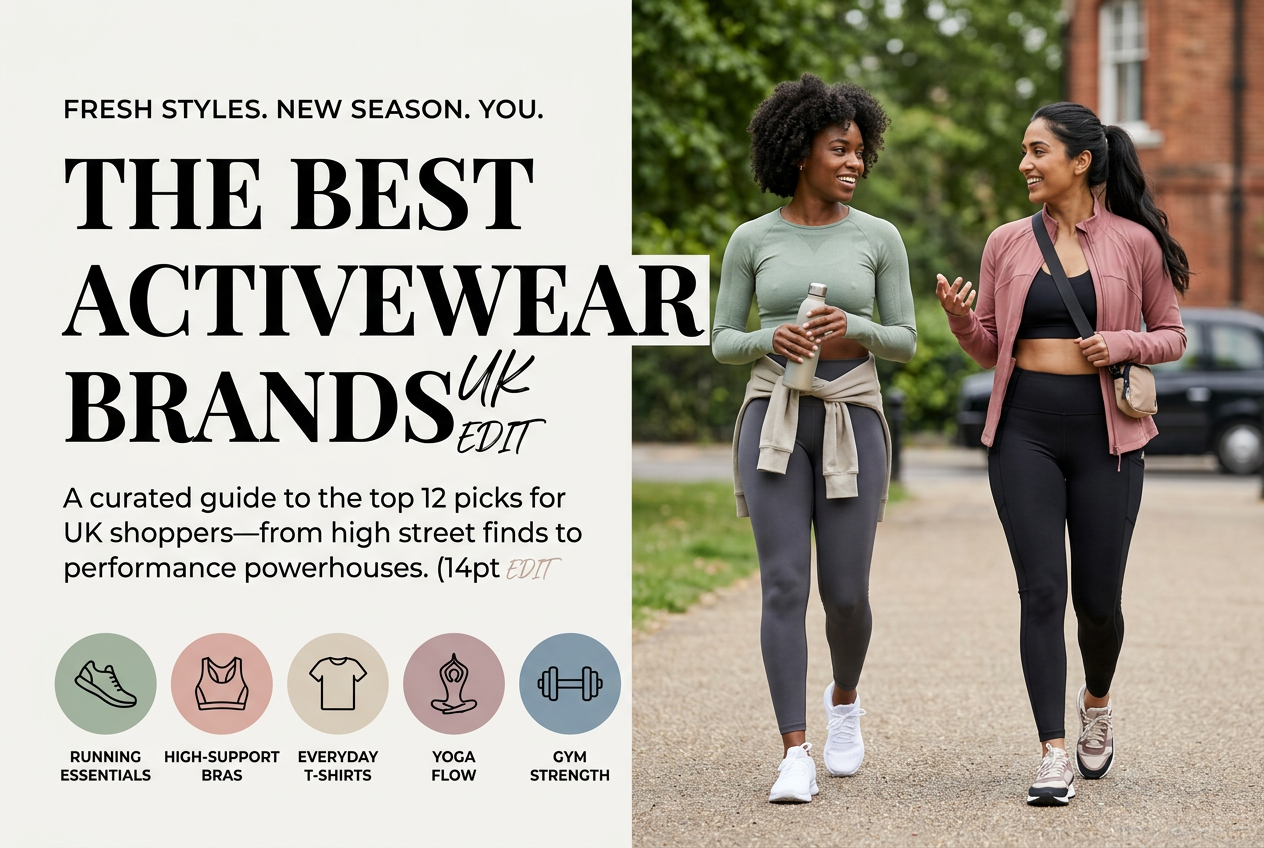
I own approximately 47 pieces of activewear. Yes, I counted. Some of it actually gets worn to the gym. Most of it doesn’t — and that’s exactly the problem this guide is trying to solve.
Here’s the honest truth upfront: the best activewear brands aren’t the ones with the biggest marketing budgets or the most Instagram followers. They’re the ones that make clothes you’ll actually put on, that fit your body, and that don’t fall apart after six washes. That sounds obvious. But the UK market is so saturated right now that “knowing where to look” has become genuinely harder than it should be.
Why Activewear Got Complicated
Five years ago, activewear was what you changed into before your workout and immediately peeled off the moment you were done. That’s not the world we’re living in anymore. People wear leggings to the supermarket, to casual offices, to meet friends for lunch — which means brands have had to completely rethink what they’re making. It’s not enough to slap moisture-wicking fabric on a pair of trousers and call it done. Now they have to think about fit across a wide range of body types, about colours that actually flatter, about whether the waistband will roll down when you bend forward to grab something off a low shelf, about whether the fabric will go bobbly after three months of regular wear. The brands that have figured this out are genuinely brilliant. The ones that haven’t are still coasting on logo recognition and hope.
High Street Picks That Actually Deliver
You don’t need to spend £150 on a sports bra.
Decathlon is the most underrated activewear option in the UK, full stop. Their Domyos range sits around £15-50 and performs better than the prices suggest — leggings that stay up, sports bras that provide real support, and a surprisingly fun selection of colours and prints. I spent years walking past Decathlon assuming it was for serious athletes only, and I was completely wrong. Their everyday gym basics are some of the best value on the market right now.
Marks & Spencer’s Goodmove range has quietly become something worth paying attention to. It’s designed with different body types and different activities in mind, the fabric has a genuinely soft, expensive feel, and their sizing goes well beyond the token XL that most brands offer. Sports bras run £25-35, leggings £35-45. Not cheap for high street, but the quality is there.
Matalan often gets skipped over entirely — which is a mistake if you’re on a tight budget. Their Fitnessactive pieces have decent construction, come in genuinely fun colourways, and most basics land between £12-25. For someone who’s just starting to build a collection, it’s a low-risk starting point. New Look and ASOS Design round out the high street options if you want something more fashion-forward; neither is a performance powerhouse, but for gym-to-coffee athleisure, they’re competitive at £15-40 per piece.

affordable high street sports bra option for everyday gym wear

budget-friendly everyday leggings that work for gym and casual wear
Asics, Road High Waist Leggings Performance Black S Women £59.99

affordable yoga and studio wear for casual activewear
Yours, Women’s Wide Leg Yoga Pants in Black Size: 38/40 Black 38/40 female £27.99
So When Is Spending More Actually Worth It?
Lululemon is the unavoidable one. The price tags are genuinely painful — £88-98 for leggings is a lot of money — but the Align leggings have earned their reputation. The nylon blend is buttery-soft, doesn’t bag out at the knees after a few wears, and holds its shape through years of regular washing in a way that most cheaper alternatives simply don’t. If you wear leggings five days a week, the cost-per-wear maths actually works out. If you’re a once-a-week gym-goer, it probably doesn’t.
Gymshark built its name on serious gym-goers and has broadened out from there without losing the quality. Construction is solid, sizing is more inclusive than many competitors, and their collaborations with female athletes have pushed the design in interesting directions. Leggings run £40-80, sports bras £30-50. For intense, frequent workouts, it’s money well spent.
Then there’s Sweaty Betty, which is British and therefore gets my automatic goodwill — but also earns it on merit. Performance fabrics, thoughtful cuts, and a sizing range that takes real bodies seriously. They offer free alterations on certain pieces, which is a genuinely unusual commitment from an activewear brand and says something about how they think about longevity. Leggings are £50-90, sports bras £40-60. On Running sits at a similar price point (£60-100 for leggings) with a more minimalist aesthetic — clean lines, quality fabrics, nothing fussy. And Rapanui, a smaller British brand making activewear from organic cotton and recycled materials, is worth seeking out if sustainability is a priority for you; the quality is exceptional and the environmental credentials are genuine, not just marketing.

high-end sports bra for serious workouts and everyday wear
Shock Absorber, Womens U10035 D+ Max Support Sports Bra £41.71 (3% OFF — was £43)

luxury leggings that justify premium price with durability and fit


eco-conscious premium yoga wear
Match Your Kit to Your Actual Sport
A lot of people buy one pair of leggings and consider the job done. That works until it doesn’t.
Runners need something different from yogis, and both need something different from someone doing CrossFit three mornings a week. For running, Brooks, Asics, and Nike have spent decades engineering for movement — minimal chafing, pieces that stay put, fabrics that wick fast. Brooks’ sports bras are particularly worth mentioning for women with a larger bust; they provide actual support rather than just compression. For yoga and Pilates, Sweaty Betty, Lululemon, and Alo Yoga (American brand, but widely stocked in the UK) all make pieces designed to move with your body rather than against it. Alo sits at £50-90 for leggings and leans heavily into aesthetics — if you want to look polished on the mat, it delivers. For swimming, Speedo is the obvious starting point, but Zoggs and Freya Active are worth checking too, particularly if fit is a priority; proper chlorine-resistant fabric matters if you’re going to the pool more than occasionally. And for casual gym sessions where performance isn’t really the point? Uniqlo’s Airism range at £10-20 is genuinely good at moisture-wicking and cheap enough to buy several pieces without overthinking it.

specialized running leggings with practical features

functional yoga accessory for studio practice
Coach, Womens Teri Shoulder Bag In Signature Canvas With Chain Strap £259

durable swimwear for regular pool sessions
Mountain Warehouse, Women’s ‘Chlorine Resistant Stretchy Swimming Shorty Legsuit in Black… £49.99
Building a Wardrobe Without Filling a Drawer
Start smaller than you think you need to.
Two sports bras (one for high-impact activity, one for lower-impact), two pairs of leggings, and a couple of tops is a perfectly functional foundation. Actually, that’s not quite right — I’d say three pairs of leggings if you’re working out more than twice a week, just so you’re not constantly doing laundry. Build from there once you know what you actually reach for.
The mistake I kept making for years was buying activewear based on aspirational workouts rather than real ones. I bought running tights when I was going to the gym. I bought yoga-specific pieces when I’d never actually been to a yoga class. Then I’d wear them to the gym anyway and wonder why the waistband kept rolling. Think about your actual weekly routine, then buy for that — not for the version of yourself you’re planning to become in January.
Mixing price points is genuinely smart, not a compromise. Grab your basics from Decathlon or M&S, invest in one or two pieces from Lululemon or Sweaty Betty that you know you’ll wear constantly, and fill the gaps with mid-range options as you go. Don’t buy everything at once — figure out what you actually wear before committing to more of it. The most sustainable activewear collection is the one with fewer pieces that actually get used, not the most comprehensive one.

coordinated activewear set for building a cohesive wardrobe
Shock Absorber, Women’s Ultimate Run Sports Bra in Black Size: 38D Black 38D £52

layering piece for complete activewear capsule
Kempa, Emotion 2.0 Jacket Dove Blue / Lime Yellow S Women £33.99
The best activewear brands for you are the ones whose clothes you’ll actually wear. That might be Decathlon. It might be Lululemon. It’s probably a mix. Stop treating activewear shopping as something to get right all at once and start treating it as something to figure out gradually — one piece at a time, based on what you actually do and what actually fits. My honest recommendation: start with a pair of Domyos leggings from Decathlon and one good sports bra from M&S or Shock Absorber, wear them until you know what you’d change, then spend up from there.
When the items in our articles catch your eye and you decide to buy through our links, we may earn a small commission at no extra cost to you. Think of it as a way of supporting us in bringing you the best content!
Frequently Asked Questions
Which activewear brands are best for women with a larger bust?
Brooks and Shock Absorber are consistently recommended for high-impact support at larger cup sizes. Sweaty Betty also offers well-structured sports bras designed for real movement, and their sizing tends to run more generously than most.
Is Lululemon actually worth the price?
For people who wear leggings five or more days a week, yes. The Align leggings genuinely hold their shape after dozens of washes in a way that £30 alternatives don’t. If you’re a once-a-week gym-goer, probably not — M&S Goodmove will do the job fine.
What’s the best affordable activewear brand in the UK?
Decathlon’s Domyos range is the most underrated option on the UK high street. The leggings don’t roll down, the sports bras provide real support, and most pieces come in under £30. Uniqlo’s Airism basics are also excellent for casual gym wear at around £10-20.
How many pieces do I actually need in an activewear wardrobe?
Two sports bras (one high-impact, one low-impact), two or three pairs of leggings, and two tops is genuinely enough to start. Build from there based on what you actually do — not what you think you should be doing.
Which UK activewear brands are most sustainable?
Rapanui uses organic cotton and is transparent about manufacturing. Sweaty Betty has made public commitments on sustainability. For the high street, M&S Goodmove uses recycled fabrics in several of its lines. The most sustainable choice, though, is buying less and wearing it more.



 No products in the cart.
Comment (1)