

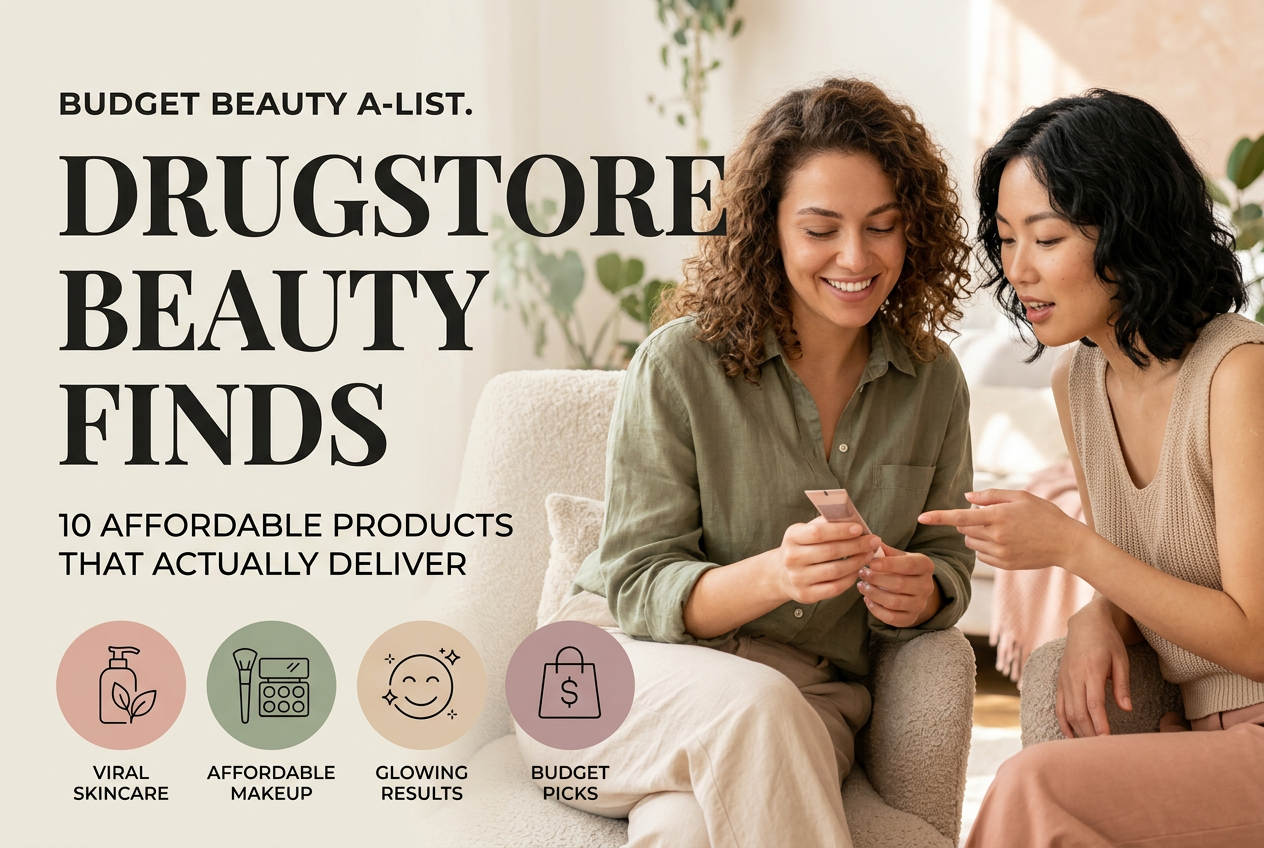
A $7 serum fixed the same problem a $400 one couldn’t quite crack. I discovered this after three months of using the expensive version, telling myself it was working because it had to be — I’d spent four hundred dollars on it. Then a friend handed me something she’d grabbed at Walgreens almost as an afterthought, and within two weeks my skin looked noticeably better. That annoyed me more than I’d like to admit.
Here’s what that experience taught me: the best drugstore beauty finds aren’t compromise picks. They’re just good products that don’t come with a markup for the frosted glass bottle.
The old logic around beauty spending — that price signals quality, that a higher number means better results — has quietly collapsed over the last decade. Drugstore formulas have caught up in a real way. Brands that sell at CVS and Target now invest in the same ingredient research that luxury labels do, partly because competition forced them to and partly because consumers got smarter about reading labels. Walk the skincare aisle at any major drugstore now and you’ll find niacinamide, peptides, retinol, and hyaluronic acid at price points that would have seemed impossible ten years ago. The dermatology community has been saying this for years, actually — active ingredients don’t care what shelf they sit on. Retinol at 0.1% does the same job whether it’s in a $12 tube or a $95 one, and the $12 version means you’ll actually use it every night instead of rationing it like a precious resource. That consistency is what gets results.
What We’re Actually Looking For Here
Not the obvious stuff. Every list covers basic moisturizers and drugstore mascara — that’s table stakes. The real drugstore beauty finds are the ones that make people stop mid-conversation to ask where you got that. Products that look completely unremarkable on the shelf and then quietly change your routine.
They exist in every category. The trick is knowing where to look.
Skincare Under $15 That Earns Its Spot
Skincare is where drugstore shopping pays off most. You don’t need a $70 moisturizer when an $8 option carries nearly the same active ingredient profile — and if you’re skeptical, pull up both ingredient lists side by side sometime. The gap is usually smaller than you’d expect.
The catch is consistency. No product works if you use it twice and abandon it.
(Actually, that’s not quite right — the real catch is that cheap products make it easier to be consistent, because you’re not mentally rationing every pump.)
Does Expensive Makeup Actually Last Longer?
Short answer: sometimes, but less often than the price difference would justify. Drugstore makeup has gotten genuinely sophisticated over the past few years — the pigmentation, the wear time, the shade ranges. I’ve worn a $6 drugstore lip color through a full workday and dinner that outlasted a $32 version I bought the same week. What you’re giving up at the drugstore is usually the texture of the experience: the weight of the compact, the smell of the store, the feeling of the purchase. If that matters to you, fine. But if you care about what ends up on your face, the gap is much smaller than the price tags suggest. You can buy four shades of eyeshadow at drugstore prices for the cost of one prestige option, which means you’ll actually experiment instead of protecting your investment.
Haircare Worth Grabbing From the Aisle
Your hair doesn’t know what you paid for shampoo. It responds to the formula, full stop. Some of the most-recommended drugstore beauty finds live in the hair care section — products people buy once as a backup and then quietly switch to permanently.
The Real Case for Spending Less
There’s a whole psychology built around luxury beauty: you paid more, so your brain decides it’s working better. That’s not cynicism, it’s documented — the placebo effect in skincare is real and has been studied. But drugstore beauty finds have been stress-testing that logic for years now, and the results are hard to argue with. Better formulations, wider availability, and no-nonsense ingredient transparency have pushed the entire category forward. A complete, genuinely effective skincare routine costs around $50 built from drugstore shelves. That’s less than a single mid-range serum. The freedom that creates — to try more things, make mistakes without real financial pain, actually use products up instead of hoarding them — is worth more than any one prestige item sitting mostly untouched in your cabinet.
Start with one product from this list. See how it fits your skin and your habits before buying six things at once.
Your wallet will adjust fast. Your skin probably won’t notice the difference.
Some links on this page are affiliate links: if you buy through them we may earn a small commission at no extra cost to you. We only recommend products we would buy ourselves.
Frequently Asked Questions
Are drugstore beauty products as good as high-end brands?
For many categories, yes. Skincare especially — active ingredients like retinol, niacinamide, and hyaluronic acid work the same whether you buy them at CVS or a department store counter. You’re often paying for packaging and branding with luxury products, not better formulas.
Which drugstore beauty category offers the best value?
Skincare and hair care tend to offer the most dramatic savings without sacrificing quality. Moisturizers, serums, and shampoos are areas where drugstore formulas frequently match or outperform prestige alternatives at a fraction of the cost.
How do I know which drugstore products are worth buying?
Look for products with straightforward ingredient lists, recognizable active ingredients, and a track record of positive reviews from real users — not just influencers with brand deals. Fragrance-free and dermatologist-tested labels are also good signals.
Can I build a complete skincare routine from drugstore products?
Absolutely. A solid cleanser, moisturizer, SPF, and targeted treatment like a vitamin C serum or retinol can all be sourced from drugstore shelves for under $60 total — less than the cost of a single mid-range prestige serum.
What should I avoid in the drugstore beauty aisle?
Heavy fragrances in skincare, overly drying alcohol-based toners, and anything with vague ‘proprietary blend’ labels hiding the actual actives. Stick to products where you can clearly read what’s doing the work.

 No products in the cart.