

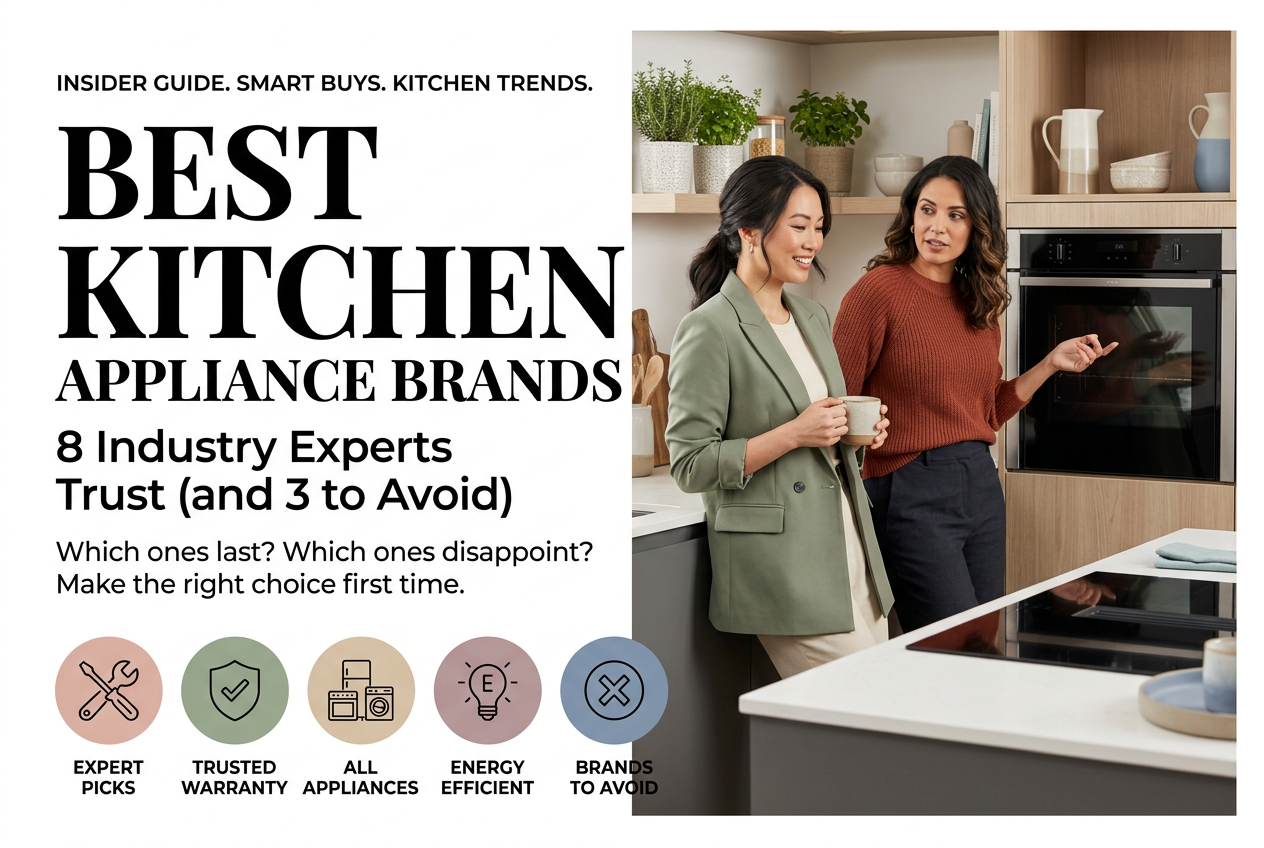
A flooded kitchen floor on a Tuesday evening — that is exactly where a bad appliance purchase ends up. I know, because I spent three hours on the phone with a warranty helpline that went nowhere after a budget dishwasher gave out 22 months in. That experience sent me down a rabbit hole of retailer data, repair engineer forums, and genuine user complaints. What came out the other side was a clearer picture of which best kitchen appliance brands actually deserve shelf space in your home — and which ones are quietly setting you up for disappointment.
Here is the thing most buying guides won’t tell you upfront: the brands worth your money are almost never the flashiest or the cheapest. They are the ones with boring strengths — available spare parts, engineers who actually show up, warranties that mean something. Keep that in mind as we go through each one.
What Actually Makes a Brand Worth Trusting?
Slick advertising tells you nothing. What separates a genuinely trustworthy kitchen appliance brand from a well-marketed one comes down to four things: warranty terms that hold up in practice, spare parts you can actually get hold of within a reasonable timeframe, repair engineers available in your area, and a complaints pattern that isn’t repeating the same fault across thousands of units. Energy efficiency matters too — not just for your bills, but as a signal that the manufacturer is investing in components rather than cutting corners on insulation and motors. Brands that score well on all four of these tend to have been around for decades, and they tend to keep investing in the infrastructure that makes ownership liveable rather than just the marketing that makes purchase feel exciting.
Worth noting: warranty length varies between products from the same brand. Always check the specific model, not just the brand name.
The Heavy Hitters — Fridge Freezers and Dishwashers
Bosch is the closest thing to a guaranteed safe bet in this category. Yes, the German engineering reputation can feel like a cliché — but there is a reason it persists. Their fridge freezers run quietly, insulate well, and the compressors hold up. Dishwashers clean properly without rattling the whole kitchen. Parts are easy to source. You will pay more upfront, but you are not replacing it in five years.
Actually, that is not quite right — you might pay more upfront. Bosch pricing varies significantly by retailer and model range, and sales do happen. It is worth setting a price alert before committing.
Samsung is where you go if modern features genuinely matter to you. Checking whether you have milk from your phone sounds gimmicky until you are standing in a supermarket aisle for the third time that week. Their fridge freezers are reliable, dishwashers perform well, and the build quality has improved noticeably over the past five years. The repair network is the one variable — in major cities, fine. In more rural areas, wait times for engineers can stretch uncomfortably long.
Neff is owned by Bosch, so you are getting comparable engineering at prices that sometimes undercut the parent brand. Their dishwashers are eerily quiet. Like, you genuinely forget they are running. Fridge freezers are well-built if less feature-heavy than Samsung. A smart pick if Bosch prices feel steep.
For budget options, Beko and Zanussi both hold up better than their price points suggest. Beko has genuinely raised its quality standards over the last decade — fridge freezers are reliable, dishwashers are decent, and replacement parts are cheap when you need them. Zanussi is similarly dependable and has customer support that actually answers. Neither brand is exciting. Both will do the job without drama.
Then there is Hotpoint. Proceed carefully. Some of their ranges are solid; others have had documented quality control problems. The brand name alone is not a guarantee here — you need to research the specific model you are considering, read the complaint patterns, and not just assume it will be fine because it is a recognisable name on the box.
Ovens, Hobs, and Cooker Hoods — A Different Game
Cooking appliances work harder than most people realise. Multiple uses daily, real heat, and no graceful degradation — when an oven fails, dinner fails with it.
Neff is exceptional here. Their built-in ovens distribute heat consistently, the controls are logical, and ignition systems are reliable over years of use. If you are speccing a kitchen from scratch and want cooking appliances that will not frustrate you, Neff is where I would start.
Bosch matches Neff on reliability, even if the designs are slightly more conservative. Cooker hoods are effective and quiet enough that cooking does not become an endurance test. For ovens and hobs, either brand is a strong choice.
Do not overlook Smeg. The retro aesthetic gets all the attention, but underneath it is a genuinely well-built appliance. Their cooker hoods in particular are excellent — proper extraction power, durable, and they look good doing it. Built-in ovens are reliable. You are paying partly for the design, but the engineering underneath justifies more of that price than critics usually admit.
If You Are Staying Put for a Decade or More
Buy Miele.
I know the prices look alarming. But Miele appliances are engineered with a 20-year lifespan as the actual target, not a marketing claim. Parts remain available long after purchase. Customer service is responsive and knowledgeable in a way that feels genuinely unusual in this industry. If you are planning to be in the same home for ten or more years, the maths on Miele start to look very different — you are buying one appliance instead of two, and the second decade of ownership costs you nothing extra.
AEG sits just below Miele in the premium tier — German-owned like Bosch, well-engineered, with good parts availability and a solid UK support network. Slightly less mainstream than Bosch, which occasionally means better value for equivalent quality. Worth a serious look if Miele is out of reach but you want something built to last.
The Ones That Might Let You Down
Indesit has struggled with consistency. Budget pricing is fine as a category, but the failure rates on certain Indesit models — dishwashers especially — are higher than they should be, and parts availability can be slow when you need them most. You might get a good one. Statistically, you are taking a bigger gamble than with any brand mentioned above.
Retailer own-brands — Currys Essentials and similar — are almost always rebranded products from manufacturers with no UK support infrastructure. Warranty coverage is minimal. Once you are outside that initial period, you are on your own. I would genuinely rather someone spent an extra £150-200 on a Beko than save money on an Essentials appliance that becomes a disposal problem in three years.
Budget brands appearing on UK marketplaces with prices that seem impossible are impossible for a reason. When the appliance fails — and the failure rates are high — there is no repair network, no parts supply chain, and often no working customer contact. That bargain purchase becomes a full replacement cost, plus the inconvenience of sourcing something urgently. The maths never work out.
So How Do You Actually Decide?
Start by separating features you need from features that just look appealing in a showroom. Then check the warranty on the specific model — not the brand’s general reputation, the actual model. After that, look up repair engineers in your postcode and find out which brands they service regularly. This is a step almost nobody takes, and it is one of the most useful things you can do before spending a significant amount of money. Finally, find someone who has owned the appliance for three or four years and ask them honestly how it is holding up. Year-one reviews are useless. Year-four opinions are everything.
The reliable kitchen appliances worth your money are not always the most expensive or the most feature-packed. They are the ones that do the job consistently, stay fixable when something eventually does go wrong, and do not demand your attention until you are genuinely ready to replace them. Bosch, Neff, Miele, and AEG deliver that reliably. Samsung does too, with the caveat about repair coverage. Beko and Zanussi are the budget options I would actually recommend. And the brands I flagged as risky? Not universally terrible, but higher odds of a bad outcome — and given what a full kitchen fit-out costs, those odds matter.
Hey savvy shoppers! When the items in our articles catch your eye and you decide to buy through our links, we may earn a small commission at no extra cost to you. Think of it as a way of supporting us in bringing you the best content!
Frequently Asked Questions
Which kitchen appliance brand is the most reliable in the UK?
Bosch and Miele consistently top reliability surveys. Bosch offers solid build quality at mid-range prices, while Miele costs more upfront but is engineered to last 20+ years with parts available long after purchase.
Is Beko a good kitchen appliance brand?
Yes, for the price. Beko has improved dramatically over the past decade and now offers reliable fridge freezers and dishwashers at budget-friendly prices. Parts are cheap and reasonably easy to find, which matters when something eventually goes wrong.
Are Samsung kitchen appliances reliable?
Generally yes, especially for fridge freezers with smart features. The main caveat is repair network coverage — in some parts of the UK, finding an engineer who works on Samsung appliances can take longer than with Bosch or Neff.
Why should I avoid cheap own-brand appliances?
Supermarket and retailer own-brand appliances (like Currys Essentials) are often rebranded products from unknown manufacturers with minimal warranty support and nearly impossible-to-source parts. The low purchase price rarely survives contact with a repair bill.
How long should a kitchen appliance last?
A quality fridge freezer or dishwasher should last at least 10 years with normal use. Miele targets 20 years. Budget brands may fail in 5-7 years. Ovens and hobs tend to last longer than dishwashers, often 12-15 years if well maintained.



 No products in the cart.