

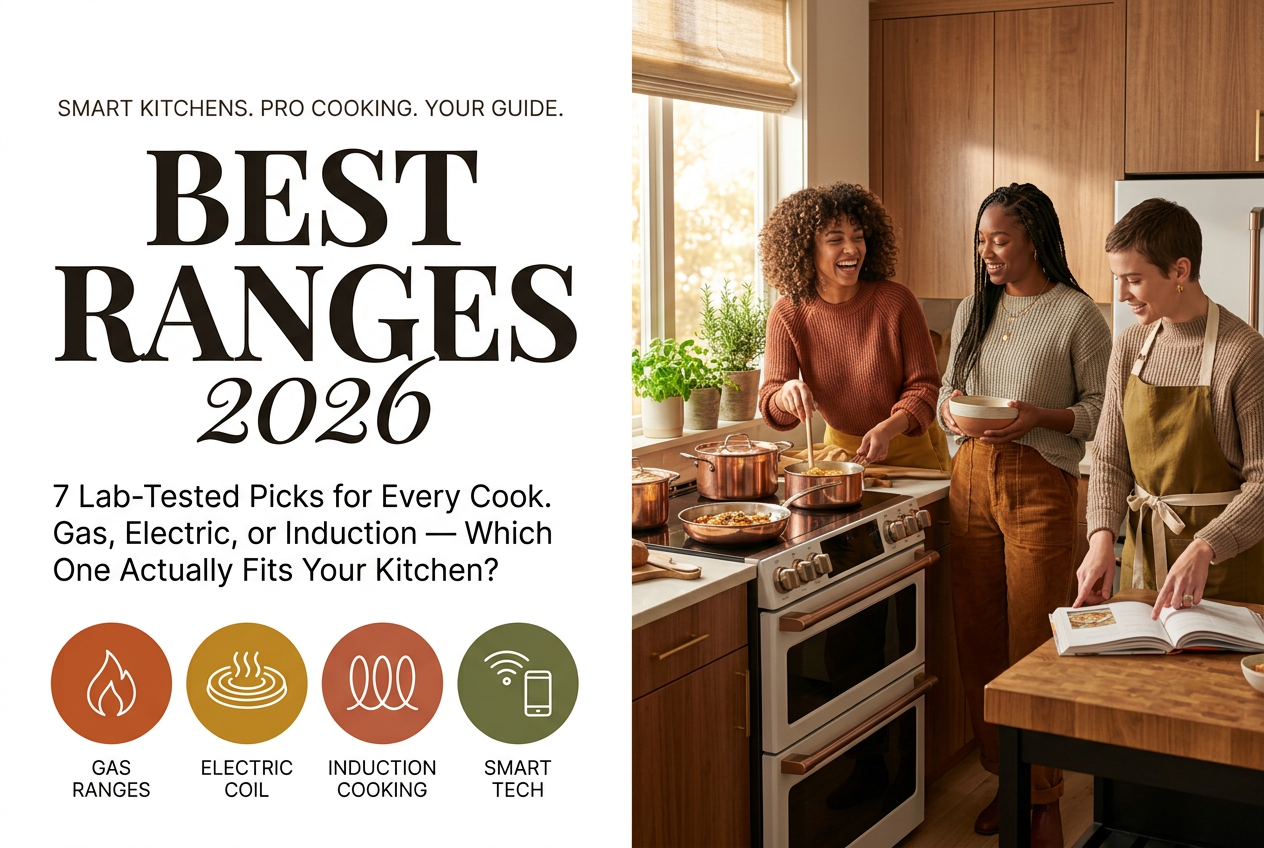
Here is the thing nobody tells you upfront: the range that wins comparison charts probably isn’t the right range for you. I figured that out around the third week of testing, standing in front of a $7,000 dual-fuel Italian import while eating reheated takeout because I’d spent the afternoon calibrating burner BTUs instead of actually cooking dinner.
The best ranges 2026 has on offer are genuinely better than what existed five years ago — faster, cleaner, more efficient — but “better” only matters if the improvement matches how you actually cook. A high-output gas range is a revelation for someone who sears proteins and stir-fries four nights a week. For someone who mostly simmers soup and bakes on weekends, that same range is expensive overkill. So before anything else, that’s the question worth answering honestly.
Gas, Electric, or Induction — Which One Actually Fits Your Kitchen?
Gas ranges run on an open flame. You can see it, you can adjust it in real time, and experienced cooks tend to be viscerally attached to that immediate feedback loop. The tradeoffs are real though: gas produces moisture and combustion byproducts indoors, the grates and burner caps require actual scrubbing (not just wiping), and if your kitchen doesn’t already have a gas line, running one can cost $500 to $1,500 before you’ve even bought the range.
Electric coil ranges are the appliance equivalent of a reliable used car. Cheap, difficult to truly break, available everywhere. They heat slowly, cool slowly, and look a little tired even when new. Still, they function. Some people genuinely prefer them, especially renters who just need something that works and won’t get them charged for damage on the way out.
Smooth-top electric ranges sit in the middle — easier to clean than coils, slower than induction, compatible with any cookware. They’re the compromise option. Sometimes that’s exactly right.
Induction ranges use electromagnetic fields to heat the pan directly rather than heating a surface that then heats the pan. The practical result is that induction is faster than gas for most tasks, more precise at low temperatures, and dramatically easier to clean because the glass surface itself barely gets warm enough to bake on spills. The catch is cookware compatibility — your pans need to be ferromagnetic, meaning a magnet has to stick to the bottom. Cast iron works. Most stainless steel works. Aluminum and copper don’t. I replaced two pans when I switched to induction testing, which was annoying but not catastrophic.
Top Gas Ranges Worth Considering
Gas converts aren’t giving up the flame anytime soon, and the options below are worth their asking price.

Premium gas range with convection oven for serious home cooks
Frigidaire, 30 in. Wide 5 burners 5.1 Cu. Ft Freestanding Gas Range with Quick… $979.99
Five burners at this price point is unusual. Most ranges in this range (no pun intended) give you four and make you fight for counter space when you’re running multiple pots. The convection oven is the other standout — convection at under $1,000 is genuinely rare, and it works: even browning, no cold spots, no rotating pans halfway through. The stovetop needs regular attention because gas grates accumulate grease faster than you’d expect, but that’s the deal you make with every gas range regardless of price. Heavy to move. Needs a gas line. Cooks beautifully.

Dual-fuel professional-style range combining gas cooktop with electric oven
$7,450 is a lot of money. I want to say that plainly before anything else. But dual-fuel is the setup that professional cooks actually prefer — gas burners for stovetop work, where flame control and high heat matter, and an electric oven for baking, where even radiant heat is everything. This ILVE delivers both without compromising either. The 36-inch width gives you a dedicated griddle zone alongside six burners, which changes how you cook weekend breakfasts entirely. If you bake bread seriously, or if you roast and braise in large quantities, the electric oven’s consistency alone justifies serious consideration. The price demands a serious cooking life to back it up.
The Induction Case (It’s Stronger Than You Think)
I was skeptical coming in. I left convinced.

Slide-in induction range with touch controls and smart features
The thing that sold me on this LG wasn’t the boil time or the oven capacity (both excellent) — it was cleaning up after a red sauce spill at 9pm on a Tuesday when I was already tired. On a gas range, that same spill would have required disassembling the grates and scrubbing dried tomato off cast iron for twenty minutes. Here, I wiped the glass with a damp cloth and went to bed. That’s not a trivial difference over ten years of cooking. The oven at 6.3 cubic feet handles a full roasting pan plus a side dish simultaneously, which is the actual test of whether an oven is generous or just marketed as generous. Touch controls take getting used to — no physical knobs means no tactile feedback — but the precision at low heat is worth that adjustment period.

36-inch induction range with convection oven for advanced home cooking
The 36-inch KitchenAid solves a problem most people don’t notice they have until they fix it: mismatched pan sizes and wasted heat. The five induction zones include a flex zone that adjusts to accommodate an oval roaster or a fish pan without leaving half the element uncovered. Bakers specifically should pay attention to this oven — the convection system is among the most consistent I tested, turning out evenly browned cookies and predictably risen bread without the rotation ritual that most ovens require. It’s expensive, and you’ll need to audit your cookware before buying. Worth it for the right household.
Good Ranges Under $1,100
Does spending less mean cooking worse? Not really.

Affordable smooth-top electric range with reliable performance
This Whirlpool is straightforward in the best way. Smooth glass top, four elements, a standard oven that fits a 9×13 pan without drama. No app, no WiFi, no convection. It heats food. It does this reliably, day after day, without demanding much attention or maintenance. Heating is slower than gas or induction, which you’ll notice if you’re used to either — pasta water takes a while. But for households that cook simple weeknight meals and don’t need the stovetop to respond in seconds, $699 for this level of dependability is genuinely good value.

Affordable gas range with four burners and reliable oven
Whirlpool, 30 in. Wide 4 burners 5.1 cu. ft. Freestanding Gas Range with Broiler… $1051.67
Four burners, gas flame, honest oven. No convection mode, which means you might rotate pans when baking. The broiler works. The burners respond instantly the way gas burners do. This is the range for someone who is certain they want gas cooking but has no interest in paying for features they’ll ignore — which, honestly, describes more home cooks than the premium appliance market wants to admit.
Should You Actually Buy a Smart Range?

Remote preheating is the one smart feature I kept using after the novelty wore off — starting the oven from the parking lot so it’s at temperature when you walk in with groceries is a small thing that turns out to matter on weeknights. Everything else (recipe suggestions, voice integration, usage tracking) felt like features designed for a press release rather than an actual kitchen. Smart ranges also have more software failure points than conventional ones, which is worth considering when the appliance sits in your home for fifteen years and the manufacturer stops pushing firmware updates after five. If you’re already running a connected home and the price delta is modest, fine. If you’re paying a $400 premium specifically for the app, I’d reconsider.
What to Actually Check Before You Buy
Specs matter less than how a range fits your kitchen and your habits. Here’s what I’d verify before committing:
Measure twice. Standard ranges are 30 inches wide; larger models run 36 inches. A 36-inch range in a 30-inch cutout is an expensive problem. Measure the width, the depth (including handles and knobs), and the height against your overhead cabinets.
Count how many burners you actually use at once. If the answer is two, four burners is plenty. If Sunday dinner involves six pots moving simultaneously, five or six burners changes how the whole meal comes together. This sounds obvious but most people buy more burners than they need.
Decide whether convection is worth it to you specifically. Convection circulates hot air, which means faster cooking and more even browning. For bakers, it’s genuinely useful. For people who mostly use the oven to reheat leftovers or roast a single chicken occasionally, it’s a feature that adds cost without adding much to daily life.
Factor in your existing hookups. Switching from electric to gas — or vice versa — means electrical or plumbing work before the range goes in. I’ve seen people buy the right range and then discover the installation cost another $800. Get quotes before you finalize a purchase, not after.
The Bottom Line
Spend time in a showroom with the ranges you’re considering. Open the oven door. Look at the oven light — some are so dim you’re squinting to check on a roast. Pull out a rack fully and see if it stays level or tilts. Turn a burner to its lowest setting and see if it holds. These are the things you can’t learn from a spec sheet, and they’re the things you’ll interact with every single day for the next decade or more. The best range for 2026 is the one that fits your kitchen dimensions, matches your fuel situation, and doesn’t make you fight it every time you cook — and based on everything I tested, the Frigidaire five-burner gas range is where I’d put my own money if I were buying today at a sane price.
Some links on this page are affiliate links: if you buy through them we may earn a small commission at no extra cost to you. We only recommend products we would buy ourselves.
Frequently Asked Questions
Is induction really faster than gas?
Yes, meaningfully so. Induction boils water roughly 25-50% faster than gas in controlled tests. The bigger advantage is precision — induction holds a true simmer without the flame creeping up the sides of a pan, which matters for delicate sauces.
Do I need to replace all my cookware if I switch to induction?
Only if your current pans aren’t ferromagnetic. Hold a magnet to the bottom — if it sticks, you’re fine. Cast iron and most stainless steel work. Aluminum, copper, and older non-stick pans usually don’t, so budget for at least a few new pieces if you’re switching.
What’s the real difference between a slide-in and freestanding range?
Slide-in ranges sit flush with your countertops and have controls at the front, which looks cleaner and eliminates the gap where crumbs fall. Freestanding ranges have finished sides and a rear control panel, making them easier to install anywhere. Slide-ins cost more and require a proper countertop cutout.
Is a 36-inch range worth it for a home kitchen?
Only if you regularly cook for groups or run multiple large pots simultaneously. For most households, 30 inches is enough. The extra width sounds appealing but it eats counter space and limits your layout options, especially in smaller kitchens.
How long should a quality range last?
A well-maintained range from a reputable brand should last 13 to 17 years. Gas ranges tend to outlast electric because there are fewer electronic components to fail. Induction ranges are newer, so long-term reliability data is still accumulating, but early signs are positive.



 No products in the cart.