

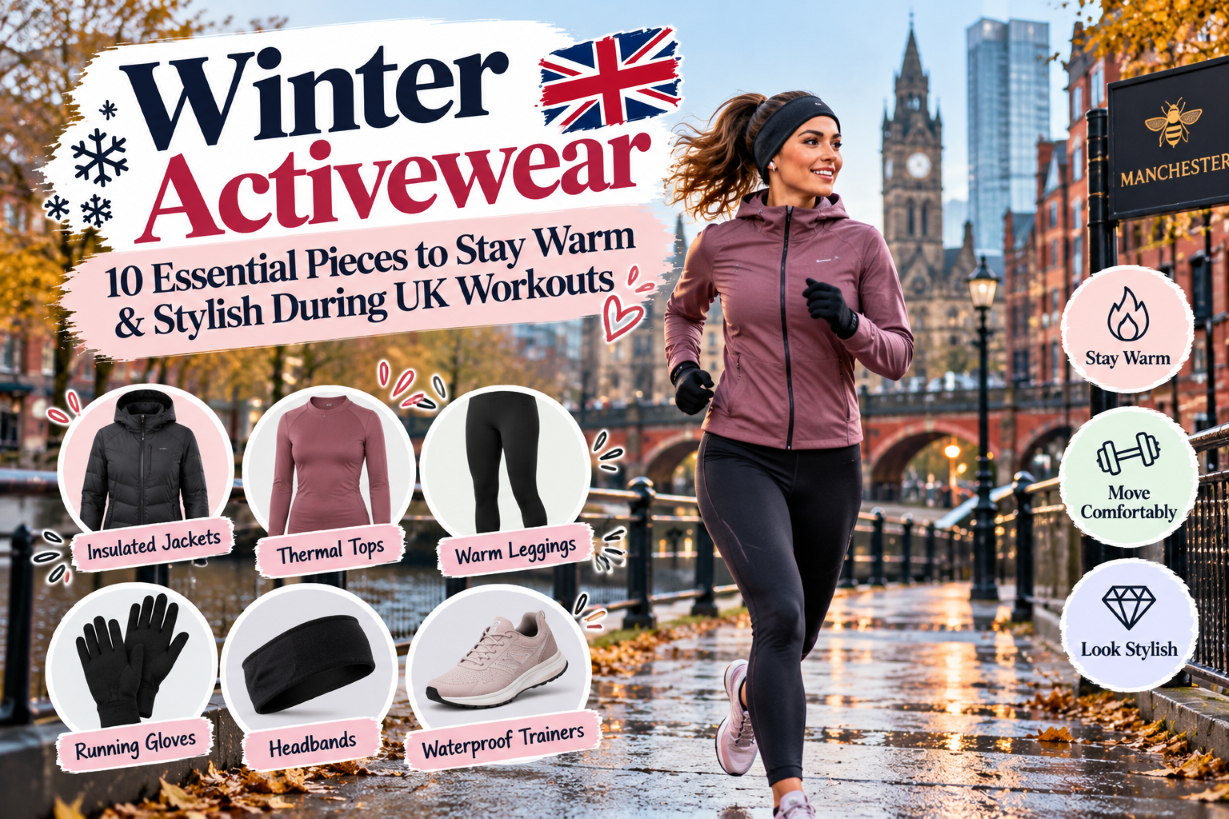
February is actually when I build most of my winter kit — because that’s when everything goes on sale and I’m not panicking about the cold that’s already arrived. But if you’re reading this in November, standing in your summer running shorts wondering why your legs feel like two frozen fish fingers, this guide is for you right now.
Here’s what most people get wrong about winter training gear: they think more bulk equals more warmth. It doesn’t. The pieces that actually work trap warmth efficiently while letting moisture escape, so you’re not finishing a run soaked in cold, clingy fabric that chills you faster than if you’d worn nothing at all.
Why your regular gym kit fails in a UK winter
UK winters aren’t just cold — they’re wet, windy, and completely unpredictable in a way that makes dressing for them genuinely difficult. Frost one morning, horizontal drizzle the next, and somehow always that particular wind that finds every gap in your layers. Cotton gym kit fails immediately in these conditions because it absorbs moisture and then holds it against your skin, and a damp cotton t-shirt on a January run doesn’t just feel unpleasant — it actively pulls heat away from your body faster than the cold air does.
You need fabrics that move moisture outward while keeping warm air trapped close to your skin, and that’s an entirely different engineering challenge than what your average gym vest is designed for. There’s also the injury angle, which doesn’t get mentioned enough: cold muscles are tight muscles, and tight muscles are far more likely to strain or pull, particularly in the hips and hamstrings where most runners carry tension anyway.

Core winter staple: insulated base layer for runs and outdoor workouts

Durable thermal tights with moisture-wicking for consistent winter training
Thermal leggings — what actually separates good from useless
Not all thermal leggings are the same. Some are so thick and stiff they restrict your stride; others are barely warmer than standard running tights with a slightly heavier fabric weight and a lot of marketing language on the label.
Fleece-lined options work brilliantly for gym sessions and home workouts where you’re not generating much external body heat. For actual running, though, a quality thermal-blend fabric without full fleece backing often performs better — you’re producing heat as you move, and full fleece can tip you into overheating territory by kilometre three. High-waisted cuts are worth prioritising because they keep your lower back covered when you’re bending, lunging, or basically doing anything that involves forward movement. And pockets — real, secure pockets, not decorative slits — genuinely change how much you enjoy a run when your phone isn’t bouncing loose against your thigh for forty minutes.

Practical thermal leggings with functional pockets for winter runs

Shorter thermal option for layering under skirts or as standalone piece
Layering tops: stop treating cotton like it’s neutral
Cotton is not neutral in winter. It’s actively bad.
The layering system that actually works goes: moisture-wicking base layer directly against skin, thermal mid-layer to trap warmth, windproof outer shell for outdoor sessions. Merino wool is the gold standard for base layers — it’s warm even when slightly damp, it doesn’t smell after one use the way synthetic fabrics can, and it feels genuinely soft rather than scratchy. The fit relationship between your base and mid-layer matters too: a closer-fitting base under a slightly looser mid-layer creates small pockets of warm air between the fabrics, which is where most of your actual warmth comes from rather than from the fabric weight alone.

Premium base layer for layering strategy in winter activewear

Mid-layer thermal top with ventilation for temperature regulation

Outer layer protection for winter outdoor workouts
NONE, Colorful Plus Size Floral Rain Poncho for Women Lightweight Packable… £17.59
Gloves, hats, socks — the accessories people skip and then regret
Cold hands at mile two will ruin an otherwise good run faster than almost anything else. You lose focus, your form falls apart, and the mental negotiation with yourself about turning back starts earlier than it should. Accessories for winter training aren’t optional extras — they’re what keeps the whole session from unravelling.
Thin running gloves that you can stuff in a pocket once you’ve warmed up are far more practical than thick insulated ones you’re stuck wearing the whole way round. Touchscreen compatibility sounds like a gimmick but it’s genuinely useful when you need to skip a track or check your pace without pulling a glove off with your teeth in the rain. For socks, padded thermal options make a real difference — your feet generate substantial heat during exercise, but thin fabric lets it escape quickly, and once your feet are cold your entire perceived effort increases. Actually, that’s not quite right: it’s not just perceived effort, your muscles genuinely work less efficiently when circulation to your extremities is compromised.

Thermal socks with cushioning to prevent blisters and keep feet warm
Spend more on two things. Save money on everything else.
High-street thermal activewear has genuinely improved. Decathlon in particular makes pieces that perform well for two or three seasons at prices that don’t sting. The honest trade-off is fabric longevity — budget thermals pill faster, lose their shape sooner, and sometimes the moisture-wicking degrades after heavy washing.
Where it’s worth spending more is your base layer and your outer shell. These two pieces do the most technical work: the base layer manages sweat against your skin all session long, and the outer shell is what stands between you and a 40mph headwind on a February morning. Get those right and you can fill the rest of your kit with mid-range options without noticing much difference in performance. I spent three winters buying cheap base layers that felt fine in the shop and then clammy and cold after fifteen minutes of running, before finally trying a merino option — and the gap in performance was genuinely embarrassing given how long I’d been tolerating the inferior version.

Value option: bundled thermal pieces for complete winter activewear coverage
Good winter activewear doesn’t make cold training sessions fun in some abstract motivational sense. It just removes the specific physical misery that makes you turn around early, skip the session entirely, or spend the whole run thinking about being warm instead of actually running. Kit that keeps you dry and warm enough to focus is kit that earns its price every single time you wear it — and that’s a more honest measure of value than any sale percentage.
Hey savvy shoppers! When the items in our articles catch your eye and you decide to buy through our links, we may earn a small commission at no extra cost to you. Think of it as a way of supporting us in bringing you the best content!
Frequently Asked Questions
What fabrics should I look for in winter activewear?
Merino wool and polyester blends are your best options. Merino is naturally warm, moisture-wicking, and antimicrobial. Synthetic blends tend to be cheaper and dry faster. Avoid cotton entirely — it absorbs sweat and then sits cold and damp against your skin, which makes finishing a winter run feel genuinely awful.
Do I need different activewear for outdoor running versus gym workouts in winter?
Yes, and the difference matters more than most people expect. Outdoor running means you need windproofing and moisture management from rain and sweat simultaneously. Gym sessions generate more consistent heat, so a good thermal base layer and mid-layer is usually enough without the outer shell. Fleece-lined leggings are brilliant for the gym but can feel suffocating on a long run.
How many layers do I actually need for a winter run in the UK?
For most UK winter conditions, three layers works well: a moisture-wicking base layer against your skin, a thermal mid-layer to trap warmth, and a lightweight windproof outer shell. Below about 2°C, you might add a thin thermal vest under your base layer. Above 8°C, you can often drop the outer shell entirely.
Is expensive winter activewear worth it compared to high-street options?
Partially. Premium pieces genuinely use better fabrics and construction that last longer and perform better in extreme cold. But you don’t need to go premium across the board. Spend more on your base layer and jacket — the pieces doing the most technical work — and save money on thermal leggings and accessories from high-street brands.
When is the best time to buy winter activewear in the UK?
February and March are when winter activewear goes on sale hardest. If you can plan ahead, you’ll regularly find premium pieces at 40-60% off. End-of-season sales from brands like Sweaty Betty and Mountain Warehouse can be particularly good. The catch is you’re buying for next winter, which requires a level of organisational optimism most of us don’t have.



 No products in the cart.