

Hey savvy shoppers! When the items in our articles catch your eye and you decide to buy through our links, we may earn a small commission at no extra cost to you. Think of it as a way of supporting us in bringing you the best content!
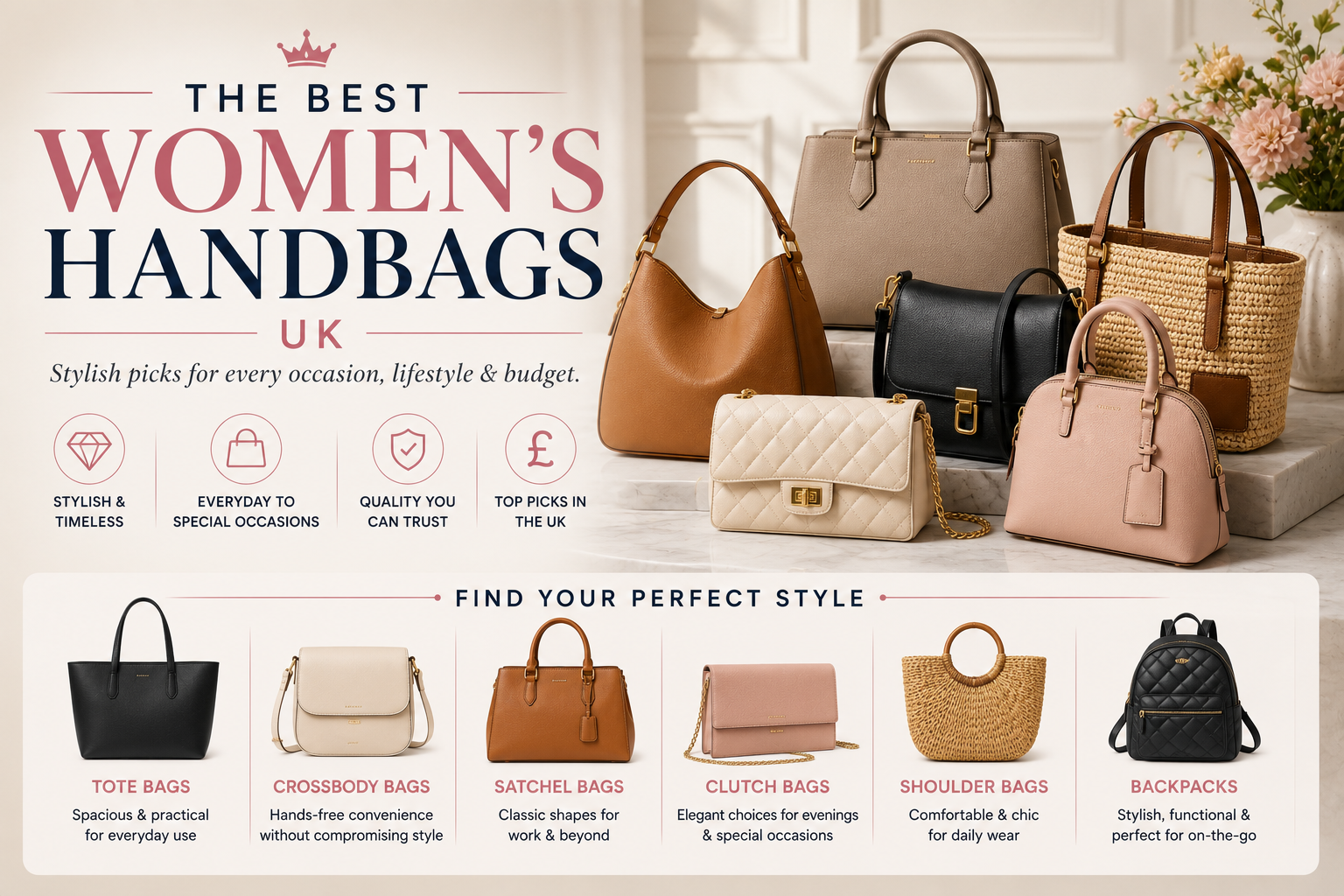
Here’s the thing nobody actually tells you about finding a great women’s handbag: the ones that photograph beautifully, hold up through a full summer, and don’t require a mortgage are genuinely rare. I know that because I spent the better part of three weeks trawling through what the UK market currently has to offer, and the gap between “looks good on a model” and “works in real life” is wider than you’d think.
A really good bag changes how you feel leaving the house. Not in a superficial way — in a practical, I-have-my-life-together way, even when you absolutely do not. Summer’s nearly here, which means the heavy winter totes can go back under the bed, and something lighter gets to take over. I’ve pulled together eight picks across different styles and price points, from the kind of straw bag that makes you feel like you’re already on holiday to the leather pieces worth saving up for. Whatever you’re after, it’s in here somewhere.
Totes: The Grown-Up Bag That Does Everything
Tote bags are having a proper moment, and I don’t think it’s going anywhere. There’s a reason — a well-structured tote is the closest thing to a bag that genuinely does it all. Laptop, water bottle, the novel you’ve been meaning to start since January, a spare pair of sandals for when your feet give up at 3pm. It fits. And somehow it still looks intentional rather than chaotic, which is the real magic trick.
Summer totes specifically have gotten much more interesting over the last couple of seasons. Structured silhouettes in unexpected textures, colours that aren’t just beige, hardware that actually adds something rather than just existing. The best ones feel like a considered choice rather than a default. (And for the record, a quality tote bought now will still be in rotation when you’re wondering where the last decade went — they age better than almost any other bag style.)
Why Mini Bags Finally Converted Me
I was a sceptic. A committed, vocal sceptic who genuinely could not understand the appeal of a bag that fits approximately four items if you’re being optimistic about the size of your phone.
Then I actually used one for a weekend, and something clicked. Mini bags aren’t about what they carry — they’re about what they make you leave behind. You take your phone, your card, your keys, and maybe a lip balm if you’re feeling ambitious, and that’s genuinely it. There’s a lightness to that. Physically, obviously, but also mentally — you’re not rummaging, you’re not hauling, you’re just moving. They’re also a smarter entry point into investment pieces than people realise, because spending £250–£350 on something small feels considerably less alarming than committing that to a full-size bag.
Straw, Woven, and Feeling Like You’re Already Somewhere Nice
Nothing signals “I have my summer sorted” quite like a straw or woven bag. They just feel like holidays — like ice cream and no emails and a terrace somewhere warm. Actually, that’s not quite right: they feel like the idea of holidays, which is arguably better because you can have it even when you’re just walking to the farmers’ market on a Saturday morning.
What’s genuinely improved in this category over the last few years is the construction. Brands have worked out that shoppers want structure — bags that hold their shape through a full season rather than collapsing into something sad by mid-July. A decent lining, reinforced handles, a base that doesn’t buckle. The accessible price point is still there, which means you can actually enjoy using one instead of treating it like a museum piece, but the quality has caught up in a way it hadn’t previously.
Spend More, Regret Less
Investment pieces deserve a straight conversation rather than vague gestures toward “timelessness.” So here it is: what makes a higher-priced women’s handbag actually worth the money is craftsmanship you can see and feel — stitching that’s even and tight, hardware that has genuine weight to it, leather that softens rather than cracks, and a silhouette that won’t read as obviously dated in four years’ time. Those things cost money to produce. That’s just the reality of it, and the brands charging for them are mostly charging for a reason.
The other thing worth knowing is that a well-made bag holds its resale value in a way that fast-fashion accessories simply don’t. So if you do decide to part with it eventually, you’re not writing off the whole amount. It’s a different way of thinking about the purchase — less “is this expensive” and more “what is this actually worth over time.”
How Do You Actually Pick the Right Bag for What You’re Wearing?
Proportion first, always. A huge structured tote paired with an already-voluminous summer dress creates visual noise that doesn’t resolve anywhere — both things are competing for attention and neither wins. Conversely, a tiny mini bag with a sharply tailored suit reads as slightly off, like the bag forgot what meeting it was going to. The bag should feel like it belongs in the same sentence as your outfit, not like a footnote or a shouted interruption.
Beyond proportion, think about what your day actually needs you to carry. Eight hours with a laptop means you need a tote whether you like it or not. A lunch with friends followed by a gallery visit means you have real options. And then there’s the subtler question — what feeling do you want to project? Structured bags read as composed and professional. Soft, slightly slouchy bags feel relaxed and easy. A bold colour or metallic finish says you’re in the mood to be noticed. None of these are wrong answers; they’re just different tools for different days, which is exactly why owning a few different styles makes so much more sense than trying to find one bag that does everything perfectly. It won’t. Nothing does.
My honest recommendation: a tote for work days, a mini for evenings, something woven for weekends. That’s four months of summer covered without any one bag being asked to do the impossible.
The Bags That Actually Made the Cut
Style and practicality are not, despite what the more stressful corners of the internet might suggest, mutually exclusive. The best women’s handbags UK shoppers can find right now manage both — they look considered and they work in real life, which is where most of us actually spend our time.
Start with what your life genuinely requires, then move toward what makes you feel something when you look at it. A beautiful bag that sits on a shelf because it doesn’t fit your actual routine is just expensive furniture. Get the one that goes everywhere with you.
Frequently Asked Questions
What handbag styles are trending for summer 2024 in the UK?
Straw and woven bags are everywhere right now, alongside structured mini bags and oversized totes in soft neutral tones. Raffia, cream leather, and bold primary colours are all having a moment this season.
How much should I spend on a quality women’s handbag?
It depends entirely on how often you’ll use it. A bag you’ll carry daily justifies spending £150–£400 on something well-made. For occasional use, a £40–£80 high-street option can be perfectly fine — especially for trend-led summer styles you might not want in two years.
Are mini bags actually practical or just decorative?
More practical than they look, honestly. Phone, keys, one card, lip balm — that covers most evenings out and casual daytime errands. The limitation forces you to travel lighter, which plenty of people find genuinely freeing rather than restrictive.
How do I match a handbag to my outfit?
Proportion matters most. Pair voluminous or flowy outfits with something more structured to balance the silhouette, and let relaxed, slouchy bags work alongside fitted or tailored pieces. Beyond that, match the bag’s mood to the occasion rather than trying to colour-match perfectly.
What makes a handbag worth the investment?
Look at the stitching, the hardware weight, and whether the leather or fabric feels substantial rather than papery. Brands with genuine heritage tend to use materials that soften and improve over time. A bag that holds its resale value is usually one that was built to last decades, not seasons.
 No products in the cart.