

Hey savvy shoppers! When the items in our articles catch your eye and you decide to buy through our links, we may earn a small commission at no extra cost to you. Think of it as a way of supporting us in bringing you the best content!
I own seventeen handbags. That’s not something I’m proud of — it’s more of a confession. And here’s what took me far too long to figure out: the problem was never that I didn’t have enough bags. It was that most of them weren’t built for the actual life I live. A good bag isn’t an accessory. It’s infrastructure — the difference between a Monday morning that flows and one where you’re fishing for your Oyster card at the barrier while a queue builds behind you.
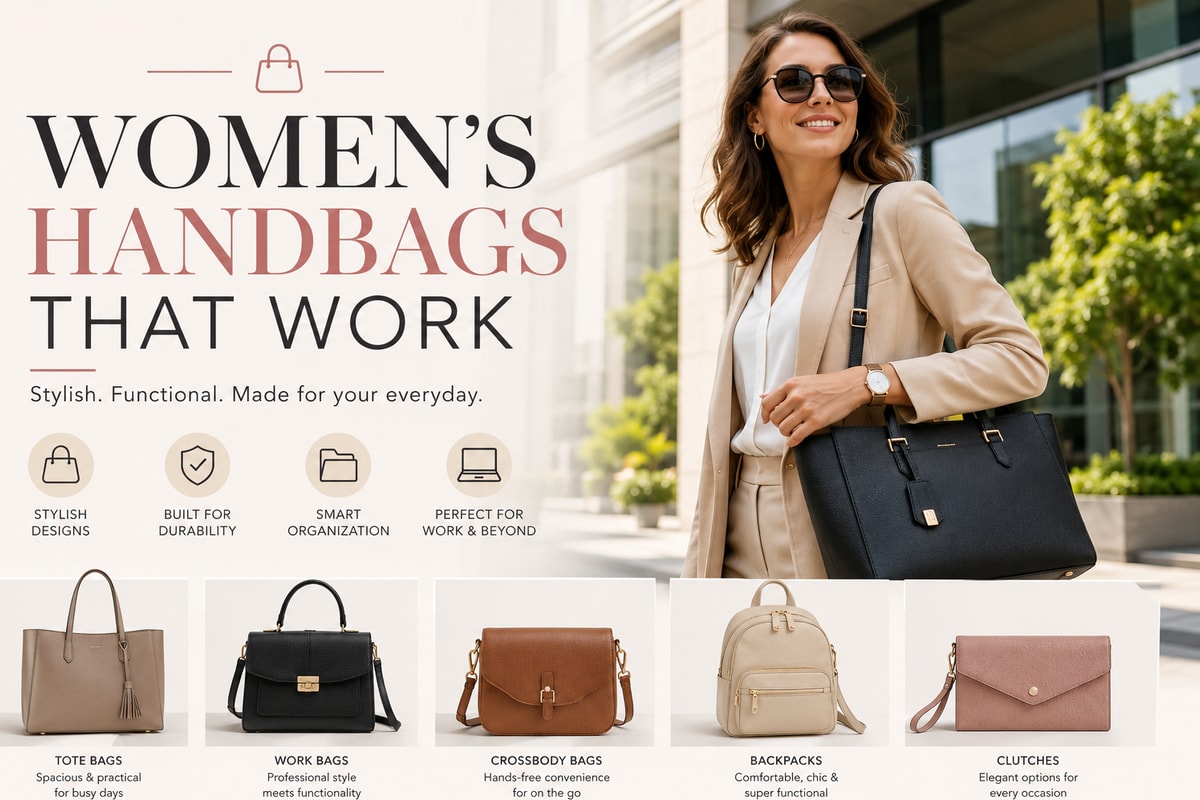
So what actually makes a women’s handbag worth owning? Not the label. Not even the price. It’s whether the bag solves something real — carries your laptop without killing your shoulder, keeps your hands free on a packed commute, makes you feel put-together at 7pm when you’ve been wearing the same outfit since 8am.
Below are eight bags, each one chosen for a specific part of your week. No filler, no pretty-but-useless options that collapse after three months.
The Foundation Pieces
Certain bag shapes have been around for decades because they genuinely work. A structured tote keeps everything visible and within reach. A crossbody distributes weight properly and keeps your hands free. A clutch forces you to edit down to only what you need. These aren’t trend pieces — they’re the shapes that form the backbone of a rotation that actually functions.

The foundational tote: spacious, organised, and professional enough for the office but casual enough for weekend errands
Why this works: Think of a leather tote the way you think of a white button-up shirt — not flashy, but you reach for it constantly. The structured shape means things stay where you put them rather than migrating to the bottom of a black hole, and good leather actually improves with age instead of pilling, cracking, or going limp. I’ve had soft unstructured totes that looked great in the shop and were unwearable within a year. Structure matters.

The everyday crossbody: hands-free practicality with proper weight distribution for commuting and casual outings
Why this works: Four days a week, this is the bag I grab. When I’m genuinely busy — running between meetings, picking things up, navigating a city — having both hands free isn’t a luxury, it’s a requirement. The weight sits at your hip rather than dragging one shoulder down, which makes a real difference by mid-afternoon. An adjustable strap is non-negotiable here; what fits over a coat in November won’t work with a thin-strap top in July.

The classic shoulder bag: elegant and versatile enough to work with both casual and dressier outfits
Why this works: The shoulder bag is the compromise option — more formal than a tote, more practical than a clutch. It’s the bag you reach for when you want to look like you’ve made an effort without actually overthinking it. Medium-sized works best because it scales up for a day out and doesn’t look ridiculous at a restaurant. Leather ages beautifully here in a way that fabric simply doesn’t.

The structured evening clutch: compact and elegant for nights out, with just enough space for essentials
Why this works: Not fitting your entire life into a bag is actually the point of a clutch. Phone, keys, one card, lipstick. Done. A structured clutch with a proper clasp keeps things secure without you having to grip it all night, and if it has a removable strap, you can switch between carrying it and wearing it crossbody depending on whether you need your hands free. That flexibility alone makes it worth seeking out over a basic envelope style.
Does your work bag actually work?
Your commute bag has a job description: hold a laptop without looking like tech luggage, survive being shoved under a desk or into an overhead rack, and still look professional when you walk into a meeting at 9am. Most bags fail at least one of these. The two below don’t.

The work tote: professional enough for the office with dedicated laptop compartment and practical organisation
Why this works: The thing that separates a real work tote from a bag that just looks the part is internal organisation — specifically, a padded laptop compartment that actually protects your device rather than letting it slide around loose, plus enough secondary pockets that you’re not emptying the entire bag to find your charger. This one does both, and the clean exterior reads as intentional in a corporate setting without screaming “I bought this at an airport.” It also transitions to weekend use without looking out of place, which makes it better value than a bag that’s strictly office-only.

The commute essential: compact enough for tight spaces but organised enough to keep everything accessible during a hectic day
XY London, Women’s ‘Whitney’ Structured Crossbody Handbag With Shoulder Strap in… £29.99
Why this works: Commuting is genuinely brutal on bags — you’re pressing them against strangers on the Tube, dumping them on questionable floors, wedging them into overhead racks. Soft, unstructured bags do not survive this. Real structure holds up. Multiple compartments mean your keys aren’t scratching your phone screen. And a strap that doesn’t dig in matters more than you’d think when you’re carrying it for two hours a day.
Evening Bags: Actually Have Fun With It
You’re not fitting a laptop in here. You’re not surviving a commute.
Evening bags exist for one purpose: to make an outfit feel finished. This is the category where you can actually take risks — metallics, unusual textures, something with a bit of theatre. The bags below do exactly that without looking like fancy dress.

The statement evening clutch: adds instant polish and works with both simple and dressy outfits
Why this works: A metallic clutch is a cheat code. Gold or silver reads as intentional regardless of what you’re wearing it with — a simple black dress, something colourful, even smart trousers and a blazer. The reflective finish catches light as you move, which draws attention in the right direction, and the compact size means it doesn’t compete with the rest of your outfit. This is the bag you grab when you’re running slightly late and need to look like you weren’t.

The formal evening bag: elegant embellishment for special occasions and dressier events
Lemon Daisy Accessories, Women’s Teardrop Statement Earrings £16.99 (15% OFF — was £20)
Why this works: For occasions that actually require effort — a wedding, a proper dinner, anything with a dress code — beading or embellishment signals that you’ve taken it seriously without needing a bold colour to do the heavy lifting. A classic neutral beaded bag works with nearly every formal outfit, and unlike a trendy colour, it doesn’t date. The beading catches light differently depending on how you move, which is a detail that costs nothing to appreciate once you have it.
The Everyday Bag: Where Most of Us Actually Live
Not commuting to a corporate office. Not heading to a black-tie event. Just normal life — coffee, errands, the market, seeing friends. Your everyday bag needs to be genuinely enjoyable to carry, not a compromise you tolerate.

The casual crossbody: durable materials and relaxed style for weekend activities and everyday adventures
Why this works: Canvas and leather blends are underrated. They’re forgiving in a way that light-coloured leather never is — wipe them clean, throw them around, and they develop character rather than looking wrecked. The crossbody cut means you can actually do things while wearing it: shopping, pushing a pram, navigating a busy market without clutching your bag to your chest. And the relaxed aesthetic scales surprisingly well, from jeans to a summer dress, without looking like you made the wrong choice.

The effortless hobo: slouchy silhouette that looks intentionally relaxed and pairs beautifully with casual outfits
Why this works: A hobo bag is the handbag equivalent of a worn-in leather jacket. It looks like you’re not trying, which is actually the hardest effect to achieve. Soft leather moulds slightly to your shape over time and gets better-looking the more you use it — not worse, not shabbier, just more itself. The slouchy silhouette is forgiving if you overpack it slightly (and we all do), and jeans and a plain t-shirt look considered rather than thrown on when you add one of these. That might sound like a lot to ask of a bag. It isn’t.
One Last Thing About Price
Here’s something I got wrong for years: expensive doesn’t mean better. I’ve owned a £200 bag that fell apart in eight months and a £60 one that I still use three years later because it was built with actual care. The question worth asking isn’t what does this cost — it’s will this look better in two years or worse? Does the hardware feel solid? Does the strap dig in after twenty minutes? A bag that answers those questions well at £30 beats one that fails them at £300. Buy for the life you actually live, not the rotation you think you should have.
Frequently Asked Questions
How many handbags does a woman actually need?
Honestly, four covers most lives: a work tote, an everyday crossbody, a casual shoulder bag, and one evening clutch. Anything beyond that is personal preference, not necessity.
Is real leather worth the extra cost for handbags?
For bags you’ll carry daily, yes. Real leather develops character over time and typically outlasts PU alternatives by years. For occasional-use bags like evening clutches, quality PU or fabric is perfectly fine.
What size handbag is best for commuting?
Medium-structured totes or crossbody bags work best for commutes. You want enough room for a laptop and essentials, but not so large that it becomes a burden on packed trains or buses.
How do I stop my handbag from getting disorganised?
Choose bags with dedicated compartments rather than one open cavity. A middle zip pocket for your phone, a front slip pocket for cards, and a main compartment for everything else makes a real difference to how quickly you can find things.
Can a crossbody bag look professional enough for the office?
A structured crossbody in leather or quality PU absolutely works in most office settings. The key is structure — a bag that holds its shape reads as polished, while a slouchy one skews too casual for client-facing environments.


 No products in the cart.