

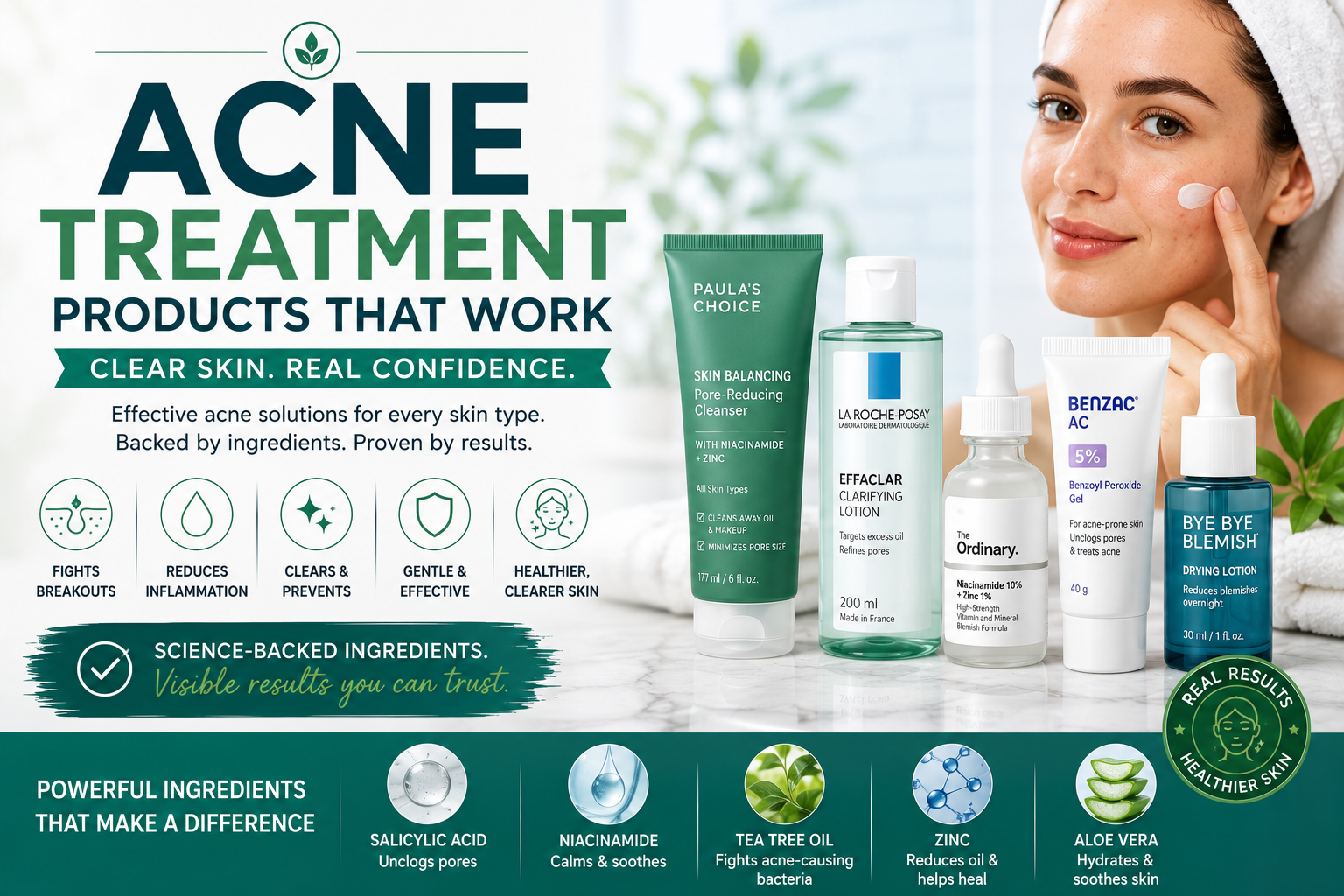
My bathroom shelf used to be a graveyard. Twelve bottles, maybe more — cleansers, spot treatments, serums — and my skin looked exactly the same as before I’d bought any of them. The problem wasn’t that acne treatment products don’t work. The problem was that I was picking them completely blind, based on packaging and hope, with zero understanding of what my skin actually needed or why one ingredient might work while another would do nothing at all.
Here’s what most skincare guides won’t tell you upfront: the single biggest predictor of whether an acne product will work for you is whether the active ingredient matches your acne type. That’s it. A brilliant product for blackheads can be completely useless against a cystic breakout, and vice versa. Get the match wrong and you’ll spend months convinced that nothing works, when really you just had the wrong tool.
What Kind of Acne Are You Actually Dealing With?
Blackheads and whiteheads — comedonal acne — happen when pores get clogged with sebum and dead skin cells. No bacteria required. Salicylic acid is ideal here because it’s lipophilic, meaning it actually dissolves into oily pores and clears the blockage from inside rather than just scrubbing the surface. Inflammatory acne (papules, pustules) is a different story: bacteria have moved in, your immune system is responding, and now you’ve got a red, painful spot that needs something antimicrobial. Benzoyl peroxide is the go-to for this — it kills acne bacteria by flooding the pore with oxygen, and crucially, bacteria can’t build resistance to it the way they can with antibiotics. Then there’s cystic acne, which sits deep under the skin and doesn’t respond well to surface treatments at all. Retinoids and, in persistent cases, prescription medication are usually what actually move the needle on cystic breakouts, because they work at the level of cell turnover and inflammation rather than just targeting the surface.
So before you buy anything, figure out which category you’re in. Using a strong antibacterial product on comedonal acne won’t clear your pores — it’ll just irritate your skin while the blackheads sit there unbothered.
The Drugstore Options Worth Your Money
You don’t need to spend a lot.
Some of the most consistently effective acne treatments are sitting in Boots or Superdrug right now for under £15. They’re not exciting, they don’t have beautiful packaging, but they contain proven actives at concentrations that actually do something. The CeraVe Blemish Control Cleanser, for instance, combines salicylic acid with niacinamide in a formula gentle enough for daily use — which matters, because a treatment you can actually stick with every day will always outperform a stronger one you use sporadically because it makes your face sting.

Entry-level acne treatment cleanser with proven BHA for daily use
CeraVe, Blemish Control Cleanser with Salicylic Acid & Niacinamide for £14.5

Affordable antibacterial spot treatment for inflammatory breakouts

Budget-friendly acne gel with pore-regulating niacinamide
CeraVe, Cleansers Blemish Control Cleanser cleansing gel against… £10
When to Spend More
Higher price doesn’t always mean better results. But sometimes it does, and it’s worth understanding when the upgrade is justified rather than just aspirational.
Premium formulations tend to matter most when you have sensitive or reactive skin, when you need higher concentrations of an active than drugstore products typically offer, or when you’re dealing with hormonal or cystic acne that requires more targeted intervention. The CeraVe Retinol Serum Duo, for example, pairs a retinoid with the ceramide-based support your barrier needs to handle the adjustment period — which is why dermatologists often recommend it over grabbing a standalone retinol and hoping for the best. Similarly, Medicube’s Azelaic Acid Exosome Serum is worth considering if your breakouts come with redness or post-acne marks, since azelaic acid handles both the active breakout and the discolouration it leaves behind.

Premium retinoid formulation for acne-prone sensitive skin
CeraVe, Control Cleanser & Retinol Serum Duo set against imperfections in… £29.4
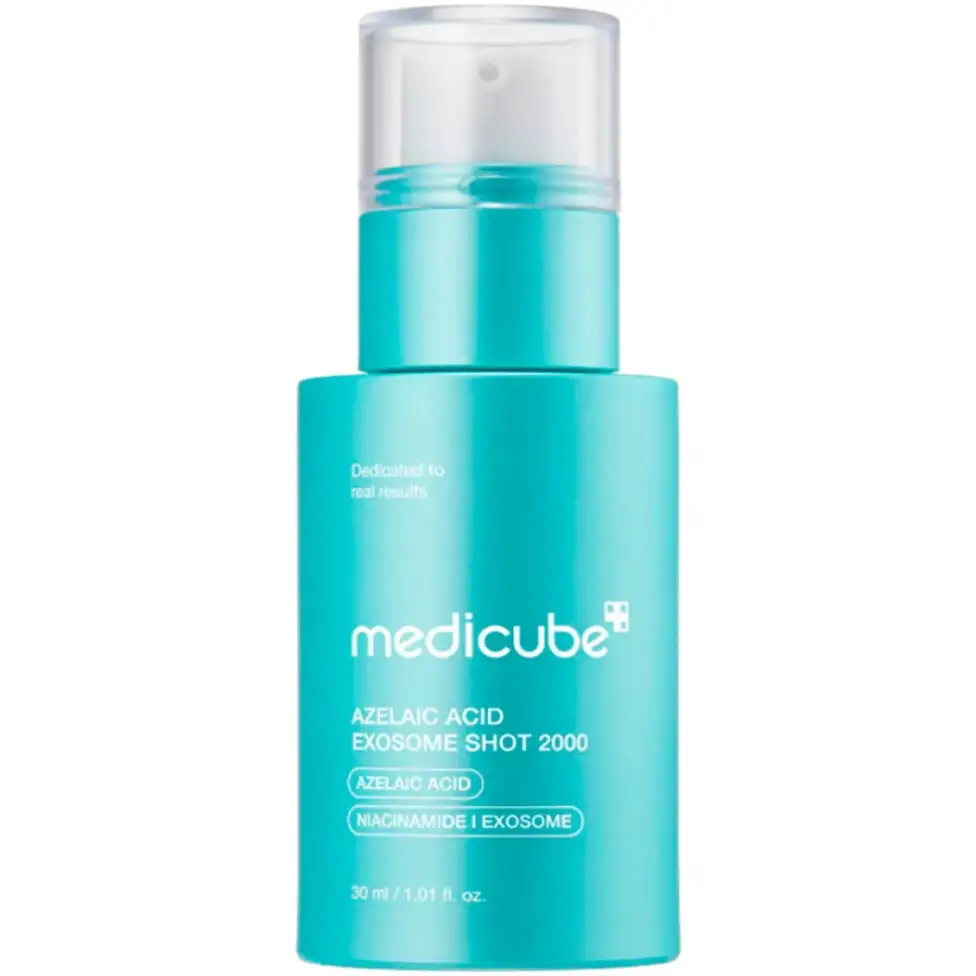
Targeted treatment for acne and rosacea with anti-inflammatory benefits
Medicube, Azelaic Acid Exosome Shot 2000 Serum for Acne-Prone Skin 30mL £14.39

High-strength BHA exfoliant for persistent congestion and acne
The Ingredients That Actually Do Something
Ingredient lists can feel overwhelming, but for acne specifically, you’re really only looking for a handful of actives that have decades of evidence behind them.
Salicylic acid (BHA)
Salicylic acid is a beta hydroxy acid that works by dissolving into sebum-filled pores and clearing blockages from the inside out rather than scrubbing the surface. It’s the standard treatment for comedonal acne and general congestion. Most products sit between 0.5% and 2% — start at the lower end if you’re new to it, and use it two or three times a week before building up to daily application.
Benzoyl peroxide
Benzoyl peroxide kills bacteria. It releases oxygen into the pore, which the anaerobic bacteria responsible for acne absolutely cannot survive. Unlike topical antibiotics, bacteria don’t develop resistance to it, which is one reason dermatologists have been recommending it for forty-odd years. It can be drying, it will bleach your pillowcases if you’re not careful, and it’s not the ingredient for everyone — but for pustular, inflammatory breakouts, very little works as reliably. Start at 2.5% rather than going straight to 5% or 10%.
Niacinamide
Niacinamide (vitamin B3) is the one ingredient that almost every skin type can use without issue. It regulates sebum production, calms inflammation, and reinforces the skin barrier, which matters because a damaged barrier makes acne worse by letting irritants in and moisture out. It also plays well with other actives, so it’s useful as a supporting ingredient in combination routines.
Retinoids
Retinoids are the gold standard. Retinol, adapalene, tretinoin — they all work by speeding up cell turnover, which prevents the dead-cell buildup that blocks pores in the first place, while also reducing inflammation and smoothing out post-acne texture over time. The catch is patience: you’ll likely see an initial purge period where breakouts temporarily worsen before improving, and meaningful results usually take 8–12 weeks minimum. Prescription tretinoin is considerably stronger than over-the-counter retinol, so if you’ve been using a retinol for six months without much change, that’s worth mentioning to a GP.
Azelaic acid
Azelaic acid is genuinely underrated and I wish more people knew about it earlier. It’s antibacterial and anti-inflammatory, handles post-acne marks and redness, works for rosacea, and is far gentler on the skin barrier than benzoyl peroxide. Actually, that’s not quite right to frame it as a consolation prize for people who can’t tolerate harsher ingredients — plenty of dermatologists consider it a first-line option in its own right, particularly for anyone with both acne and hyperpigmentation concerns.

Mineral-based acne treatment with soothing zinc for sensitive skin
Stop Overcomplicating Your Routine
The most common mistake isn’t using the wrong product. It’s using six products simultaneously and wondering why your face looks like it’s staging a protest.
Mornings should be simple: a gentle cleanser, a non-comedogenic moisturiser (yes, even if you’re oily — skipping moisture makes your skin produce more sebum to compensate, which makes everything worse), and SPF. That’s genuinely all you need in the morning. Your actives should be doing their work at night, not competing with sunscreen and primer.
Evenings are where your acne treatment goes: cleanser, one active treatment, moisturiser. If you’re using a retinoid, use it two or three nights a week at first, not every night — your skin needs time to build tolerance. Don’t use benzoyl peroxide and a retinoid on the same night. Don’t use salicylic acid in the morning and a different exfoliant at night. Stacking actives doesn’t accelerate results; it damages your barrier, causes inflammation, and often triggers more breakouts than you started with.
Is it frustrating to keep things this minimal when you’re desperate for results? Yes. Does it work better than the alternative? Consistently, yes.
Sensitive Skin Isn’t an Excuse to Avoid Treatment
Reactive skin and acne is a genuinely difficult combination, but the answer isn’t to avoid active ingredients — it’s to use gentler versions introduced more slowly. A 0.5% salicylic acid in a wash-off cleanser is categorically different to a 2% leave-on treatment; the contact time alone changes how your skin responds. Niacinamide is almost universally tolerated. Azelaic acid sits in the same category. If retinoids are on your list, start at the lowest available strength and use it once a week for the first month before increasing frequency.
The goal is to find the version of each ingredient your skin can handle, not to give up on the ingredient entirely.
When Products Aren’t Enough
Severe cystic acne, hormonal breakouts that arrive like clockwork regardless of what you use, acne that’s leaving permanent scarring — these are situations where over-the-counter products have a ceiling, and that ceiling is lower than most people want to admit. A dermatologist can prescribe tretinoin at concentrations that dwarf anything available without a prescription, alongside options like spironolactone for hormonal acne or isotretinoin for severe cases. There’s no virtue in suffering through years of ineffective self-treatment when clinical options exist.
For mild to moderate acne, though, the products in this guide are genuinely sufficient if used correctly and consistently. Pick one active ingredient that matches your acne type. Give it six weeks minimum before drawing any conclusions. Adjust from there. The routine that works is almost always the boring, consistent one — not the elaborate one with seven steps and four different acids fighting for space on your face.
Hey savvy shoppers! When the items in our articles catch your eye and you decide to buy through our links, we may earn a small commission at no extra cost to you. Think of it as a way of supporting us in bringing you the best content!
Frequently Asked Questions
How long do acne treatment products take to work?
Most acne treatments need at least 4–6 weeks before you’ll notice real change. Retinoids take longer — expect 8–12 weeks minimum. Switching products every two weeks because nothing seems to be happening is one of the most common mistakes people make.
Can I use salicylic acid and benzoyl peroxide together?
Technically yes, but not at the same time. Use one in the morning and one at night, or alternate days. Layering them simultaneously tends to cause dryness and irritation without meaningfully improving results.
What acne treatment works best for sensitive skin?
Niacinamide and azelaic acid are your safest bets. Both are antibacterial and anti-inflammatory without the drying effect you get from benzoyl peroxide. If you want to use salicylic acid, start with a 0.5% concentration in a cleanser rather than a leave-on treatment.
Do I need to moisturise if I have oily, acne-prone skin?
Yes — this is non-negotiable. Skipping moisturiser when you’re oily actually makes things worse because dehydrated skin overproduces sebum to compensate. Use a lightweight, non-comedogenic gel moisturiser and your skin will regulate better over time.
When should I see a dermatologist instead of using over-the-counter acne treatments?
If you’re dealing with cystic acne, breakouts that leave scars, or hormonal acne that arrives on a monthly cycle regardless of what you use, a dermatologist can prescribe options that over-the-counter products simply can’t match — tretinoin, spironolactone, or in severe cases, isotretinoin.

 No products in the cart.