

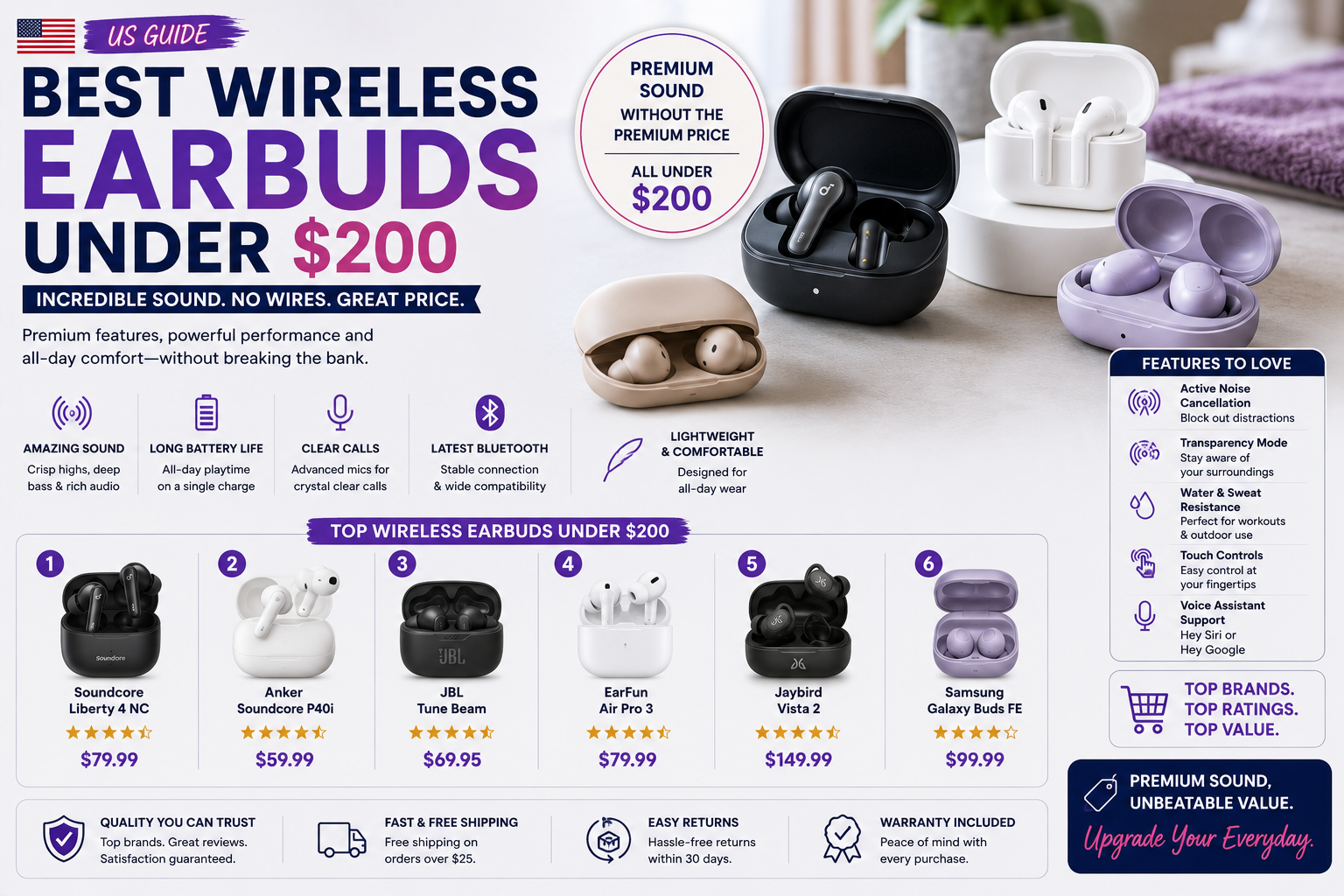
Here is the thing nobody tells you: the sweet spot for wireless earbuds isn’t at the top of the price chart. It’s sitting right around $150, where brands stopped treating good audio as a premium feature and started treating it as table stakes.
I checked price history on three different sites and spent an embarrassing number of hours in comparison rabbit holes to put this list together — partly because I kept second-guessing myself on the Technics pick, which nearly got cut twice before I landed on it. The seven earbuds below aren’t consolation prizes for people who couldn’t afford better. They’re what I’d actually buy.
Why the flagship premium mostly isn’t worth it
Five years ago, $150 earbuds were a punchline. Now? That range is where the real value lives, and the audio industry’s dirty secret is that the components driving flagship sound — better chips, efficient drivers, longer-lasting batteries — have become cheap enough to manufacture that they’re filtering down fast. Brands still charge $300+ for the name and the packaging, but the actual technology inside a $170 pair of earbuds today would have cost you $400 in 2019. The jump in sound quality from $50 to $150 is enormous. From $150 to $350, you’re mostly paying for spatial audio that most people turn off after a week and an aluminum case instead of a plastic one.
What you actually get in the $150-$200 range: active noise cancellation that handles subway noise and open offices, multipoint Bluetooth for switching between your phone and laptop without manually reconnecting, and battery life that clears a full workday without a crisis. What you give up compared to the $350 flagships is mostly marginal — a few extra hours of playtime, some proprietary audio format your phone might not even support, and the prestige of the logo.
Most people don’t need what they’d be paying for.
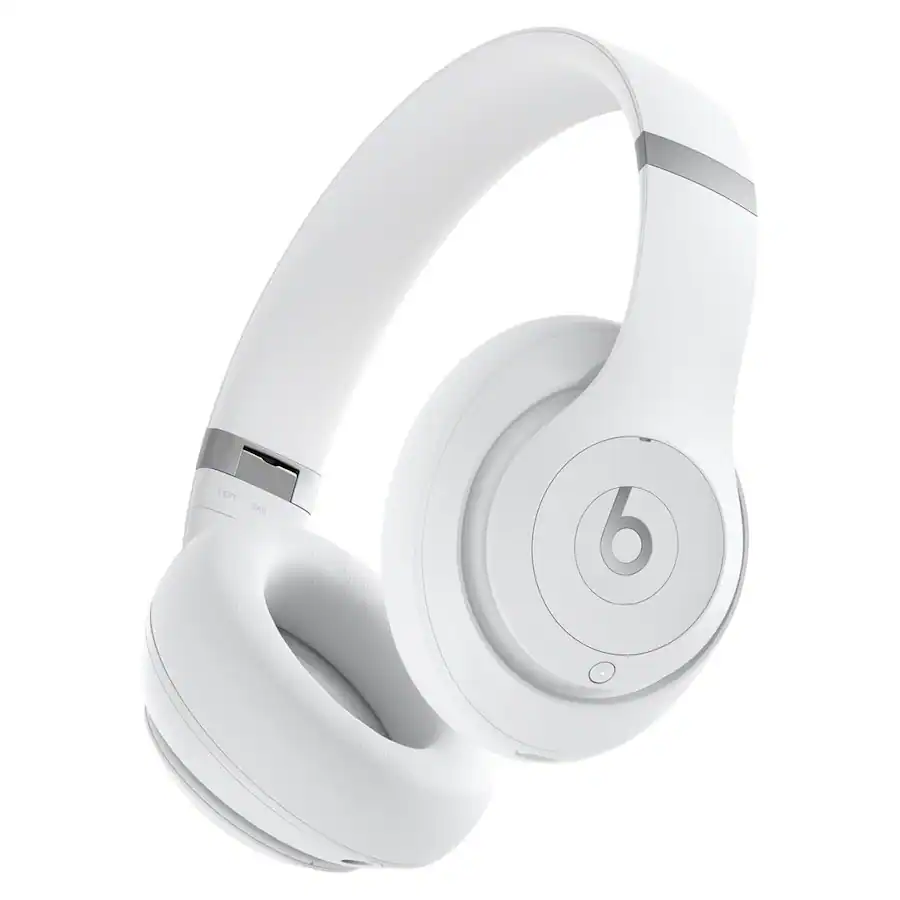
Best overall value earbuds with active noise cancellation and solid battery life
Beats, Studio Pro Bluetooth Wireless Noise Cancellation Headphones $179.95 (18% OFF — was $219)
Every “best value” list includes this one, and honestly the consensus is correct. The noise cancellation is the real deal — it blocks subway screech, not just gentle office hum — and the 7-hour per-earbud battery combined with wireless case charging makes for a genuinely hassle-free daily carry. Touch controls are reliable, sound is warm without turning everything to mush, and the fit holds up through long wear. The one legitimate gripe is the case size, which is bulkier than competitors. But that bulk is doing something: it’s housing wireless charging hardware and a big battery, so it’s a trade-off worth making.
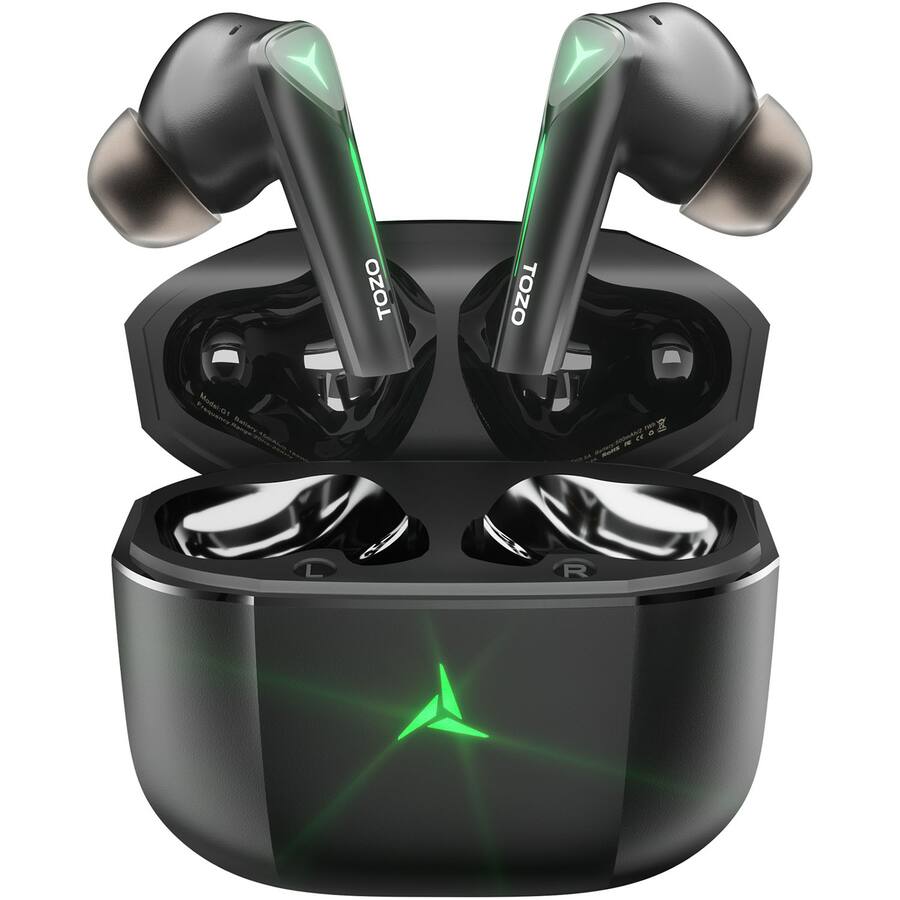
Best for gaming and video watching with minimal lag
TOZO, G1S Gaming Pods Bluetooth Wireless Low Latency Earbuds $29.99
Audio sync is the thing that ruins gaming earbuds for most people — you fire a shot and hear it 80ms later, which feels wrong in a way your brain refuses to ignore. These solve that. Gaming mode brings latency down to around 55ms, which is low enough that the delay disappears from conscious awareness. Battery runs about 6 hours, the passive seal is good enough that you feel genuinely inside the game, and the compact case earns its keep in a backpack pocket. They’re snug, which is great for immersion but less great if you’re wearing them for six straight hours on a flight. For focused sessions, though, they’re hard to beat at anywhere near this price.
The picks
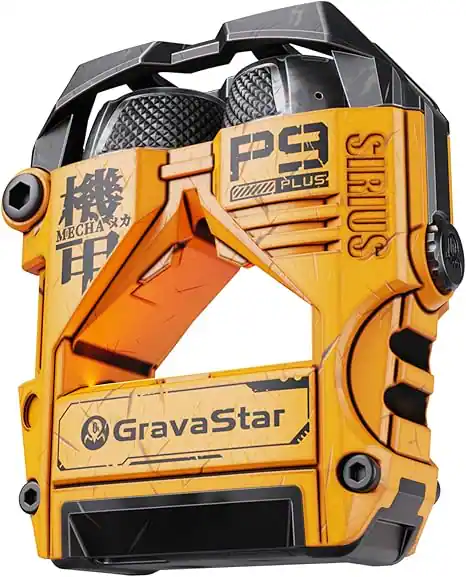
Best for all-day listening with extended battery performance
Ten hours per earbud. That number does a lot of work. It means two or three days of normal use before you even open the case, which for people who find charging anything a low-grade annoyance (I am one of those people) is worth paying attention to. Sound is balanced without leaning hard in any direction, which makes them genuinely versatile across podcasts, music, and calls rather than optimized for one thing. The ANC is present but subtle — background hum gets dialed down rather than obliterated, which some people prefer and others find underwhelming. The app has a learning curve that took me longer than it should have. Still, if battery anxiety is your main pain point, these are the obvious answer.
These sound genuinely good in a way that catches you off guard — the kind of good where you notice a guitar layer in a song you’ve heard two hundred times and wonder if it was always there. Larger drivers than typical earbuds give them a fuller, more open sound. The ANC is intentionally light-handed, tuned to reduce background noise without sealing you off completely from your surroundings, which is either a feature or a flaw depending on your preferences. Fit is customizable with multiple tip sizes and they hold steady during workouts. Battery is 6 hours, solid but not exceptional. If you’re stretched thin on budget, skip these — but if sound quality is the deciding factor above everything else, they justify the price.

Best for workouts and outdoor activities with durability
IPX7 rated. That means submerged-in-water resistant, not just splash-proof, so a sweaty gym session or a run in the rain is a complete non-issue. Wing tips lock them in place during movement, battery holds 8 hours of active use, and the sound is tuned punchy and forward in a way that cuts through wind and ambient gym noise without requiring you to crank the volume. ANC is minimal here, which actually makes sense for workouts where you want to hear a car pulling up or someone calling your name. The case won’t charge wirelessly, but it’s small enough that it disappears in a pocket.
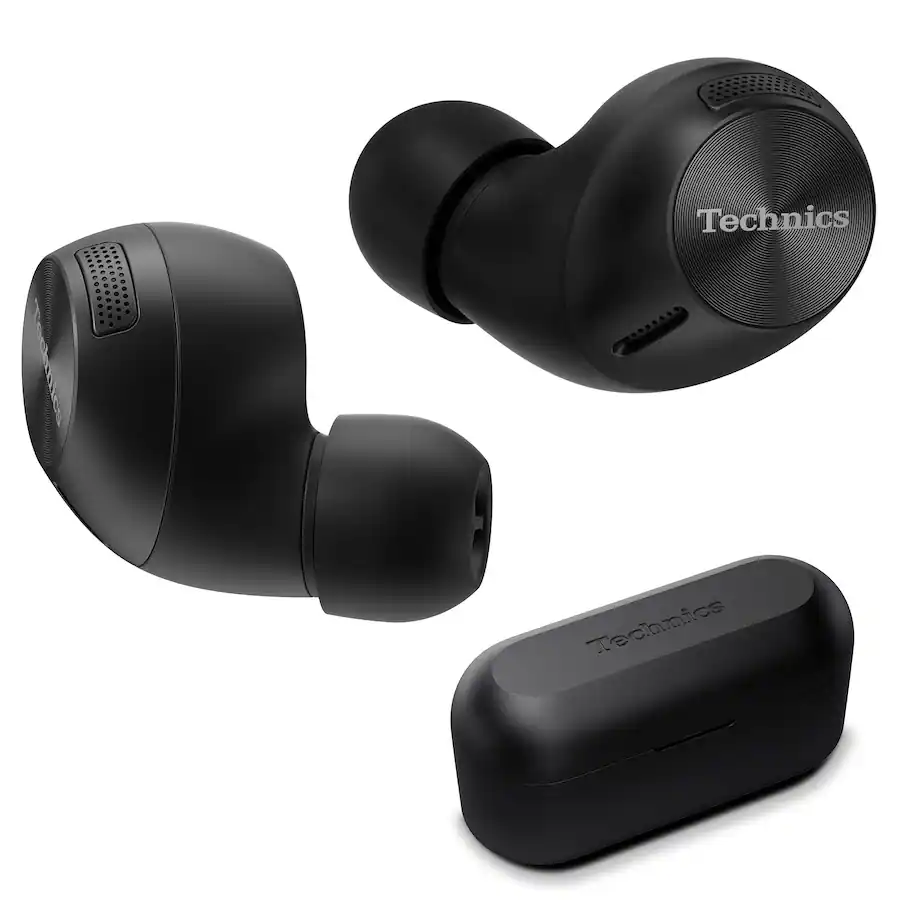
Best for switching between phone and laptop without manual reconnection
Technics, True Wireless Earbuds with Noise Cancelling and 3 Device Multipoint $169.99
The multipoint here is the reason to buy these, and it’s the feature that’s hardest to explain until you’ve used it. You’re on a video call on your laptop. Your phone buzzes with a call. The earbuds switch automatically — no fumbling in Bluetooth settings, no manual disconnect, no dropped audio. It just happens. Three-device pairing means phone, laptop, and a tablet can all be connected simultaneously, and the earbuds route audio intelligently based on what’s active. Sound quality is good across the full frequency range, ANC handles ambient noise without that pressurized feeling some people hate, and battery runs 7 hours. Touch controls take a few days to learn. After that, they become second nature.

Best for travel and portability with minimal case size
Jbl, Vibe Beam 2 Wireless Bluetooth True Wireless Earbuds w/Charging Case $64.99
The case is mint-tin sized. That’s not a metaphor — I held one next to a tin of Altoids and they’re roughly the same footprint. For people who travel with a single carry-on and resent every cubic inch of wasted space, that matters. Despite the packaging, battery runs 6 hours per earbud with 18 hours of additional charge in the case. Sound skews bright, which works well for podcasts and calls and is fine for music if you like a bit of crispness in the high end. Fit is on the looser side, so extended wear isn’t where these shine. But as the pair you throw in a jacket pocket and forget about until you need them, they’re nearly perfect.
What actually matters when you’re comparing specs
Not all earbuds under $200 are built the same, and the spec sheets don’t always surface the differences that matter in real life.
ANC that works vs. ANC as a checkbox. There’s a real gap between these two things, and marketing copy won’t tell you which you’re getting. Earbuds that actually work at noise cancellation will cite specific decibel reduction numbers and get reviewed positively in noisy real-world environments like trains and open offices. Passive isolation — the physical seal between the earbud and your ear canal — matters just as much as the active electronics, and the two together are what separates earbuds that genuinely quiet things down from ones that sort of try.
Battery life per earbud, not total. Manufacturers love to advertise “36 hours total” because it sounds impressive. But if each earbud only lasts 4 hours before needing the case, that total number is mostly irrelevant. Six hours per earbud is the floor for all-day use; 8 or more is genuinely comfortable. Read real-world reviews for this — manufacturer claims tend to be measured at low volume with ANC off, which is not how anyone actually uses earbuds.
Fit variety. Multiple ear tip sizes are standard now, but some earbuds ship with two sizes and call it a day while others give you four or five. If you have small or large ears, this matters more than almost any other spec. People with smaller ears in particular tend to have trouble with earbuds designed around average ear canal dimensions — check reviews from people mentioning fit issues before assuming the listed options will work for you.
Codec support — but only if you’re on Android.
LDAC and aptX both allow higher-quality audio transmission over Bluetooth than the default codec. If you’re on an Android phone that supports LDAC and you care about audio quality, look for earbuds that match. iPhone users can ignore this entirely; Apple’s AAC implementation is fine and none of the proprietary Android codecs apply.
Buying at the right price
Earbud prices are not stable. The same pair might be $180 one week, $145 the next, and $210 the week after a sale ends. Assuming the listed price is the real price is how you overpay.
Price tracking tools show you what an earbud has actually sold for over the past 90 days. If something is listed at $160 but was $125 three weeks ago, that’s not a deal — it’s the regular price with a temporary markup. Real deals are when the price drops below the recent average, not when the page shows a strikethrough.
When manufacturers release new models, the previous generation almost always drops in price within a few weeks. Last year’s version of a popular earbud typically sounds nearly identical to this year’s, costs $30-50 less, and has a longer track record of real-world reviews to read through. Chasing the newest model is rarely worth it in this category.
Manufacturer-refurbished earbuds are worth considering too. Buying directly from the brand (not a third-party seller) gets you a unit that’s been quality-checked, comes with a warranty, and runs 20-30% below retail. The only thing missing is the new-product experience of opening the box, which is not worth paying full price for.
Holiday sales are real but front-loaded — deals on Black Friday and Prime Day often go live two or three days early. The best prices on specific models can sell out before the official sale date. Set price alerts and check back in the days before, not just on the day itself.
What you’re actually trading away
If you buy earbuds under $200 instead of spending $350, here is what you’re giving up: marginal sound improvements that most people won’t consciously notice. The absolute latest ANC algorithms (which are genuinely impressive in flagships but not life-changing), spatial audio features that most listeners enable once and then forget about, premium case materials, and a few extra hours of battery on the very top-end models. That’s the complete list.
What you keep is real money.
Whether that trade is worth it depends entirely on how you use earbuds. A 30-minute commute with podcasts? The under-$200 category is more than sufficient and you’d be wasting money going higher. A professional audio engineer using earbuds for critical listening work? Maybe the flagship gap matters. For the vast majority of people, the $150-$200 range is the honest answer — not the compromise answer, the right answer. The brands charging $350 are counting on you not knowing that.
Some links on this page are affiliate links: if you buy through them we may earn a small commission at no extra cost to you. We only recommend products we would buy ourselves.
Frequently Asked Questions
Are wireless earbuds under $200 actually worth buying in 2025?
Yes, genuinely. The gap between budget and flagship earbuds has shrunk dramatically over the past few years. You can get solid active noise cancellation, 7-8 hour battery life, and multipoint Bluetooth for well under $200. The main things you sacrifice are marginal — slightly fancier materials, a few extra hours of playtime, and the logo on the case.
What should I look for when buying earbuds in the $100-$200 range?
Focus on four things: battery life per earbud (not just total). How the ANC actually performs in real-world reviews, fit options (multiple ear tip sizes matter more than people realize), and multipoint Bluetooth if you switch between devices. Codec support matters too — Android users with LDAC-capable phones should look for earbuds that match.
Do earbuds under $200 have good noise cancellation?
Some do, some fake it. The difference between earbuds that list ANC as a checkbox feature and ones where it genuinely works is real. Look for reviews that test ANC in noisy environments like trains or open offices, not just quiet rooms. Passive isolation — how well the earbud seals physically — also matters as much as the active tech.
When is the best time to buy wireless earbuds to get the lowest price?
Black Friday and Amazon Prime Day are the obvious windows, but back-to-school season (late July through August) is underrated. Also watch for when manufacturers release new models. The previous generation almost always drops $30-50 in price within a few weeks of the announcement.
Is it safe to buy manufacturer-refurbished earbuds?
Generally yes, especially when buying directly from the brand rather than a third-party seller. Manufacturer refurbished units go through quality checks, come with a warranty, and are functionally identical to new. You’re typically looking at 20-30% off retail, which can put otherwise out-of-budget earbuds into the under-$150 range.


 No products in the cart.