

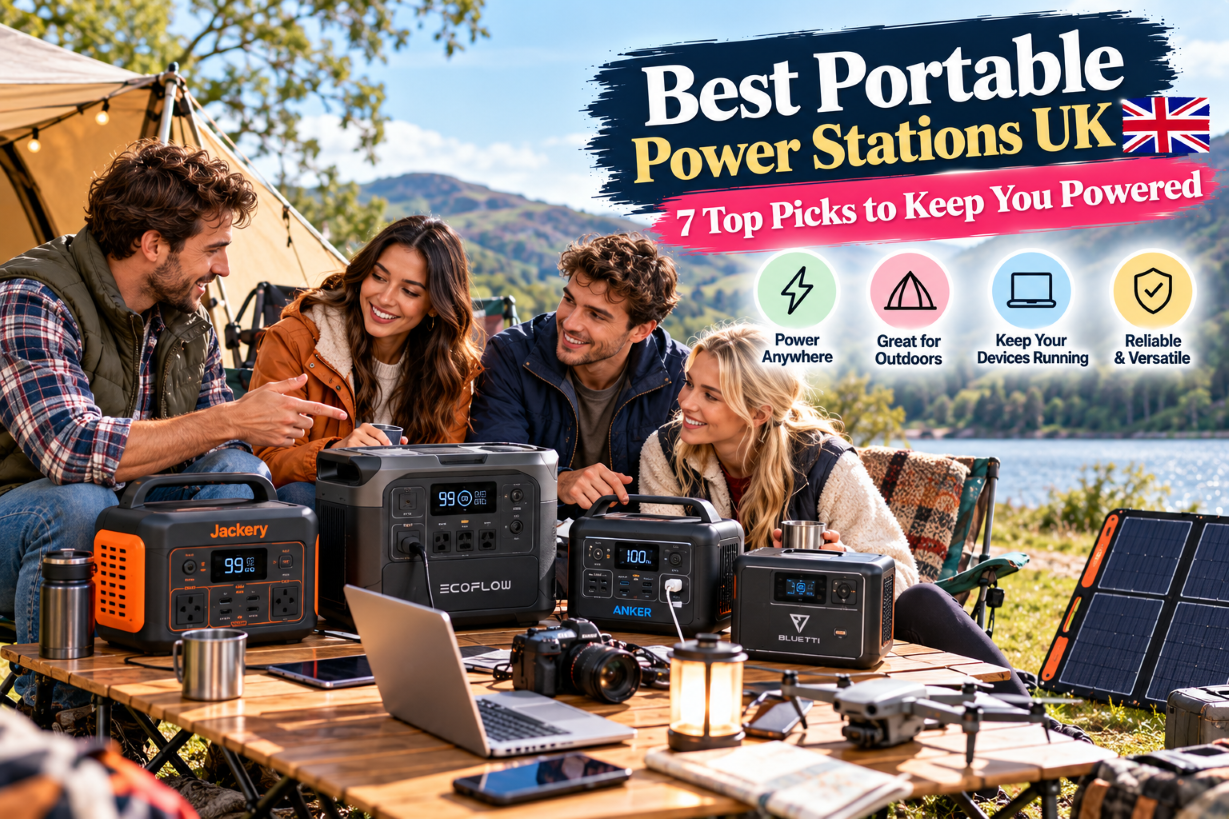
By day two of our Cotswolds camping trip, we were rationing phone battery like it was rationed petrol in 1973. We had the tent, the sleeping bags, approximately forty-seven snack bars — and absolutely nothing to charge a single device or run the camping lights we’d optimistically packed. That one oversight is what finally pushed me into buying a portable power station, and it is genuinely one of the more useful things I own now.
Here is the thing most buying guides won’t tell you upfront: the right power station isn’t the most powerful one, it’s the one that matches how you actually live. Buy too small and you’ll be frustrated. Buy a 20kg unit because the specs looked good and you’ll leave it in the garage gathering dust every time you actually need it.
The best portable power stations UK retailers carry today have almost nothing in common with those heavy, overpriced battery blocks from five years ago. Prices have dropped considerably, lithium iron phosphate batteries have made them dramatically lighter and longer-lasting, and the output options on even budget models are now genuinely flexible — USB-A, USB-C, AC outlets, 12V car sockets. The market has matured in a way that makes this a sensible purchase for a wide range of people, not just serious off-grid types or preppers.
Small But Capable
If your use case is mostly travel — weekend breaks, festivals, the odd night camping where you want lights and a charged phone without relying on a campsite hookup — compact units under 300Wh are worth a serious look. I tried a couple of bulkier models before landing on one that actually fits in a rucksack alongside everything else, and the difference in how often I actually bring it is stark. Weight matters. A unit that stays home because it’s annoying to carry isn’t doing anyone any good. These smaller stations won’t run a fridge or a power tool, but they’ll charge your phone eight or ten times over, keep a USB lamp running all night, and top up a tablet without breaking a sweat. For a solo traveller or a couple on a short trip, that’s often enough.
The Middle Ground (Where Most People Should Start)
Mid-range units — roughly 500Wh to 1500Wh — are where the best value sits for most households. They’ll run a laptop comfortably, charge four or five devices at once, keep a small camping fridge cold, or power garden lighting through an evening without any drama. They’re also the tier where solar charging input starts becoming genuinely practical rather than just a marketing bullet point. Actually, that’s not quite right — solar input exists on smaller units too, but the charge times on a 150Wh station via a 60W panel are short enough to be useful; it’s just that mid-range units give you enough capacity to make overnight solar top-ups feel meaningful rather than marginal.
You Actually Need Serious Backup Power
Larger units — 1500Wh and above — aren’t for everyone. They’re heavy, often expensive, and overkill if you’re mainly charging phones at a festival. But if you’re thinking about genuine household resilience, keeping medication refrigerated during a grid outage, running a CPAP machine overnight, or powering a small workshop that occasionally loses power at the worst possible moment, the calculus changes completely. Britain’s grid infrastructure is older than most people realise, and weather-related outages are becoming more frequent rather than less. A high-capacity station paired with a decent solar panel setup isn’t paranoid — it’s just practical forward planning.
What actually determines which one to buy?
Wattage is where most people start and where most people get confused. The capacity figure (Wh) tells you how much total energy is stored. The output wattage tells you what you can run at any one moment. A 1000Wh station with a 500W output can’t run your 800W microwave, full stop. So before you buy anything, write down the two or three things you most want to power, look up their wattage requirements, and check that the station’s output rating covers them. Phone chargers are 5-20W. Laptops sit around 60-100W. A mini fridge is typically 150-300W. A kettle is 2000-3000W and will immediately exceed the output ceiling of virtually every portable power station on the market — worth knowing before you pack one expecting tea.
Battery chemistry is a genuine consideration, not just a spec sheet detail. LiFePO4 (lithium iron phosphate) batteries last significantly longer — often 2000 to 3500 cycles — run cooler, and are more stable than standard lithium-ion. They cost more. For anything you plan to use regularly or keep for five-plus years, the premium is worth paying. For a cheap backup unit you’ll use twice a year, standard lithium-ion is fine.
Output variety is underrated. USB-C Power Delivery ports are essential if you’re charging modern laptops. A 12V car outlet is useful for certain camping equipment. Multiple AC sockets matter if you want to run a lamp and charge a laptop simultaneously. Check the port layout before buying — some otherwise solid units have oddly limited output configurations that only become annoying once you own them.
Getting More Life Out of It
Charge it fully before first use, then keep it between 20% and 80% for long-term storage. Lithium batteries genuinely do degrade faster when left completely empty for months at a time, and that is a mistake that costs you capacity you can never get back.
If you’re planning any extended off-grid time — a week-long camping trip, a boat, a remote cabin — budget for a compatible solar panel from the start rather than adding it later. Even on a properly overcast British day, a 100W panel will put meaningful charge into a mid-range unit over several hours. On a reasonable summer day, you can realistically run indefinitely without touching the mains. The upfront cost stings slightly, but the freedom it gives you is disproportionate to the price.
Don’t try to run everything at once.
Store the unit somewhere with stable, moderate temperatures — a hallway cupboard beats a garden shed in January. Heat and cold both shorten battery life, and a damp corner will eventually cause problems with connectors and housing even on well-built units.
I wish someone had told me five years ago that this was a category worth paying attention to. The Cotswolds trip was the nudge I needed, but honestly I’ve used mine more for mundane things — a power cut during a work-from-home day, keeping a lamp running in the garden when there’s no outdoor socket nearby, charging everything overnight in a hotel room that had exactly one accessible plug socket. It earns its keep in small ways as much as the dramatic ones, and that’s what makes it worth the shelf space.
Hey savvy shoppers! When the items in our articles catch your eye and you decide to buy through our links, we may earn a small commission at no extra cost to you. Think of it as a way of supporting us in bringing you the best content!
Frequently Asked Questions
What size portable power station do I need for camping?
For a typical camping trip where you want to charge phones, run LED lights, and maybe power a small speaker, a unit between 250Wh and 500Wh is usually enough. If you’re planning longer trips or want to run a cool box, look at 500Wh to 1000Wh models instead.
Can a portable power station run a fridge?
Yes, but it depends on the fridge. A small camping fridge drawing 50-80W continuously will run for many hours on a 500Wh unit. A full-size household fridge is a different story — you’d need at least 1500Wh capacity and a power station with a high enough continuous output rating, typically 1000W or more.
How long does a portable power station take to charge?
It varies a lot by model and charging method. Most mid-range units charge from flat in 4-8 hours via mains. Some premium models support fast charging and can hit 80% in under two hours. Solar charging takes longer and depends on panel wattage and weather conditions.
Are portable power stations safe to use indoors?
Lithium-based portable power stations are generally safe indoors — unlike petrol generators, they produce no fumes. That said, keep them away from direct heat sources and don’t cover them while in use. Always buy from reputable brands with proper safety certifications like CE marking.
How long will a portable power station last before the battery degrades?
Most quality lithium iron phosphate (LiFePO4) units are rated for 2000-3500 charge cycles before dropping to around 80% capacity. Lithium-ion models typically manage 500-1000 cycles. Keeping the battery between 20% and 80% charge when storing it long-term will meaningfully extend its lifespan.



 No products in the cart.