

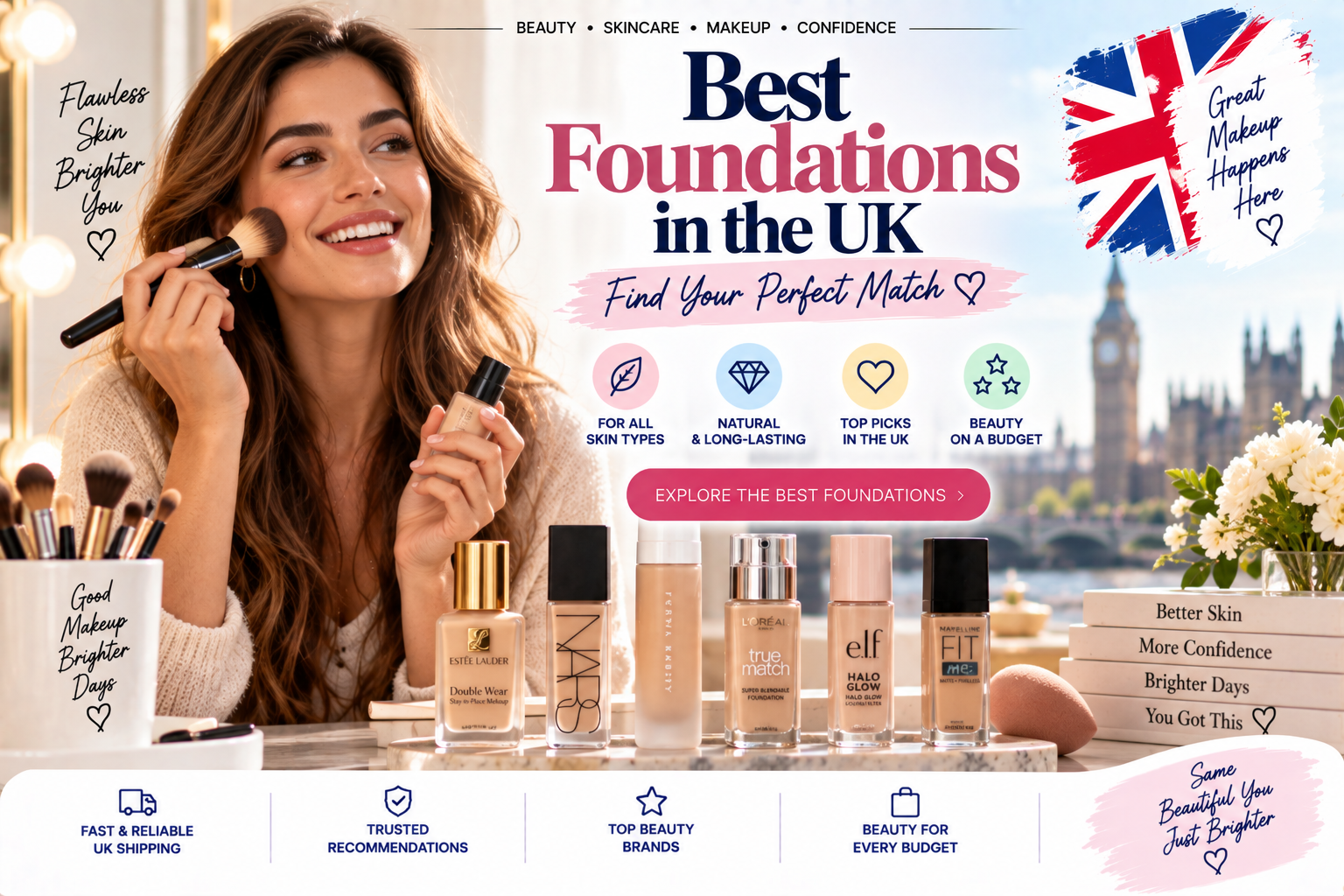
Here is something nobody tells you when you’re standing in Boots staring at 47 foundations: the most expensive one probably isn’t the right one for you.
I tested 12 of the best foundations currently available in the UK — drugstore staples, mid-range options, and a couple of genuinely pricey picks — across different weather, different occasions, and different times of the month. Wore them to the office, through a rainy commute, to a wedding, and yes, once to a spin class just to see what happened. Some were genuinely brilliant. Others I threw in a drawer and forgot about.
But before we get into specific picks, there’s one thing worth understanding upfront, because it changes everything about how you shop for foundation.
What Actually Matters When You’re Choosing
Your skin type is the starting point, not the destination. A matte formula on oily skin can go cakey by lunchtime if the formula’s too thick for your particular level of oil production — and I’ve learned this the hard way after buying a highly-rated foundation that looked perfect at 9am and genuinely alarming by 2pm. A dewy formula on dry skin might emphasize every flaky patch you were trying to hide. Coverage matters too, but not in the way most product descriptions suggest: “full coverage” doesn’t mean “looks like you’re wearing a mask” — it means enough pigment to cover blemishes without needing five layers, which is a very different thing. Then there’s finish: matte, satin, dewy, natural.
These words aren’t just marketing. A satin finish sits right in the middle — not shiny enough to read as oily, not flat enough to look tired — and for that reason it tends to be the most forgiving across skin types. And undertone, which most people ignore entirely and then wonder why their foundation looks slightly off all day: most skin tones are warm (golden or peachy), cool (pink or red), or neutral (somewhere between the two), and matching your foundation to your undertone is honestly more important than matching the depth of shade.
Brands that invest in wide shade ranges across multiple undertones tend to care about formula quality too. Worth using as a filter when you’re overwhelmed.

Understanding the range of foundation types and finishes available
Charlotte Tilbury, Airbrush Flawless Foundation 7 Neutral- Full Coverage Foundation £40
Oily and Combination Skin: What You’re Looking For
Combination skin is its own frustrating category. Your T-zone is shiny by mid-morning, your cheeks are fine, and no single product description seems to account for both simultaneously. Full oily skin is simpler in one sense — at least everything’s consistent — but you need formulas that genuinely won’t slip around or break down, without making you feel like you’ve applied cement to your face.
The best foundations for oily skin tend to contain silica or other mattifying agents that absorb sebum as it’s produced rather than just sitting on top of it. They also resist oxidation — that frustrating thing where your foundation turns noticeably more orange an hour after application. Good ones stay close to the colour you applied. When you find one that does both of those things reliably, hold onto it.

Best foundations for oily and combination skin types with matte finishes
NONE, UODO Hydrating Oil-Control Foundation Liquid Long-Lasting Matte… £16.29

Foundations with oil-control technology for shine-prone skin

Versatile foundations that work across combination skin zones
HUDA BEAUTY, Faux Filter Skin Finish Buildable Coverage Foundation Stick… £16.2
Dry and Mature Skin Deserves Better Than It Usually Gets
Matte foundation on dry skin looks wrong almost immediately. It clings to flaky patches, sits heavy in any fine lines, and by mid-afternoon it can look almost powdery in a way that ages you about ten years. Not the goal.
What dry and mature skin needs is a formula that behaves more like skincare — something with glycerin, hyaluronic acid, or a light oil built into the base, finished with a dewy or satin result that reflects light rather than absorbing it. The luminosity isn’t vanity. It physically makes skin appear more plump and rested, which is exactly what dryness and age work against. I was skeptical about this for a long time, honestly, until I switched from a medium-coverage satin to a full dewy formula and a colleague asked if I’d had a facial. I hadn’t. It was just the foundation.

Foundations with hydrating ingredients for dry and mature skin
Charlotte Tilbury, Unreal Skin Sheer Glow Tint Hydrating Foundation Stick £37

Glowy foundations that enhance radiance without emphasizing texture
Charlotte Tilbury, Air Cushion Foundation Lightweight Dewy Finish Long Lasting Heart… £12.49
How Much Coverage Do You Actually Need?
Coverage is personal, and social media has genuinely distorted how most people think about it. Sheer foundations — the kind where your freckles show through — are perfect for days when your skin is cooperating and you just want things evened out slightly. Medium coverage is the practical choice for most people most of the time: it handles minor blemishes and redness without looking like you’ve put much effort in, which is usually the point. Full coverage is for specific situations, not everyday wear, and the best full-coverage formulas in the UK are buildable, meaning you can layer up without the formula going thick or sitting in texture.
Actually, that’s not quite right — buildability isn’t only a full-coverage feature. The best foundations at any coverage level let you control how much you’re applying rather than locking you into one result.

Sheer foundations for a barely-there, natural look

Buildable foundations offering medium coverage versatility
Charlotte Tilbury, CT Airbrush Blur Concealer Full Coverage Creaseless&Foundation Dewy… £11.89

Full coverage foundations for maximum pigmentation and longevity
Application Makes or Breaks It
Prep your skin properly or nothing else matters.
A hydrating primer on dry skin, a mattifying one on oily skin — this step changes how long your foundation lasts and how evenly it applies, more than almost any other variable. From there, a slightly damp beauty sponge gives you blendability and control; a brush gives you speed and a bit more coverage. Neither is wrong. Apply in thin layers, building where you actually need it rather than applying the same amount everywhere. Your under-eye area, the bridge of your nose, and your chin usually need the most attention; your forehead and cheeks can often get away with very little. And please blend your jawline down onto your neck — a visible foundation line at the jaw is the one thing that makes it obvious you’re wearing makeup, and it’s entirely avoidable.

Primers to prepare skin and extend foundation wear
Smashbox, Photo Finish Foundation Primer smoothing makeup primer 10 ml £9.9
The Full Tested List: Picks by Skin Type
Right. Here’s what actually performed across 12 foundations tested in real conditions — not in a makeup studio, not in flattering lighting, but in the actual weather and actual situations most of us deal with every day.
For Oily Skin: Matte and satin finishes with built-in oil control. These won’t slip, separate, or go strange colours as the day goes on.

Affordable matte foundations for oil-prone skin
For Dry Skin: Hydrating formulas with a dewy result. Moisture-binding ingredients keep skin looking plump rather than tight.

High-end hydrating foundations with dewy finishes for dry skin
For Combination Skin: Satin finishes that are neither too flat nor too shiny — something that can handle an oily T-zone without drying out your cheeks.
Mid-range foundations with satin finishes for combination skin
Sisley, Womens Phyto-Teint Nude Foundation £46.6 (41% OFF — was £79)
For Sensitive Skin: Fragrance-free, hypoallergenic formulas with short ingredient lists and dermatologist testing. Less is more here, and that applies to the formula as much as the application.

Finding the right foundation takes a bit of trial and error regardless of how much research you do first. Most high street shops have testers; many brands will give you a sample if you ask. Wear each one for a full day before deciding — not just the first two hours, because that’s when almost every foundation looks fine. The real test is 4pm, after a commute, after lunch, after whatever your day actually involved. Your skin will change over time too, whether from hormones, seasons, or age, and a formula that worked brilliantly at 25 might not be right at 35. That’s not failure. It’s just skin.
My honest opinion after testing all of these: the MAC Studio Fix Fluid held up better than anything else I tried for oily skin, and the Charlotte Tilbury Unreal Skin Stick did something genuinely flattering for drier skin that I didn’t expect from a stick formula. Neither of those conclusions required spending a lot of time on the internet — they required wearing the things in real life and paying attention.
Hey savvy shoppers! When the items in our articles catch your eye and you decide to buy through our links, we may earn a small commission at no extra cost to you. Think of it as a way of supporting us in bringing you the best content!
Frequently Asked Questions
What foundation finish is best for oily skin in the UK?
Matte or satin finishes work best for oily skin. Look for formulas containing silica or mattifying powders that absorb excess oil throughout the day without leaving skin looking flat or dry.
How do I find my foundation undertone?
Check the veins on your inner wrist. Blue or purple veins suggest cool undertones (look for foundations with pink bases), green veins suggest warm undertones (golden or peachy bases), and a mix of both means you’re neutral. Testing in natural daylight is the most reliable method.
Can I use a matte foundation if I have dry skin?
It’s not ideal. Matte formulas tend to cling to dry patches and emphasize flakiness. A dewy or satin finish with hydrating ingredients like glycerin or hyaluronic acid will look far more comfortable and natural on dry skin.
What is the best way to apply foundation for long wear?
Start with a clean, moisturised face and an appropriate primer. Apply foundation in thin layers using a damp beauty sponge or brush, building coverage only where you need it. Always blend down onto the neck to avoid a harsh line at the jaw.
Do expensive foundations perform better than drugstore ones?
Not always. Some of the best-performing foundations in real-world testing cost under £10. Price tends to reflect packaging and brand heritage more than formula quality. The right foundation is the one that suits your specific skin type and finish preference, regardless of cost.


 No products in the cart.