

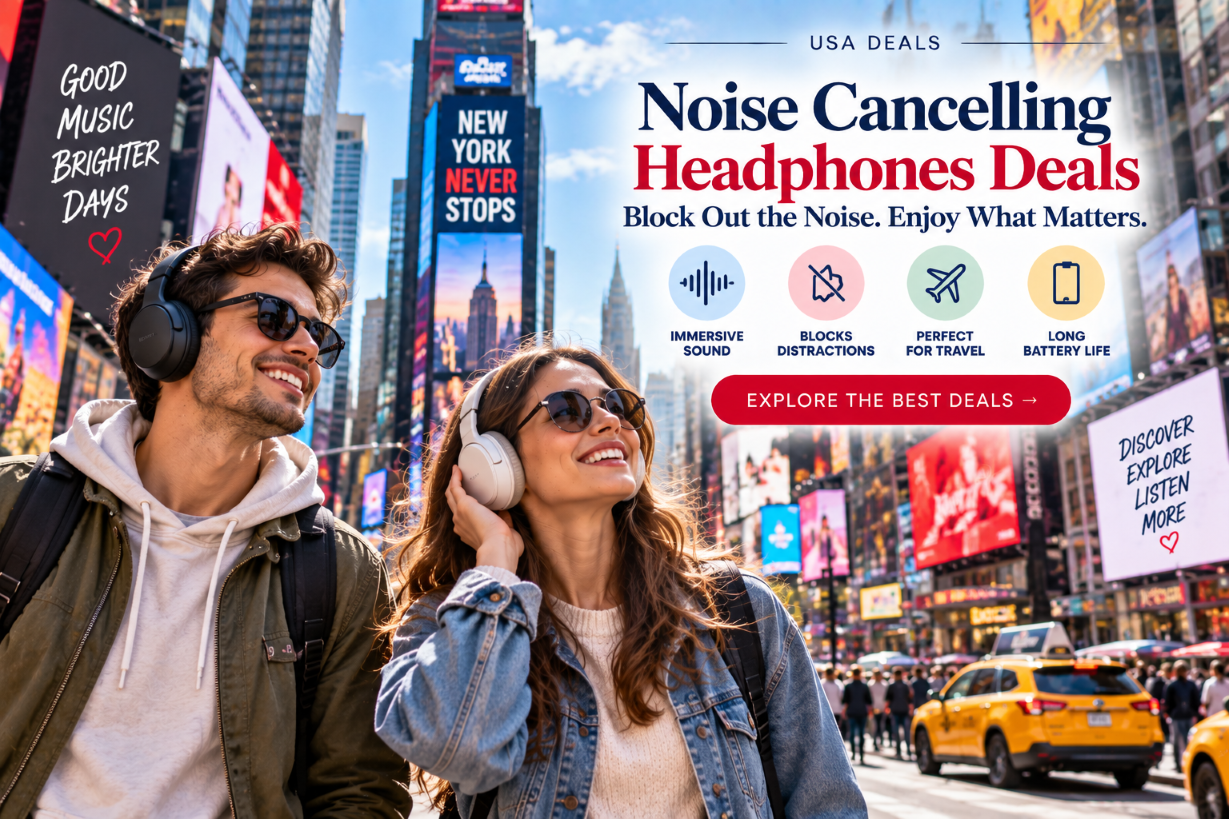
Here’s the thing about noise cancelling headphone pricing: the best deals of the year often have nothing to do with Black Friday. Right now, retailers are sitting on last-generation stock while new spring models are either already out or weeks away, and that inventory pressure is showing up as real price cuts — 29% off the Bose QuietComfort, 40% off the Sony ULT WEAR. Those aren’t manufactured discounts. That’s genuine clearance math.
I’ve tracked ANC headphone pricing long enough to recognize a real window when one opens, and this week is one of them. So let’s get into what’s actually worth grabbing.
Why ANC Headphones Are No Longer a Luxury Purchase
Open office. Subway commute. Apartment with thin walls. If any of those describes your daily life, noise cancelling headphones stopped being optional a while ago. The technology works by using small microphones on the outside of the ear cup to sample ambient sound, then generating an opposing frequency that effectively cancels it out before it reaches your ear — which means you’re not turning up the volume to drown out the world, you’re just removing the world from the equation. Your ears will thank you eventually. What used to cost $350 to do well now costs $150, and that price compression is exactly why this week’s deals are worth paying attention to: you’re getting 2022-era flagship performance at 2025 clearance prices.
The passthrough mode matters too, and it’s underrated. One button press and you can hear your surroundings clearly — your coffee order, a gate announcement, someone calling your name — without taking the headphones off. That flexibility is what separates ANC headphones from just wearing foam earplugs.
Over-Ear Picks Right Now
Over-ears are where ANC really performs. Bigger drivers, better physical seal, more room for the processing hardware. Here’s what’s discounted this week:

Premium flagship over-ear ANC model with advanced noise cancellation technology
Bose, QuietComfort Wireless Noise Cancelling Over-the-Ear Bluetooth… $254 (29% OFF — was $359)

High-end over-ear noise cancelling headphones with superior sound quality

Professional-grade over-ear ANC headphones for serious audio enthusiasts
JLab, JBuds Lux ANC Wireless Bluetooth Over-Ear Headphones with Active… $104.99

Extended battery over-ear noise cancelling headphones for travel and daily use
Retailers are clearing last season’s over-ear stock hard right now, and the sweet spot lands between $250 and $350 — that’s where you get ANC that’s actually been refined over a couple of product generations, not first-attempt tech. These aren’t unproven models. They’ve been reviewed by thousands of people, the firmware has been updated, the quirks are documented. Buying a headphone with a two-year review record is a different proposition than buying something that launched last month.
What About Earbuds?
Not everyone wants to wear over-ears. Fair.
True wireless earbuds with ANC have gotten genuinely good — not just “good for earbuds” good, but good period. I was skeptical of earbud ANC for years because the early versions sounded like someone had put a pillow over the world rather than actually cancelling noise, which is a subtly different and much more annoying experience. That’s mostly been fixed in the last two generations of chips.

Compact true wireless earbuds with active noise cancellation and charging case
JLab, GO Pop ANC True Wireless Bluetooth Earbuds with Active Noise… $31.99

Noise cancelling earbuds with intuitive touch controls and premium sound

True wireless earbuds with extended battery and wireless charging support
Jbl, Vibe Beam 2 Wireless Bluetooth True Wireless Earbuds w/Charging Case… $64.99
One honest caveat on earbud ANC: it’s physically limited in ways over-ears aren’t. Smaller housing means less room for the processing, and there’s no ear cup adding passive isolation on top of the active cancellation. Low-frequency rumble — engines, HVAC, subway — gets handled well. Higher-pitched noise, including voices, bleeds through more. That’s not a flaw, it’s just physics. For most daily use cases it doesn’t matter much, but if you’re specifically buying for a loud open-plan office where you’re trying to block out conversations, over-ears will serve you better.
How to Verify You’re Actually Getting a Deal
Retailer pricing is not always honest. Some models get a fake “was” price attached to them and sit at the same effective price for months while showing a perpetual “X% off” badge. The fix is simple: check price history before buying, not after. CamelCamelCamel tracks Amazon pricing going back years and takes about 30 seconds to check. Honey does similar work across other retailers. If a headphone was genuinely $350 three months ago and is $250 now, that’s a real drop. If it’s been $250 since it launched with a fictional $350 crossed out next to it — that’s theater.
Also worth checking: Amazon, Best Buy, and B&H Photo don’t always match each other. The same model can be priced differently across all three on the same day, especially during inventory clearance cycles. Takes five minutes to check all of them.
Four Things That Actually Matter When You’re Comparing Models
ANC quality: Read reviews that test noise cancellation directly, not just sound quality. Good ANC is transparent — the noise simply isn’t there. Bad ANC sounds like someone turned down the world’s volume knob without actually removing anything, which gets fatiguing fast.
Accurate battery specs: Look for ANC-on battery life specifically. Some manufacturers list ANC-off numbers, which are basically useless — nobody buys ANC headphones to leave the ANC off. Anything under 20 hours ANC-on is worth noting before you commit.
Build quality at your price point: Cheaper headphones feel cheap in ways that become obvious within a few months. Hinges, ear cup padding, headband flex points — these all degrade faster on budget builds. The $150-200 range is where build quality starts to hold up to daily use reliably. Below $100, manage your expectations accordingly.
Return policy: Comfort is personal and unpredictable. Clamping force that works fine for one head shape causes headaches for another. Buy from somewhere with easy returns — Amazon and Best Buy both make this painless — rather than saving $15 from a seller with a no-returns policy. You may need to swap sizes or models.

Affordable entry-level noise cancelling headphones for value-conscious buyers
VEAT00L, Hybrid Active Noise Cancelling Headphones -55dB Wireless Bluetooth… $42.99

Mid-tier noise cancelling headphones balancing price and performance
PROXXI, Hypergear Stealth2 ANC Wireless Headphones black $60.99 (12% OFF — was $68.99)

High-end flagship noise cancelling headphones with advanced features
Sony, ULT WEAR Wireless Noise Cancelling Headphones $149.99 (40% OFF — was $248)
Of everything listed here, the Sony ULT WEAR at 40% off is the one I’d move on fastest. Sony’s ANC processing has been consistently strong for three generations running, and $149 for a full-size over-ear with their noise cancellation is a price that will not last once stock runs low. The Bose QC at $254 is the safer long-term bet if comfort and build durability are your priority — Bose ear cup padding holds up better over years of daily wear than most of the competition. Pick based on what you’ll actually use it for.
Some links on this page are affiliate links: if you buy through them we may earn a small commission at no extra cost to you. We only recommend products we would buy ourselves.
Frequently Asked Questions
Are noise cancelling headphones deals actually worth it, or are retailers just inflating original prices?
Some retailers do inflate ‘original’ prices to make discounts look bigger. The safest way to verify a deal is real: check the price history using CamelCamelCamel for Amazon listings, or Honey’s tracker for other retailers. If the price has genuinely dropped from what it sold at for the past few months, it’s a real discount. If it’s been ‘$280’ for six weeks and is now ‘$280 with 0% off,’ that’s not a deal.
What’s the minimum I should spend to get headphones with ANC that actually works?
Honestly, around $80-100 gets you functional ANC on over-ear headphones now, which wasn’t true even three years ago. Below that, you’re often getting ANC that muffle-cancels rather than truly cancels — it can actually sound fatiguing. For earbuds, expect to spend a little more ($100-130) to get ANC that handles low-frequency noise like traffic or airplane hum reliably.
Is over-ear or in-ear ANC better for commuting?
Over-ear wins on raw noise cancellation performance because the physical ear cup seal blocks sound before the electronics even kick in. But for a commute where you’re moving around, earbuds are easier to manage — no bulk, better fit under a bike helmet or hat, and you’re less likely to leave them on a train. If your commute is mostly sitting on a bus or subway, over-ear. If you’re walking or cycling, earbuds.
How do I know if ANC headphones will be comfortable before buying?
You largely can’t know without trying them. Clamping force, ear cup depth, and headband padding all vary significantly between models and between head shapes. The practical fix: buy from retailers with generous return windows. Amazon and Best Buy both offer easy returns, which makes it worth paying an extra $10-15 over a no-returns third-party seller. If they don’t fit, send them back.
When is the best time of year to buy noise cancelling headphones?
Black Friday gets the most attention, but it’s not always the best window. New flagship headphones typically launch in spring, which pushes retailers to discount the previous generation in late winter and early spring to clear inventory. That cycle — not Black Friday — often produces the steepest percentage discounts on models that are still excellent. Right now is one of those windows.

 No products in the cart.