

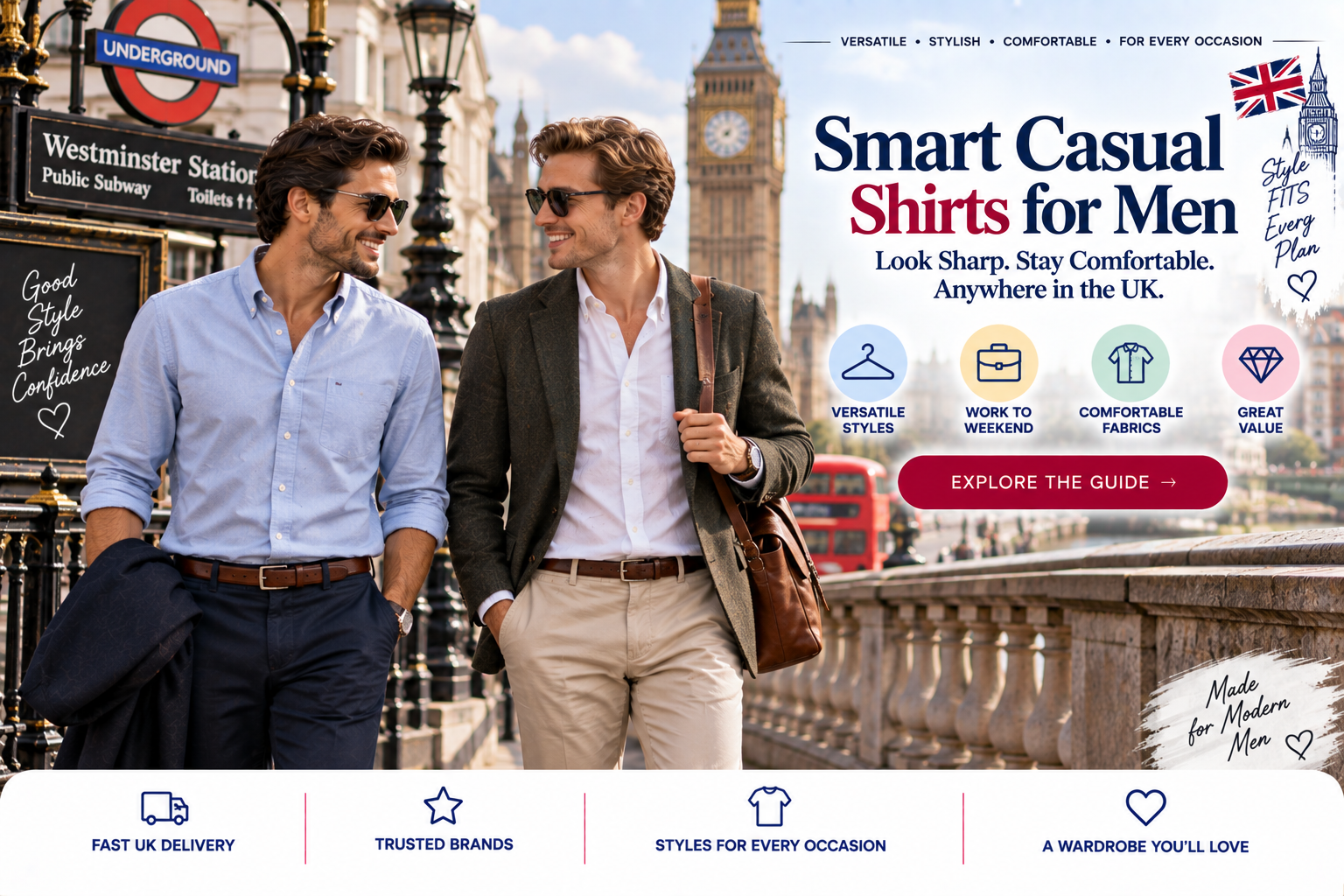
The Oxford shirt is the most useful piece of clothing most men own and never think about. That sounds like a small claim, but stick with me — because understanding why changes how you shop for everything else.
Smart casual shirts for men occupy an awkward middle ground that most style advice glosses over. Not formal enough for a board meeting, too put-together for the pub. But that middle ground is where most of us actually live — office Fridays, lunch with friends, a date that doesn’t require a suit. Get this category right and getting dressed stops being a problem you solve every morning.
So what makes a shirt land in smart casual rather than veering too formal or too sloppy? Fabric, fit, and finish. You want structure without stiffness — not a t-shirt, but definitely not a dress shirt with a rigid collar that needs ironing twice. There’s a sweet spot, and once you find it, you stop second-guessing your wardrobe.
What “Smart Casual” Actually Means for Shirts
It means you made an effort, but you’re not overdoing it.
A smart casual shirt has a collar that sits properly without being stiff, fabric that doesn’t crumple the second you sit down, and a cut that follows your body without clinging to it. The difference from a formal dress shirt isn’t sloppiness — it’s personality. You’re wearing it because it works with your life, not because a dress code told you to.
Fit matters more than anything else here, more than brand, more than fabric, more than price. A shirt that pulls across the chest or hangs off your shoulders like a bin bag will look wrong regardless of what it cost. The shoulder seam should sit right at the edge of your shoulder. Your torso should have about an inch of breathing room inside the fabric. The hem should hit somewhere around mid-hip — not riding up, not hanging down to your knees like you borrowed your dad’s shirt.
The Oxford: Just Buy One
If you own exactly one smart casual shirt, it should be an Oxford. This is not a controversial take. The Oxford weave — that visible, slightly textured pattern you can feel between your fingers — gives the shirt enough structure to look intentional while staying far away from formal territory. It’s been the backbone of smart casual dressing for decades because it genuinely works across a huge range of situations: Friday office, weekend lunch, casual dinner, layered under a sweater in November.
What I keep coming back to with Oxfords is how forgiving they are in practice. I’ve worn mine straight out of the wash, skipped the iron entirely, and they still looked fine — the weave absorbs light wrinkles in a way that smooth cotton just doesn’t. They pair with dark jeans, chinos, tailored trousers. They work in most seasons because the fabric has enough weight to feel substantial without being stifling in warmer weather. The button-down collar is worth seeking out specifically — it stays in place whether you’re wearing a tie or not, which means the shirt looks sharp in both situations without any adjustment on your part.
Stick to white, light blue, or navy first. Sage green and soft grey are good second purchases. Anything brighter can wait until you know what gaps you actually have.

The Oxford is the foundation of any smart casual wardrobe — durable, versatile, and genuinely comfortable.
boohooMAN, Mens Slim Fit Button Down Collar Oxford Long Sleeve Shirt £16 (20% OFF — was £20)
Linen Is Allowed to Wrinkle (That’s the Point)
Linen has a reputation problem. People worry about the creases. They shouldn’t.
The slight wrinkling you get from linen isn’t a flaw — it’s what the fabric does, and it looks intentional rather than careless when you’ve got the right weight of cloth and a decent fit. Summer-weight linen can look flimsy and cheap, so aim for something with a bit of substance that holds its shape through a full day rather than collapsing by lunchtime. Cream, white, and soft blue are the safest colours to start with, though a warm tan works well if you’ve got any warmth to your skin tone.
Chambray is worth knowing about separately. It sits between linen and standard cotton — more visual depth than plain cotton, more structure than linen, and less obviously “holiday” than either. Chambray works all year, ages into a softer feel over time, and pairs cleanly with both denim and chinos. Actually, that’s not quite right — it pairs better with chinos than denim, because wearing chambray with dark jeans can look a bit matchy if you’re not careful about the tones.

Linen shirts bring effortless elegance to your smart casual rotation — perfect for warmer months and weekend dressing.
Eight X, Men’s Blue Leaves In The Night Relaxed Fit Linen Blend Short Sleeve… £194
Do Patterns Work, or Are They Just a Risk?
They work. With conditions.
Small-scale checks and gingham are where most men should start with patterns — they read as deliberate without being loud, and they pair with almost everything already in your wardrobe. Navy and white gingham is classic for obvious reasons. Grey gingham feels slightly more current. If you want something with a bit more personality without committing to anything bold, look for micro-patterns or tonal prints where the design sits in a similar colour range to the base fabric, so it only reveals itself up close rather than announcing itself from across the room.
Stripes are fine, but direction matters. Vertical stripes feel deliberate and tailored. Horizontal stripes can slide into territory that looks more seaside souvenir than smart casual, especially if they’re thick. Thin vertical stripes, worn with a neutral chino, is a reliable combination that looks more considered than a plain shirt without requiring any additional effort.
Floral prints and large-scale patterns belong on holiday or at a specific kind of summer event. For everyday rotation, keep patterns subtle enough that the shirt supports the outfit rather than becoming the entire conversation.

Patterned smart casual shirts add personality without compromise — gingham and checks are the perfect entry point.
Enorsia, Men’s Navy-Blue White Gingham Check Regular Fit Long Sleeve Shirt in… £22.99

Vertical stripes bring subtle visual interest to your smart casual rotation while maintaining a polished appearance.
Jeans, Chinos, and the Layering Move Everyone Ignores
The same shirt worn three different ways is essentially three different outfits. That’s the whole appeal of smart casual shirts — you’re not buying variety, you’re buying flexibility.
Dark jeans are the most forgiving starting point. Light blue Oxford with dark indigo denim is a combination that has worked for forty years and will continue working indefinitely. White shirt with black jeans reads sharper and more urban. If you go patterned shirt with dark denim, keep the pattern small and the colours muted — the jeans are already doing a lot of visual work just by being dark, and a loud shirt on top of that tips the whole thing into busy territory.
Chinos are actually where smart casual shirts perform best, because the combination sits in exactly the right zone — polished enough to look intentional, relaxed enough not to feel like you raided a job interview wardrobe. Stone, navy, and grey chinos pair with almost any shirt colour. Patterned shirt? Keep the chinos neutral. Plain shirt in a solid colour? Your chinos can take a bit more interest — a rust tone or olive green adds depth to an otherwise simple combination without requiring any additional effort.
The layering move most men skip: wearing your smart casual shirt under a crew-neck sweater. The collar just visible above the neckline, a bit of cuff showing at the sleeve — it makes the whole thing look considered rather than thrown together, and it adds warmth without adding bulk. I started doing this about three winters ago and now it’s basically my default October-through-March look. In summer, the same shirt worn open over a plain white tee works for exactly the opposite reason: it’s relaxed but still has structure.

Quality chinos are the perfect smart casual pairing for your shirts — neutral tones work with almost any top.
Hugo Boss, Men’s Cotton Slim Fit Stone Grey Chino Shorts £79.99

Layer your smart casual shirt under a crew-neck sweater for a more refined, intentional look.
Lacoste, Men’s Lacoste Mens Organic Cotton Crew Neck Sweater £88
Fit Is Not Complicated — Here’s What to Check
Shoulder seam at the edge of your shoulder. An inch of room through the body. Hem at mid-hip. Cuff at the wrist bone. That’s the whole checklist.
Sleeve length is the thing most men get wrong because it’s easy to ignore until you put on a jacket. When your arms hang at your sides and you’re wearing something over the shirt, roughly half an inch of cuff should show. Too short and the shirt looks like it shrank. Too long and you spend the whole day pushing sleeves up. Neither looks good, and neither reads as smart casual — they both just read as ill-fitting.
Find a good local tailor and use them. Taking in a shirt that’s slightly too loose costs very little and makes a visible difference to how the shirt sits on your body — the kind of difference that people notice without being able to say exactly why. Most men skip this step entirely, which is why most men’s shirts look subtly off even when the shirt itself is decent quality.
Building the Collection Without Overbuying
Start with two Oxford shirts (white and light blue), one chambray in a neutral tone, and one simple check. That’s your foundation. Everything else is optional until you notice a gap.
Think about what you actually wear your shirts for — because that changes what you should buy. Office-heavy weeks call for shirts that lean slightly more structured, with collars that look sharp tucked in. If most of your smart casual occasions are weekends and social events, you can go looser with linen and relaxed fits without it ever feeling underdressed. The best wardrobe is the one that fits your actual life rather than some idealised version of it.
On quality: you don’t need to spend a lot, but you do need to pay attention to construction. Buttons that feel lightweight and hollow will crack. Seams that aren’t double-stitched will pull. Fabric that’s too thin will go transparent when it catches the light. These are the things that separate a shirt you’ll wear for three years from one that goes in a charity bag after six months. A shirt that costs twice as much and lasts four times as long is the better purchase, and that’s not a complicated calculation.
Smart casual shirts are the piece of your wardrobe doing the most work for the least drama. Get the fit right, start with Oxfords, and ignore patterns until the basics are covered. The rest sorts itself out.
Hey savvy shoppers! When the items in our articles catch your eye and you decide to buy through our links, we may earn a small commission at no extra cost to you. Think of it as a way of supporting us in bringing you the best content!
Frequently Asked Questions
What is the difference between a smart casual shirt and a dress shirt?
A dress shirt is built for formality — stiff collar, smooth fabric, designed to be worn with a tie or suit. A smart casual shirt has a softer collar, more relaxed cut, and usually a fabric with some texture to it, like Oxford weave or chambray. It looks polished but not uptight.
Can I wear a smart casual shirt untucked?
Yes, and most of the time it looks better that way. The hem should hit between mid-hip and a few inches below — if it’s longer than that, tuck it in or get it shortened. A shirt that hangs to your thighs untucked looks unintentional.
What fabric is best for smart casual shirts?
Oxford cotton is the most forgiving — it resists wrinkles, works year-round, and looks good with almost everything. Linen is ideal for warmer months. Chambray sits in between, offering visual interest with solid structure. Avoid anything too thin or too shiny.
How do I style a smart casual shirt for the office?
Pair it with tailored trousers or dark chinos and clean leather shoes. Tucked in looks sharper. Layer a plain crew-neck sweater over the top on cooler days with the collar just visible — this reads as intentional and polished without being formal.
What colours should I start with when building a smart casual shirt wardrobe?
White, light blue, and navy are your foundation. They pair with almost everything and never look like you tried too hard. Once those are covered, add a soft grey or sage green. Save bolder colours and patterns for later, once you know what gaps you actually have.

 No products in the cart.