

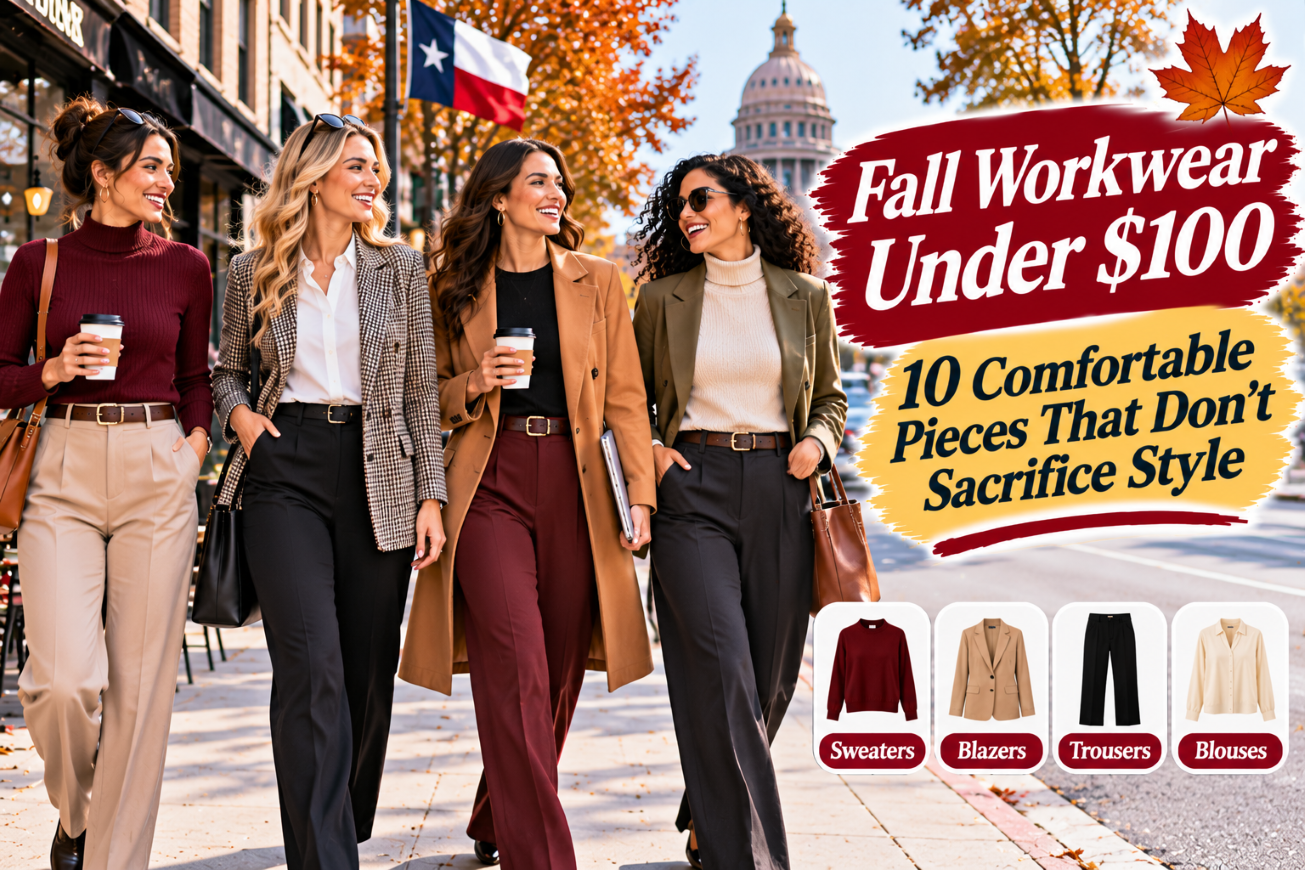
A $15 belt changed how my whole outfit looked last October.
I didn’t expect that. I had been standing in front of the mirror in a cheap dress and a borrowed blazer, feeling vaguely unfinished, and the belt fixed it in about four seconds.
Why cheap work clothes usually fail
Last September, I showed up to the office in a blazer that cost $89 and pants that felt like sweatpants. My boss thought I’d gotten a raise. I hadn’t. I had just learned what to look for, and that is the whole game with fall workwear under $100.
Spending less only works if you actually wear the stuff. A $40 pair of pants that pinches your waist by 2 p.m. is wasted money, and a blazer that wrinkles the second you sit down defeats its own purpose. So here is what matters, piece by piece, and which trade-offs are worth making.
Start with the blazer
Every fall wardrobe needs one. It turns a basic tee and trousers into something that says you have your life together, even on days when you’re running on cold brew and spite.
Fabric weight and structure come first. You want a blazer substantial enough that it doesn’t collapse in a heap when you take it off, but not so heavy it feels like armor. Under $100, most are cotton blends or polyester blends, and that’s fine. The trouble is the lining. A thin, plasticky one snags on everything and bunches in odd places, so put your hand inside before you buy and check that it feels nearly as good as the outside. I tried on about eight blazers one afternoon before I understood this, and the ones with decent linings were the only ones I kept reaching for later.
Fit is where people slip. Shoulders should land right at the seam, not drooping and not pulling. You should be able to button it and sit without the front gaping open. Sleeves end at the wrist bone. Longer and you look like you borrowed your dad’s jacket; shorter and it reads like a costume.
For color, charcoal and navy are safe. Rust, olive and warm camel are worth a look if your office is relaxed, since they go with more than you’d guess and look better on video calls than flat black.
Pants that don’t quit by 3 p.m.
Wrinkle-resistant pants are the real MVP here. They are often the gap between looking put together and looking like you slept in your clothes.
The secret is usually polyester. Pure cotton creases. Blend in 30 to 35 percent polyester and you can stuff the pants in a bag, pull them out three hours later, and nobody knows. That isn’t a gimmick, just fabric doing what fabric does.
There is a catch, though. These blends can feel stiff at first, which fades after a wash or two, and they breathe less than 100 percent cotton. If you run hot or your office is warm, try one pair before you commit to several.
Straight-leg and a slight bootcut are the easy choices because they sit well with flats, loafers and ankle boots alike. Skip a sharp taper at the ankle unless heels are the plan. And try them on sitting down, because a pair that fits perfectly standing but cuts off circulation at your desk is torture.
Real pockets?
If the pants have deep, functional pockets, buy them in every color they make.
Dresses are basically cheating
Put one on, add a blazer or cardigan, and you’re done. No matching, and no 7:45 a.m. debate over whether these pants go with that top.
The fall sweet spot is a midi in structured knit or lightweight ponte. Both hold their shape, resist wrinkling, and feel good for a full day. Steer clear of anything very clingy, which reads unprofessional, or very flowy, which can look like you’re headed to brunch instead of a meeting.
Sleeves matter a little. Three-quarter or long sleeves make layering easier in fall, though that is a tip, not a rule. If you love sleeveless and your office is climate-controlled, go ahead and keep a cardigan at your desk (I keep two, one gray and one black, and rotate them without anyone noticing).
Solid colors and small prints, like tiny geometrics or subtle florals, look better on camera and read more office than big busy patterns. Creative field? Ignore all that and wear what feels like you.
The biggest mistake is buying a dress that’s too long and promising to hem it later. You won’t. Hem it before the first wear or pick a different length.
Your feet are in charge
Eight hours. That is how long these shoes stay on, so comfort is mandatory.
Loafers are having a moment for good reason. They look deliberate and polished without trying too hard, and they work with dresses, trousers, blazers, and jeans on casual Friday. Leather or leather-look holds up better than suede in wet fall weather, although suede is softer. Choose suede and you should budget for protectant spray and maybe a professional cleaning midseason.
Flats need arch support, or your feet and your mood will both be wrecked by 3 p.m. That isn’t dramatic. Look for an insole that feels cushioned instead of thin and slick, and press your thumb into it before buying. If you feel the base of the shoe right away, keep looking.
Fit is finicky. A flat has to hug the heel without slipping, and a half-size changes everything. Between sizes, go down and add an insole if needed, because a loose flat means blisters by day two.
Black and neutrals do the heavy lifting, but cognac, burgundy or forest green adds interest and still pairs with nearly everything. They also hide scuffs better than pale neutrals.
Finishing touches that cost almost nothing
Accessories are where a $60 outfit starts looking like a $200 one, and you don’t need much money to get there.
Start with a structured bag in a neutral tone. It doesn’t have to be designer. It must hold your laptop if you carry one, have pockets so you aren’t digging for keys at the security desk, and look intentional. A tote or structured satchel reads more professional than a backpack in most offices, though you know your workplace better than I do.
Scarves are underrated. A silk or silk-like one, draped on your neck or tied to a bag handle, adds color and texture without being fussy. Burnt orange, deep burgundy, forest green and mustard are great in fall. Plus they run $8 to $15.
Jewelry needn’t be real or pricey. A simple watch, a few stacking rings and earrings that don’t distract are plenty. Avoid anything that jingles or clicks while you type, because your coworkers will quietly hate you. Aim for understated, not invisible.
Back to belts. If your pants or dress have loops, or you’re pairing a dress with a blazer, a structured belt in black, brown or a neutral adds definition and makes everything look planned.
Honest talk about budget shopping
Buying fall workwear under $100 works if you’re strategic. Try things on. Read the fabric tag and touch the material instead of trusting photos. Be honest about fit instead of telling yourself you’ll get used to it.
You also have to accept trade-offs. A $45 blazer may not last five years, but a season or two is fine. A $35 pair of pants might pill a bit after many washes, yet you didn’t pay $120, so the math still holds up. This is about value, not perfection.
Begin with one or two anchors, maybe a blazer and a pair of pants, and build outward. A small wardrobe that works together beats a closet full of strays. Honestly, I’d take comfortable clothes that fit and cost less than a month’s rent over any pricey piece I’d be tugging at all day, so buy the belt first.
Some links on this page are affiliate links: if you buy through them we may earn a small commission at no extra cost to you. We only recommend products we would buy ourselves.
Frequently Asked Questions
Can you really build a good fall work wardrobe for under $100 a piece?
Yes. Check fabric content, feel the lining, and try everything on while sitting. Start with one blazer and one pair of pants, then add pieces that work with both.
What fabric blend resists wrinkles best in work pants?
A blend with roughly 30 to 35 percent polyester. Pure cotton wrinkles fast, while the blend survives a bag or a commute. It can feel stiff at first, but that usually fades after one or two washes.
What colors work best for a budget fall blazer?
Charcoal and navy are the safest. Rust, olive and camel work well if your office is less corporate, and they pair with more outfits than most people expect.
How do I know if flats have enough support?
Press your thumb into the insole. If you feel the base of the shoe right away, the cushioning is too thin. Also make sure the heel fits snugly so it doesn’t slip.
Which accessories make a cheap outfit look more expensive?
A structured bag, a silk-like scarf, a simple belt and understated jewelry. All of these can be found for $8 to $15 or so, apart from the bag.
 No products in the cart.