

A twisted sleeve can ruin an entire meeting.
I learned that the hard way, sitting through a quarterly review while a jacket cuff crept up my forearm and refused to settle. Nothing else about the outfit was wrong. That one small thing was all I could think about, and it shaped how I shop for women’s workwear fall pieces now: I test for annoyance, not just for looks.
Why does a fall office make dressing so awkward?
Because the morning commute feels chilly and your office is warm by 10 a.m. You need clothes that look pulled together at your desk and still feel easy on the train, in the car, or on a walk across a windy parking lot. A few careful choices make that daily shuffle far less irritating.
This guide is about how to shop, not about a list of labels or specific items. The right choice depends on your commute, your office rules and your laundry habits, so I think fabric and fit matter more than whatever brand is printed on the tag. Start with what your week really looks like. Then build around it.
Comfort first, polish second
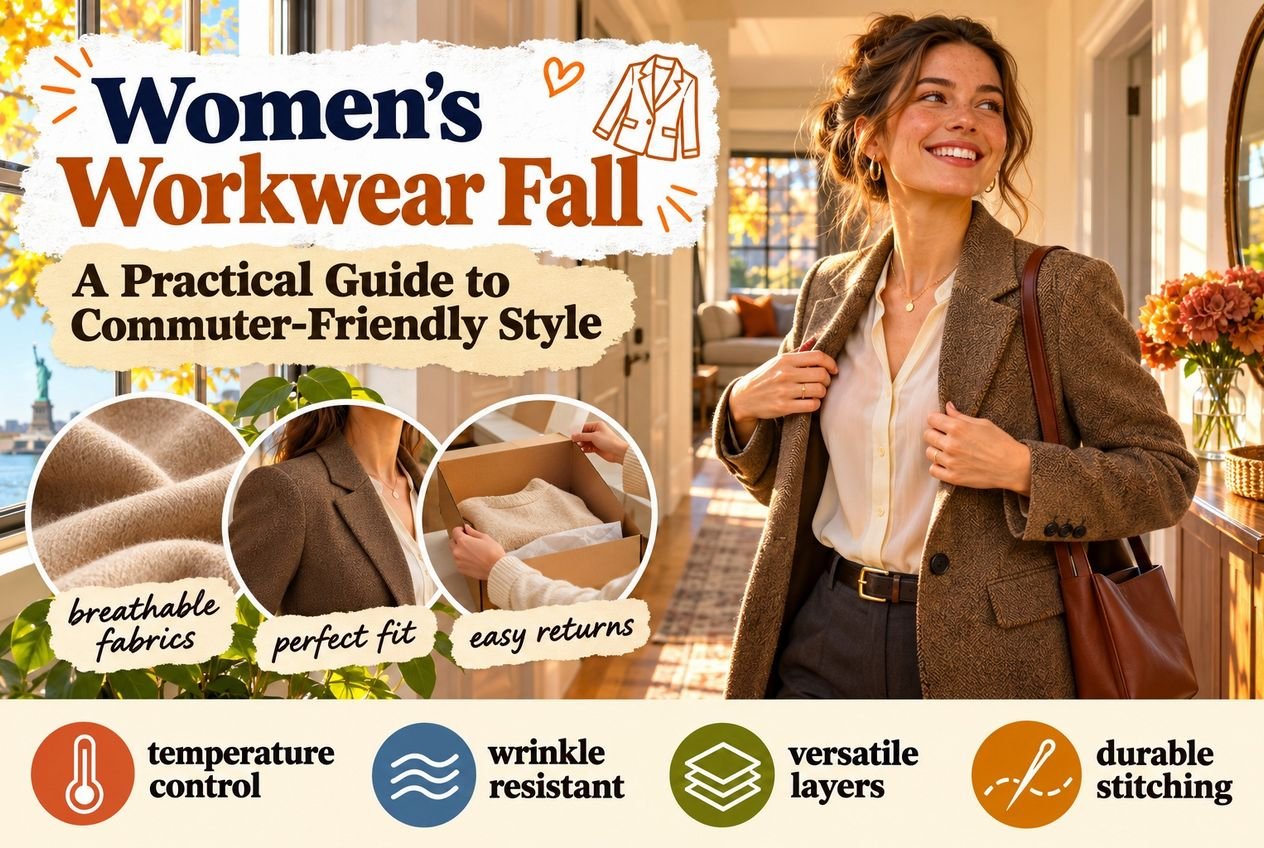
Fall office attire has to handle changing temperatures without turning your commute into a layering puzzle. A breathable base layer under a blazer or cardigan gives you options once you get inside. Look for pieces that sit smoothly under jackets and don’t bunch when you pull a coat on over them.
Fabric deserves a closer look. A little stretch makes sitting, walking and climbing subway stairs easier, while a thicker weave may feel more substantial on a cold morning. Natural fibers can feel lovely against skin, but they may wrinkle or need gentler washing, and synthetics often dry faster and resist creasing even though some feel warm in a packed carriage. No fabric is perfect. Check the care label against your real patience for laundry.
Fit matters in motion. Sit down in the trousers before you remove the tags, reach forward in the jacket, and take a few steps in the shoes you plan to wear. If the waistband digs in after lunch or a skirt rides up when you walk, those problems won’t fix themselves during a busy week. Checking a mirror while standing is only half the test.
For a practical fall palette, begin with shades you already wear and add one seasonal color if you want a change. Deep brown, navy, charcoal and olive work in plenty of offices. A lighter blouse or scarf can break up a dark outfit without making you replace half your closet (I keep one cream scarf in my desk drawer for exactly this). If your workplace runs warm, keep the extra layer easy to carry or drape over your chair.
Brands are a shortcut. Your frustrations are the real brief.
The best workwear brands for you depend on what keeps going wrong in your current clothes. Maybe sleeves are always too long, trousers gap at the waist, or jackets feel stiff on the bus. Treat those complaints as your shopping list. A polished campaign photo won’t tell you whether a cut suits your proportions or whether a garment survives your commute.
Before buying, read the size chart for the specific garment rather than assuming every label fits the same way. Check garment measurements when they’re listed, especially shoulders, waist, hip and inseam. Reviews help you spot repeated fit patterns, but treat them as clues, not promises. One person’s perfect office trouser is another person’s too-short ankle crop.
Check returns and exchanges too. Work clothes often need a real try-on, and sizing can shift between fabrics or cuts. Keep the tags on while you test a new piece at home, wearing the shoes and layers you already own, then walk around and sit for a few minutes. Yes, it takes longer than a quick checkout. It can also save you from an expensive closet orphan.
What will this cost you in laundry time?
Think about care before you fall for a garment. If you won’t hand-wash after a long week, a delicate-only piece may never earn its keep, and a slightly less dramatic fabric that survives your normal wash is often the smarter buy. On busy mornings, consistency wins. A familiar fit you can wear twice a week beats a statement piece that needs special handling.
A wardrobe that needs fewer pieces than you think
A useful work wardrobe doesn’t need a huge number of items. It needs a few shapes that work together. Start with what you wear most: a layer for chilly rooms, a bottom that suits your dress code, and a top that works under both. Then see whether those pieces can make more than one outfit with clothes already hanging at home.
For jackets, pay attention to shoulder fit and sleeve length. A blazer that pulls across your back makes reaching for a bag awkward, and one with too much fabric gets bulky beneath a coat. If you carry a backpack, test the combination before deciding, because some structured fabrics crease under straps and that may be a dealbreaker. A cardigan or softer jacket moves more easily, though it may read casual in a formal office.
When choosing trousers, think about the shoes you’ll wear most. A hem that works with loafers may drag once you switch to flats. Stretch helps over long stretches of sitting, but too much give can mean the fabric loses its shape by afternoon. Watch how it recovers after you bend your knees, and check whether the pockets lie flat. I find that small pocket details make a pair feel either polished or oddly lumpy.
Skirts and dresses need a walking test and a sitting test, not only a standing one. If you bike or take stairs, make sure the cut lets you move without fuss. A lining helps some fabrics hang better, but it can also make a dress warmer indoors. Decide whether you’ll need tights, a slip, or another layer before calling an outfit ready for fall.
Don’t skip the base layer. A shirt with a comfortable neckline and sleeves that stay put makes a jacket far easier to wear. If you run cold, a thin layer under a blouse is more flexible than buying a heavier top for every outfit. The trade-off is bulk around the arms, so try the whole combination before wearing it to something important.
Same season, very different dress codes
Dress codes vary wildly, even between offices in one industry. If yours is formal, aim for clean lines and steady polish. Keep layers structured enough for meetings, and make sure the fit still feels fine after an hour in a chair. Formal doesn’t have to mean stiff, but it does call for attention to finish.
In a business-casual office, you have more room to mix tailored pieces with softer ones. Pair a structured layer with a comfortable knit, or pick trousers that feel less rigid than traditional suiting. Check your team’s norms before wearing anything that feels like a big departure. You want to feel like yourself and still match the room.
Relaxed workplaces reward neatness more than formality. A clean, well-fitting outfit looks intentional without a blazer every day. Casual still doesn’t mean every garment survives a full shift, so sit, bend and walk in your outfit before trusting it with a commute and a packed calendar. Fabric that twists or clings gets distracting fast.
Hybrid schedules add another twist. You may need something that looks sharp on a video call but is comfortable enough for a home day. Keep one layer nearby for calls, and check how your top looks on camera in the lighting you actually use. Some colors wash out on screen, and busy patterns can feel distracting. Run a test call before a day of back-to-back meetings.
Then there’s the weather between your front door and your desk. A garment can be perfect indoors and useless in rain or wind. Think about coat length, footwear, and whether you carry a work bag. If you walk several blocks, comfort underfoot deserves as much attention as the outfit. Nobody wins a prize for arriving with sore feet.
Cheap is not the same as affordable
Affordable workwear is about cost per wear, not the lowest number on the tag. A garment you wear every week can be better value than a heavily discounted piece that suits one occasion. Before shopping, name the gap you’re trying to fill: a warm layer, a comfortable bottom, a top for meetings. A specific need keeps browsing from turning into a cart full of almost-right clothes.
When hunting workwear deals, compare the final price after shipping and any return fees. Check whether a promotion covers the size and color you want, and read the terms before you plan around it. Discounts make a useful staple easier to afford, but they don’t fix poor fit or fussy care instructions. If a purchase only makes sense because of a countdown banner, sleep on it.
Sale timing is unpredictable, so keep a short list of wardrobe gaps instead of waiting for a particular week. Sign up for retailer alerts only if you’ll read them, since inbox clutter isn’t a bargain. Clearance sections can hold season-spanning basics, but inspect the details and the return policy. A low price means little if the piece arrives and doesn’t suit you.
Secondhand shopping stretches a budget, especially for classic layers that don’t hinge on a seasonal trend. Ask for measurements when listings include them, and read condition notes carefully. There’s more uncertainty than buying new, so give yourself time to compare and don’t assume a familiar label fits the way you expect. A tape measure beats guesswork here.
Before checkout, run one test: can you name at least three outfits using the item and clothes you already own? If not, wait. That’s my favorite way to avoid buying an attractive piece that solves nothing. Keep receipts, try garments on at home, and return anything that pinches, needs constant adjusting, or makes your commute harder.
Make it yours
The strongest women’s workwear fall wardrobe is the one that fits your real schedule. A long train ride, a chilly open-plan office and a day of client meetings call for different choices, even if they share a few basics. Start with comfort and care needs, then pick cuts that match your workplace. You don’t have to rebuild your closet in one trip.
Keep a note on your phone of what works after a full day: which fabrics stay comfortable, what layers fit under your coat, and which shoes you reach for again. That little record makes your next purchase far more focused. When a deal does turn up, you’ll know whether it fills a genuine gap or just looks tempting on a screen.
My view is simple: buy fewer things, test them harder, and let the cuff that behaves beat the jacket that photographs well.
Some links on this page are affiliate links: if you buy through them we may earn a small commission at no extra cost to you. We only recommend products we would buy ourselves.
Frequently Asked Questions
What fabrics work best for women’s workwear in fall?
It depends on your commute and laundry habits. A little stretch helps with sitting and stairs, natural fibers feel pleasant but may wrinkle, and synthetics dry faster but can feel warm on a crowded train.
How do I check fit before keeping a work garment?
Try it at home with the tags on. Sit, reach forward, walk around in the shoes you plan to wear, and see whether the waistband, sleeves or hem bother you after a few minutes.
Is secondhand workwear worth it?
Often, yes, especially for classic layers. Ask for measurements, read condition notes closely, and keep a tape measure handy, since there is more uncertainty than when buying new.
How can I tell if a workwear deal is actually good?
Compare the final price after shipping and return fees, then ask whether you can name a few outfits using the piece and clothes you own. If not, wait a day.

 No products in the cart.