

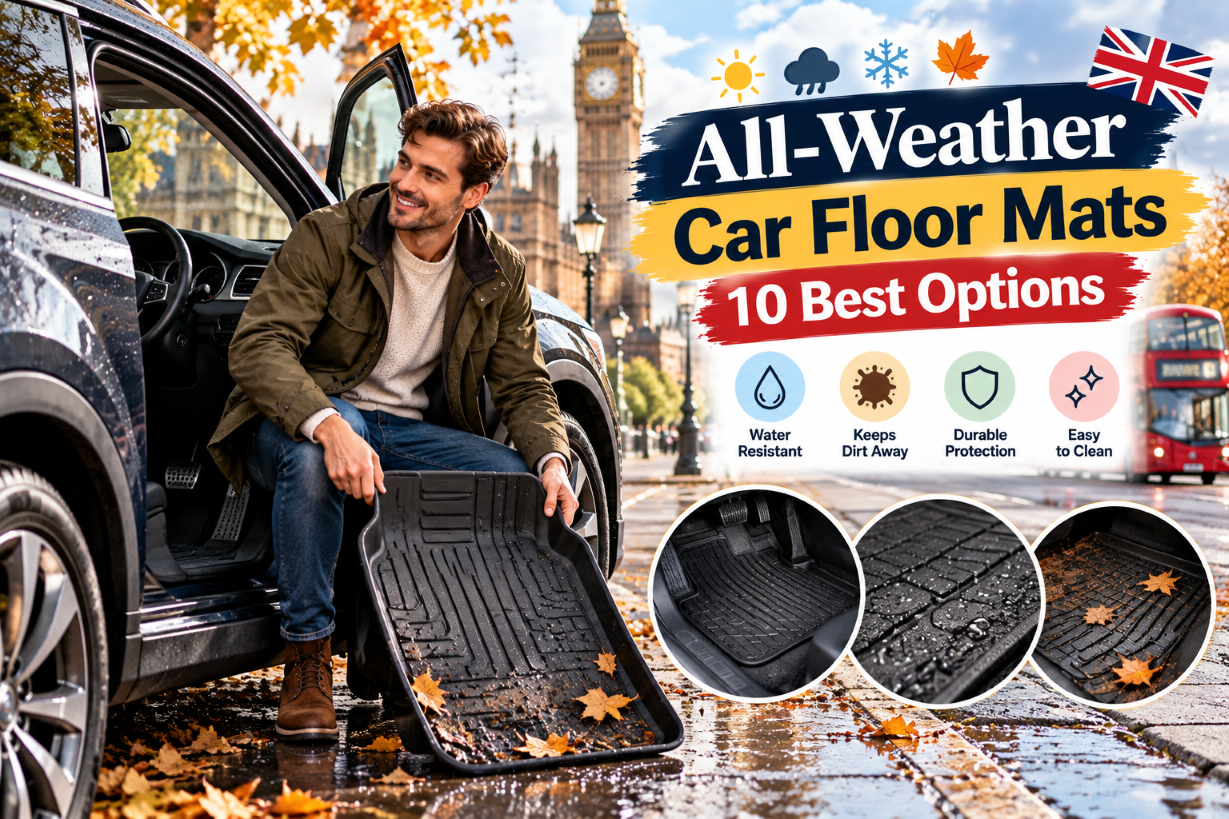
Salt spray on the sills, mud caked into the carpet, a coffee stain from three school runs ago that has somehow become permanent — I know that particular misery well. It took me selling a Ford Focus with carpets that looked like a crime scene to understand that all-weather car floor mats are not an optional extra for UK drivers. They are just sensible. And if you get one thing right about your car’s interior, this is it.
Here’s what most buying guides bury in the final paragraph: the mat you choose matters far less than whether you actually maintain it. A £60 rubber mat that gets rinsed monthly will outlast a £150 custom-fit mat left to fester with salt all winter. Keep that in mind throughout.
Why British Roads Eat Car Interiors Alive
Our weather is relentlessly wet. Rain, sleet, frost, and the occasional actual snow — sometimes in the same week, sometimes in the same afternoon. Standard fabric mats absorb all of it. They go soggy, start to smell, and eventually disintegrate in ways that are genuinely grim to deal with. Every time someone climbs in with wet shoes, muddy boots, or sandy trainers from a beach walk in November, that moisture and grit heads straight for your carpet. Without a barrier, it soaks in. Salt from gritted roads is especially brutal — it works into fabric fibres and causes slow, invisible deterioration that you only notice when you go to sell the car and a buyer points out the floor looks like a salt flat. Carpets stained and damaged this way are expensive to replace professionally, and they knock real money off a private sale or trade-in, sometimes several hundred pounds depending on the car. Mats — even cheap universal ones — sit between all of that and your carpet. They catch the moisture and the muck. You pull them out, rinse them off, put them back. Done.
The comfort angle matters too. Wet feet on soggy carpet is miserable, and that musty damp smell that builds up in winter is depressing. Good drainage design keeps feet drier and the cabin smelling like a car, not a canal.
What Actually Separates Good Mats from Useless Ones
Not all floor mats are created equal — and the differences matter more than most people expect.
Material first. Rubber is the gold standard. It doesn’t absorb water, it resists staining, and it handles temperature swings from freezing January mornings to August heatwaves without cracking or warping. TPE (thermoplastic elastomer) is a decent alternative — slightly softer, usually cheaper, and good enough for most drivers. Avoid cheap PVC. It cracks in cold weather and gets dangerously slippery when wet, which is exactly when you don’t want your foot sliding off a pedal.
How the mat handles water is everything. Look for ridged or textured surfaces that channel moisture away from the edges rather than letting it pool and eventually overflow onto the carpet underneath. Premium mats have proper drainage channels built into the design. Cheap mats just have a flat surface with a slight lip — fine for light use, but inadequate if you’re regularly driving in heavy rain or dealing with muddy footwear.
Custom fit versus universal. Custom-fit mats are shaped to match a specific car’s floor exactly. They stay in place, protect every corner, and look tidy. Universal mats are cheaper and fit most cars loosely — they bunch up, slide around, and leave gaps at the edges where water sneaks through. (Actually, that is not quite right — good universal mats with strong non-slip backing do stay reasonably put. The problem is the edge gaps, not the movement.) If your budget stretches to custom fit, go for it. If not, universal mats are still genuinely better than nothing.
Non-slip backing is non-negotiable. A mat that shuffles forward every time you brake is annoying at best and dangerous at worst. Proper rubber or textured backing keeps mats anchored. Some cheaper mats use adhesive strips instead — these work initially but lose grip over time.
So Which Mats Should You Actually Buy?
Price brackets tell a useful story here.

Premium all-weather option with custom-fit options for maximum protection and durability

Mid-range thermoplastic elastomer mats offering good balance of protection and affordability

Budget-friendly universal mats for drivers wanting basic protection without custom fitting

Premium mats designed for maximum water management and durability in harsh UK weather

Precision-fitted mats for exact vehicle models ensuring complete floor coverage and security
NONE, Thick Oxford cloth car trunk mat £23.99 (50% OFF — was £47.98)
Budget options — roughly £25 to £55 for a full set — are universal fit. Perfectly fine for an older car or a second vehicle you’re not precious about. Mid-range mats in the £55 to £120 bracket usually offer better TPE or rubber compound, reinforced edges, and proper drainage channels; expect three to four years of solid use from these with basic care. Above £120, you’re into custom-fit territory with thicker material, precise floor coverage, and sometimes extras like extra cushioning. If you drive a newer car or spend serious time behind the wheel, the premium tier is worth it — these mats regularly last five to seven years.
Fitting and Looking After Them — Quicker Than You Think
Installation takes five minutes. Remove old mats, position the new ones flat against the carpet, and check there is clear space around every pedal before you drive anywhere. That last step matters — a mat that bunches up and catches under the brake pedal is a genuine safety problem, not just an annoyance. Press the mat down firmly so the non-slip backing grips, then slide the seat forward and back to confirm the mat moves with it or stays firmly put, depending on the design.
Maintenance is where most people fall down.
Shake the mats out every couple of weeks to dislodge loose grit. Once a month, pull them out and rinse with a hose or wash with soapy water and a soft brush for any stubborn salt or mud buildup. Dry them before putting them back — moisture trapped underneath the mat is how you get the musty smell you were trying to avoid in the first place. In winter, when the roads are heavily salted, rinse more often; road salt is corrosive and will degrade rubber faster than anything else if left sitting on the surface for weeks at a time. Never use abrasive scrubbers or harsh chemicals — they damage the material and often void any warranty.
Floor Mats Won’t Do Everything — What Else Helps
Your floor is sorted. What about the rest of the interior?

Pair floor mats with seat covers for complete interior protection against spills and wear

Combat moisture-related smells that can develop even with good floor mat drainage
Chemical Guys, New Car Scent Air Freshener And Odour Eliminator £14.99

Extend protection to your boot where water and dirt accumulation is common
NONE, 1pc Car Trunk Mat Polyester Fiber Fabric Universal Red Sport Style… £16.59 (52% OFF — was £34.56)

Protect door entry areas from wear and dirt where mats don’t reach
Seat covers are the obvious next move if you have children or a dog. Waterproof options that unclip and go in the washing machine make a real difference to how manageable the interior stays week to week. Boot liners are underrated — your boot takes as much punishment as the passenger floor, and a waterproof mat there costs £20 to £50 while saving you from genuinely expensive boot carpet damage if you transport muddy kit, wet shopping, or anything that leaks. Door sill protector films (usually £10 to £20) cover the scuff-prone entry points that mats simply cannot reach. And activated charcoal odour absorbers work better than spray fresheners because they pull moisture and smell out of the air rather than just covering it up.
None of these products are exciting. That is fine. The cars with well-maintained interiors at resale time belong to the people who made boring, practical decisions a few years earlier — and those cars consistently sell faster and for more money than the ones that smell like damp dog and have salt-corroded carpets. Buy the mats. Rinse them monthly. The rest takes care of itself.
Hey savvy shoppers! When the items in our articles catch your eye and you decide to buy through our links, we may earn a small commission at no extra cost to you. Think of it as a way of supporting us in bringing you the best content!
Frequently Asked Questions
Are rubber or TPE floor mats better for UK weather?
Rubber is more durable and handles temperature extremes better, making it ideal for harsh British winters. TPE is softer underfoot and usually cheaper, which makes it a solid mid-range choice. Both outperform cheap PVC, which cracks in cold weather and gets slippery when wet.
Do universal floor mats actually protect against water damage?
They offer basic protection, but gaps around the edges mean water can seep through to your carpet. If you drive in wet conditions regularly or park near the coast, custom-fit mats are a better investment because they cover every corner of the floor.
How often should I clean all-weather car floor mats?
Shake them out every couple of weeks and rinse with a hose or soapy water monthly. In winter, when road salt is heavy, clean them more frequently — salt corrodes rubber over time if left to sit.
Can floor mats be a safety hazard?
Yes, if poorly fitted. A mat that bunches up near the pedals can catch on the accelerator or brake. Always check for clear space around all pedals after fitting, and make sure the mat lies completely flat before driving.
Are all-weather floor mats worth it for an older car?
Even for older cars, mats make sense. Damaged, stained carpets knock money off a trade-in or private sale value, sometimes by several hundred pounds. A £30 universal set is cheap protection even if you’re not planning to keep the car long.



 No products in the cart.