

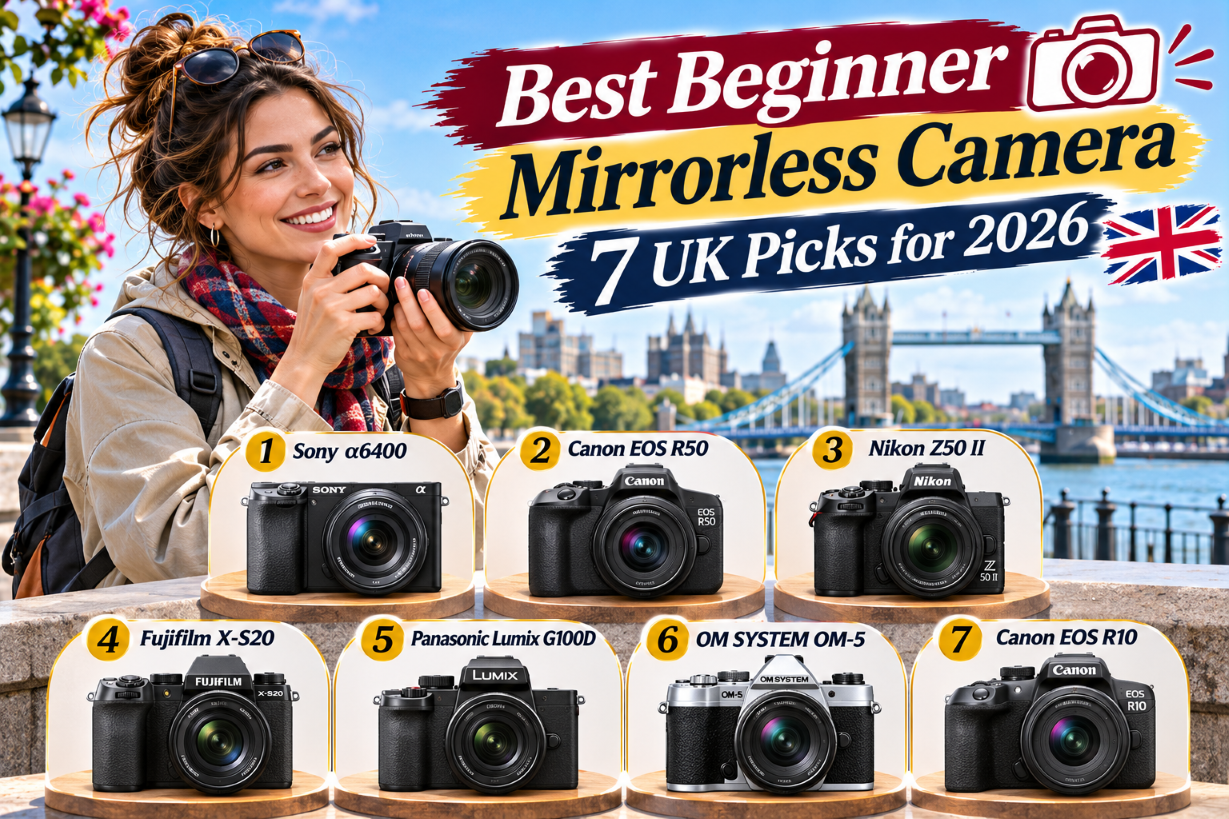
The small grip on the Canon EOS R50 is the first thing I noticed when I picked one up.
It felt cramped. Yet I kept reaching for it anyway, and that says something about what makes a good first camera. The best beginner mirrorless camera is the one you’ll actually want to take out on a rainy Tuesday, not the one with the most intimidating spec sheet.
Your first camera doesn’t need to be your forever camera. It just needs to get you excited about the next shot.
If you’re moving up from a phone, the choice can feel huge, because Sony, Canon and Fujifilm all make capable cameras and the prices run from sensible starter-kit money to a serious investment. I’ve picked seven approachable models for UK buyers in 2026, from compact video-friendly bodies to cameras with room to grow. Prices are approximate UK street prices and shift with promotions, stock and whether a lens is included, so check the exact bundle before you buy.
What should you look for first?
Think about what you’ll photograph most before comparing bodies. Family days out and travel call for a light kit and dependable autofocus. Filming yourself puts screen movement and microphone support higher up the list, and if you love portraits, a larger sensor and access to bright lenses may matter more than a stack of video modes.
A bundled zoom lens is often the easiest place to start. It lets you try wide views and tighter framing without buying extra glass on day one. Look for a comfortable grip, a screen you can see clearly, and controls that don’t send you digging through menus every time you want to change focus.
One thing I’d avoid is paying extra for features you can’t yet explain. Learn the basics first. Then decide whether you need advanced video, faster burst shooting or a particular lens system, because the camera that makes those first steps enjoyable is usually the better buy.
Three flexible picks to grow into
These suit beginners who want a camera they can keep for a while. They handle stills and video well, though each has its own personality: Sony leans into autofocus and creator features, Canon keeps handling approachable, and Fujifilm brings tactile controls and distinctive colour options.
Sony a6400, around £700 with a basic kit lens. This compact APS-C camera has fast autofocus and a useful tilting screen, which makes it a capable all-rounder for travel, portraits and everyday video. The menus feel dated next to newer models. Expect a short learning curve before everything feels intuitive.
Canon EOS R50, around £800 with the RF-S 18-45mm lens. A friendly choice if you want quick subject recognition and a vari-angle screen that faces forward for self-recording. It’s light and easy to pick up (I carried mine around a whole weekend without noticing it), though the small grip can feel cramped with larger hands or a heavier lens attached.
Fujifilm X-S20, around £1,200 for the body. The spendier step-up pick, with in-body stabilisation and strong video tools alongside its APS-C sensor. You get room to develop as a photographer. But the body price alone is a lot to commit to before you know which lenses you enjoy using.
Under £800, without the regret
Trying to keep your first setup below £800? Check the price of a complete kit rather than the body alone. A camera advertised at a tempting price can still need a lens, a memory card and a spare battery, and kit deals change often, so treat these as the more manageable entry points.
Canon EOS R100, around £500 with the RF-S 18-45mm lens. An inexpensive route into Canon’s RF-S system and a proper interchangeable-lens camera to learn on. The screen doesn’t flip out for vlogging and the feature set is basic next to the R50. That simplicity may suit someone who mainly wants photos.
Fujifilm X-M5, around £800 with a standard zoom when bundled. Small and creator-friendly, and worth a look if you want Fujifilm colour modes in a portable body with video in mind. Bundles and body-only prices vary, so check what’s in the box. The lack of a built-in viewfinder may also be a deal-breaker if you prefer composing at eye level.
Don’t treat the £800 figure as a guarantee. A discounted bundle can change the maths overnight, and if a kit includes a lens you’ll use, a slightly higher price can beat a cheaper body-only listing.
Kits with a lens in the box
A kit lens saves you another decision before you’ve taken your first proper batch of photos. It’s usually a modest zoom rather than a specialist lens, which is exactly the point, since you can learn what focal lengths you like before spending more.
Sony ZV-E10 II, around £900 with a power-zoom kit lens. Built with creators in mind, with a forward-facing screen and video features that make filming yourself less fiddly. There’s no viewfinder, so it’s less appealing if you mostly shoot stills outdoors in bright sun.
Canon EOS R10, around £900 with an RF-S zoom lens. Responsive autofocus and a more substantial set of controls than the entry-level R100 make it a nice bridge from beginner to enthusiast. It’s a strong first camera for action and family photos, although the kit lens won’t give you much reach for distant wildlife.
Kit lenses aren’t magic. They tend to be less bright in dim rooms than premium glass, and you may eventually want a wide-angle for interiors or a telephoto for wildlife. Still, start with the bundled zoom and see what you reach for most, which beats buying a lens because a stranger on a forum said you needed it.
Sensor size, sorted
Most cameras here use APS-C sensors. That’s a happy middle ground for beginners, since it’s larger than the sensor in most phones yet usually paired with bodies and lenses that are easier to carry than full-frame gear. You get more control over depth of field and better flexibility in tricky light, though your results still depend on the lens and how you use the camera.
Full-frame gives you more room in low light and a softer background, but the camera and lenses cost more and take up more bag space. For a first setup, that extra size can feel like carrying a second hobby around. APS-C is plenty for travel, portraits, family life and learning the basics.
Then there’s Micro Four Thirds. Its smaller sensor still delivers lovely images and the system has compact lens choices. It isn’t in this shortlist, but it’s worth knowing about if portability is your top priority.
Does any of this decide the purchase on its own?
No. Hold the camera if you can, check whether its menus make sense to you, and think about how much you want to spend on future lenses. A system you enjoy using matters more than a spec that sounds impressive on paper.
Making the call
Start with your main use. For casual photos and travel, prioritise a light body and a kit zoom. For vlogging, look for a screen that faces forward, reliable autofocus and a microphone connection if you plan to add better audio. If you want a camera for a bit of everything, the R50 or a6400 is a sensible place to begin, depending on the kit price you find.
Next, think about the system rather than just the body. Sony, Canon and Fujifilm each offer lenses across a range of uses, but the exact choices and prices differ. You don’t need a full lens collection now. Just make sure there’s an affordable portrait or telephoto option you might want later.
Finally, leave room in the budget for small essentials. A memory card and spare battery make a day out far less stressful, and a basic strap is often more comfortable than the one in the box. Skip the huge accessory bundles; they’re rarely as useful as they look.
My pick? The Canon EOS R50, grip and all, as long as the kit price is right. If it isn’t, the Sony a6400 is the camera I’d buy instead.
Hey savvy shoppers! When the items in our articles catch your eye and you decide to buy through our links, we may earn a small commission at no extra cost to you. Think of it as a way of supporting us in bringing you the best content!
Frequently Asked Questions
What is the best beginner mirrorless camera for most people?
For a bit of everything, the Canon EOS R50 or Sony a6400 is a sensible start, depending on which kit price you find. Both are compact APS-C cameras with good autofocus.
Is a kit lens good enough when you’re starting out?
Yes. A bundled zoom lets you try wide and tighter framing before spending more. You can upgrade once you know which focal lengths you reach for.
Do I need a full-frame sensor as a beginner?
No. APS-C is plenty for travel, portraits and family photos, and the bodies and lenses are cheaper and lighter to carry.
Which camera here is best for vlogging?
The Sony ZV-E10 II and Canon EOS R50 both have forward-facing screens that make filming yourself easier. Add a microphone if audio matters to you.
What extras should I budget for?
A memory card and a spare battery are the main ones. A comfortable strap helps too, but skip the huge accessory bundles.



 No products in the cart.