

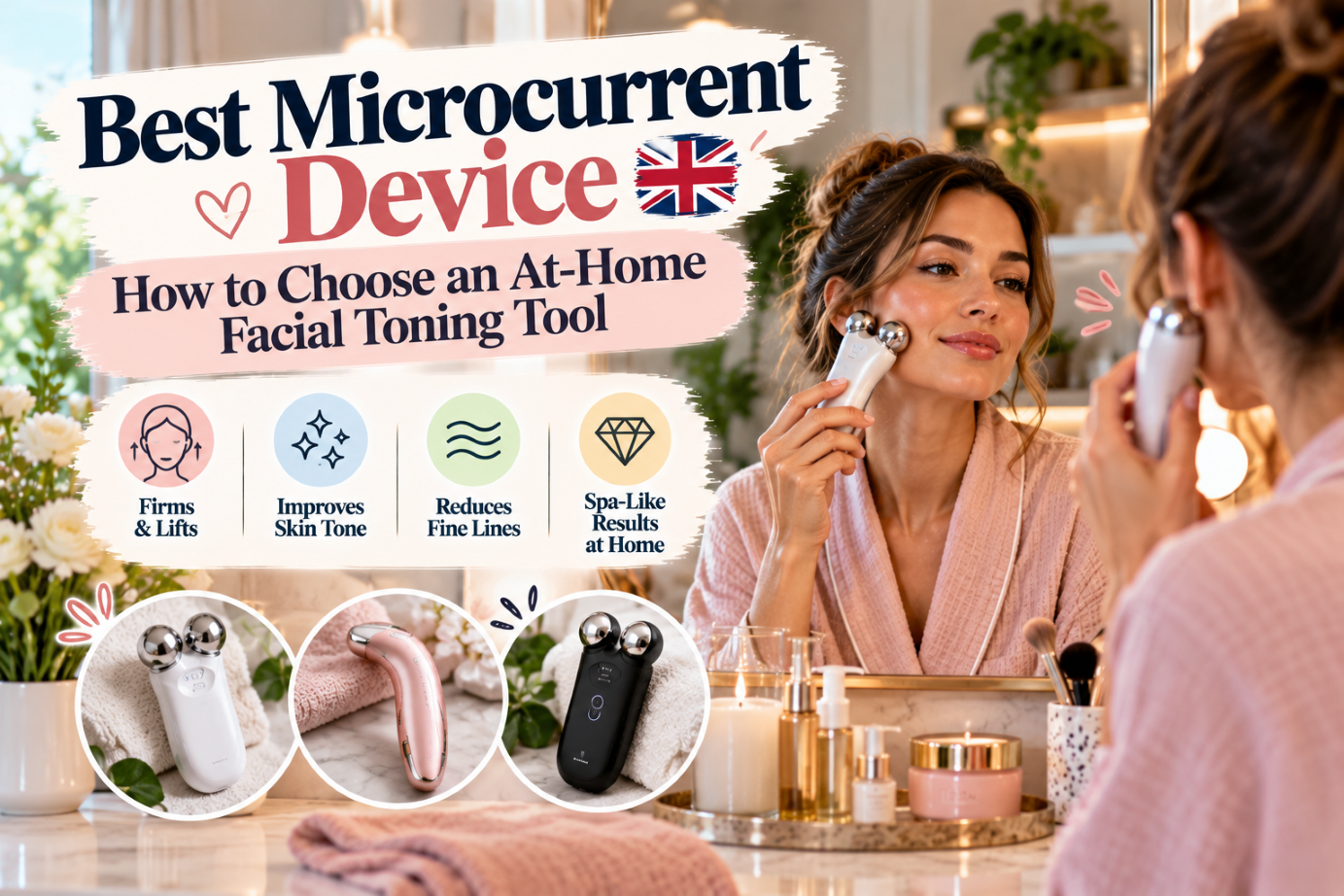
I nearly bought the first device I saw, purely because its box promised a lifted jawline in days.
That would have been a mistake. Fine, I did not test these products for this guide, and I will not pretend otherwise or crown a winner where the evidence is not there. What I can do is walk you through how I would choose, because the right microcurrent device depends far less on a dramatic before-and-after promise than on whether you will use it regularly, safely and with the correct conductive gel.
These at-home tools send a low-level electrical current through the skin. Brands market them to support a temporarily toned, more defined look. Results vary, and they are no replacement for medical care or a clinic treatment.
Who should skip it, or ask first?
Better to say this early. Microcurrent is not for everyone, so read the maker’s full safety list before you do anything else, and ask a qualified healthcare professional if you have a medical condition, use an implanted electronic device or simply are not sure. Restrictions differ between devices, which is why the specific manual matters more than any general article, this one included.
Pregnancy, a seizure disorder, a heart condition, a pacemaker or any other implanted electrical device: all of these call for medical guidance before you try at-home electrical treatments. That list is not exhaustive. Had facial surgery, injectables or another procedure recently? Ask the treating clinician when it is safe to resume facial devices, instead of guessing from a generic online schedule.
Skip a session if your skin is irritated, sunburnt, broken or infected. If you have a skin condition, or you tend to react badly to skincare, check with a clinician and patch-test any new gel the way its label directs. Cosmetic claims never override health advice you have been given.
There is a non-medical reason to pass too. Maybe you just dislike the sensation, or the whole routine feels like too much faff. Perfectly good reason. A device earns its place by fitting your life, not by making you feel you must keep up with a trend.
What should “best” even mean?
A useful device is one you can handle comfortably and whose instructions you can actually follow. The boldest lift claim on the box does not count for much. Look at how the tool sits against your face, what the manual says about treatment areas, and whether you can easily buy the required conductive product in the UK. My bias, for what it is worth: a clear manual beats a confusing app every single time.
Start with the treatment heads. Some tools use two rounded contact points, while others have a different shape meant to glide along particular contours, and that shape decides how easily you keep contact with your skin and move the way the instructions show. Smaller features or awkward hands? Check grip and head size carefully. A device that is fiddly around the jawline ends up in a drawer.
Next, intensity settings. More settings do not mean better results, though they can make it easier to begin gently and adjust only where the manufacturer allows. Does the device tell you clearly when contact is lost? Is the treatment plan easy to follow without guessing? If an app is involved, see whether the core instructions still work without a subscription or a strong phone connection.
Gel comes before the purchase, not after. Most microcurrent devices need a conductive gel, or another product the manufacturer specifically approves, so current can pass between electrodes and skin. Ordinary moisturiser is not automatically a stand-in. If you are sensitive, read the ingredients, and count the ongoing cost of topping it up. A low upfront price looks much less charming when the consumable is hard to find.
Last, warranty, returns and safety information. Because this device touches your face, confirm the seller’s returns policy and whether the maker offers support in the UK. Distrust anything that sounds permanent or guaranteed. At-home microcurrent is a cosmetic routine, not a facelift in a wand.
A toner you will actually stick with
When you compare a microcurrent toner UK retailers stock, decide first how you like to do skincare. A short guided session a few times a week? Or a longer routine that becomes one more chore on a busy evening? The best pick matches your real life, including the nights you get home late and cannot face a complicated ritual.
Upkeep matters as much as the session. Does it need charging, and is that convenient? Can you wipe the head clean easily? Is there a dry spot to store it? Boring questions, I know (I skip them too, until a gadget annoys me). They count for more than a fancy feature if you are trying to build a habit.
Then frequency and treatment time. Follow the company’s current instructions, not a schedule borrowed from social media or another brand’s manual. Longer or more frequent sessions are not better by default. Uncomfortable skin means stop and check the guidance.
Keep the comparison fair. Look at what is included, whether a suitable gel comes in the box, and what you will need to replace. A starter-style device might appeal because the controls are simple, while another may suit you better thanks to clearer guided steps. Neither is right for every face.
What about budget, including any hunt for the best microcurrent toner under £150? Do not judge by headline price alone. Can you identify the manufacturer, find a full instruction manual, verify the seller and understand the returns policy? If safety details are vague or the intended use is murky, I would keep scrolling. Bargain hunting should never mean guessing what you are pressing against your skin.
NuFace Trinity vs Foreo Bear, without the fake winner
People searching NuFace Trinity vs Foreo Bear usually want a neat verdict. Without current, hands-on testing under identical conditions, declaring one superior would not be honest. So compare the exact versions being sold, their official instructions and the features you will genuinely use. A brand name tells you nothing about whether a device suits your routine.
Make a side-by-side list before spending anything. Note the head design, intensity controls, session guidance, charging setup and what each maker says about compatible conductive products. Then check warranty and returns from the actual UK seller. Bundles and product names vary by retailer, so confirm you are comparing the same version and not two listings with different accessories.
How does each one feel to operate?
One shape may be easier for you to keep in contact with skin; another may feel more natural in your hand. That is personal, not a universal advantage. Cannot try before you buy? Lean on the manual, the dimensions and the return terms to cut the risk of ending up with something clumsy.
Look hard at the evidence behind the claims, too. Before-and-after photos shift with lighting, camera angle, expression and whatever skincare someone used, so they do not prove what a device alone did. Ask for a clear explanation of the intended effect and keep expectations realistic. A temporary look of more definition is a different thing from a permanent change in facial structure.
My rule is plain. Choose safe, understandable instructions and a routine you are likely to follow. If one brand’s guide simply reads better to you, that can matter more than a long feature list. And if neither manual answers your safety questions, wait.
Using a microcurrent toner at home
Learning how to use a microcurrent toner starts with the instructions supplied for your exact device. Do not copy a tutorial built around another model or a different electrode layout. Manuals change, and the maker’s directions should govern treatment areas, movement, contact and frequency.
Before the first session, read the contraindications and check the device is suitable for you. Begin with clean, dry skin unless the instructions say otherwise, then apply the specified gel in the amount and pattern the maker recommends. Consistent contact is the point. If the tool drags or feels uncomfortable, pause and see whether you need more approved gel, and never keep running it over dry skin just to finish sooner.
Pick the lowest comfortable setting if your device lets you choose. Follow the stated movements and timing, keep the tool moving as directed instead of parking it on one spot, and do not improvise around sensitive areas. Irritated, broken or infected skin is off limits unless a qualified clinician and the manufacturer have both said it is appropriate.
Afterwards, remove the gel as directed and clean the device by its care instructions. An unsuitable cleaner can damage a treatment head, so do not assume every household disinfectant is safe. Store it dry, away from children and water unless the manual says otherwise.
For visible results, think consistency inside the recommended schedule, not extra sessions. Progress photos are optional, but if you take them, keep lighting, distance and expression the same each time. Even then, small day-to-day shifts in hydration or puffiness will show up. Pain, burning or lingering irritation? Stop and seek proper advice. A beauty routine should not hurt.
Pick with your eyes open
The best microcurrent device is not necessarily the priciest, nor the one with the flashiest app. It has clear safety instructions, a design you can manage, a suitable conductive product and a routine that fits your week. Compare exact versions and UK seller terms, and give yourself permission to walk away if key details are missing.
Microcurrent may appeal if you enjoy a structured at-home facial routine and accept that any visible effect can be modest or temporary. Unsure about safety, or expecting a permanent lift? Talk to a qualified professional first. My honest view: if a brand cannot explain its device plainly, it has not earned your money.
Hey savvy shoppers! When the items in our articles catch your eye and you decide to buy through our links, we may earn a small commission at no extra cost to you. Think of it as a way of supporting us in bringing you the best content!
Frequently Asked Questions
Is the NuFace Trinity better than the Foreo Bear?
There is no honest universal winner without side-by-side testing. Compare the exact versions on sale, their official instructions, gel requirements, warranty and the UK seller’s returns terms, then pick the one whose manual makes most sense to you.
Can I use ordinary moisturiser instead of conductive gel?
Not automatically. Most makers specify a conductive gel or an approved product to help the current pass between device and skin. Check your manual before substituting anything.
Who should avoid at-home microcurrent?
People who are pregnant, have a seizure disorder or heart condition, or use a pacemaker or other implanted electrical device should get medical advice first. Skip it too if your skin is irritated, sunburnt, broken or infected.
How often should I use a microcurrent device?
Follow the schedule in your own device’s current instructions. More frequent or longer sessions are not automatically better, and you should stop if anything hurts or burns.



 No products in the cart.