

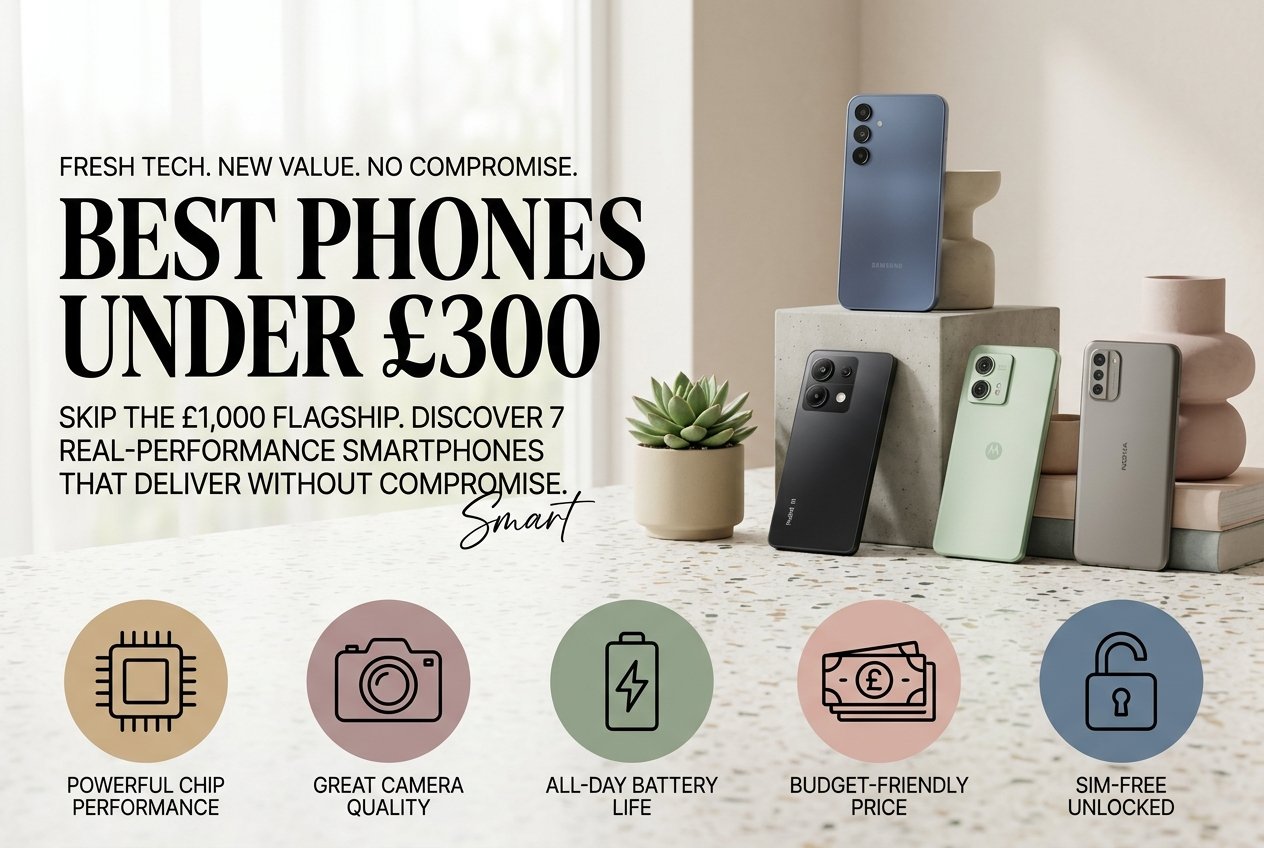
Here is the thing nobody tells you upfront: a £300 phone in 2025 is not a compromise. It is just a phone. A good one.
I spent a few weeks switching between budget handsets, and the moment that stuck with me was taking a low-light photo on a sub-£200 Samsung and thinking it looked better than shots I’d taken on a mid-range device two years ago costing twice as much. That changed everything about how I approached this category.
Flagship phones have quietly become absurd. A £1,200 device does the same core things a £250 one does — calls, texts, photos, apps, streaming. The premium buys you a fancier camera system, a thinner frame, and a logo people recognise. For a lot of people, that trade-off stopped making sense a while ago. So if you’re switching from an ancient handset, buying your first proper smartphone, or just cannot stomach dropping four figures on something you’ll inevitably sit on, this bracket deserves a serious look.
What actually matters at this price
Processor age is the one spec most buyers ignore and probably shouldn’t. A chip from three years ago will drag — not immediately, but six months in, as apps update and demand more, you’ll feel it. Look for Snapdragon 6 or 7 series, MediaTek Dimensity 6000 or 7000 range, or anything launched in the last two years. Everything else flows from having a decent chip underneath.
Battery capacity should sit at 5,000mAh or above if you want genuine all-day use without rationing. Fast charging (30W or better) matters too — not because you’ll always need it, but because on the days you forget to plug in overnight, being able to top up in twenty minutes is the difference between a useful device and a paperweight. Display-wise, AMOLED is a nice bonus but not essential; a bright IPS panel with 90Hz refresh is perfectly fine and noticeably smoother than the 60Hz screens that dominated this bracket a few years back. Camera megapixel counts are mostly marketing — a 50MP sensor with decent computational photography will beat a mediocre 108MP setup every single time, especially in mixed or low light.
Software support is where people get caught out. Two years of updates is the bare minimum; three or more is worth paying a slight premium for. An unsupported phone becomes a security liability and stops receiving features, which shortens its useful life considerably.
7 solid picks right now

A reliable mid-range 5G phone with strong processing power and all-day battery
Samsung, Galaxy A26 5G 128GB Smartphone (White) £184.5 (38% OFF — was £299)
Most people should start here. The A26 5G covers the basics without any glaring weak spots — you get a processor that won’t leave you watching loading spinners, a battery that genuinely makes it through the day, and a display bright enough to read in direct sunlight. It is not the flashiest phone on this list, but it is the one I’d hand to someone who just wants a reliable daily driver without thinking too hard about it.
Budget phone with emphasis on camera performance and expandable storage
Samsung, Galaxy A26 5G 128GB Smartphone (White) £177.99 (40% OFF — was £299)
If photos are your priority, this variant earns its place. Low-light shots come out cleaner than you’d expect at this price, and the colours don’t look oversaturated in the way cheaper camera systems tend to go. Storage is generous from the off, and there’s a microSD slot if you’re the type who never deletes anything (no judgement).

Budget phone with premium display features for scrolling and gaming
The screen on this one stands out. Higher refresh rate, big enough to actually enjoy video without squinting, and it doesn’t feel like a budget concession the way some cheaper panels do. If you spend a lot of time scrolling or play casual games, you’ll notice the difference within an hour.

Budget phone with emphasis on battery capacity and rapid charging
Two days of battery. Actual two days, not the theoretical manufacturer figure that assumes you use your phone for eight minutes a day. Heavy scrollers, commuters, people who travel and forget cables — this is your phone. When you do need to charge it, fast charging means you’re back to full before you’ve finished a coffee, which is all you can really ask for.

Budget 5G phone with modern processor for future-proofing
Motorola, Moto G56 5G 256GB (8GB RAM) Pantone Black Oyster £269.99
5G coverage is expanding fast across the UK, and buying a 4G-only phone right now feels like buying a phone without a headphone jack in 2019 — fine today, quietly annoying within a year. The Moto G56 5G handles that concern while pairing the connectivity with a processor that keeps up with multitasking, a decent 256GB of storage, and Motorola’s typically clean software that doesn’t bloat over time the way some Android skins do. It sits near the top of this price range, but it earns the extra spend if longevity matters to you.
Does size actually matter here?
Not everyone wants to carry something the size of a small hardback novel.
Smaller phones — genuinely pocketable ones — are harder to find in the budget bracket, but they exist. One-handed use without a thumb workout, lighter in your bag, less likely to slide off a table and shatter. Smaller screen doesn’t mean worse phone; it just means a different set of priorities. Worth considering if you find yourself putting your phone down constantly because it’s uncomfortable to hold.
Water resistance: boring until it saves you £250
Spilled coffee. Rain on the walk to the bus. A pocket that went through the wash because you forgot to check. These are not edge cases — they happen to most people at some point, and a phone with proper water resistance (IP54 or better) is the difference between a minor inconvenience and a replacement cost. Build quality at this price range has improved a lot; you don’t need to baby these phones the way you once did, and several in this bracket handle splashes and rain without drama.
Making the budget stretch further
Timing a purchase around new launches is genuinely worth it. When Samsung or Motorola drop a new model in spring or autumn, the previous generation gets discounted, sometimes by £50-80 overnight. Certified refurbished is another route worth taking seriously — a graded refurb from a reputable retailer comes tested and warrantied, and you might access a better phone than you could afford new. SIM-free beats contract on total cost in almost every scenario: a £300 SIM-free phone on a £15/month deal costs roughly £660 over two years, versus £850+ on a bundled contract with the same handset. Actually, that’s not quite right for every contract — occasionally you’ll find a deal where the subsidised price and plan cost genuinely undercut the SIM-free maths, but it’s rare enough that you should run the numbers yourself before assuming it’s cheaper. Trade-ins are worth checking too; an old phone sitting in a drawer might knock £30-50 off, which is not nothing.
Where does the real gap show between a £300 phone and a £900 one?
Honestly, two places. Low-light photography — flagships genuinely do better in dark bars and evening shots, with more detail and less noise. And materials: glass backs and aluminium frames feel premium in a way plastic doesn’t, even if plastic is actually more durable and less likely to shatter on a drop. Everything else — gaming performance on everyday titles, app speed, video calls, streaming quality — the difference is marginal enough that most people wouldn’t notice in a blind test. Photography enthusiasts and people who care deeply about how their phone feels in hand might miss the extra spend. Everyone else, probably not.
Buy the one that fits your actual life rather than the spec sheet, and you’ll be fine.
Hey savvy shoppers! When the items in our articles catch your eye and you decide to buy through our links, we may earn a small commission at no extra cost to you. Think of it as a way of supporting us in bringing you the best content!
Frequently Asked Questions
Are phones under £300 actually worth buying in 2025?
Yes, genuinely. The gap between budget and flagship phones has narrowed considerably. You get 5G, solid cameras, and processors that handle everyday tasks without breaking a sweat. Unless you need cutting-edge zoom optics or titanium frames, there’s very little reason to spend more.
How much storage do I need in a budget phone?
128GB is the floor for comfortable use. 64GB fills up faster than you’d expect once apps, photos, and a few downloaded videos pile up. If the phone has a microSD slot, that buys you flexibility — but not all budget phones include one, so check before you buy.
Is a refurbished phone a good option at this price range?
Often, yes. A certified refurbished handset from a reputable retailer comes tested and warranted. You might land a better phone for the same money, or pocket £50-100 in savings. The key word is ‘certified’ — avoid anything sold without clear grading and a returns policy.
What processor should I look for in a phone under £300?
Aim for something from the last two years: Snapdragon 6 or 7 series, or MediaTek Dimensity 6000 to 7000 range. Older chips lead to lag and sluggish multitasking that gets worse over time as apps demand more. Processor age matters more than most specs on the sheet.
SIM-free or contract — which saves more money?
SIM-free almost always wins on total cost. A £300 phone plus a £15/month SIM-only deal runs you around £660 over two years. The same handset on a £25/month contract costs £850 or more. Contracts make sense only when the upfront discount is genuinely steep, which is rare.



 No products in the cart.