

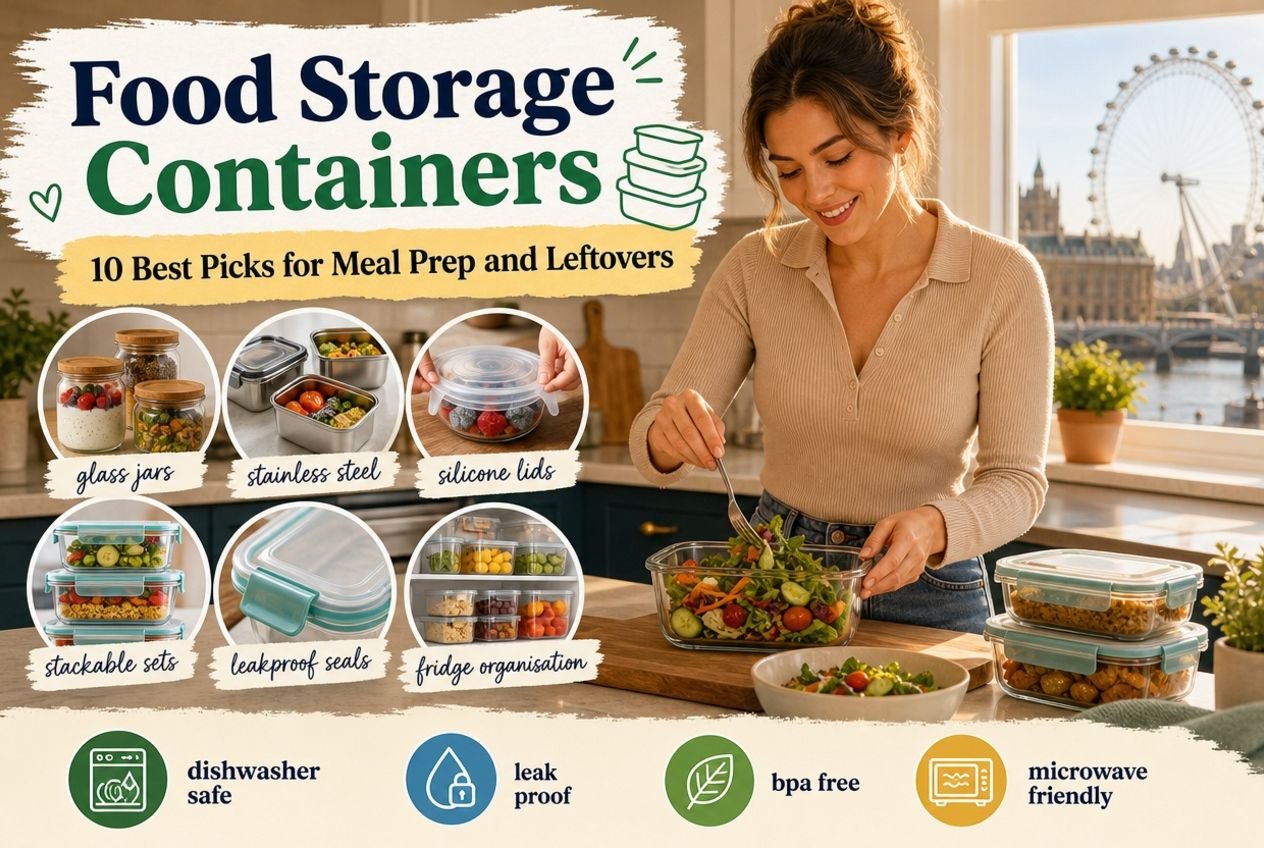
My fridge used to be a game of Tetris I always lost.
Then I bought a matching set of tubs, and the odd-lid drawer finally stopped haunting me. Here’s the thing I’d tell anyone starting out: start with two or three sizes you’ll use every week, then build from there. If you reheat leftovers often, glass may suit your routine. If you carry lunch across town, a lighter tub could be the one you actually grab. The best food storage containers are the ones that fit your shelves, your meals and your real-life washing-up habits, and nothing else matters nearly as much.
Which material should you pick?
There isn’t one perfect material for every job. Glass is reassuringly sturdy and handles reheating well, while lightweight plastic is handy for packed lunches and busy households. You’ll also find stainless steel, silicone and simple glass jars if you want to cut back on plastic. Below are 10 styles, with typical UK price guidance rather than promises about any retailer’s current stock. Prices shift with size, piece count and lid design, so treat the ranges as a starting point, check what the maker says about dishwashers and microwaves, and follow their instructions for hot food.
Seal it, stack it, see it
A container that seals properly can save a half-used tin of beans from leaking over the fridge shelf. A clear lid means you’re more likely to remember the soup you made on Monday. I’m a fan of a small, consistent set because it stacks neatly. Still, a few different shapes help when you’re packing everything from curry to chopped fruit (my own cupboard has a rogue square tub for exactly that reason).
For batch cooking, aim for tubs that stack when full and nest when empty. Rectangular ones make good use of fridge shelves. Round ones suit soups and sauces. These first two styles cover the basics.
1. Everyday glass containers with snap-lock lids: typically £15–£35 for a small set. These are a dependable starting point for leftovers and lunches, especially if you like to see what’s inside. Look for a couple of capacities and removable seals that are easy to clean. Glass adds weight, so they wouldn’t be my pick for a daily commute.

a versatile starter set for fridge leftovers and batch-cooked meals
NONE, Gcirn Glass Food Storage Containers with Lids £14.36 (75% OFF — was £57.46)
2. Nesting rectangular food tubs: typically £8–£25 for a multi-piece set. A nested set saves cupboard space between uses, and rectangular bases line up tidily on shelves. They suit chopped veg, sandwiches or portions of pasta. Check the lid fit before buying. A lid that only sits loosely is a nuisance when you’re carrying lunch.

space-saving tubs for everyday leftovers and meal prep
Glass or plastic? Pick your fight
Glass suits home storage and reheating. Plastic tubs are lighter and less nerve-racking in a work bag. Neither material wins every round, since glass can chip against a sink and plastic can stain after a tomato-heavy lunch. For either, let hot food cool as advised before sealing it away, and use only containers marked as suitable for the job you have in mind.
If you pack meals to take out, a leak-resistant lid matters more than a sleek shape. For fridge and freezer use, check the temperature guidance instead of assuming every tub copes with a sudden swing. Two picks, two routines.
3. Portion-sized glass meal prep boxes: typically £18–£40 for a set. Smaller individual dishes make it easy to divide a batch of grains, vegetables or cooked protein into grab-and-go lunches. They work if you reheat at home or in a work microwave, provided the container and lid instructions allow it. The trade-off is weight, especially with several portions in one bag.

individual portions for planned lunches and batch cooking
NONE, Gcirn 4-Pack Assorted Size Glass Lunch Boxes £17.24 (70% OFF — was £57.46)
4. Lightweight reusable plastic lunch tubs: typically £6–£20 for a set. When your bag already holds a water bottle, a laptop and an umbrella, a light container is welcome. Choose secure-fitting lids and a mix of sizes for sandwiches, snacks or leftovers. These tubs pick up stains and smells over time, so check the cleaning guidance and replace any that crack or look badly worn.

light lunch tubs for packed meals and everyday use
NONE, 14-Pack Plastic Airtight Food Storage Containers with Lids £12.99 (75% OFF — was £51.96)
What does airtight actually mean?
Airtight tubs keep dry ingredients crisp and stop fridge leftovers absorbing every other dinner’s aroma. But the word means different things across product ranges, so inspect the lid design and any supplied seal. For liquids, a locking lid with a flexible gasket beats a simple press-on top.
Meal prep containers should fit the food you really make, not an idealised week of perfectly portioned lunches. A deeper tub works for stew or overnight oats. A shallow one is easier for stacked sandwiches or cooked rice. These options cover two common meal-prep jobs.
5. Divided meal prep containers: typically £8–£22 for a multi-pack. Built-in sections keep a main and sides apart, which is handy for packed lunches or picky eaters who like their food in separate zones. They also make portioning feel wonderfully straightforward. One drawback is that the partitions take up room, so they’re less flexible for bulky leftovers.

sectioned lunch boxes for keeping meal components separate
OTDPACK, 20/40/80Pcs Pack Chinese Disposable Take Out Food Containers -Leak… £11.49
6. Airtight glass containers with clip-lock lids: typically £18–£45 for a set. A clip-lock design feels reassuring for saucy leftovers, and glass lets you check what’s tucked behind the milk. Look for a removable seal so you can clean around it properly. The clips add bulk in a drawer, and the glass makes this a home-first option rather than a lightweight lunchbox.

secure home storage for sauces and cooked leftovers
NONE, Glass Food Storage Jars with Screw Airtight Seal Acacia Wood… £22.09
Swaps that cut the plastic
Want less disposable packaging? Start with habits that’ll stick. Reusable storage can mean glass boxes, a few steel tins, or silicone bags for snacks and chopped ingredients. Don’t replace everything at once. I’d begin with the container you reach for most, then add a different material only when it solves a real problem.
For non-toxic storage, ignore broad claims on a listing and check the material and care instructions. Food-contact products should be clearly described, and any claim about heat, freezer use or dishwasher safety should match the maker’s guidance. Plastic-free choices can still come with plastic lids or seals, so read the full details if you want to avoid plastic entirely.
7. Stainless steel lunch containers: typically £10–£30 each. Steel is light and durable, and a smart option for snacks or packed lunches when you don’t need a microwave-safe box. Some come with divided sections, while others keep the inside simple and easy to wipe. You can’t see through the sides, and steel generally isn’t suitable for the microwave.

a durable plastic-free lunch option for cold meals and snacks
8. Reusable silicone food bags: typically £8–£25 for a small set. Flexible bags hold chopped fruit, bread or freezer portions, then fold away when empty. They’re a useful alternative to single-use bags if drawer space is short. Check how the closure works and whether the whole bag is dishwasher-safe, because seams and corners take longer to dry than a solid tub.

flexible reusable storage for snacks and freezer portions
Measure the shelf first
Before buying a big set, measure the shelf where it’ll live. A tall stack looks compact on a product page and still collides with the shelf above. Think about what you store most often, too. Leftover pasta needs a broad shape, while dressing or one portion of soup calls for a smaller, deeper tub.
Round containers are handy for soups and sauces, but rectangular shapes often stack more efficiently. If you freeze meals, look for freezer guidance and leave room for food to expand. For pantry storage, a wide opening makes scooping oats or flour less messy. Lids are the fussy part of any collection. Choose a set where replacements or matching pieces are easy to find, if that matters to you.
9. Small leak-resistant tubs for sauces and snacks: typically £5–£15 for a set. Tiny containers earn their keep when you pack dressing, hummus or a handful of berries. They tuck easily into a lunch bag and stop a condiment sachet from being your only option. Don’t expect one to double as a full lunch portion, though, because capacity is limited by design.

compact pots for dips, dressings and snack portions
NONE, 3pcs Stainless Steel Snack Box 8oz Rectangular Food Container with… £10.99
10. Wide-mouth glass storage jars: typically £6–£20 each. Jars are a tidy pick for oats, seeds, dried pasta or overnight breakfasts, and the wide opening makes filling and cleaning less fiddly. A well-fitting lid keeps cupboard staples fresh, though the shape can waste space on shallow shelves. Choose a size you can lift comfortably when it’s full.

clear pantry jars for dry goods and make-ahead breakfasts
My honest view: buy glass for the fridge, one light set for the bag, and stop there.
Hey savvy shoppers! When the items in our articles catch your eye and you decide to buy through our links, we may earn a small commission at no extra cost to you. Think of it as a way of supporting us in bringing you the best content!
Frequently Asked Questions
Is glass or plastic better for food storage containers?
Neither wins every time. Glass suits home storage and reheating, while plastic is lighter for packed lunches. Always check the maker’s guidance for heat and freezer use.
How do I know if a container is really airtight?
Look at the lid design and any supplied seal. A locking lid with a flexible gasket is a safer bet for liquids than a simple press-on top.
Can I put stainless steel containers in the microwave?
Generally no. Steel containers aren’t suitable for microwave use, so they work best for cold meals and snacks.
What size food containers should I buy first?
Start with two or three sizes you use every week. Measure your fridge shelf before buying a large set so nothing collides with the shelf above.
How can I cut down on plastic when storing food?
Begin with the container you reach for most, then add glass, steel or silicone swaps. Plastic-free boxes can still have plastic lids or seals, so read the full product details.


 No products in the cart.