

When items in our articles catch your eye and you buy through our links, we may earn a small commission at no extra cost to you — it helps us keep the content coming.
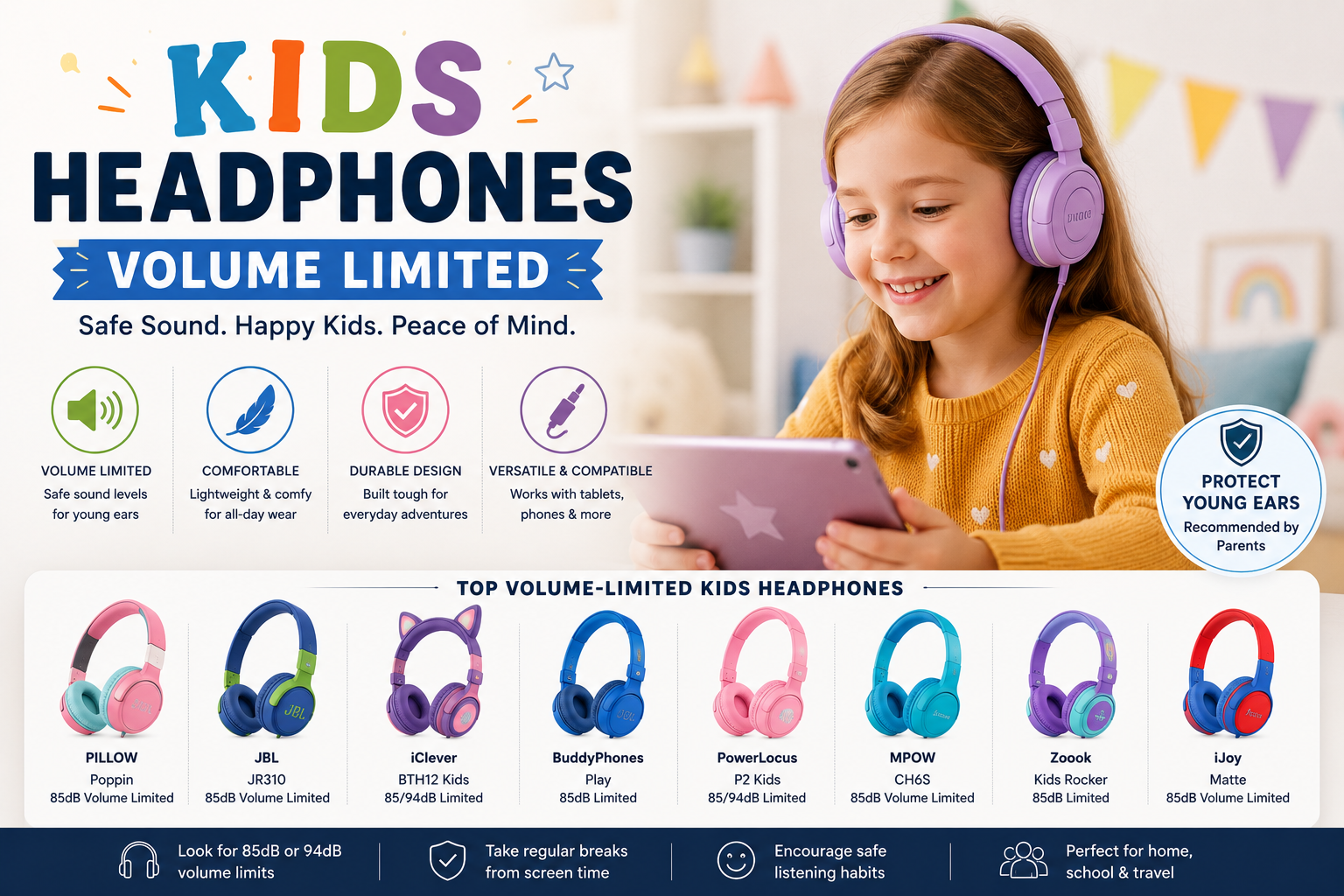
Here’s what nobody tells you until it’s almost too late: hearing damage in children is permanent, cumulative, and almost entirely preventable. The World Health Organization estimates 1.1 billion young people are at risk from unsafe audio habits. My daughter came home from school one afternoon with her ears ringing after using standard adult headphones cranked up during a lesson. That was the moment I stopped treating kids headphones volume limited as a nice-to-have and started treating them as non-negotiable.
A child’s ear canal is physically smaller than an adult’s, which means sound hits harder at the same volume setting. Damage happens faster, at lower levels, with less warning. And kids almost never self-regulate — their brains simply haven’t developed the instinct to think “that’s too loud.”
The good news? The market has genuinely caught up. Safe doesn’t mean boring anymore.
Why Volume Caps Actually Matter
Volume limiters cap maximum output at a set decibel level — typically 85dB for younger children, rising to 94dB for older kids. To put that in perspective, 85dB is roughly the sound of a busy restaurant, while anything over 100dB starts causing damage with sustained exposure. Kids using uncapped adult headphones can easily hit 110dB or higher without realising it. By the time they notice discomfort, the damage is already done — and it doesn’t undo itself.
Beyond the hearing protection angle, kids headphones volume limited tend to be built sturdier by design. Reinforced hinges, flexible headbands that bend rather than snap, detachable cables that give way when yanked rather than taking the whole headphone with them. These aren’t accidents — manufacturers building for children know exactly what kind of abuse is coming. Some models also include a sharing jack, a second headphone port so two kids can listen together at safe levels, which is surprisingly useful for car journeys and classroom activities.
School use alone justifies the investment. Teachers now use audio for language learning, music lessons, and streaming content regularly. Add home use on top and some children are wearing headphones six to eight hours weekly. That’s real exposure, week after week, across years of development.

Essential safety feature for young listeners with capped maximum output
Shokz, 【Limited Time Free Gift Included】Shokz OpenDots One Grey Wireless… £149
The Picks Worth Buying
I tested a lot of pairs before narrowing these down. (Actually, my kids did most of the real-world testing, which involved at least two drops down stairs and one incident with a dog.) These are the ones that held up.
JBL Jr 310 (Ages 4–12) — £39.99. This is where I’d send most parents first. The 85dB limiter is hardware-based and rock-solid, the build quality punches above its price, and the colours are fun without looking like a toy. The headband adjusts as your child grows, and the detachable cable means a yank won’t destroy the whole unit. Sound is clear enough for audiobooks and music. One honest caveat: the ear cups run slightly small, so kids over 10 might find them a tight fit.
Puro Sound Labs PuroQuiet Plus (Ages 5–14) — £54.99. If noise isolation is a priority — and for school use, it often is — these are the standout choice. The closed-back design keeps outside noise out and inside sound in, which also means you’ll actually hear what your child is listening to if you’re nearby. Volume caps at 85dB. Bluetooth range hits around 30 metres, battery runs roughly 20 hours, and they pair quickly without drama. They’re slightly heavier than competitors, which younger kids may notice on longer sessions.
Snug Kids Pro (Ages 3–8) — £44.99. Designed specifically for small heads, with a tighter circumference and softer ear cup padding than most. The 85dB limit genuinely cannot be overridden — there’s no settings menu, no workaround, no button sequence that unlocks more volume. For parents of kids who like experimenting with buttons, that’s a feature, not a limitation. Comes with a sharing cable. Durability is exceptional; I’ve seen these survive drops that cracked other headphones clean open. They are bulky, though, so not ideal if your child carries them in a small bag.
Beats Solo3 Wireless Kids Edition (Ages 8–16) — £149.99. Yes, it’s expensive. The build quality does justify it, and a 15-year-old will actually wear these without embarrassment, which matters more than parents sometimes admit. The volume limiter is adjustable between 85dB and 100dB, with parental control over the setting. Sound quality is genuinely excellent — real bass, clear highs, the kind of audio older kids appreciate. Battery life sits around 40 hours. The risk is obvious: at this price, a lost or sat-on pair hurts. Best reserved for kids who’ve demonstrated they can look after things.
LilGadgets Connect+ (Ages 2–10) — £49.99. These exist for one purpose: survival. The headband flexes and springs back. The cables are reinforced. The plastic resists cracking in ways that other headphones simply don’t. Volume caps at 85dB. Wired only, which removes the battery problem entirely and means no Bluetooth pairing to troubleshoot. Sound quality is acceptable rather than impressive — these are built for durability first and audio second, which is exactly the right priority for the 2–5 age group.
Sony WH-CH720N (Ages 10–16) — £79.99. Older kids want headphones that don’t announce themselves as children’s headphones. These look like adult Sony cans, just scaled down. Volume caps at 94dB (appropriate for this age group), noise cancellation works properly rather than just marketing-works, and battery runs about 35 hours. Bluetooth is stable and consistent. They’re less rugged than the budget options, so they suit kids who’ve earned some trust with tech. For a 12-year-old gaming or streaming daily, these will make them genuinely happy.

Robust wireless options with safe volume limits for active kids
What to Actually Check Before Buying
Volume limiting is the baseline — everything else is secondary to that. But once you’ve confirmed a pair has a proper hardware cap, these are the things worth checking.
Comfort is more important than most product descriptions admit. If the ear cups clamp too tight or the headband digs in after 20 minutes, your child will take them off and refuse to wear them again. Padding matters. Adjustable headbands matter because heads grow, and you want two or three years out of a decent pair. Weight matters too — anything over 200 grams gets tiring on a child’s neck during a long school session, and kids’ necks are smaller than adults’, so weight distribution hits differently.
Does the cable detach? If yes, a yanked or snapped cable costs you £8–10 to replace. If no, it might cost you the whole headphone.
Wired versus wireless comes down to age and lifestyle. Wired means no charging, no pairing, no dead battery mid-lesson. Wireless means freedom of movement and no cable tangling around furniture, which genuinely matters once kids are moving between home and school daily. Some models do both, which is the most practical option if you can find it at a reasonable price. Battery life under 15 hours feels frustrating for daily use — 20 hours should be the minimum threshold you consider.
Warranty support is worth reading about before you buy, not after something breaks. Some brands replace faulty units without question; others make the process deliberately difficult. Parent reviews on this specific point — not sound quality, not design, but what happened when something went wrong — are more useful than any spec sheet.

Ergonomic designs built for growing heads and active play
Soundlab, Digital Stereo Fashion Headphones With Luxury Padded Headband… £13.99
Spending More Doesn’t Always Mean Safer
Price and hearing protection are not the same thing. A £15 pair with a genuine 85dB hardware limiter protects your child’s hearing just as well as a £150 pair. What you’re actually paying for as you move up the price range is sound quality, durability, battery life, and brand reputation — none of which have any bearing on whether the volume cap works.
Under £50 covers most families well. JBL Jr, LilGadgets, and Snug all live here, and all three offer solid limiting, acceptable durability, and sound quality that works fine for audiobooks, school content, and music. Battery life might top out at 15–20 hours, Bluetooth range might be shorter, and the build might not survive four years of hard use. But for a child still growing into headphones, or one with a history of sitting on things, this is sensible money.
The £50–£100 bracket is where the real value sits, honestly. Better sound, longer battery life, noticeably tougher construction. A Puro Sound Labs or mid-range Sony in this range will outlast multiple years of daily use, which often makes the higher upfront cost cheaper than replacing a budget pair annually.
Over £100 is for older kids who’ve earned the trust, or for parents who want premium sound and don’t mind the risk of replacement costs. Beats and premium Sony sit here. They’re excellent. They’re also expensive to replace when left on a school bus.

Wallet-friendly options that don’t compromise on hearing protection
Altec Lansing, Kid Safe MZX4500 Wireless Bluetooth Headphones £49.99
Matching the Right Pair to Your Child’s Age
Age shapes everything about what a child needs from headphones.
Toddlers and preschoolers (2–5) need durability and simplicity above anything else. No complex features, nothing to configure, nothing to charge mid-use if you can help it. Wired is often better here. The volume cap must be 85dB and hardware-based. The design should be chunky, flexible, and capable of surviving being sat on, thrown, and chewed — in that order of likelihood.
Primary school kids (6–9) are where balance starts to matter. They use headphones for school work and entertainment, so battery life becomes relevant. Adjustable headbands matter because their heads are still growing fast. Wireless starts making practical sense if they’re carrying headphones between home and school. Stick with 85dB limits. A sharing cable is worth having for classroom activities.
Older kids (10–14) have opinions. They know what looks babyish and they won’t wear it, regardless of how much you spent. Sound quality starts to matter to them in a way it didn’t at seven. You can move to 94dB limits if needed, though there’s no reason to increase the cap unless they’re genuinely finding 85dB too quiet for their use case. They’re less likely to physically destroy headphones through rough play, so slightly less rugged options are reasonable.
Teenagers (15+) should be treated almost like adults, with one firm exception: the volume limiter stays. Let them choose the pair if that helps with buy-in. Style and brand matter to them and that’s fine — just confirm the cap before handing over the money. If a teen is resistant to volume-limited headphones, the conversation worth having is about tinnitus, which affects around 1 in 10 people and has no treatment. That usually lands.
If you can try them in a shop, do. A pair that looks right on paper but sits uncomfortably on your child’s specific head shape is a pair they won’t wear. Check return policies — some retailers offer 30-day returns on unused headphones, which gives you a proper trial period at home.

Accessories and protective options to extend headphone lifespan
Bosch, PRO Demolition Hammer 240v SDS max GSH 11 VC Carrying case 0611336070 £844.4
The Bottom Line
Hearing loss doesn’t announce itself. It accumulates quietly, across years, until one day it’s just gone — and there’s no fixing it.
The practical upside is that protecting against it is genuinely straightforward. Kids headphones volume limited are widely available, affordable at every price point, and good enough now that children actually want to wear them. The JBL Jr 310 is where I’d start for most families — it does everything it needs to do for under £40, and it’ll survive the school year. For families who want something that lasts multiple years and sounds noticeably better, the Puro Sound Labs PuroQuiet Plus at £54.99 is worth the extra spend. Premium options like the Beats Solo3 Kids Edition are excellent, but only make sense for older kids who’ve demonstrated they won’t lose or destroy them within six months.
Start with the volume cap. Everything else — wireless, weight, colour, brand — comes after that one requirement is confirmed. Your child’s future hearing is the only spec that actually matters.
Frequently Asked Questions
What decibel limit is safe for children’s headphones?
85 decibels is the recommended maximum for children under 10. For older kids and teens, 94dB is generally considered acceptable, though staying closer to 85dB is always the safer choice. The WHO recommends keeping daily exposure under 85dB for no more than 8 hours.
Can kids bypass the volume limit on children’s headphones?
On well-designed kids headphones, no. The best models have hardware-level limiters that can’t be overridden through software or settings. Cheaper options sometimes use software limits that can be bypassed, so it’s worth checking reviews before buying.
Are wired or wireless headphones better for young children?
Wired headphones are often better for toddlers and young children because there’s no battery to charge, no Bluetooth to pair, and one fewer thing to go wrong. Wireless becomes more practical from around age 7-8, when kids move between school and home and benefit from the freedom of no cables.
How do I know if kids headphones are genuinely volume limited?
Look for headphones that specify the exact dB limit in their product description, ideally 85dB. Check whether the limit is hardware-based or software-based — hardware limits cannot be overridden. Reading parent reviews about real-world use is also more reliable than trusting marketing claims alone.
At what age should I switch from 85dB to 94dB limited headphones?
Most audiologists suggest sticking with 85dB through age 12, then moving to 94dB for early teens if needed. The honest answer is: if 85dB is working fine for your child and they’re not complaining it’s too quiet, there’s no reason to increase it at all.


 No products in the cart.