

The invitation arrives on a Thursday. Saturday in July, venue TBC, dress code: Smart Casual. Suddenly you’re staring into your wardrobe at 11pm wondering what that actually means.
Here’s the thing most guides won’t tell you upfront: the most expensive suit in the world looks terrible if it doesn’t fit. Before brand, before budget, before colour — fit is everything. A £250 suit that’s been properly tailored will make you look sharper than a £700 one bought off the rail and worn as-is. Once you accept that, the rest of this gets much simpler.
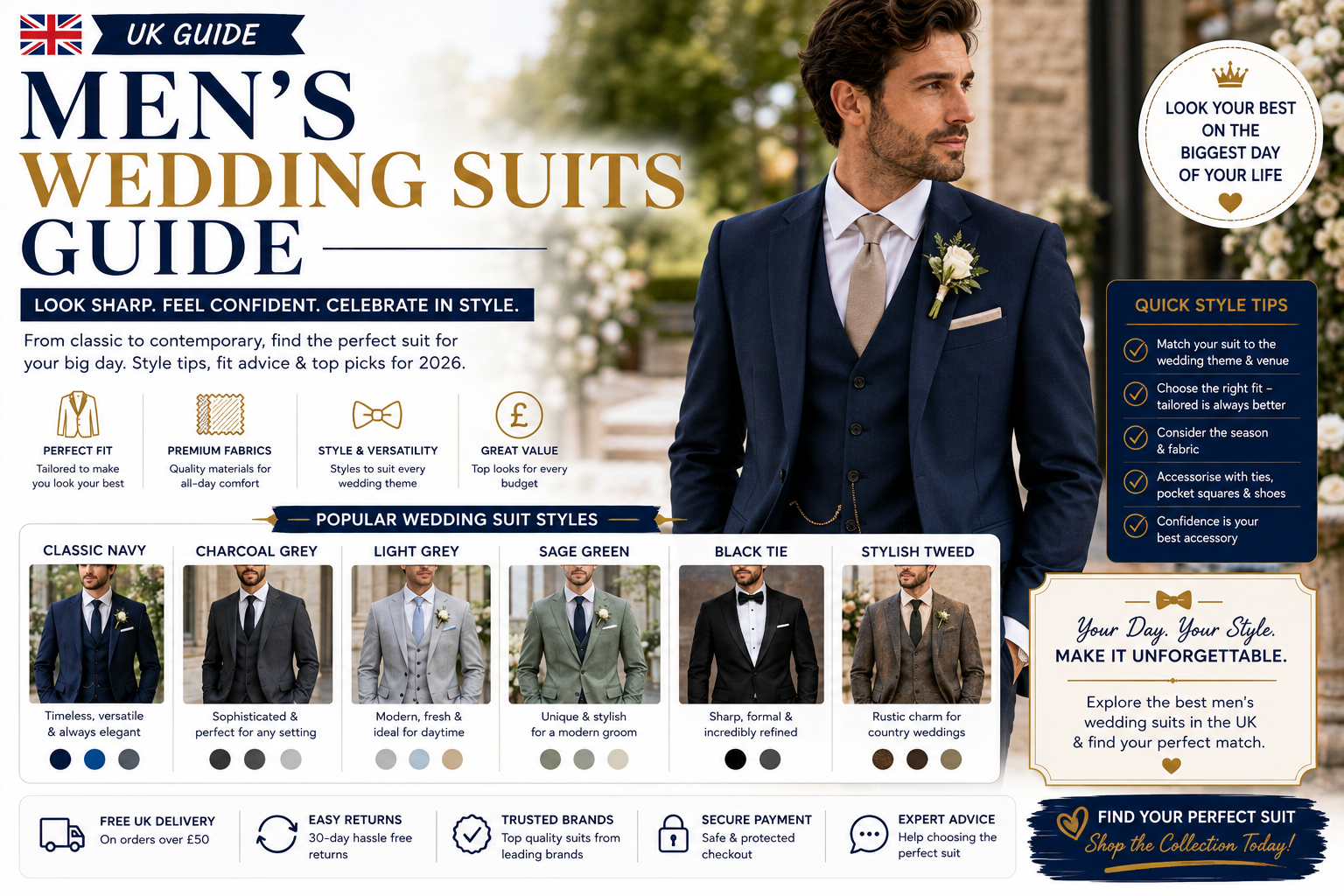
Whether you’re heading to a black-tie winter ceremony, a garden party in June, or something in between, we’ve pulled together men’s wedding suits that actually work across different dress codes, seasons, and price points. No filler — just the picks worth your time.
What Does Your Dress Code Actually Mean?
Dress codes are a language. If you don’t speak it, you’ll feel it the moment you walk in.
Black Tie & Formal Evening Weddings mean a tuxedo or a very dark, very structured suit — charcoal or midnight navy. Crisp white shirt, bow tie (not a regular tie — this matters), shoes polished enough to see your reflection in them. These happen after 6pm. No shortcuts, no substitutions.
Black Tie Optional is the sweet spot for anyone who likes getting dressed up. You can wear a tuxedo, but a beautifully tailored dark suit works just as well. This is where you have genuine permission to be creative — a patterned waistcoat, cufflinks that actually mean something to you, a tie in a deep jewel tone instead of the standard navy.
Lounge Suit / Smart Formal is the code you’ll see most often on UK wedding invitations. Standard suit in navy, charcoal, or a subtle pattern. Formal enough to feel intentional, relaxed enough that you’re not overdressed. Pair it with a dress shirt and tie and you’re done.
Smart Casual is where most men panic unnecessarily. You’re still wearing a suit — or at minimum tailored separates — but the tie is optional and the jacket can be slightly less structured. Think garden parties, daytime ceremonies, informal summer venues. The vibe is: I made a real effort, but I’m not sweating through my shirt by noon.
Casual / Garden Party means you can skip the jacket entirely if you want. A crisp shirt, tailored trousers, maybe a waistcoat. Linen is your friend. Colour is allowed. This is genuinely the one where you can breathe — literally and figuratively.

The foundation piece for most wedding codes—versatile enough for black tie optional through to smart formal
Paul Andrew, Mens Navy Suit Waistcoat Prince Of Wales Formal £54.99 (23% OFF — was £70.99)
Season Changes Everything
A heavy wool suit in August is a nightmare you won’t forget. I wore one to a July wedding in a marquee with no airflow — by the speeches I looked like I’d been swimming. Fabric choice isn’t just about aesthetics; it determines whether you’re comfortable or miserable for eight hours.
Winter & Early Spring (November–March) is your moment for structure and weight. Wool blends, deep colours, proper tailoring. You want fabric that holds its shape and keeps you warm without looking bulky. Charcoal and navy are obvious choices, but burgundy works if you’re willing to commit to it. Texture helps too — a subtle herringbone or check adds depth without demanding attention. This is the season where a well-constructed suit genuinely looks its best, because the weight of the fabric gives it a presence that lighter materials can’t match.
Late Spring & Summer (April–September) flips all of that. Linen, cotton blends, unstructured jackets — these aren’t casual choices, they’re just breathable ones. Colours get lighter too: stone, pale blue, even cream if the wedding is relaxed enough. The fit becomes even more important here, because there’s nowhere for poor tailoring to hide when the fabric is light.
Autumn (September–October) sits in genuinely odd territory.
You can get away with mid-weight wool or a linen-wool blend, and warm tones work beautifully — burnt orange, deep green, warm grey. Not quite heavy winter, but past the point where you can throw on anything and hope for the best.

Essential for warm-weather weddings—breathable without looking cheap or overly casual

The reliable choice for winter and formal ceremonies—structured, warm, and timelessly sharp
Ted baker, Mens Premium Charcoal Panama Slim Suit Jacket £109.5 (50% OFF — was £219)

The middle ground between linen and wool—works for shoulder seasons and smart-casual codes
Burton, Men’s Charcoal Tailored Fit Essential Suit Jacket Size: 42R £30 (50% OFF — was £60)
High Street vs. Premium — Where Should Your Money Actually Go?
You don’t need to spend £800 to look like you did. That’s the honest truth, and the suit market has shifted enough in the last decade that spending more doesn’t automatically mean looking better.
High-street options have gotten genuinely good. Reiss, Next, and Burton have figured out that men want decent tailoring without a second mortgage, and their mid-range suits now sit at a quality level that would have cost twice as much ten years ago. Expect to pay £150–£400 for something that’ll survive multiple weddings and actually acknowledges that human bodies aren’t all shaped identically. The catch — and there is one — is that you’ll almost certainly need alterations. That’s not a criticism. That’s just how off-the-rail suits work for anyone who isn’t built exactly like a shop mannequin, which is most people.
Premium brands (Hackett, Savile Row specialists, the upper end of Ted Baker) charge more because the fabrics are genuinely better, the construction is more obsessive, and you’re buying something that’ll still look sharp in six years rather than two. You’re looking at £500–£1,200+. Worth it if you wear suits regularly. Probably not worth it if you’re a wedding guest three times a year and the suit otherwise lives in a bag at the back of your wardrobe.
The middle ground — Suit Supply, John Lewis own-label, Ted Baker’s standard range — is where most men should be shopping. Decent fabric, proper tailoring options, prices that don’t require a spreadsheet to justify. Usually £300–£600. This is where value actually lives.
High-street staple that works across multiple dress codes without breaking the bank
Burton, Men’s Navy Tailored Fit Essential Suit Jacket Size: 38R Navy 38R £30 (50% OFF — was £60)

Premium mid-range option with better fabric and construction than basic high-street
Ted baker, Mens Flat Fronted Slim Fit Suit Trousers In Charcoal Wool £65 (50% OFF — was £130)

Lighter option for warm-weather weddings that still reads as intentional and polished
River Island, Mens Suit Trousers Beige Slim Fit Linen Blend £20 (60% OFF — was £50)
Ties, Shoes & the Details That Actually Get Noticed
The suit is the canvas. The accessories are where you either look considered or like you grabbed whatever was nearest to the door.
Ties first. If the dress code specifies one, wear one — full stop. If it’s smart casual and you want to wear a tie anyway, that’s fine, just make sure it coordinates with the suit rather than simply existing in the same outfit. Silk ties in jewel tones, quiet patterns, or classic stripes work for almost any wedding. Skip anything neon, novelty, or so narrow it looks like a shoelace. Width actually matters more than most men realise — aim for around 7–8cm. Too thin and you look like you’re stuck in 2008. Too wide and you’ve raided your dad’s wardrobe.
Shoes are non-negotiable. This is the detail that tells people whether you actually made an effort or just put a jacket on. Oxford or derby shoes in black or dark brown, properly polished, with real leather (or at least convincing faux leather). Not trainers. Not boat shoes, unless it’s genuinely a beach ceremony and even then, maybe reconsider. If you’re wearing a linen suit to a summer wedding, suede or a lighter tan works — but it still needs to look like a deliberate choice rather than an accident. And wear socks. Visible ankles at a wedding is a statement, and not a good one.
Pocket squares are optional. They’re also the fastest way to look like you know what you’re doing — a simple silk square in a complementary colour, folded cleanly, not stuffed in like a tissue you forgot about.
Cufflinks matter if your shirt has proper cuffs (which it should, if you’re wearing a formal suit). Nothing flashy. Silver or gold, or something with a bit of personality — but not a novelty item. Cufflinks live in the background. They shouldn’t be the first thing anyone notices about you.

Essential accessory that ties the whole look together—literally

The foundation of any sharp wedding look—polish and quality matter more than you’d think
Infinity Leather, Mens Black Oxford Formal Derby Shoes Faux Leather £44.99 (22% OFF — was £57.99)
Packing a Suit Without Destroying It
A suit that wrinkles if you look at it wrong is a suit that’ll stress you out before you’ve even found your seat at the ceremony.
Wool-blend fabrics — wool mixed with a small percentage of polyester or elastane — hold their shape far better than pure wool when packed. They recover from creases faster too. Something around 80% wool, 20% synthetic doesn’t feel cheap; it just feels practical, which is exactly what you need when you’re pulling a suit out of a bag in a hotel room twenty minutes before you need to leave.
Linen suits wrinkle by design. That’s not a flaw — that’s their whole character. If you’re packing one, either plan to steam it when you arrive or commit to the slightly relaxed look, which genuinely works at casual summer weddings if you own it rather than apologise for it.
Roll your suit instead of folding it.
Seriously — rolling reduces creasing more than any folding method I’ve tried, and I’ve ruined enough jacket sleeves with sharp fold lines to say this with some confidence. Pack trousers inside out to protect the outer fabric, jacket on top. If you’re genuinely paranoid, use a garment bag, but rolling works for most trips. A small travel steamer costs around £20 and is worth keeping in your bag if you’re attending weddings more than twice a year.
Practical choice for destination weddings or long journeys—holds shape and forgives packing

For travel and warm venues—keeps you comfortable without sacrificing polish
Get the Fit Right, Then Worry About Everything Else
Shoulders first. They should sit exactly at your shoulder point — not hanging off the edge, not pinching inward. This is the one measurement that alterations cannot easily fix, so if the shoulders are wrong in the shop, walk away. Everything else — sleeve length, jacket waist, trouser hem — a decent tailor can sort for £30–£60. The shoulders, though. Get those right from the start.
Sleeves should end just above your wrist bone, showing roughly half an inch of shirt cuff. The jacket should button without pulling across the chest. Trousers should break just slightly on your shoe with a clean line down the front — not pooling, not hovering above the ankle like you’ve grown since you bought them. Actually, that last point is worth checking if you’re pulling out a suit you haven’t worn in two years. Bodies change. Suits don’t.
Budget for alterations from the start.
Most men don’t, and then they skip them because it feels like an extra expense on top of what they’ve already spent. That’s the wrong calculation. A £280 suit that’s been properly tailored to your body will make you look sharper than a £700 suit worn straight off the rail. I’d put money on it.
One last thing: wear the suit before the wedding. Not just to check the fit — wear it around the house for an hour, sit down, stand up, reach across a table, hug someone. If something feels wrong or restrictive, you’ve got time to fix it. Discovering mid-ceremony that your jacket pulls every time you move is not a problem you want to solve at the reception bar.
Good men’s wedding suits aren’t about impressing anyone. They’re about showing up looking like you respected the occasion enough to give it some thought. That matters — not because it’s shallow, but because weddings are someone else’s moment and dressing well is a small, concrete way of saying you understood that. Find something that fits, get it adjusted, and then actually enjoy the day.
Hey savvy shoppers! When the items in our articles catch your eye and you decide to buy through our links, we may earn a small commission at no extra cost to you. Think of it as a way of supporting us in bringing you the best content!
Frequently Asked Questions
What is the difference between black tie and lounge suit dress codes at weddings?
Black tie means a tuxedo or very dark structured suit, bow tie, and polished formal shoes — typically for evening ceremonies after 6pm. Lounge suit is the most common code: a standard navy or charcoal suit with dress shirt and tie. Both are formal, but black tie is a level above.
Can I wear a linen suit to a wedding?
Yes, for spring and summer weddings especially. Linen suits are breathable and look sharp in warm weather. Just know they wrinkle easily — either steam them when you arrive or commit to the slightly relaxed look, which actually works if the wedding is casual enough.
How much should I spend on a wedding guest suit?
Honestly, £200–£500 covers most men well. High-street brands like Burton and Next have improved dramatically. The real investment isn’t the price tag — it’s paying a tailor £30–£60 to adjust the fit. A well-fitted £250 suit will beat a baggy £600 one every time.
What shoes should I wear with a wedding suit?
Oxford or derby shoes in black or dark brown, properly polished. For summer linen suits you can stretch to suede or a lighter tan leather, but it still needs to look deliberate. Skip trainers, boat shoes, or anything casual — and wear socks.
How do I pack a suit for a destination wedding without it creasing?
Roll it rather than fold it — this genuinely reduces creasing. Pack trousers inside out, jacket on top. A wool-blend fabric recovers from travel far better than pure wool or pure linen. If you’re staying overnight, most hotels offer a pressing service for a few pounds.


 No products in the cart.