

Here is the honest version of budget gaming audio: a £45 headset I bought on a whim two years ago still sits on my desk, and I have never once wished I’d spent more. That is not a universal truth, but it is close enough to be useful.
UK gamers hunting for solid audio under £50 have more genuinely good options right now than at any point before — and knowing which ones are worth your money versus which are marketing dressed up as value is the whole game.
Why cheap doesn’t mean bad anymore
Five years ago, anything under £50 was basically a gamble. You’d tear open the box, slap on the headset, and immediately clock the tinny highs, the mic that made you sound like you were calling from a submarine, and the headband that started pinching around the 45-minute mark. That was just the reality. The budget gaming headset market has shifted since then, and not in a small way — you are now getting headsets with functional virtual surround sound, noise-filtering mics, and drivers that hold up across hours of play. The trade-off has moved away from core performance and landed squarely on build materials: thinner plastics, lighter padding, cables that feel a touch delicate. That is a much better trade-off than it used to be.

Introduction to affordable gaming audio options for UK gamers
SUBSONIC, Pro Gaming 50 Gaming Headset Multicolor £15 (25% OFF — was £19.99)
Seven picks that actually hold up
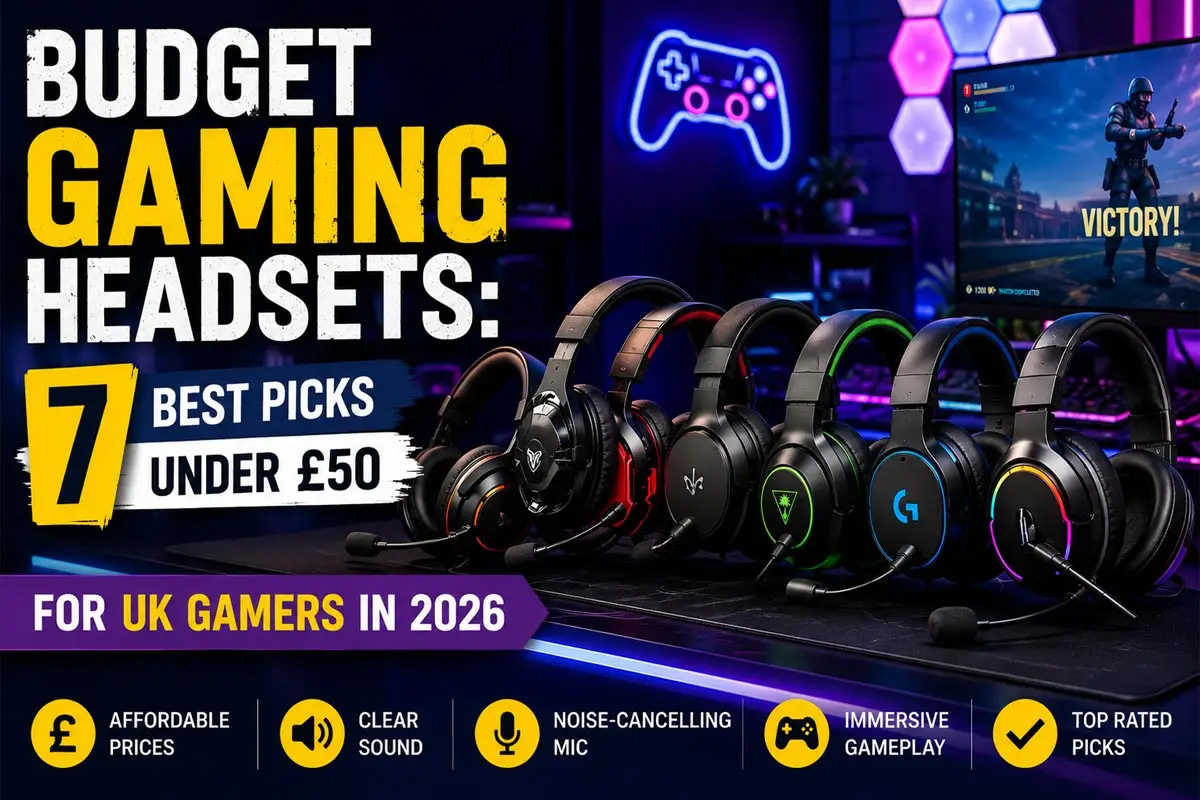
I have narrowed this down to seven headsets. Not ten, not three — seven, because that is how many cleared the bar after real use across shooters, open-world games, and long group sessions where a bad mic gets you muted fast.

Best budget gaming headsets for various platforms and gaming styles
The HyperX Cloud Stinger 2 sits at around £45 and earns it. Lightweight enough that you forget it is there, flip-to-mute mic that your squadmates will thank you for, and audio that is crisp without going shrill in the highs. The virtual 7.1 is not magic, but it is useful for positional audio in shooters. One honest gripe: the cable feels thin where it meets the headset. It has not failed on me yet, but I handle it with a bit more care than I probably should.
The SteelSeries Arctis Nova 1 is the one I keep recommending to people who ask in person. At £49, it looks like a normal headset rather than a piece of RGB furniture, which matters if you wear it outside gaming sessions too. The mic clarity surprised me — a friend asked if I had upgraded my setup because I suddenly sounded cleaner on calls. Eight hours straight in one sitting, no discomfort. That is the number that matters.
The Corsair HS35 Stereo runs £35–40 depending on where you catch it, and it feels more expensive than it is. Build is solid. Sound leans warm, which some people love and others find a touch muddy — worth reading a few reviews to see which camp you fall into. The mic is average, honestly. Fine for voice chat, nothing to write home about. Best suited to people who game mostly solo and want reliable audio without overthinking it.
The SCUF H6 Pro (around £45) is underrated because people overlook it in favour of the bigger names. Designed for console use, which means the controls are where you expect them, it just works out of the box without any software fiddling, and the sound profile is tuned for clarity in competitive games specifically. The ear cups run slightly small — I noticed it after about two hours, though it did not become a problem.
The JBL Quantum 100 at £40–45 brings actual audio pedigree to a price point where most brands are winging it. Sound is balanced and easy on the ears over long sessions, which is rarer than it should be in this category. The headband does feel plasticky, and the mic is average at best. But if you want a name with genuine audio history behind it and you use your headset for music and video as much as gaming, this one makes sense.
The Turtle Beach Recon 50 costs around £35–40 and somehow does not feel like a £35–40 headset. The audio punches. There is a faint mic hum that you will notice in quiet moments and then stop noticing entirely — actually, it is barely worth mentioning, but I would rather flag it than not. Padding could be thicker. Still, if money is genuinely tight, this is the pick.
The Razer Kraken X at £40–45 is for people who want the Razer ecosystem without the Razer flagship price. Surround sound works well, mic is clear, build feels sturdy. It runs slightly heavy compared to the Cloud Stinger 2, which becomes noticeable past the four-hour mark. The RGB is fixed with no customisation — which either does not bother you at all or bothers you a lot, depending on who you are.

Budget headsets with quality microphones for team communication
What actually matters when you are shopping
Comfort is non-negotiable — full stop. A headset you cannot wear for three hours straight is a waste of money regardless of how it sounds. Look for ear cup padding you can press a finger into, a headband that spreads weight rather than concentrating it on one point, and total weight under 300 grams if you can manage it. Adjustability matters more than materials at this price; being able to dial in the fit saves you from that low-grade pinching headache that sneaks up around hour two.
The mic is where most budget headsets quietly fail. You want your voice picked up cleanly without the headset also picking up your mechanical keyboard, your fan, and whatever your neighbours are doing. Flip-to-mute is genuinely useful — faster than any software shortcut. Noise cancellation on the mic input (not the audio output) is worth prioritising if you can find it in your budget range.
Sound quality at this price is about balance, not wow factor. Can you hear which direction footsteps are coming from? Do the highs stay clear without turning sharp after an hour? Is the bass present without swallowing everything else? Those are the questions. Bass-heavy profiles sound impressive for about twenty minutes and then become tiring. Read reviews from people playing the same genres you play — a headset tuned for competitive shooters sometimes sounds hollow in a sweeping RPG soundtrack.

Budget gaming headsets prioritising comfort for extended play sessions
Razer, BlackShark V2 X 50mm Triforce Drivers Wired Gaming Headset £35.82
The brands worth knowing about
Certain names keep appearing in the budget space for good reasons, not just because they have big marketing budgets.
HyperX (HP-owned now) built its reputation on consistency. Nothing flashy, rarely disappointing. Their customer service is also decent, which matters more than people admit when something goes wrong six months in.
Razer is the brand everyone recognises, and their budget range is genuinely good rather than coasting on name recognition. Their companion software can feel bloated if you do not care about customisation, but you can ignore most of it.
Turtle Beach has been making gaming audio since before gaming audio was a category. Their budget options are no-frills in a good way — proven designs that do not try to over-engineer anything.
JBL brings mainstream audio engineering to gaming headsets, which shows. Their products tend to sound more natural than pure gaming brands, and they hold up well for non-gaming use too.
SteelSeries has quietly put out some of the best value options at this price point over the last two years. The Arctis Nova 1 in particular sits well above what the price suggests.
Corsair makes reliable peripherals without a lot of fuss. Their budget headsets will not excite you, but they will not let you down either — which is sometimes exactly what you need.

Budget gaming headsets from established brands with proven track records
Logitech, G321 LIGHTSPEED Wireless Bluetooth Gaming Headset £39.99 (33% OFF — was £59.99)
Which one should you actually buy?
What is your setup, and what do you mostly play? Those two questions narrow the field faster than any spec sheet.
Competitive FPS players — Counter-Strike, Valorant, Warzone — should lean toward the HyperX Cloud Stinger 2 or SteelSeries Arctis Nova 1. Positional audio and mic clarity matter more here than anything else. Hearing footsteps a half-second earlier is the difference between a kill and a death.
Single-player and story game players can deprioritise surround sound and focus on audio balance and comfort. Long sessions in a narrative game reward a headset that sounds natural rather than processed. The JBL Quantum 100 or Corsair HS35 handle this well, and neither will fatigue your ears across a four-hour stretch.
Console players, particularly PS5 or Xbox, should look at the SCUF H6 Pro first. No drivers, no setup headaches, no wondering whether it will work — just plug in and go.
If budget is tight and you need something right now, the Turtle Beach Recon 50 delivers the most per pound spent. Nothing premium about it, but nothing broken either.

Budget gaming headsets suitable for different gaming platforms and preferences
Trust Gaming, Multi platform Gaming Headset GXT433K Pylo Camo in Black Black £12.99
One thing before you commit: check the return window. Amazon, Currys, and Scan all offer 30 days. Use it. Audio is personal in a way that spec sheets cannot predict — how a headset sits on your specific head, whether the clamping force bothers you after hour three, whether the mic picks up your particular voice well. Buy it, wear it for a full session, and keep the receipt.
The gap between a £45 headset and a £150 one exists. I am not going to pretend otherwise. But for most people playing most games, that gap is smaller than the price difference suggests — and the SteelSeries Arctis Nova 1 at £49 is my honest pick if you want one answer rather than a decision tree.
Hey savvy shoppers! When the items in our articles catch your eye and you decide to buy through our links, we may earn a small commission at no extra cost to you. Think of it as a way of supporting us in bringing you the best content!
Frequently Asked Questions
Are budget gaming headsets under £50 actually worth buying?
Yes, genuinely. The sub-£50 market has improved dramatically over the past few years. You get decent directional audio, mics your squad won’t mute, and enough comfort for multi-hour sessions. The main trade-off is build materials — thinner plastics, lighter padding — not core audio performance.
What should I prioritise when buying a budget gaming headset?
Comfort first, mic quality second, sound third. A headset that hurts after 90 minutes is worthless no matter how it sounds. After that, check whether the mic has flip-to-mute and pick up your voice without swallowing every keyboard click in the room.
Do budget gaming headsets work on both PC and console?
Most wired headsets with a 3.5mm jack work across PC, PS4, PS5, and Xbox with no fuss. Some USB headsets are PC-only or need an adapter. Always check the compatibility list before buying — console-specific models like the SCUF H6 Pro skip the driver headache entirely.
Is 7.1 surround sound on budget headsets actually useful?
It depends. Virtual 7.1 on budget headsets is software-driven, not hardware, so quality varies a lot. For competitive shooters where footstep direction matters, it can genuinely help. For story games or music, plain stereo often sounds cleaner and less processed.
How long should a budget gaming headset last?
Realistically, one to three years with regular use. Budget headsets cut costs on cable quality and hinge durability, so those are the first things to go. Treating the cable well — no tight wrapping, no yanking — adds months to the lifespan.



 No products in the cart.