

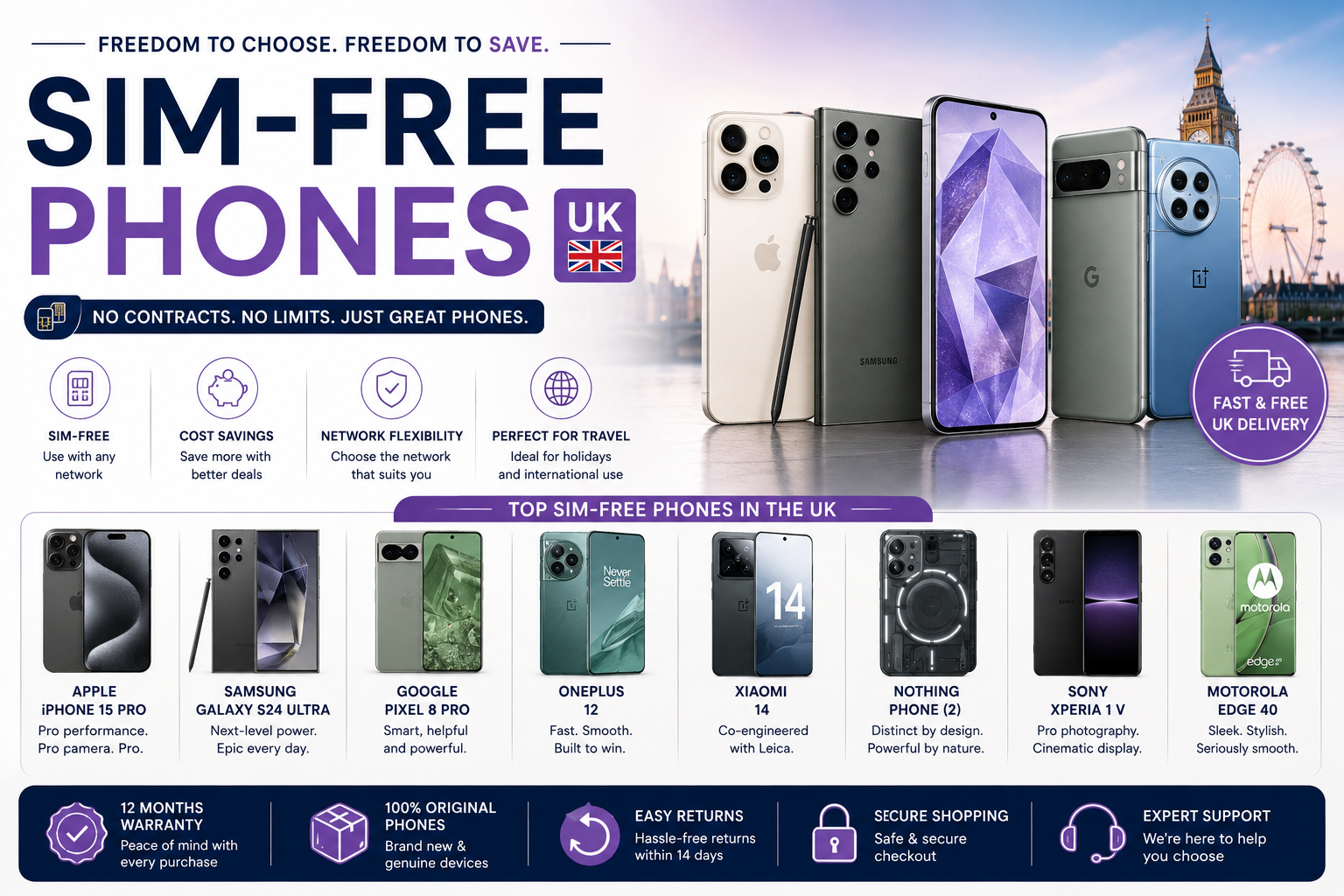
Here is what most phone buyers find out too late: a £50-a-month contract over 24 months costs £1,200 before you technically own anything. Buy the handset SIM-free, grab a £15-a-month SIM-only deal, and that same two years runs closer to £800. The maths isn’t close.
That gap is why SIM-free phones UK have gone from a niche choice to the obvious one for anyone paying attention. You buy the phone once. Then you’re free.
Why Unlocked Actually Wins
I’ll be honest — I held off going SIM-free for longer than I should have, mostly out of habit. The idea of sorting the phone and the SIM separately felt like effort. But once I did it, I couldn’t quite believe I’d been handing networks an extra £30 a month for years. The savings aren’t theoretical. They show up in your bank account every single month, and you never have to sit through a retention call when you want to leave.
There’s also the resale angle, which doesn’t get talked about enough. An unlocked phone sells to anyone on any network. A carrier-locked handset sells to a much smaller pool of buyers, and that shows in the price you get. If you upgrade every couple of years, better resale value on the outgoing phone meaningfully offsets what you spend on the new one.
Freedom matters too. Your network’s speeds are terrible in your area? Leave. No exit fees, no guilt. Just done.
Top SIM-Free Smartphones for Every Budget
Whether you’ve got £250 to spend or you’re ready to go full flagship, there’s an unlocked phone worth buying right now. The best phone for you isn’t necessarily the most expensive one — it’s the one that matches what you actually do with it every day.

Entry-level SIM-free phone for everyday users

Solid mid-range SIM-free phone with good performance
Samsung, Galaxy S26 Ultra 5G 256GB AI Smartphone Violet £989 (24% OFF — was £1299)

High-end SIM-free phone for power users
Samsung, Galaxy S26 Ultra 5G 256GB AI Smartphone Violet £1269

What Do You Actually Need It to Do?
This is the question most buying guides skip past too quickly, and it’s the one that matters most.
Camera-focused buyers should look at sensor size, optical zoom range, and night mode performance rather than just megapixel counts — a 50MP sensor in a well-engineered system will beat a 200MP one with poor processing every time. Gamers need processor grunt (the Snapdragon 8 Elite and Apple’s A18 chip are the current benchmarks), at least 8GB of RAM, and a display running at 120Hz or higher, because once you’ve used a high refresh rate screen you genuinely can’t go back to 60Hz without noticing. For everyone else who mostly wants a reliable phone that handles calls, messages, maps, and the occasional scroll through social media without dying at 4pm, an honest mid-ranger at £300 to £450 is almost certainly the right answer — and spending twice as much won’t make your day meaningfully better.
Battery is trickier than the spec sheet suggests. Raw capacity (mAh) only tells part of the story, because a well-optimised 4,500mAh phone regularly outlasts a power-hungry 5,500mAh one in daily use. Read real-world endurance reviews, not just the headline number.

SIM-free phone prioritising all-day battery performance
Apple, iPhone 13 Pro Max 5G 256GB Alpine Green SIM-Free Unlocked Mobile Phone £419

SIM-free phone for photography and video enthusiasts
Samsung, Galaxy S26 5G 256GB SIM-Free Unlocked AI Smartphone £899

SIM-free phone optimised for gaming and demanding apps
Apple, iPhone 14 5G 128GB Midnight Sim-Free Unlocked Mobile Phone £249 (64% OFF — was £699)
Pairing Your Phone With the Right SIM Deal
Once you have an unlocked phone, the SIM choice is where the real savings compound.
EE, Vodafone, O2, and Three all run SIM-only plans from roughly £10 for a data-light option up to £50 for unlimited everything. But the big four aren’t always the smart pick. MVNOs — smaller providers running on the same towers — routinely undercut them. Giffgaff runs on O2’s network, Smarty uses Three, Voxi sits on Vodafone. Same coverage, lower bill. The catch is that customer service can be patchier, but for most people who never actually call their network, that’s a non-issue.
Check your last three months of usage before buying any plan. Most UK smartphone users consume between 8GB and 18GB monthly (actually, a lot of people are surprised to find they use less than they think, especially if they’re on WiFi at home and at work most of the day). Paying for unlimited data when you never breach 15GB is just a donation to your network.

Best-value SIM-free phone for balanced performance and price
Samsung, Galaxy S25 Ultra 5G 12GB RAM 256GB AI Smartphone Titanium Black… £799 (41% OFF — was £1349)
Before You Hit Buy
Budget first. Always. If your honest ceiling is £350, don’t spend an afternoon reading reviews of £900 phones — you’ll just make yourself dissatisfied with the right answer. Plenty of phones in the £250 to £450 range are genuinely excellent, and a phone you’re comfortable owning beats an aspirational one that quietly stresses you out every time you check your account.
Software support is worth more attention than most buyers give it. Apple typically supports iPhones for five to six years with full OS updates. Samsung’s flagships now get four years of major Android updates. Budget Android phones sometimes age out after two years, which means you’re either running outdated security patches or buying again sooner than you planned.
Read user reviews, not just tech press write-ups. Reddit threads and long-term YouTube reviews from people who’ve used a phone for six months will surface the genuinely annoying quirks that never appear in launch-day coverage. A phone can have a headline-grabbing camera and a charging port that collects lint so aggressively it stops working within a year. That kind of thing matters.
Compare prices across Currys, John Lewis, Amazon, and the manufacturer’s own site before buying. The same handset can vary by £50 to £100 depending on where you look and whether any cashback deals are running that week.
Going SIM-free in 2026 isn’t a compromise. It’s just the smarter way to own a phone — and anyone still rolling over into a new two-year contract without running the numbers is almost certainly leaving money on the table.
Hey savvy shoppers! When the items in our articles catch your eye and you decide to buy through our links, we may earn a small commission at no extra cost to you. Think of it as a way of supporting us in bringing you the best content!
Frequently Asked Questions
Will a SIM-free phone work on any UK network?
Yes. An unlocked phone works on EE, Vodafone, O2, Three, and every smaller MVNO without any restrictions.
How much can I actually save buying SIM-free instead of on contract?
Most people save between £200 and £400 over two years by buying unlocked and pairing the phone with a SIM-only deal. Heavier users on premium plans sometimes save more.
Can I spread the cost of a SIM-free phone?
Many retailers including Currys, John Lewis, and manufacturer websites offer 0% interest finance. You get the flexibility of SIM-free without needing to pay everything upfront.
Do SIM-free phones come with a warranty?
Yes, standard manufacturer warranties apply just as they would with a contract phone. Most cover one year. Extended protection plans are usually available at checkout for an additional cost.
Where are the best places to buy unlocked phones in the UK?
Currys, John Lewis, Amazon, and the manufacturer’s own website are the most reliable options. Always compare prices across at least two or three before buying — the same model can vary by £50 to £100 depending on where you look.


 No products in the cart.