

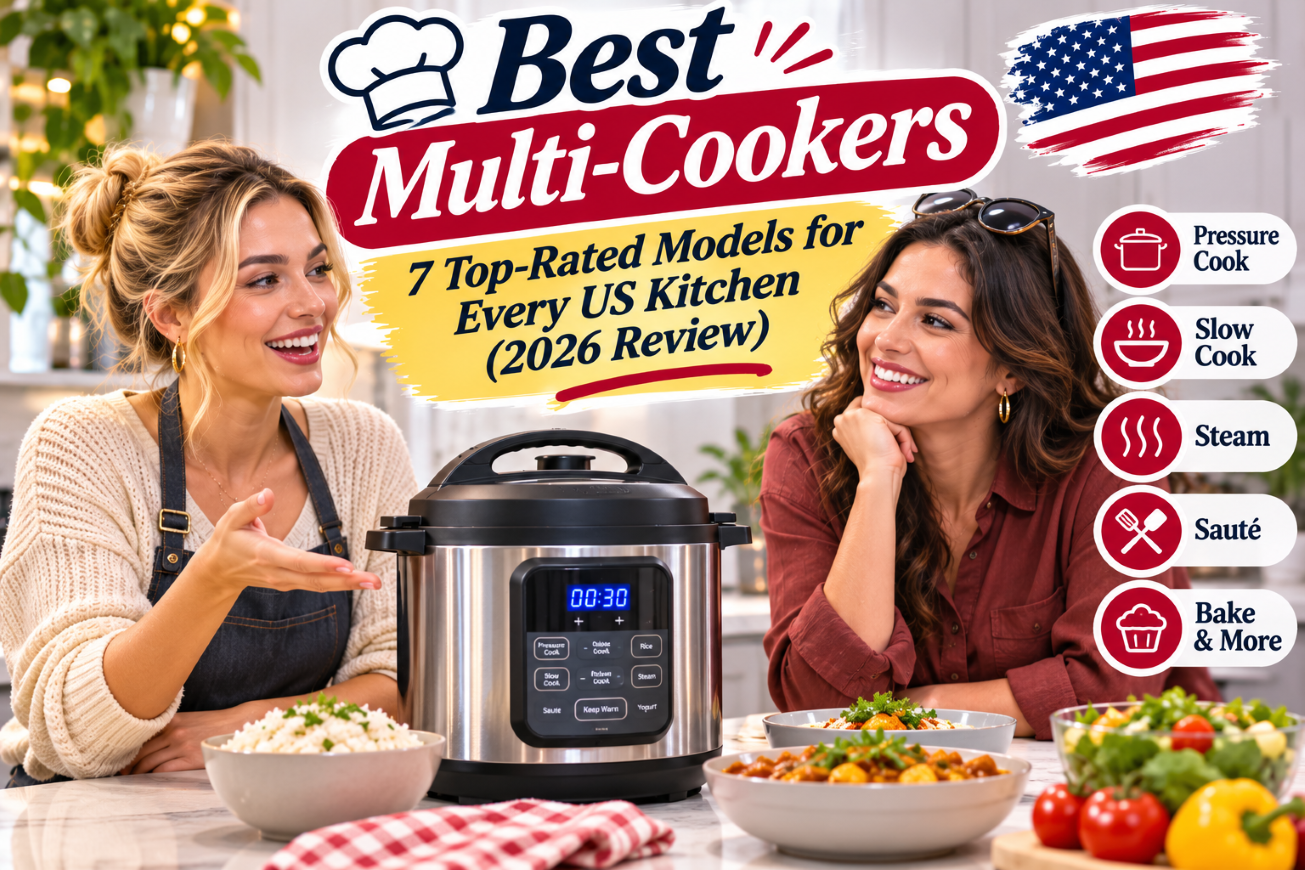
Three multi-cookers. That is how many I own right now, which either makes me a serious home cook or someone with a minor appliance problem — probably both. One lives at my mom’s apartment where she batch-cooks chicken almost every day. One is mine, used for weeknight curry and risotto. The third went to my brother, who uses it exclusively for Sunday meal prep and refuses to give it back.
Here is what I learned from watching three different people cook with three different units across two years: the best multi-cookers are not exciting purchases. They have no Instagram appeal. What they do is quietly replace a pressure cooker, a slow cooker, a rice cooker, and sometimes a steamer — four appliances — with one device that actually earns its counter space.
Why This Appliance Actually Earns Its Counter Space
Pressure cooking cuts time by up to 70% compared to stovetop methods, and that is not ad copy — it is physics. A sealed, high-pressure environment drives moisture into food at temperatures above the normal boiling point, which means a tough chuck roast goes tender in 25 minutes instead of two and a half hours, dried chickpeas go from rock-hard to creamy in under 35 minutes, and weeknight dinners that used to require planning ahead become genuinely spontaneous. I have made beef stew on a Tuesday after getting home at 7pm. That was not possible before.
Speed is only part of it.
The other part is what you stop buying. When one appliance handles pressure cooking, slow cooking, steaming, sautéing, and rice, you are not just saving time — you are reclaiming cabinet space and simplifying cleanup. One pot. One lid. Done.
There is also an energy angle worth mentioning: pressure cooking uses roughly 30% less electricity than conventional methods because the cook time is so compressed. Cook four or five times a week and that difference adds up over a year in a real, measurable way.
Multi-Cooker vs. Pressure Cooker — Does It Matter?
People conflate these two things constantly, and the distinction is worth getting straight before you spend money.
A stovetop pressure cooker does one thing: pressurizes to cook food fast. You monitor the heat yourself, manage the pressure manually, and stay nearby while it works. They are cheap — often under $40 — and they work brilliantly for anyone willing to be hands-on. Your grandmother probably owned one and probably used it until it fell apart.
A multi-cooker is an electric countertop appliance with a built-in heating element, a sealed cooking chamber, and programmable modes for pressure cooking, slow cooking, steaming, sautéing, rice, and sometimes yogurt or sous-vide depending on the model. You add ingredients, press a button, and walk away. The pressure management is automatic. Some models have 15 or more cooking functions; others keep it to five essentials. The price range runs from around $60 to well over $400, depending on capacity and features.
Think of it this way: a stovetop pressure cooker is a tool that demands your attention. A multi-cooker is an appliance that works while you do something else. Neither is objectively better — the right choice depends on how hands-on you want to be and whether you have a stovetop to spare.
Seven Models Worth Considering Right Now
What follows covers the real range of what is available — across sizes, price points, and feature sets. I have weighed actual user reviews against specs, cross-referenced common complaints, and cut anything with patterns of the same failure showing up repeatedly in feedback.

Best all-around multi-cooker for families with multiple cooking needs
Instant, Duo Plus Stainless Steel Digital Pressure Cooker 6 qt Black/Silver $139.99
The 6-quart range is where most households land, and for good reason. You get enough capacity for a full family dinner or a solid meal-prep session without the bulk and weight of a larger unit. Models in this tier typically include food-specific preset programs for chicken, beans, rice, and soup; a delay-start timer; and either a digital display or tactile mechanical controls depending on preference. The stainless steel inner pot is worth paying attention to — it does not hold onto flavors, does not stain, and does not degrade the way non-stick coatings eventually do. If a model in this range is offering a non-stick pot as a premium feature, treat that skeptically. Look for a manual pressure release valve and at least two or three distinct pressure settings before committing.
Best multi-cooker for small apartments or single households
Cooking for one or two people? A 3 or 4-quart model makes more sense than the standard 6-quart. It takes up roughly half the footprint, weighs noticeably less, and is far easier to store if you are renting or moving. The obvious limit is volume — batch-cooking a week of lunches or feeding more than three people gets awkward fast. But for daily single-person cooking, these smaller units are not a compromise. They are the right tool.

Some multi-cookers do five things. Others do twenty. If you actually want sous-vide, yogurt-making, sterilizing, and pressure-canning in a single appliance, models with expanded function sets exist and they work. The honest caveat is that most people use three or four functions regularly and ignore the rest — so before paying a premium for a 20-program model, open the manual online and check whether those extra programs are genuinely distinct cooking modes or just renamed versions of the same two or three settings. Marketing teams are creative with button labels.
Best multi-cooker for large families or meal prepping
Eight-quart models are for volume. Feeding six people, meal-prepping seriously, or cooking a whole chicken with vegetables in a single load — this is the tier for that. Expect the unit to weigh 10 or more pounds, expect it to need a permanent spot rather than moving in and out of a cabinet, and expect slightly longer preheat times because of the larger chamber. For the right household this is genuinely the most efficient option. For a single person or couple it is overkill, and the extra size will annoy you more than the capacity helps.
Best budget-friendly multi-cooker with essential features
Instant Pot, Duo Plus 6-qt. Multi-Use Pressure Cooker $139.99
Solid budget options exist in the $50 to $80 range. They cover pressure cooking, slow cooking, steaming, and basic rice reliably. No Wi-Fi, no guided recipes, fewer preset buttons — just core functions done well. Read reviews carefully at this price tier because build quality varies more than it does at $150. The things to check for specifically: stainless steel inner pot (not non-stick), a warranty of at least two years, and user comments that mention durability after six or more months of regular use rather than just first impressions.

Best premium multi-cooker with smart features and app connectivity
App-connected multi-cookers let you start cooking remotely, monitor progress from your phone, and access guided recipes with built-in measurements. They run $200 to $300 or more. Honestly? I think the Wi-Fi feature is a novelty for most people — I used it twice before reverting to just pressing buttons at the machine like a normal person. But if you want to start dinner from your office or you cook better with recipe guidance built into the interface, this tier exists and the hardware is generally well-made. Just check recent reviews specifically about the app, not the cooker. A great pot attached to a broken app is an expensive frustration.
Best multi-cooker for cooking multiple dishes simultaneously
Presto, Polished Stainless Steel Pressure Cooker 6 qt $99.99
Dual-chamber models let you run two separate cooking programs at the same time. Protein in one chamber, vegetables or grains in the other, different times and temperatures, finished simultaneously. If you cook for people with different dietary needs, or you want to meal-prep two components without doing them sequentially, this is the design that solves that. They cost more than single-chamber units and take up more counter space. Whether that trade-off makes sense depends entirely on how often you would actually use both chambers at once.
What Does “Budget-Friendly” Actually Mean Here?
Under $100 buys a capable multi-cooker. Full stop. The gap between a $75 model and a $250 model is usually features — preset programs, app connectivity, aesthetic finish — not fundamental cooking performance. Pressure cooking at high pressure works the same way regardless of what the outer housing looks like.
Watch for three things in the sub-$100 range: a stainless steel inner pot (non-stick degrades), a warranty of at least two years, and reviewer comments about long-term durability. First-impression reviews are mostly useless. Look for people who have owned the thing for six months or a year and are reporting back on whether it still works.
One honest warning about the very bottom of the market. A $29 multi-cooker exists. It will probably cook your food. It will also probably have a lid that fits poorly, buttons that stick after three months, and a seal that fails before the warranty runs out. Sometimes cheap is cheap, and the frustration cost outweighs the savings. The $60 to $80 range is where the value floor actually is — below that, you are gambling.
Premium Features That Are Actually Worth Paying For
Spending $200 or more should get you something specific, not just a fancier box.
Multiple pressure levels. Low, medium, and high settings give you real control. Delicate fish and eggs need low pressure. Tough cuts need high. A single-pressure model forces you to work around the hardware rather than with it.
A sauté function with temperature adjustment. Browning meat before pressure cooking adds depth to the final dish that you cannot get otherwise. Doing it in the same pot means one fewer pan to wash. Not all models include this, and the ones that do vary widely in how well the temperature control actually works — check whether reviewers mention hot spots or uneven browning.
Both natural and quick pressure release. Recipes vary. Some dishes need slow pressure release to prevent splattering or overcooking; others need immediate release to stop the cooking process. You want both options, not one.
A delay-start timer. Load it in the morning, set the timer, and come home to dinner ready. This feature is only useful if your schedule is predictable enough to plan meals that far ahead — but for people who meal-plan, it changes the calculus entirely.
What you probably do not need: Wi-Fi (unless you specifically want it), more than 10 preset programs (you will use four), or a stainless exterior if the interior and performance specs are otherwise identical to a simpler model. Pay for cooking capability. Everything else is preference.
How Do You Actually Choose?
Start with capacity, not features. How many people do you cook for regularly? Take that number and add one. A too-full multi-cooker will not pressurize correctly, and cooking in batches defeats the purpose of having one. A too-large one just means slower preheat and wasted energy.
Then be honest about your cooking habits. Do you slow-cook? Make rice weekly? Want to sauté in the same pot rather than dirtying a separate pan? The functions that matter to you should drive the decision, not a spec sheet that lists everything a model theoretically can do.
Read reviews from the last twelve months specifically. A multi-cooker from 2020 may have had manufacturing changes — good or bad — that older reviews do not capture. Look for patterns across multiple reviewers, not individual complaints. One person who burned their beans is noise. Thirty people reporting the same seal failure is a product defect.
Check the warranty before purchasing. Two years is standard and acceptable. One year suggests the manufacturer is not confident in the product’s longevity. Three years is a genuine signal of quality.
Actually, that is not quite right — warranty length alone is not the full picture. Read the warranty terms too. Some one-year warranties cover everything; some two-year warranties exclude the seals and inner pot, which are the components most likely to wear out. The details matter more than the number.
A $90 Multi-Cooker Beats a $300 One If You Actually Use It
The gap between owning a multi-cooker and benefiting from one is use. That is it. The model matters far less than whether it becomes part of how you cook. An $85 unit used four times a week pays for itself in time and energy savings within a couple of months. A $300 one that sits on a shelf because the interface is confusing or the size is wrong for your household never pays for anything.
Pick the capacity that matches your household. Match the price to your budget without going so low that build quality becomes a problem. Verify the warranty. Then cook with it until it becomes automatic — which, in my experience, takes about four or five uses before the process stops feeling unfamiliar.
After that, you will wonder why you waited.
Some links on this page are affiliate links: if you buy through them we may earn a small commission at no extra cost to you. We only recommend products we would buy ourselves.
Frequently Asked Questions
How much should I spend on a multi-cooker?
You can get a reliable multi-cooker for $60 to $100. Models in this range handle pressure cooking, slow cooking, steaming, and rice without issue. Spending $200 or more mostly gets you app connectivity and extra preset programs — features most people rarely use. Start modest and upgrade only if you find yourself wanting something specific.
What size multi-cooker do I need for a family of four?
A 6-quart model is the standard recommendation for four people. It handles a full meal in one go without being so large that it takes forever to reach pressure. If you regularly batch-cook or do weekly meal prep, consider stepping up to 8 quarts.
Is a multi-cooker the same as an Instant Pot?
Instant Pot is a brand, not a category. It makes multi-cookers, and it dominates the market, but several other brands make comparable or better products depending on your needs. Treat ‘Instant Pot’ the way you treat ‘Kleenex’ — a brand name that became a generic term.
Are multi-cookers safe to leave unattended?
Yes. That is actually one of the main advantages over stovetop pressure cookers. Electric multi-cookers have automatic pressure regulation, overheat protection, and lid-locking mechanisms. You set it, walk away, and come back to finished food. Read the manual for your specific model before the first use.
Can a multi-cooker replace a slow cooker?
For most recipes, yes. Multi-cookers have a dedicated slow-cook mode that works nearly identically to a standalone slow cooker. The one caveat is that some slow cooker purists say the sealed environment in a multi-cooker traps more moisture, which can slightly change the texture of certain dishes. In practice, this rarely matters enough to justify owning both.



 No products in the cart.