
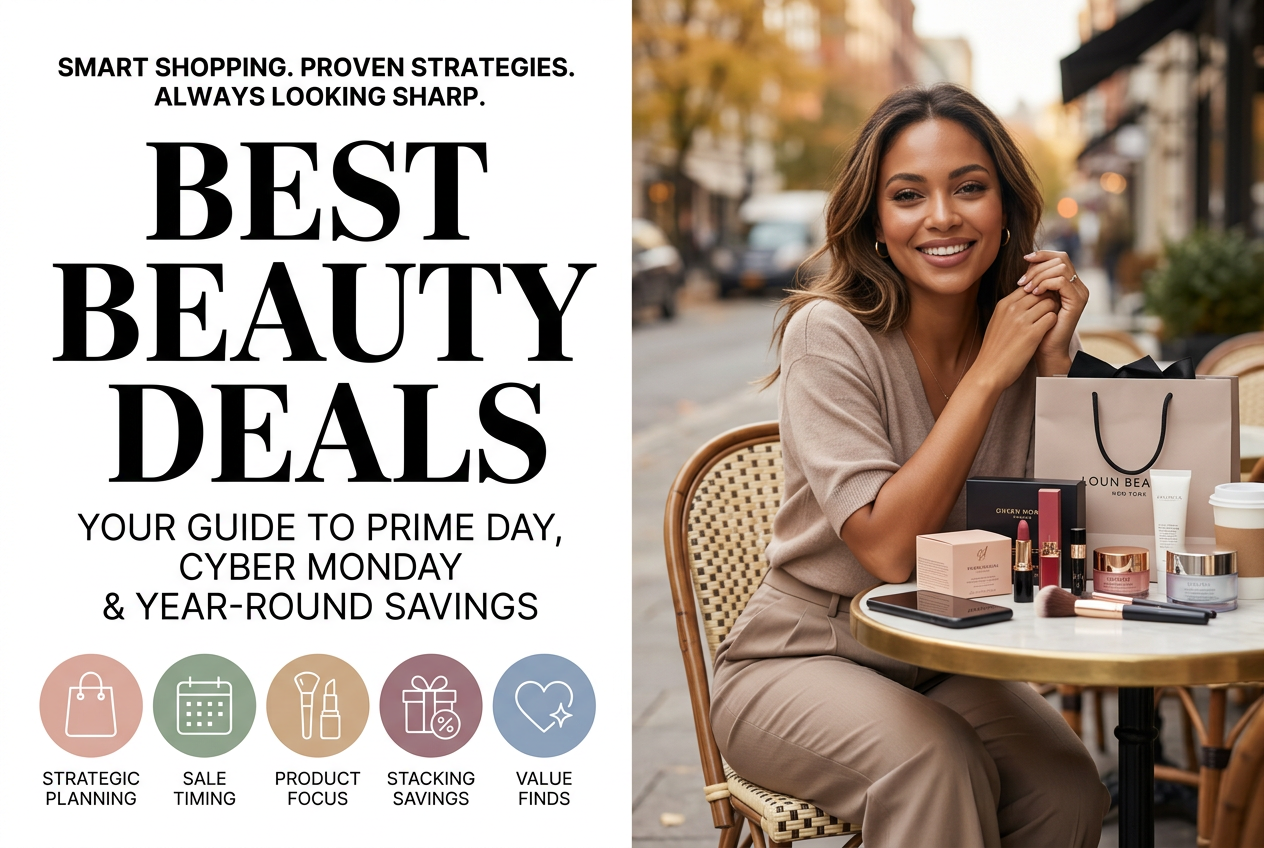
I have spent more money on makeup than I care to admit. Here is the part that stings: about 60% of those purchases happened during major sales events, and I still overpaid on half of them. Turns out there is a significant difference between actually scoring the best beauty deals and just buying whatever happens to be marked down that week — and I had to lose a fair amount of money before I understood it.
The real insight isn’t about finding the lowest price. It’s about being strategic enough to only buy things you actually wanted before the sale started.
Best beauty deals follow patterns. Retailers plan them months out. Brands coordinate their discounts with specific retail partners. And if you understand how these events work, you can walk away with products you genuinely wanted at prices that make sense — not just whatever was left on the shelf at 40% off.
Know the Calendar Before You Open Your Wallet
Mark these dates now: Prime Day in mid-July, Prime Early Access in October, Black Friday in late November, and post-holiday clearance through January. Those are the anchors. But most people only shop the big events and completely miss the smaller windows that sometimes have better deals on specific categories — Sephora’s VIB sales happen three times a year, Ulta’s 21 Days of Beauty rotates different brands each week, and Target runs its own beauty promotions on a schedule that has nothing to do with anyone else’s.
The real skill is matching product type to sale timing. Sunscreen? Wait for summer clearance in August when retailers are moving inventory. Moisturizer and serums? Black Friday tends to have the deepest cuts on skincare. Lip products go on sale constantly because they’re high-margin items that drive store traffic, so there is almost never a reason to pay full price for a lipstick. Hair tools are Prime Day’s strongest category by far — that is when Amazon actually competes hard on Dyson and T3.
I keep a spreadsheet — yeah, I’m that person — with every product I actually use, the regular price, and the lowest price I’ve tracked. Ten minutes to set up. Saves me probably $200 a year because when a sale starts I’m checking my list, not browsing randomly and getting swept up in things I never planned to buy.

Essential everyday makeup items that frequently go on sale during major beauty events
Lancôme, Lancome La Base Pro Perfecting and Smoothing Makeup Primer $45

Skincare staples with predictable sale cycles throughout the year

Haircare products that see consistent discounts during seasonal sales events
Breaking Down the Sales That Actually Matter
Not all sales are the same animal. Some events lean hard into drugstore brands. Others are almost entirely prestige. Some are gated behind membership tiers. Knowing the difference saves you from wasting two hours hunting for a deal that simply doesn’t exist in that particular event.
Prime Day (July) is Amazon’s moment to push beauty hard. Expect 20-40% off popular brands, but the selection is genuinely random — great on hair tools and some skincare, thin on prestige makeup. Deals sell out fast, sometimes within an hour, so set alerts the night before and have your cart staged and ready to go.
Sephora VIB Sales run three times a year: Rouge access opens first in March, VIB follows in May, and Insider gets a window in August. If you’re already spending over $350 a year at Sephora, Rouge status pays for itself on early access alone — the difference between getting a sold-out serum and finding an empty shelf is usually just 48 hours. Discounts land at 15-20% across the board, which might not sound dramatic until you’re buying a $120 moisturizer.
Ulta’s 21 Days of Beauty is all about timing. Each week a different brand rotates in with buy-one-get-one or steep percentage discounts. The play here is planning ahead — if you know you want a specific mascara from a specific brand, check the schedule and wait for their week. Buying it the week before is just paying full price with extra steps.
Black Friday and Cyber Monday are when drugstore goes hardest. CVS, Walgreens, and Target run 40-50% off select items plus loyalty bonuses. Prestige brands stay closer to 15-20%, with occasional exceptions. Cyber Monday is worth preferring over Black Friday if you shop online — same deals, no crowds, and inventory tends to be less chaotic.
January clearance is the most underrated window on the whole calendar, and I think people sleep on it because the holidays are over and spending guilt kicks in. Retailers need to move inventory fast. Holiday sets and gift bundles go 50-70% off. Individual products are hit-or-miss, but if you don’t care about holiday packaging, this is where I quietly stock up on backups of things I already know I love.

Higher-end skincare products that typically appear in Sephora VIB sales and Black Friday events

Budget-friendly makeup options that see the deepest discounts during major retail sales events
The Tactics Most Guides Won’t Tell You
Unsubscribe from the hype first. Retailers are genuinely excellent at manufacturing urgency — “Only 2 hours left!” “Price going back up!” — and most of it is theater. The product will go on sale again. You do not need to buy something just because it’s discounted if you weren’t planning to buy it anyway. That’s not saving money. That’s spending money with extra guilt removal.
Stack your discounts wherever possible. A Sephora VIB membership combined with a Rakuten cashback session gets you 15% off plus 2-3% cashback — on a $100 order, that’s $17-18 in actual savings, not just the headline number. Ulta constantly mails $3.50 off $15 coupons that most people throw away. Use them. They are real money.
Buy during the right time of day.
This sounds strange but it works: most sales go live at midnight or early morning, and if you shop at 2 a.m., you get first pick before inventory sells out. I set an alarm for a Dyson sale once, bought the tool I wanted, and went back to sleep. My friend who shopped the same sale at noon found it sold out. Same sale, very different results.
Check the math on gift sets before you assume they’re a deal. Retailers bundle products during the holidays at “discounted” prices that sometimes don’t actually save you anything on the individual items — and sometimes they do. If a set is $50 and the products normally total $75, buy it. If the same $50 set normally totals $55, skip it and buy the one thing you actually needed. The bundling isn’t automatically a bargain just because the packaging says so.
Always check price history before buying anything labeled as on sale. Keepa tracks Amazon price history going back years. Honey and Capital One Shopping do the same for other retailers. I have personally seen items marked “40% off” that were actually cheaper three months prior at full price — retailers do mark things up before marking them down, and it is more common than it should be.

Bundled beauty products that often provide better value during seasonal sales events

Beauty tools and accessories that frequently see discounts during Prime Day and holiday sales
Does Drugstore or Prestige Actually Win on Price?
Drugstore brands — Maybelline, e.l.f., Neutrogena, CoverGirl, Wet n Wild — hit their deepest discounts during Black Friday and January clearance, sometimes 40-60% off. CVS and Walgreens use beauty as a loss leader: they discount it aggressively to get you through the door and hope you buy shampoo and vitamins while you’re there. Selection is limited and inventory moves fast, so you need to know exactly what you want before the sale starts, not after.
Prestige brands (Charlotte Tilbury, Nars, MAC, Estée Lauder, Urban Decay) rarely drop below 20-25% off even on Black Friday. The exceptions are Sephora VIB sales and Ulta’s rotating brand weeks. Actually, that’s not quite right — occasionally a prestige brand will do a deeper cut through their own website, but it’s not predictable enough to count on.
Here’s what actually drives the difference: prestige brands don’t need to discount because they’re selling on formula and reputation, not price competition. Drugstore brands are competing on price by design. If you’re buying based purely on cost, drugstore wins almost every time. If you’re buying a vitamin C serum where the formulation and concentration genuinely affect results, prestige sometimes justifies the price even without a discount — and when a discount does come, it hits harder in absolute dollar terms. A 20% cut on a $120 moisturizer is $24 off. That’s not nothing.
My actual approach: prestige skincare goes on the Sephora VIB list. Drugstore makeup — foundation, mascara, eyeliner — gets bought during Black Friday at CVS or Walgreens. Hair tools wait for Prime Day, full stop.

Premium skincare products that see meaningful discounts during Sephora VIB events and Ulta sales
Budget-friendly makeup staples with the deepest discounts during Black Friday and CVS/Walgreens sales

Premium hair tools that typically see the best deals during Prime Day events
Where Deals Hide the Rest of the Year
Brand websites run promotions that never get broadly advertised. Charlotte Tilbury, Drunk Elephant, and Tatcha all do their own sales — smaller discounts, usually 10-15%, but you get full selection and early access if you’re on their email list. Worth subscribing even if you only buy from them once a year.
Outlet-style locations (Sephora Inside JCPenney, Ulta Beauty at Kohl’s) carry overstock and discontinued items at permanently lower prices. Not sale prices — just lower prices, full stop. If you have one nearby, check it regularly. I found a discontinued Nars foundation shade I’d been hoarding for $18 at one of these spots. Regular price had been $44.
Flash sale apps like Rue La La and Gilt run 48-hour windows on specific brands at 30-50% off. The catch is attention — you have to be watching when the sale goes live, or it’s gone. Set brand alerts and check them. The deals are real when they happen.
What about loyalty programs?
Genuinely underrated, especially Ulta’s. Points accumulate on every purchase and redeem for products. After a year of regular spending, you’ll have enough for something free. Sephora’s rewards work the same way. If you’re buying anyway, there is no reason not to collect points — you’re leaving free product on the table otherwise.
Clearance sections on Sephora, Ulta, and Target’s websites rotate constantly throughout the year, not just in January. Discontinued shades, seasonal items, overstocked products — all of it ends up there at 40-60% off. Check weekly. It takes three minutes and occasionally turns up something genuinely useful.

Premium skincare products available through brand websites and flash sale platforms with regular promotional pricing
Anua, YesStyle Exclusive Rice Glow Skincare Routine Set 4 pcs $52.43 (25% OFF — was $69.9)
Exclusive beauty items and rewards available through Sephora and Ulta loyalty program redemptions
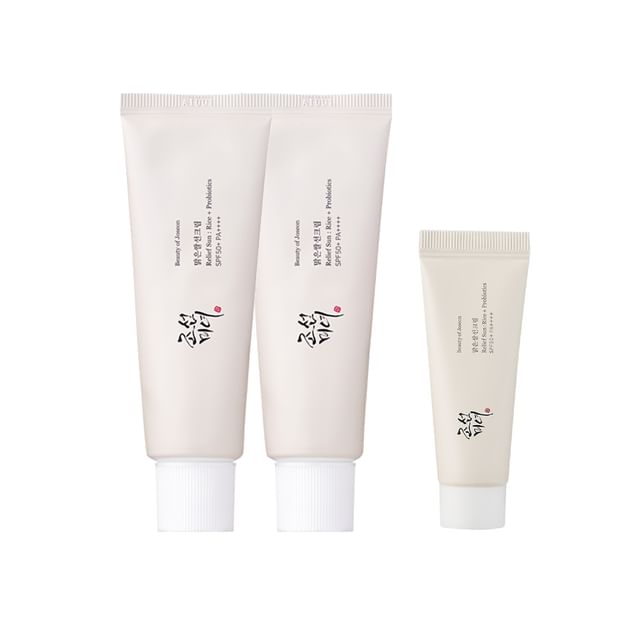
Beauty of Joseon, YesStyle Exclusive Relief Sun Bundle Set 3 pcs $25.87 (30% OFF — was $37.1)
I used to buy five mascaras because they were 50% off. I’d come home with a drawer full of products I didn’t actually want, having spent $80 to “save” money. Now I buy the one mascara I already know I love, at a sale price, and skip everything else. The spreadsheet helps. The calendar helps. But the actual shift was deciding that a discount on something I don’t need isn’t a deal — it’s just a smaller waste of money than full price would have been.
Some links on this page are affiliate links: if you buy through them we may earn a small commission at no extra cost to you. We only recommend products we would buy ourselves.
Frequently Asked Questions
When is the best time of year to buy skincare on sale?
Black Friday typically has the deepest skincare discounts at prestige retailers like Sephora and Ulta, usually 15-20% off. Sephora’s Rouge sale in March is worth timing purchases around if you’re a member. Post-holiday January clearance is underrated for finding 50-70% off skincare gift sets and bundles.
Is it worth joining Sephora Rouge just for the sales?
If you spend more than $350 a year at Sephora, yes. Rouge members get earlier access to VIB sales and a higher discount tier. On a $60 serum, that extra few percentage points is real money, and the early access means popular items don’t sell out before you get to them.
Are Prime Day beauty deals actually good?
Hit or miss, honestly. Hair tools and some skincare tend to have genuinely good discounts — 20-40% off. Prestige makeup is thin. The bigger issue is that deals sell out fast, so you need to have a wishlist ready before the event starts, not during it.
How do I know if a sale price is actually a good deal?
Check price history before you buy. For Amazon, Keepa tracks historical prices and will show you if something was cheaper three months ago. For other sites, Honey or Capital One Shopping does the same thing. Retailers do mark items up before marking them ‘down,’ and it happens more than you’d think.
What beauty products get the deepest discounts?
Drugstore mascara, eyeliner, and foundation get the steepest cuts — sometimes 40-60% at CVS and Walgreens during Black Friday. Lip products go on sale constantly because they’re high-margin. Sunscreen hits clearance in August. Fragrance and premium hair tools tend to discount best on Prime Day and during holiday gift set promotions.


 No products in the cart.