


Here’s something most skincare guides won’t tell you upfront: the single most effective thing you can do for eye wrinkles costs almost nothing. SPF. Every day. Because UV damage drives roughly 80% of visible ageing around the eyes, and no eye cream — however expensive — can undo what daily sun exposure quietly accumulates over years. I learned this the hard way after spending far too much on serums while skipping sunscreen on overcast mornings. That changed everything.
Once you’ve got SPF locked in, the eye cream question gets interesting. The skin around your eyes is roughly 0.5mm thick — about a third the thickness of the rest of your face — which means less collagen, barely any oil glands, and almost no natural buffer against environmental damage. You blink around 17,000 times a day. Add dehydration, side-sleeping, and years of squinting into screens, and you’ve got the exact conditions that turn fine lines into something more permanent. The right eye cream wrinkles formula won’t reverse all of that, but it can genuinely slow it down and, with the right actives, rebuild some of what’s been lost.
Why Your Eyes Age Faster Than the Rest of Your Face
Collagen loss starts in your mid-twenties. Most people don’t notice it for another decade, but by then the under-eye area has already been quietly thinning, losing elasticity, and accumulating UV damage that hasn’t surfaced yet. Prevention, if you’re reading this early, is dramatically more effective than treatment. But treatment works too — just more slowly, and it requires patience that most of us find harder than expected when we’re staring at fine lines in the bathroom mirror at 7am.
What actually causes eye wrinkles? Four main things: UV damage, repetitive muscle movement, skin dehydration, and collagen degradation from ageing and lifestyle factors like smoking or poor sleep. Retinol addresses the last two directly. Peptides support collagen rebuilding. Hyaluronic acid handles dehydration. And none of them replace SPF for the first one.
Our Top 12 Eye Creams for Smoother Skin

Retinol is the gold standard for fine lines and wrinkles. This product targets age spots, crepey texture, and loss of firmness with vitamin A power.
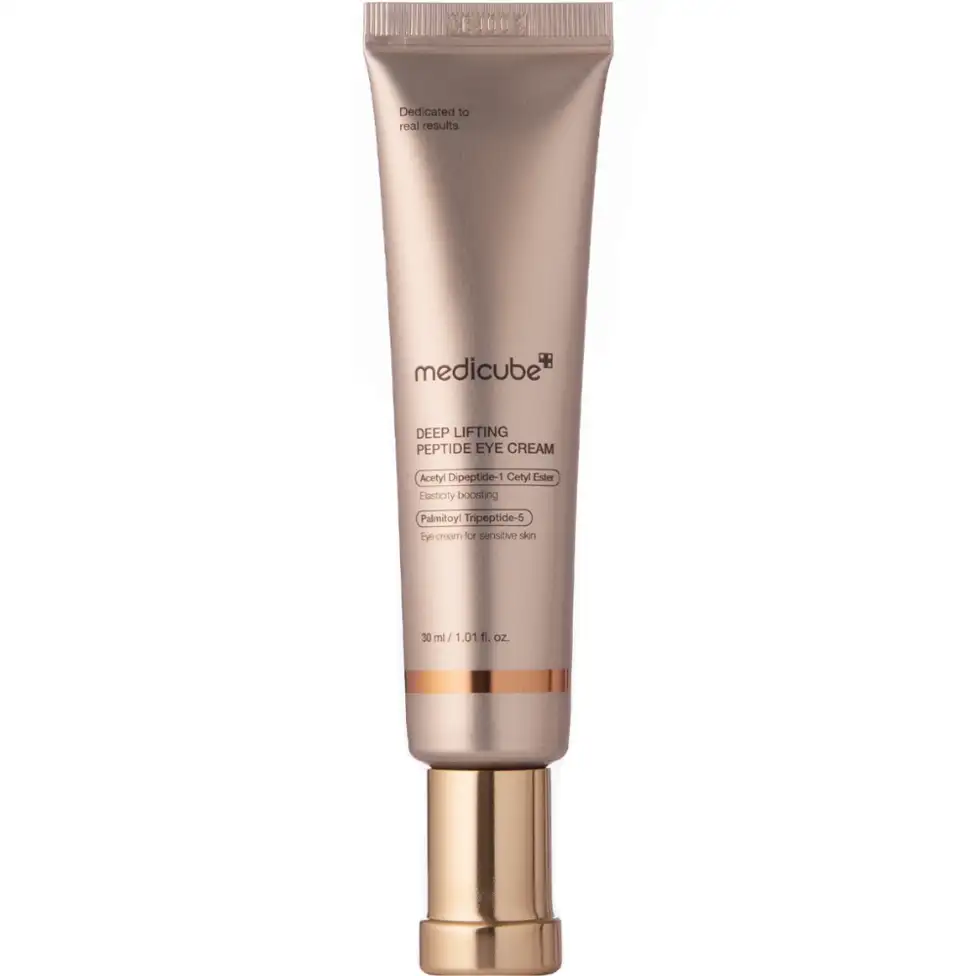
Peptides signal your skin to produce more collagen. Perfect for mature skin that needs structural support and lift.
Medicube, Deep Lifting Peptide Firming Eye Cream 30mL £16.11

Hyaluronic acid holds up to 1000x its weight in water. It plumps fine lines and keeps the delicate eye area dewy and supple.
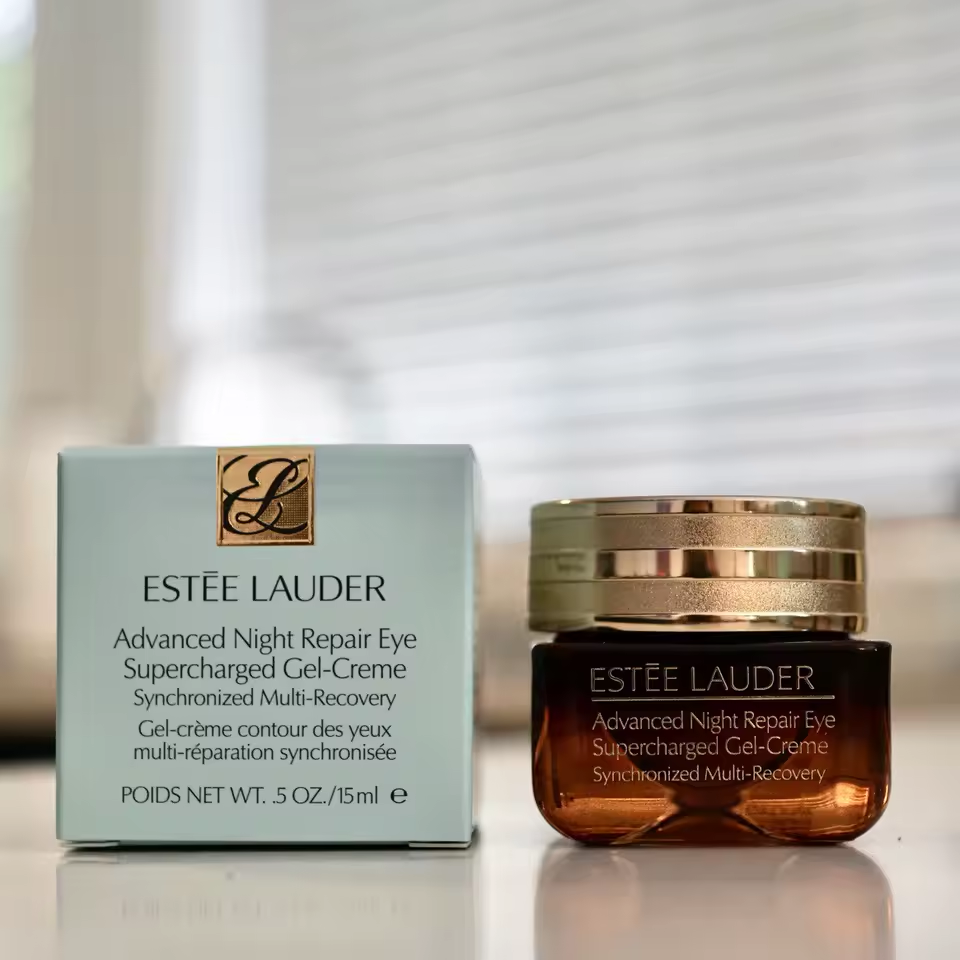
Caffeine reduces puffiness and constricts blood vessels to minimise dark circles. Bonus: it firms and tightens skin.

Niacinamide strengthens your skin barrier, reduces inflammation, and minimises fine lines. Brilliant for sensitive, reactive eyes.
Charlotte Tilbury, Cream Eyeshadow – Gold – Jean 4522 Eyes To Mesmerise Size: £26

Bakuchiol gives you retinol-like results without irritation. Ideal if your skin is sensitive or you’re pregnant and avoiding retinoids.
Skin Chemists, skinChemists Retinol Bakuchiol Eye Serum 15ml £14.16 (35% OFF — was £21.9)

Resveratrol is a powerhouse antioxidant that protects against environmental damage and supports collagen. Luxury skincare favourite.
Caudalie, Caudalíe Resveratrol-Lift Eye Contour Firming Gel Cream 15mL £25.06

Squalane mimics skin’s natural oils and absorbs quickly without greasiness. Perfect for mature skin that needs moisture without heaviness.
Copper peptides boost collagen and elastin production. They’re pricey but deliver visible tightening and line reduction.
Medicube, Deep Lifting Peptide Firming Eye Cream 30mL £16.11

This combo targets wrinkles on multiple fronts: peptides rebuild structure, hyaluronic acid plumps, and together they smooth fine lines fast.
What do these ingredients actually do?
The active ingredients in eye cream wrinkles products are where the real story is. Retinol — vitamin A, essentially — is the most studied anti-ageing ingredient in existence. It speeds up cell turnover, stimulates collagen production, and fades lines over roughly 8 to 12 weeks of consistent use. Start at a low concentration (0.25% or less) around the eyes because this skin reacts more strongly than the rest of your face; I pushed too high too fast with my first retinol eye cream and ended up with flaking and redness for two weeks, which rather defeated the purpose.
Peptides work differently. They’re short amino acid chains that essentially send signals to your skin cells telling them to produce more collagen and elastin — think of them as instructions rather than builders. Gentler than retinoids, they suit people who can’t tolerate vitamin A derivatives, and they stack well with most other actives. Results take 4 to 6 weeks but keep improving over months.
Hyaluronic acid is a humectant, not a fixer. It draws water into skin and holds it there, which makes fine lines look less pronounced while your skin is properly hydrated. It won’t rebuild collagen. But it’s genuinely essential for keeping the eye area plump and preventing dehydration lines from deepening into something more permanent, and it works fast enough that you’ll notice a difference within a few days of starting.
What about vitamin C, niacinamide, and bakuchiol?
Vitamin C is an antioxidant that blocks free radical damage, brightens dark circles, and nudges collagen synthesis — but only in stabilised forms like L-ascorbic acid or sodium ascorbyl phosphate, since unstabilised versions oxidise quickly and lose all potency before they’ve done anything useful. Niacinamide (vitamin B3) strengthens the skin barrier, calms inflammation, and improves elasticity without irritating even reactive skin. Bakuchiol is the plant-derived option for people avoiding retinoids: it delivers genuinely similar effects on collagen turnover without the sun sensitivity or irritation risk, which makes it the sensible choice during pregnancy or for skin that simply won’t tolerate retinol no matter how low the concentration. A solid eye cream wrinkles formula will usually pair two or three of these actives rather than relying on just one mechanism.
Does price actually predict results?
Honestly, less than the marketing suggests. Budget eye creams — anything under £20 — can contain the exact same active ingredients as products costing five times as much. The differences tend to be in formulation elegance (texture, absorption speed, scent), packaging, and concentration levels of actives. A £12 retinol eye cream and a £90 retinol eye cream both contain retinol. Whether the expensive one contains a meaningfully higher or better-stabilised concentration depends entirely on that specific product, not the price point.
Mid-range options between £20 and £50 are often the sweet spot. Better textures, more considered formulations, and enough budget for the brand to invest in research without you paying purely for heritage and a glass jar. Luxury options above £50 do sometimes justify themselves — particularly when they’ve stabilised actives in ways cheaper brands haven’t managed, or combined ingredients that genuinely work synergistically rather than just listing impressive names on the box. But start with something affordable. If it works after eight weeks, you’ve saved yourself a fortune.
The habits that make eye creams work harder
No eye cream works well in isolation. Sleep on your back if you can — side-sleeping presses your face into the pillow for hours every night, creating compression creases that gradually become permanent lines, and it also allows fluid to pool under the eyes overnight, making puffiness worse. Drink water. Not as a vague suggestion but as an actual daily habit: dehydrated skin looks more lined because it lacks the internal plumpness that keeps fine lines from looking deep. A humidifier in winter makes a real difference too, especially if you run central heating.
Don’t rub your eyes.
This sounds trivial but it’s not. The eye area has almost no subcutaneous fat and very little structural support compared to the rest of your face, which means repeated tugging and rubbing — when removing makeup, when you’re tired, when you’re applying product carelessly — gradually breaks down what little elasticity remains. Use your ring finger (it’s the weakest, which matters here), and pat rather than drag. Apply your eye cream before your moisturiser, working outward from the inner corner.
Consistency beats everything else. Two applications a day, every day, for at least eight weeks before you judge whether something is working. Most people quit at week three, right before the results would have started showing.
Hey savvy shoppers! When the items in our articles catch your eye and you decide to buy through our links, we may earn a small commission at no extra cost to you. Think of it as a way of supporting us in bringing you the best content!
Frequently Asked Questions
How long does it take for an eye cream to reduce wrinkles?
Most active ingredients like retinol and peptides need at least 8 weeks of consistent use before you’ll notice real change. Some people see plumping from hyaluronic acid within days, but structural improvement takes longer. Stick with it.
Can I use a regular face moisturiser around my eyes instead of an eye cream?
You can, but it’s not ideal. The skin around your eyes is about a third as thick as the rest of your face, so it needs gentler, more targeted formulas. Many face moisturisers contain fragrances or actives at concentrations that irritate this area.
What is the best ingredient in eye cream for deep wrinkles?
Retinol is the most well-researched option for deep lines — it increases cell turnover and rebuilds collagen over time. Copper peptides are also strong contenders. For sensitive skin that can’t tolerate retinol, bakuchiol delivers similar effects without the irritation.
Should I apply eye cream before or after moisturiser?
Apply eye cream before your moisturiser, working from thinnest to thickest consistency. Use your ring finger and pat gently — never rub or drag the skin around your eye area.
Are expensive eye creams actually better than budget ones?
Not always. Budget options can contain the same active ingredients as luxury brands. The difference is often in formulation stability, texture, and concentration levels. If a cheaper option is working for you after 8 weeks, there’s no reason to upgrade.



 No products in the cart.