

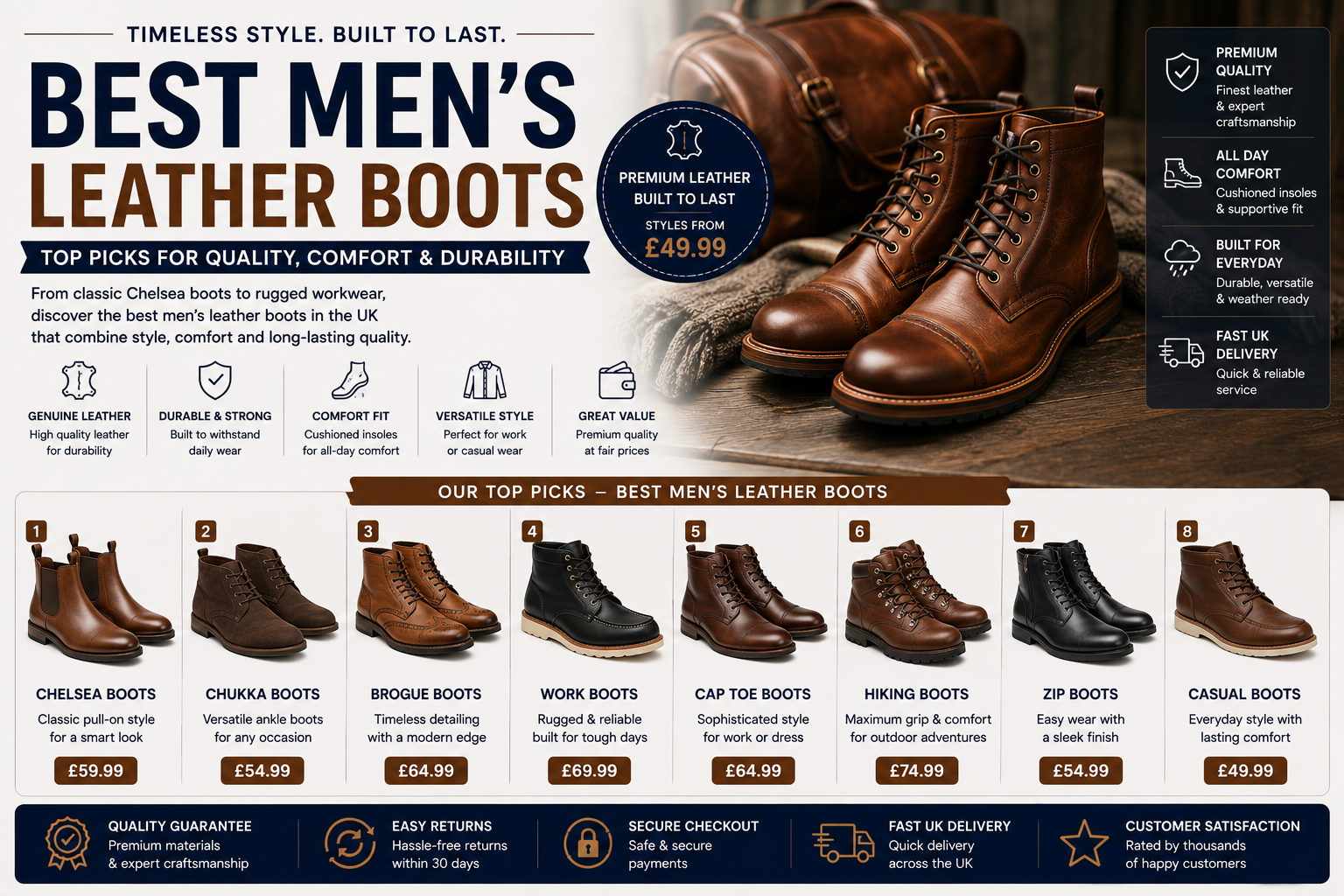
Here’s something worth knowing before you spend a penny: the right pair of leather boots will outlast almost everything else you buy this year. Maybe this decade. That’s not marketing — it’s just what good leather does when you look after it. It ages, it moulds to your foot, it gets better. No trainer or dress shoe can say the same.
Which makes finding the right pair genuinely worth the effort. And there’s a lot of choice out there — some of it excellent, some of it not worth the box it came in.
I went through more options than I’d like to admit before landing on a pair I’d actually wear into the ground. Tried the budget end, got burned once by a sole separating after six weeks, and eventually worked out what actually matters when you’re buying leather boots in the UK. Below is what I’d tell anyone starting that search now.
Why Leather Boots Deserve a Spot in Your Wardrobe
They fill a gap that nothing else really covers.
Trainers feel too casual for half the situations you’ll find yourself in. Dress shoes are overkill for the other half. Leather boots sit right in the middle — sharp enough for a client meeting, relaxed enough for a Sunday walk that ends at a pub. They work with jeans, chinos, tailored trousers, and on the right day, even shorts. The same pair of dark brown chelsea boots that got me through a January board meeting also did three muddy miles in the Peaks the following weekend. That kind of flexibility is hard to put a price on.
There’s also the durability question. Quality leather develops what people in the boot world call patina — a gradual deepening of colour and character that comes from actual use. Scuffs, creases, weather marks. Far from ruining the boot, they make it look more interesting. A pair of trainers at the same price point will be yellowing at the sole and falling apart inside two years. A decent leather boot, properly cared for, could still be in rotation in 2035.

Classic work boot style perfect for everyday wear and durability

Sleek and smart, chelsea boots work for both casual and smart-casual occasions
Dune london, Men’s ‘Mckinley’ Leather Chelsea Boots in Black Size: 9 Black 9 £129
The Picks Worth Your Attention Right Now
These aren’t just pulled from a spreadsheet. Each style below covers a different need — different budget, different use, different vibe. The idea is that somewhere in this list there’s a pair that actually fits your life, not just a generic “best of” ranking.

Rugged, waterproof option for outdoor adventures and rough terrain

Lightweight and casual, perfect for spring and summer styling
Off the Hook, Men’s Jethro Suede Leather Casual Desert Boots in Tan Size: 12 Tan 12 £39.99

Edgy and bold, adds attitude to any outfit

Easy-wearing and modern, works with almost everything in your wardrobe
How Do You Actually Style Them?
The honest answer is: more easily than you’d think. Leather boots are forgiving in a way that most footwear isn’t, and the same pair genuinely shifts depending on what you put above the ankle.
For casual days, dark jeans and a plain tee or chunky knit get the job done. The boots carry the look without any effort on your part — you don’t need to think too hard. Step it up slightly with chinos (grey or navy both work well), a button-up shirt, and a knit layer on top, and you’ve got something that works for a Friday at the office, a weekend lunch, or a first date where you don’t want to look like you tried too hard. For proper smart occasions — client meetings, weddings, anything requiring a blazer — swap in tailored trousers and a proper shirt. The boot adds just enough edge to stop the whole thing looking like you borrowed your dad’s outfit.
One thing worth knowing: darker boots (black, dark brown) are easier to dress up. Tan and lighter browns sit more naturally in casual territory, though they can absolutely be worn smart if the rest of the outfit earns it.

Versatile mid-height boot that transitions easily between casual and smart-casual
Off the Hook, Men’s ‘Sahara’ Suede Leather Casual Lace-Up Chukka Boots in Brown… £39.99
Budget Breakdown: Where to Spend, Where to Save
Spending more isn’t always smarter. But spending too little usually costs you more in the long run.
Under £80 is perfectly fine as a starting point — you’ll get something wearable, and it’s low-stakes enough that if you discover chelsea boots aren’t your thing, you haven’t lost much. The construction at this price won’t blow you away, and the leather is often bonded or corrected-grain rather than full-grain, so manage expectations accordingly. Between £80 and £150 is where the real value lives for most men: construction improves noticeably, the leather starts to behave like leather should, and you’re getting something that’ll last beyond a single winter.
This is probably the range to aim for if you’re buying your main pair. At £150 to £250, you’re into proper investment territory — better soles (Goodyear welted construction is worth looking for at this price), leather that’ll develop genuine character, and a boot that a cobbler can resole when the time comes rather than one that gets binned. Above £250, you’re buying heritage. That’s not a bad thing if you’ll actually wear them, but it’s overkill if the boots are going to sit in a wardrobe.

Value-for-money options that don’t sacrifice style or durability
Under armour, Ua Spotlight White Leather Fg Football Boots £42.99 (77% OFF — was £190)

Investment pieces built to last decades with proper care
Keeping Them Going (It Takes About Five Minutes a Month)
Most men ignore boot care until something goes visibly wrong. By then, the damage is usually already done.
After each wear, wipe them down with a soft damp cloth. Salt from winter roads is particularly brutal on leather — it dries out the surface and leaves white tide marks that are a pain to shift once they’ve set. A quick wipe takes thirty seconds and prevents most of that. Every couple of months, work in a leather conditioner or balm — nothing expensive, just something that keeps the leather from drying out and cracking at the flex points.
Waterproofing spray goes on before the first wear, then gets reapplied each autumn. When the sole starts going thin, take them to a cobbler rather than the bin. A resole costs £40–£80 and effectively gives you a new boot. (Actually, that is not quite right — it gives you a better boot, because the upper has already been broken in to your foot.) Store them with shoe trees inside, or at minimum stuff them with newspaper, so the leather holds its shape between wears.
That’s genuinely all there is to it.
Do all of that and a good pair of leather boots will still be in rotation years from now, looking more interesting than they did when you bought them. Skip it, and you’ll be replacing them every eighteen months and wondering why boots have a reputation for lasting forever.
My honest take: if you’re only going to own one pair, spend in the £100–£150 range, get a dark brown chelsea, and actually look after them. You’ll get more wear and more compliments out of that single pair than from a rotation of cheaper boots that never quite fit and never quite look right.
Hey savvy shoppers! When the items in our articles catch your eye and you decide to buy through our links, we may earn a small commission at no extra cost to you. Think of it as a way of supporting us in bringing you the best content!
Frequently Asked Questions
How long should a good pair of men’s leather boots last?
A well-made pair of leather boots, looked after properly, can last anywhere from 5 to 20 years. The key factors are leather quality, sole construction, and how often you condition and protect them. Getting them resoled when the time comes adds years to their life.
What’s the best way to break in new leather boots?
Wear them around the house for short periods first — an hour or two at a time. Thick socks help. Some people swear by leather conditioner applied before the first proper outing, which softens the upper and speeds up the process. Avoid wearing brand-new boots for a full day out straight away; you’ll regret it.
Are chelsea boots or lace-up boots more versatile?
Chelsea boots edge ahead for most men because they work across more occasions without any extra effort — no lacing, clean silhouette, easy to pull on. Lace-up boots tend to look better with casual and outdoor outfits, and often offer a more secure fit. If you’re buying your first pair, a black or tan chelsea is probably the smarter starting point.
How much should I spend on leather boots in the UK?
The £80–£150 range is where most men get the best return on their money. Below that, quality becomes inconsistent. Above £150, you’re paying for better leather, construction, and longevity — worth it if you’ll wear them constantly. Budget picks under £80 are fine for testing a style before committing.
Can leather boots be worn in heavy rain?
Yes, with the right preparation. Apply a waterproofing spray before the first wear and reapply every season. Full-grain leather handles rain reasonably well once treated; suede is much more vulnerable and needs extra protection or avoiding altogether in wet conditions.



 No products in the cart.