

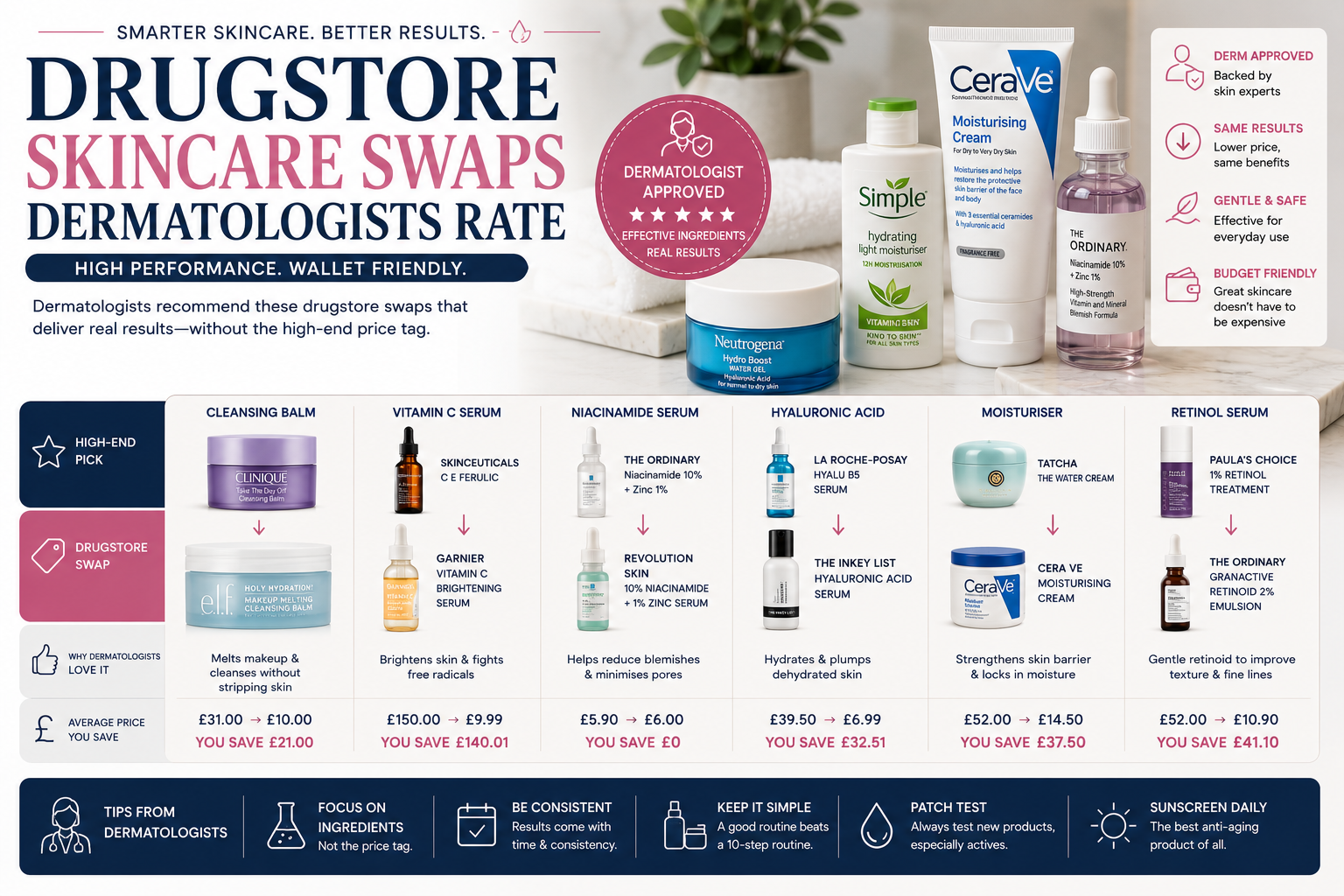
A ceramide is a ceramide. That one fact — so obvious once you know it, so carefully obscured by beauty marketing — is what this whole piece comes down to. It does not matter whether it lives in a £5 tub from Superdrug or a £95 jar with embossed lettering. The ingredient behaves identically on your skin.
I spent last month pulling ingredient lists on cult-favourite premium skincare and comparing them side by side with their drugstore equivalents. Some were virtually identical. Others? The cheaper version actually won. So here are 12 drugstore skincare swaps that dermatologists genuinely rate — not ‘pretty good for the price’ products, but legitimately excellent ones, full stop.
The Price Tag Is a Story, Not a Promise
Once you hit a certain price point in skincare, you are paying for packaging, brand heritage, and a PR budget. A dermatologist told me something that has stuck with me ever since: ‘I see the same skin improvements in patients using £6 cleansers as I do in those using £60 ones. The difference is consistency and knowing your skin.’ That is not a fringe opinion. That is the consensus among the people who actually study what happens to skin cells.
This does not mean every drugstore product is secretly brilliant. It means active ingredients — niacinamide, hyaluronic acid, salicylic acid, retinol — work the same way whether they are in a Superdrug bottle or a Selfridges one, and that some of the best skincare chemists in the world work for high-street brands, formulating products that cost under a tenner because the brief was to make something that works for everyone, not something that photographs beautifully in a flat lay. The formula matters. The name on the label does not.
What you actually need: the right ingredients for your skin type, a routine you will stick to, and patience. Everything else is marketing.
Do You Even Need an Expensive Cleanser?
No. You really do not.
A good cleanser removes makeup and daily grime without stripping your barrier. That is the entire job description, and drugstore cleansers have been nailing it for decades. You are looking for something gentle enough for twice-daily use that leaves skin feeling clean but not tight — not a treatment, not a miracle, just a reliable workhorse that you will actually reach for every morning without thinking it is too much faff.

Creamy, non-stripping cleanser alternative to luxury milk cleansers; ideal for sensitive or dry skin
Beauty of Joseon, Green Plum Refreshing Cleanser gentle exfoliating foaming cream with… £9.5

Budget-friendly oil cleanser for double cleanse routines; removes makeup and SPF without harsh surfactants
Caudalie, Vinoclean oil cleanser and makeup remover for face and eyes 150 ml £18.1

Affordable BHA cleanser for oily and acne-prone skin; drugstore alternative to premium acne cleansers
CeraVe, Blemish Control Cleanser with Salicylic Acid & Niacinamide for £14.5
The CeraVe BHA cleanser above is worth a specific mention for anyone dealing with blocked pores or hormonal breakouts — salicylic acid at this price is genuinely hard to beat, and the addition of niacinamide means it calms while it clears. I tried four different cleansers for oily skin before landing on this category, and the price difference between the cheapest and most expensive option was £38. The results were not £38 apart.
Moisturisers: Where People Throw Money at the Problem
Ceramides, glycerin, hyaluronic acid — these are cheap to produce. The £80 moisturiser markup is not about better science. It is about the bottle.
A good moisturiser hydrates, protects your barrier, and does not leave you feeling like you have applied a thin layer of cling film to your face. Drugstore options do all of this without the guilt that comes from accidentally leaving the lid off a £70 cream. The ceramide-based ones are what dermatologists reach for first when recommending products for compromised or sensitive skin, and they cost about the same as a coffee — actually, less than most London coffees these days.

Dermatologist-recommended ceramide moisturiser for damaged or sensitive skin; drugstore alternative to premium barrier repair creams
CeraVe, Moisturising Cream Pot with Hyaluronic Acid & Ceramides for Dry £17.5

Budget hydrating moisturiser for oily and combination skin; affordable alternative to luxury hydration serums
Dermalogica, Biolumin-C Brightening Gel Moisturiser £55.24 (15% OFF — was £65)

Affordable niacinamide-rich moisturiser for sensitive skin; drugstore dupe for premium calming creams
Collistar, Attivi Puri Salicylic Acid + Niacinamide soothing cream with… £24.9
Oily skin types should look at hyaluronic acid gels — hydration without the heaviness. Combination skin does well with niacinamide, which regulates oil production and calms redness at the same time. Both ingredients are everywhere in the drugstore, both work, and neither requires you to choose between good skin and paying your bills.
Serums Are Where the Real Money Gets Wasted
Serums are where people spend the most and expect the most, which makes them the richest territory for finding alternatives that actually hold up. Vitamin C, niacinamide, hyaluronic acid, peptides — none of these become more powerful because they are housed in a weighted glass bottle with a magnetic cap. If anything, some drugstore formulations are more stable than their expensive counterparts, partly because the brief is to create something that survives a year in someone’s bathroom cabinet rather than something that looks good on a dressing table.

Budget niacinamide serum for enlarged pores and oily skin; affordable alternative to premium pore-refining treatments
Dermacol, Niacinamide Serum pore-minimising and dark spot reducing serum 30 ml £9.5

Lightweight hydrating serum for all skin types; drugstore alternative to luxury HA serums
Niacinamide is the one I keep coming back to. I genuinely cannot tell the difference between results from the £8 version and results from the £50 version — both reduce the appearance of pores over time, both calm redness, both layer well under moisturiser without pilling. The expensive one just has a better Instagram aesthetic. Hyaluronic acid serums are even more interchangeable; they are essentially the same molecule in slightly different concentrations, and once it is on your face, your skin does not know what you paid for it.
SPF First. Everything Else Second.
This is not a controversial opinion among dermatologists, but it might be among people who have spent £80 on a vitamin C serum: sunscreen is the most important anti-ageing product you own. Not the serum. Not the retinol. Sunscreen. And you can get broad-spectrum SPF 50 protection at the drugstore for under £10, which means the single most effective thing you can do for your skin long-term is also one of the cheapest steps in your routine.
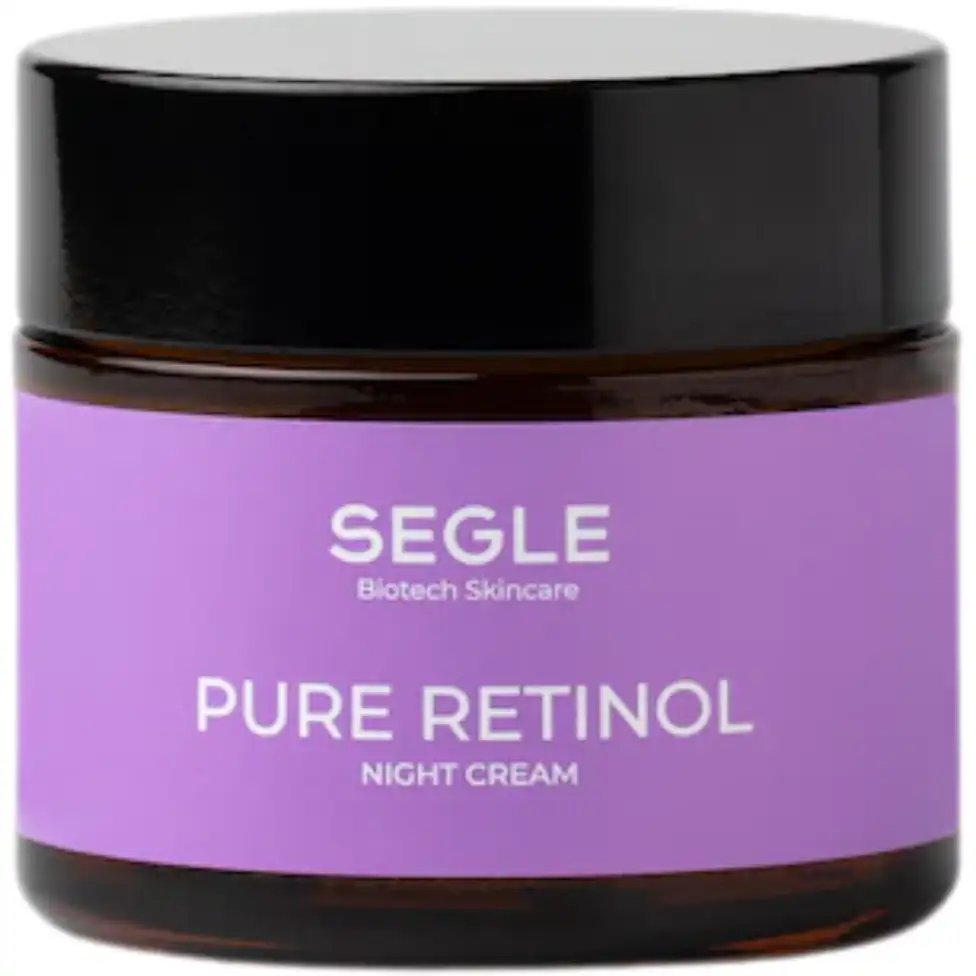
Budget retinol for beginners and sensitive skin; affordable alternative to premium retinol products

Budget-friendly mineral sunscreen for sensitive and acne-prone skin; drugstore dupe for luxury mineral SPF
BIODERMA, Photoderm Nude Touch mineral sunscreen for the face SPF 50+ shade… £20.5
On retinol: start cheap. Your skin has to build tolerance over weeks, and there is zero point spending £60 on a luxury retinol when your face is going to peel regardless of the price tag during the adjustment phase. Drugstore retinol has the same active ingredient doing the same job — boosting collagen production, improving texture, fading lines gradually over months of consistent use — and once your skin is tolerating it well, you can decide whether you ever need to upgrade. Most people find they never do. Actually, that is not quite right — some people with very specific concerns like deep wrinkles or significant sun damage do benefit from prescription-strength tretinoin, but that is a dermatologist conversation, not a Boots aisle one.
The Drugstore Wins. Here Is Why That Matters.
When you are not spending £120 on a serum, you can afford to buy the right product for your skin instead of rationing the expensive one. You replace things when they run out. Then you experiment. You use enough product each time rather than applying a half-portion to make the bottle last longer, which is — quietly — one of the main reasons expensive skincare underperforms for people.
The dermatologists I spoke to kept returning to the same point: the best routine is the one you will actually do. A £12 serum used every morning beats a £70 serum used three times a week out of guilt and anxiety about the cost. Consistency is what changes skin. The drugstore has known this all along — they just do not have a PR team telling you about it.
These are not compromise picks. They are what you buy when you stop paying for the story and start paying for the thing that actually works.
Hey savvy shoppers! When the items in our articles catch your eye and you decide to buy through our links, we may earn a small commission at no extra cost to you. Think of it as a way of supporting us in bringing you the best content!
Frequently Asked Questions
Are drugstore skincare products as effective as luxury brands?
For most active ingredients — niacinamide, hyaluronic acid, ceramides, retinol — yes. The molecule is identical whether it costs £5 or £50. What you pay extra for with luxury brands is mostly packaging, fragrance, and marketing. That said, some premium formulations do have better ingredient stability or delivery systems, so it depends on the specific product.
Which drugstore skincare ingredients do dermatologists recommend most?
Ceramides for barrier repair, niacinamide for pores and redness, hyaluronic acid for hydration, salicylic acid for acne-prone skin, and retinol for anti-ageing. All of these are widely available in drugstore products and work the same way regardless of price point.
Is drugstore SPF actually good enough for daily sun protection?
Absolutely. SPF efficacy is regulated and tested the same way regardless of brand. A £9 broad-spectrum SPF 50 from the drugstore protects your skin just as well as a £40 luxury version. Dermatologists consistently recommend prioritising daily SPF use over any other anti-ageing product.
Should beginners start with drugstore retinol or invest in a premium version?
Start with drugstore retinol every time. Your skin needs weeks to build tolerance, and there is no benefit to using an expensive retinol during this adjustment phase. Most people find that once their skin is acclimatised, a mid-strength drugstore retinol is all they ever need.
How do I find a good drugstore dupe for my luxury moisturiser?
Check the ingredient list on your luxury product and identify the top active ingredients — usually in the first five to eight listed. Then look for a drugstore product with those same actives at similar concentrations. CeraVe, The Ordinary, and Dermacol are reliable starting points for most skin types.


 No products in the cart.