

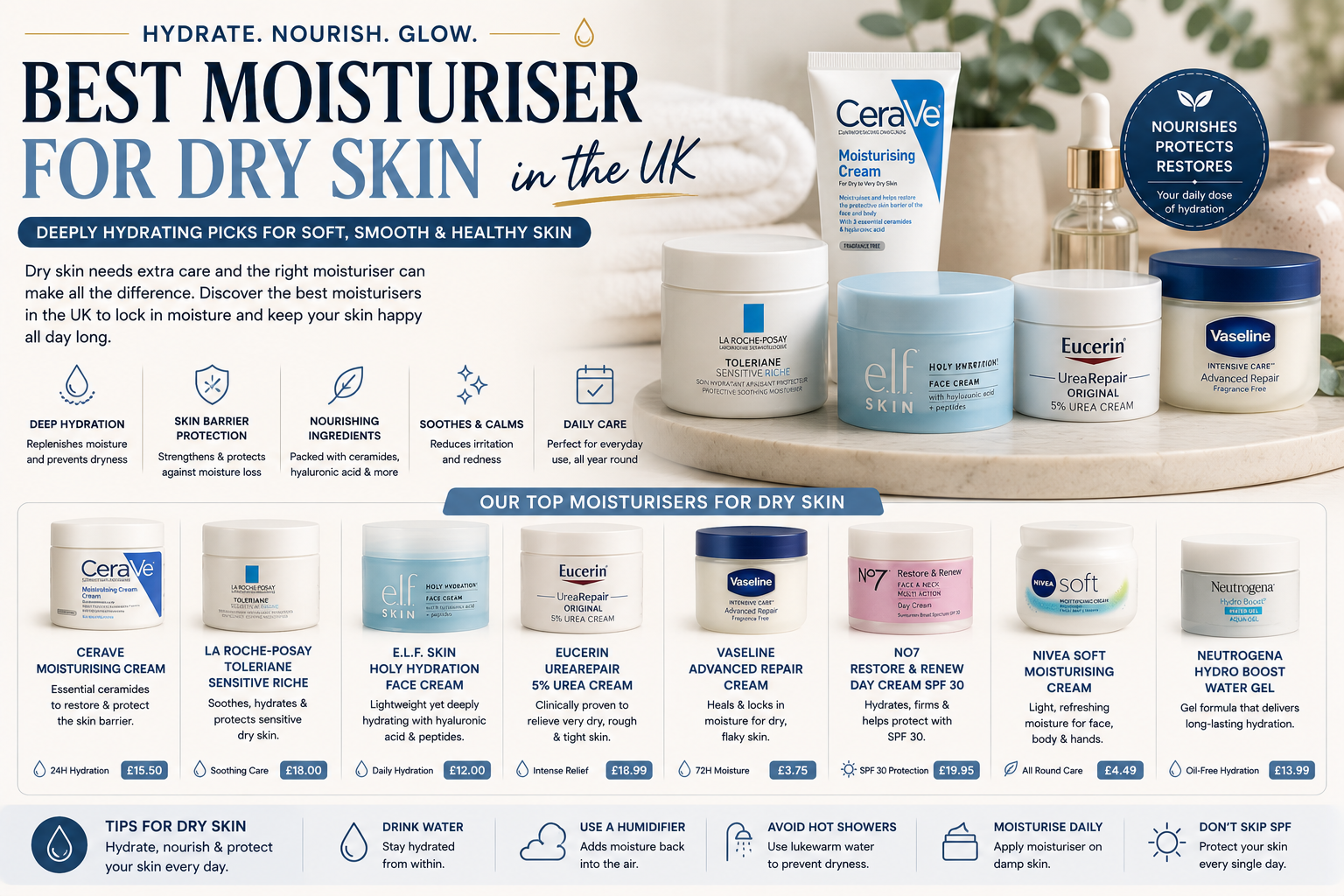
By mid-afternoon, your skin is tight. Maybe itchy. Possibly pulling at the corners when you smile. I noticed this every single winter for about three years before I realised the problem wasn’t my skin type — it was that I was applying moisturiser wrong, to the wrong skin, at the wrong time. That changed everything.
Here’s what most people with dry skin actually need to know upfront: one well-chosen moisturiser, applied to damp skin immediately after cleansing, will do more for you than six layered products applied to a completely dry face. The rest of this guide exists to help you find that one product.
What’s Actually Happening to Your Skin?
Your skin has a protective barrier made of lipids and proteins. When it’s healthy, it keeps moisture in and irritants out. When it’s compromised — by genetics, cold UK winters, a cleanser that’s too harsh, or over-exfoliating — moisture escapes constantly, and no amount of water you drink will fix that from the inside. The flakiness, the tightness, the sensation that your face might crack if you raise your eyebrows too enthusiastically — all of it traces back to a damaged barrier. The fix isn’t complicated, but it does require the right combination of ingredients working together: humectants like glycerin and hyaluronic acid to pull water into the skin, emollients like plant oils and shea butter to soften and smooth, and occlusives like petrolatum or dimethicone to seal everything in so it can’t escape. A moisturiser that has all four of those working in concert will consistently outperform one that relies on a single hero ingredient, regardless of price point or how beautiful the jar looks on your bathroom shelf.
What surprised me, honestly, is how many people with dry skin are simply not using enough product. A thin scraping isn’t going to cut it.

Budget-friendly option with essential hydrating ingredients
CeraVe, Moisturising Cream Pot with Hyaluronic Acid & Ceramides for Dry £17.5

Mid-range pick offering intensive hydration
CeraVe, Moisturizers face and body moisturiser for dry to very dry skin 454 g £16.7
The Ingredients Worth Caring About
Ceramides are probably the single most important thing to look for. They exist naturally in your skin barrier — ceramide NP, ceramide AP, ceramide EOP — and applying them topically genuinely helps repair and rebuild that barrier over time. Hyaluronic acid draws water into the skin but only works properly when your skin is damp (apply it to a completely dry face and it can actually pull moisture out). Glycerin does similar work, more gently, which makes it good for reactive skin.
Beyond those, niacinamide reduces inflammation and supports barrier function. Squalane is an emollient that absorbs cleanly without greasiness. And petrolatum — yes, old-fashioned Vaseline-style petrolatum — is one of the most effective occlusives ever studied. It sounds heavy. It isn’t.
Avoid fragrance. Full stop.
Under £15 and Actually Worth It
Budget moisturisers earn their reputation not through marketing but through formulation basics done well. You’re not paying for embossed packaging or a celebrity face — you’re paying for glycerin, ceramides, and a sensible preservative system. The catch with some cheaper options is texture: they can feel stickier or less pleasant to apply, which matters more than people admit, because a product you hate using is a product you’ll skip.
Does skipping one night matter? Probably not. Skipping consistently because the texture annoys you? That matters a lot.

Budget pick under £10 with essential hydrating ingredients
CeraVe, Moisturizers face and body moisturiser for dry to very dry skin 50 ml £5.7

Supermarket staple offering effective hydration at low cost
CeraVe, Cleansing Cream for Face and Body Normal to Dry Skin 473mL £11.22 (6% OFF — was £12)

Budget option suitable for reactive, parched skin
BIODERMA, Sébium Sensitive intensive hydrating and soothing cream for skin left… £13.8
Spending More Isn’t Silly — If You Know What You’re Getting
Premium moisturisers for dry skin tend to earn their price in two ways: richer bases (more butters, more plant oils, higher concentrations of actives) and better sensory experience. That second point is less frivolous than it sounds. A cream you genuinely enjoy applying — one that smells good, absorbs well, and makes your skin feel immediately different — is one you’ll actually use consistently for months. That consistency is where real results come from, not from any single ingredient.
High-end picks also tend to come in better packaging for preservation, which matters for actives like vitamin C or peptides that degrade with air and light exposure. Whether that’s worth £50 versus £12 to you is a personal call. (I’ll admit I went through a phase of buying every luxury cream I could find, convinced the price gap meant a results gap. It mostly doesn’t — though there are genuinely excellent expensive formulas out there.)
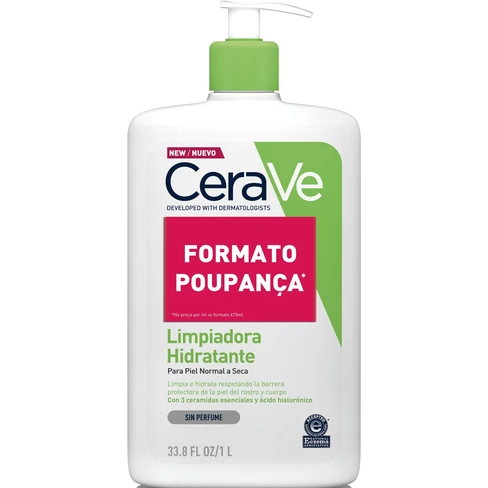
Investment piece with rich formula and premium ingredients
CeraVe, Cleansing Cream for Face and Body Normal to Dry Skin 1000mL £8.58 (50% OFF — was £17.16)
Does the rest of your routine actually matter?
Yes. More than the moisturiser itself, sometimes. Start with a creamy or balm cleanser — foaming formulas that leave your skin squeaky clean are stripping your barrier every single time you use them, which means your moisturiser is spending half its effort just undoing the damage your cleanser caused. After cleansing, a hydrating toner or essence applied to still-damp skin adds a layer of hydration before you seal it in. At night, a facial oil over your moisturiser gives an extra occlusive layer that works well for very dry or flaky patches. SPF every morning, non-negotiable — UV damage makes dry skin worse over time and accelerates the barrier breakdown that causes the problem in the first place.
On exfoliation: resist the urge. Flaky dry skin looks like it needs scrubbing. It doesn’t. Physical exfoliants damage an already struggling barrier. If you want to exfoliate, use a low-percentage AHA product once a week at most — but honestly, two weeks of solid moisturising will do more for texture than any exfoliant.
Give whatever you choose a proper two-week trial before writing it off. Skin barrier repair is slow. The best moisturiser for dry skin is the one you’ll actually use every day — and at this point, I’d take a £5.70 tube of something ceramide-packed over a £90 jar of something you save for special occasions.
Hey savvy shoppers! When the items in our articles catch your eye and you decide to buy through our links, we may earn a small commission at no extra cost to you. Think of it as a way of supporting us in bringing you the best content!
Frequently Asked Questions
How often should I apply moisturiser for dry skin?
Twice a day is the standard — once in the morning before SPF, once at night after cleansing. If your skin is very dry, a third application mid-afternoon on particularly harsh winter days genuinely helps.
Should I apply moisturiser to wet or dry skin?
Damp skin, not soaking wet. Pat your face after cleansing so it’s still slightly moist, then apply immediately. This seals in that extra hydration rather than letting it evaporate.
Are expensive moisturisers actually better for dry skin?
Not necessarily. Some of the most effective formulas for dry skin cost under £10 and contain the same ceramides and hyaluronic acid as creams priced at £80+. You’re often paying for texture, fragrance, and packaging with premium options.
What ingredients should I avoid if I have dry skin?
Fragrance is the main one — it irritates an already compromised barrier. Alcohol-heavy formulas are drying. Anything labelled ‘oil-free’ or ‘mattifying’ is formulated for oily skin and will likely make dryness worse.
Can dry skin become oily if I over-moisturise?
Your skin won’t turn oily from using moisturiser. If anything, consistently moisturising a dry skin type can reduce oil overproduction, since some people’s skin overcompensates for dehydration by producing more sebum.



 No products in the cart.