

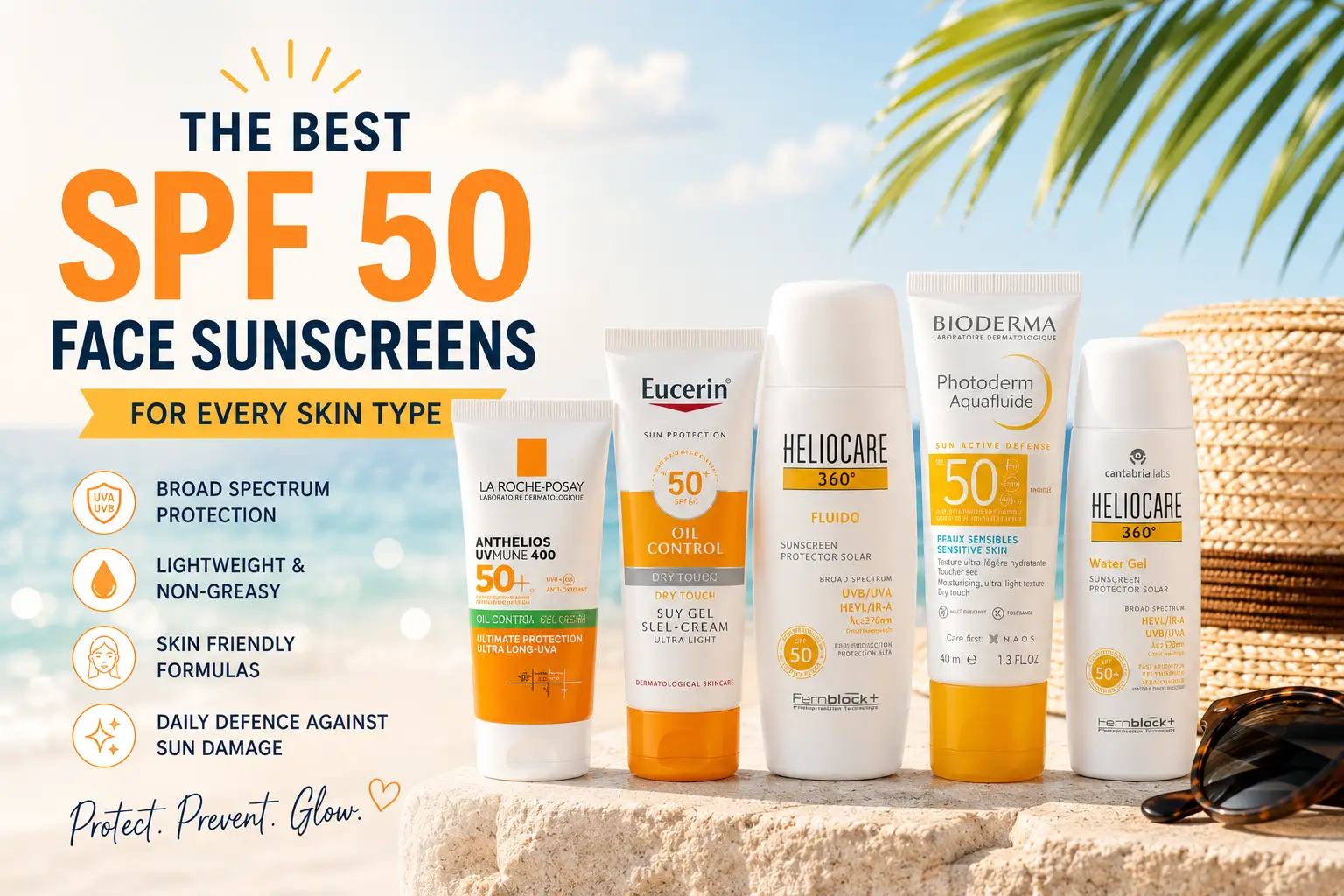
Once you find an SPF 50 face sunscreen that actually works with your skin, applying it becomes as automatic as brushing your teeth. That sounds like a small thing. It isn’t. Because the difference between someone who wears SPF daily from their thirties and someone who doesn’t shows up clearly on their face two decades later — in sun spots, in texture, in the kind of premature ageing that no serum can fully reverse.
The tricky part isn’t knowing you should wear it. It’s finding one you’ll actually want to put on every morning. Some SPF 50 formulas leave a white cast that makes you look faintly ghostly by the time you reach the office. Others feel so greasy by lunchtime that you end up dabbing them off with a tissue, which defeats the point entirely. I went through at least seven different options before landing on a formula that didn’t make my combination skin look like a chip-shop window by midday — so I understand the frustration.
Why your face needs more protection than the rest of you
Your face gets more UV exposure than almost any other part of your body, full stop. It’s never covered. It faces forward into sunlight during your commute, catches reflected UV off pavements and windows, and — this is the part people forget — gets hit by UVA rays even through glass and on overcast days. UVA is the ageing wavelength. It doesn’t burn you, so you don’t notice it. But it penetrates deeper into skin than UVB and degrades collagen steadily over years, which is why dermatologists keep banging on about daily SPF even in January.
SPF 50 blocks roughly 98% of UVB rays. SPF 30 blocks about 97%. One percent doesn’t sound like much, does it? Except that most of us apply sunscreen at roughly half the recommended quantity, which means real-world protection is already lower than the number on the bottle suggests — and having that extra buffer built in actually closes some of that gap. If you’ve got a family history of skin cancer, or you spend time near water or snow where UV reflects back at you, SPF 50 isn’t overcautious. It’s just correct.
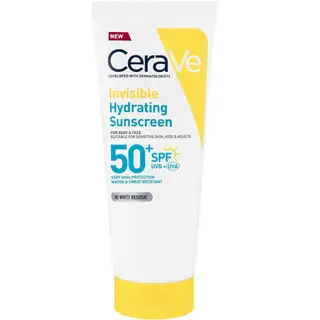
Why SPF 50 is essential for everyday facial sun protection
CeraVe, Invisible Hydrating Sunscreen for Face and Body 177mL SPF50+ £16.05 (6% OFF — was £17.16)
Matching formula to skin type actually matters
What skin type are you actually buying for?
Oily and combination skin needs something lightweight, ideally with a matte or satin finish that doesn’t amplify shine by mid-morning. Dry skin wants hydration baked into the formula — a sunscreen that doubles as a moisturiser is a genuine time-saver. Sensitive skin requires fragrance-free, ideally with a short and recognisable ingredient list. Acne-prone skin needs non-comedogenic confirmed on the label, not just implied. These aren’t cosmetic preferences; they determine whether you’ll actually stick with the product past week two.

Best SPF 50 for oily and combination skin types

Hydrating SPF 50 options for dry and sensitive skin
CeraVe, Invisible Hydrating Sunscreen for Face and Body 75mL SPF50+ £9.05 (7% OFF — was £9.68)
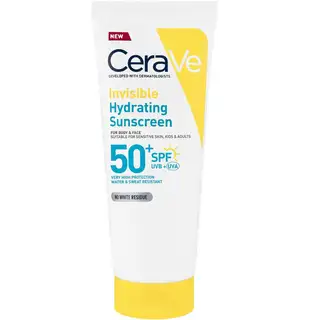
Lightweight, invisible-finish SPF 50 for everyday wear
CeraVe, Invisible Hydrating Sunscreen for Face and Body 75mL SPF50+ £9.05 (7% OFF — was £9.68)
Cheap SPF 50 is not a compromise
Boots, Superdrug, and most supermarkets stock SPF 50 face sunscreens in the £5 to £15 range that are genuinely good. Not good-for-the-price good. Just good. The gap between a £7 sunscreen and a £40 one comes down to texture, finish, and the marketing budget behind it — not the SPF number, which is regulated regardless of what you pay. Both have to meet the same standard to carry that label.
Drugstore SPF formulations have changed a lot over the past few years, and the white-cast problem that used to make budget options unwearable has largely been solved. You’ll find both mineral and chemical filters at accessible prices, which makes it easier to experiment with both without committing a lot of money to something that might not suit your skin. There’s also a practical argument for cheaper sunscreen: you’re supposed to apply it generously and reapply every two hours in the sun, and people are statistically more likely to do that when they’re not rationing a £40 tube.
Worth checking the ingredient list before you buy, though — fragrance and essential oils show up in some budget formulas and can be a problem for reactive skin.

Budget-friendly SPF 50 face sunscreens from UK drugstores

Accessible SPF 50 options from major UK retailers
Caudalie, Vinosun Sunscreen Very High Protection Fluid SPF50+ 40ml £10.38 (25% OFF — was £13.84)
Spending more gets you texture, not extra protection
Premium SPF 50 formulas are where you find the sunscreens that blur like a primer, or feel genuinely skin-like rather than product-like, or pack in peptides and antioxidants alongside the UV filters. The protection level is the same as a budget option — regulations make sure of that — but if you’ve historically struggled to enjoy wearing sunscreen, a more elegant formula can be what finally makes it stick as a habit. That’s not a trivial thing.
Some of the higher-end options also use more advanced UV filter technology, like the Mexoryl or Tinosorb systems, which offer broader UVA coverage than older chemical filters — and that does have real skin benefits beyond just texture. Whether the price difference is worth it depends entirely on your budget and how much the sensory experience of your skincare matters to you.

Premium SPF 50 face sunscreens with advanced formulations
La Roche-Posay, La Roche Posay Anthelios UVMune Sunscreen 400 Color Fluid SPF50+ 50ml £15.64
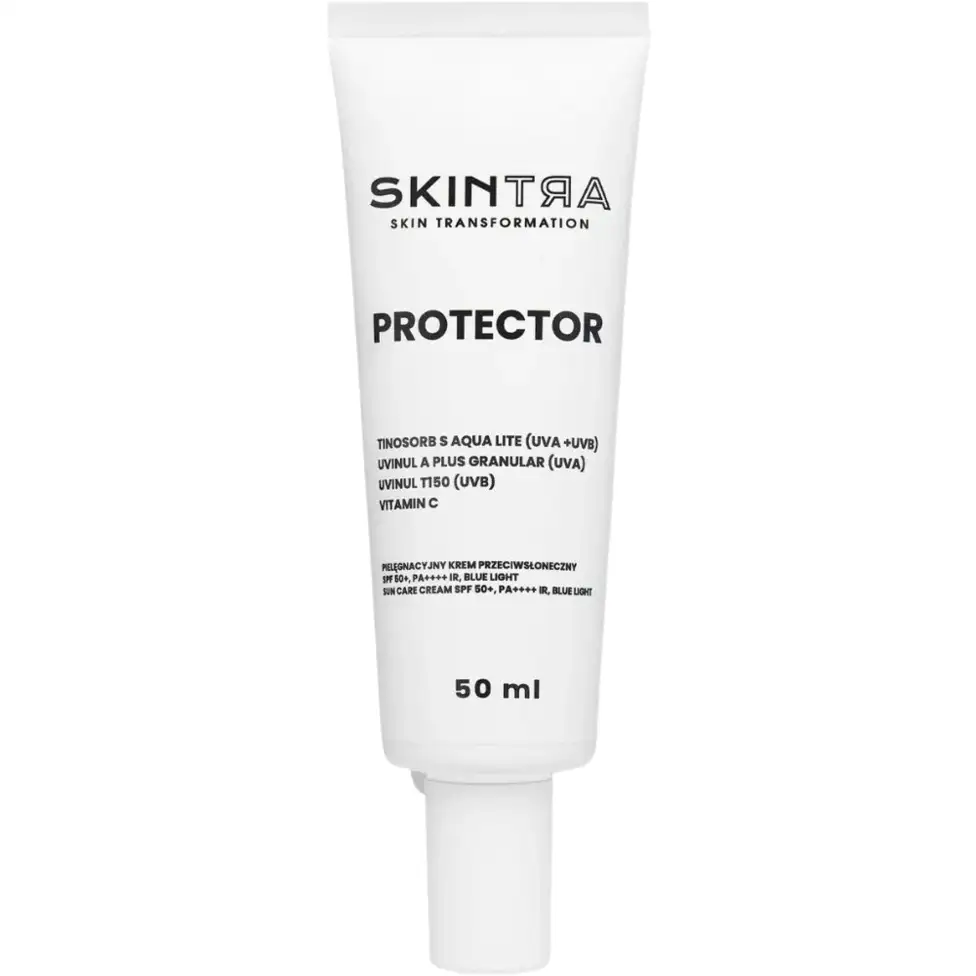
SPF 50 with additional skincare actives and benefits
SkinTra, Protector Sunscreen Skincare Suncreen SPF50+/PA++++ £15.71 (1% OFF — was £15.91)
Mineral vs. chemical: the debate that doesn’t need to be a debate
Chemical SPF absorbs UV radiation and converts it to heat. Mineral SPF (zinc oxide or titanium dioxide) sits on the skin’s surface and deflects UV rays. Both are safe, both are effective, and the idea that one is categorically better than the other is mostly driven by marketing rather than evidence. That said, there are real practical differences worth knowing about.
Chemical filters tend to produce lighter, more skin-like textures with no white cast, which makes them easier to wear daily and better under makeup — but they need about 15 minutes to activate after application, and some people with sensitive or rosacea-prone skin find certain chemical filters (particularly oxybenzone and avobenzone) irritating. Mineral filters work immediately, are less likely to provoke reactions, and are the standard recommendation for anyone with reactive skin or those who are pregnant; the downside is that zinc oxide in particular can leave a visible white or greyish tint, though tinted mineral formulas have largely solved this for most skin tones. Actually, that’s not quite right to say they’ve fully solved it — very deep skin tones can still struggle to find mineral options that disappear completely, and that’s a genuine gap in the market.
Using mineral on your body and chemical on your face is a completely reasonable approach. There’s no rule.

Mineral SPF 50 options using zinc oxide or titanium dioxide

Chemical SPF 50 formulas with lightweight, invisible finish
CeraVe, Invisible Hydrating Sunscreen for Face and Body 177mL SPF50+ £16.05 (6% OFF — was £17.16)
How to apply it (and where almost everyone goes wrong)
Use a quarter-teaspoon for your face and neck. Most people use about half that, which means the protection they’re actually getting is closer to SPF 25. It’ll feel like a lot. Do it anyway.
Apply SPF 50 face sunscreen as the last step of your skincare routine — after moisturiser, after serums, after eye cream — and give it a couple of minutes to set before layering makeup on top. Reapply every two hours if you’re spending time outdoors, and after swimming or sweating. For reapplication over makeup, a finely milled powder SPF or a sunscreen mist designed for that purpose is far more practical than trying to reapply a cream formula over foundation. Sunglasses aren’t optional if you care about the skin around your eyes, either — that area is thin, UV-sensitive, and one of the first places to show age.
SPF is one tool. Shade, hats, and avoiding the midday sun between roughly 11am and 3pm are others. Use all of them.
My honest take: the best SPF 50 face sunscreen is whichever one you’ll actually use every single day without resenting it. Start with something affordable from a brand with a decent reputation, wear it consistently for three weeks, and then decide whether you want to experiment with something different. The habit matters more than the formula — but once the habit is there, finding the formula you genuinely like wearing is worth the effort.
Frequently Asked Questions
Is SPF 50 actually worth it over SPF 30 for daily use?
Yes, particularly if you’re applying less than the recommended amount — which most people do. SPF 50 blocks around 98% of UVB rays versus SPF 30’s 97%, and that extra buffer matters when real-world application is usually thinner than lab conditions assume.
How much SPF 50 face sunscreen should I actually apply?
About a quarter-teaspoon for your face and neck combined. It feels like a lot. If you use half that, you’re realistically getting closer to SPF 25 protection, so don’t be shy with it.
Can I use SPF 50 face sunscreen under makeup?
Absolutely. Apply it as the last step of your skincare routine, let it set for a couple of minutes, then apply makeup as normal. For reapplication during the day, a powder SPF or sunscreen mist works well over foundation.
What is the difference between mineral and chemical SPF 50?
Mineral SPF (zinc oxide or titanium dioxide) sits on skin and deflects UV rays — it’s gentler and works immediately. Chemical SPF absorbs UV and converts it to heat, tends to feel lighter, but needs 15 minutes to activate and can irritate sensitive skin.
Does SPF 50 face sunscreen protect against UVA rays too?
SPF ratings only measure UVB protection. For UVA coverage, look for the UVA circle logo or PA++++ rating on the packaging. Broad-spectrum products cover both, which is what you want for daily anti-ageing protection.
Heads up: when you buy through links on this page, we may earn a small commission — at no extra cost to you. It helps keep the content going.



 No products in the cart.