

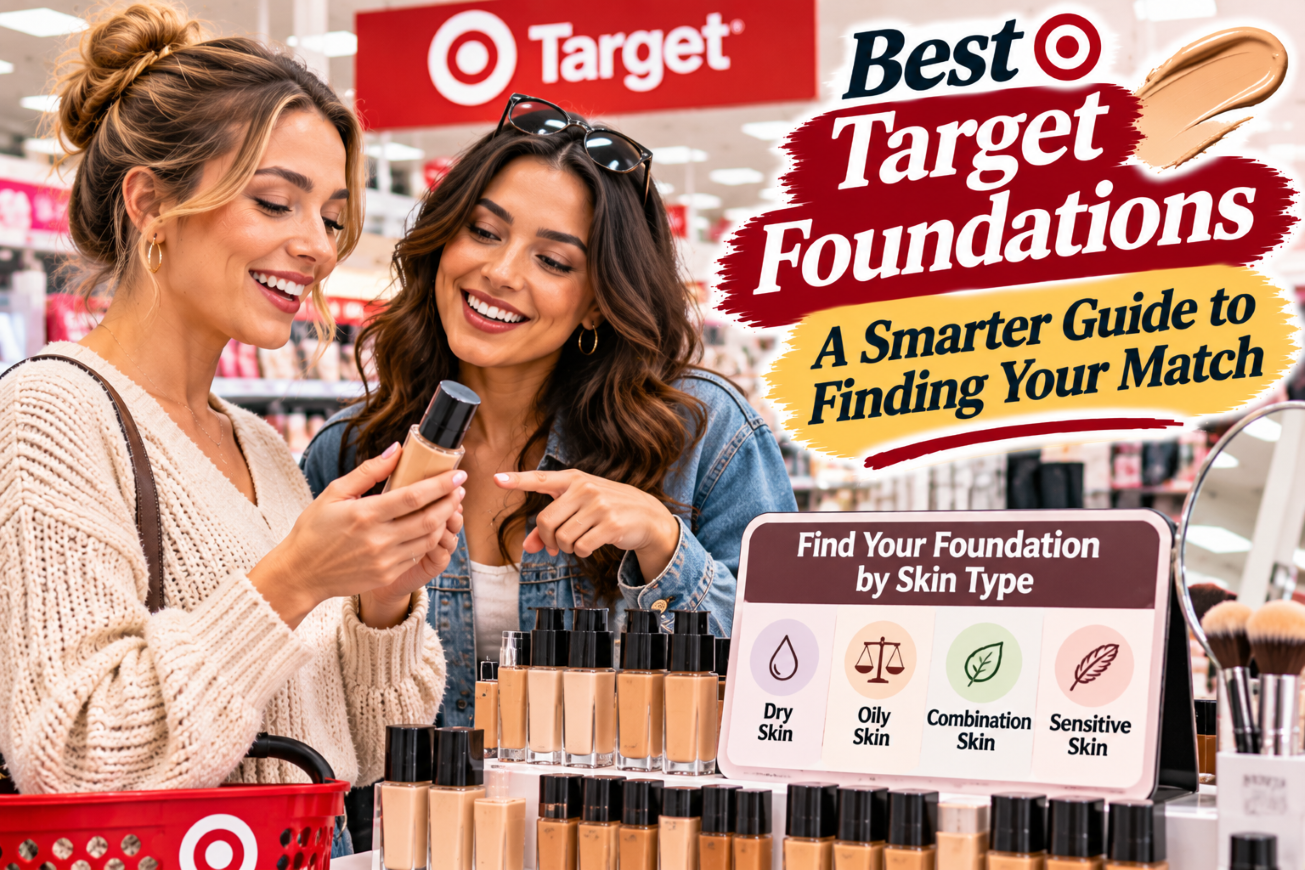
I once bought a foundation because a video told me it was a perfect copy of a pricey favorite. It was not.
That bottle taught me something the video never mentioned. A low price and similar packaging prove nothing about how two formulas behave on your face, and the best Target foundations are the ones that fit your skin, your finish preference and your tolerance for touch-ups. Nobody else’s face is the test.
Does the dupe really match?
The phrase “target foundation dupe” gets clicks because everyone likes a similar look for less. But dupe can mean a close shade, a similar finish, comparable coverage, or just a product someone happens to like as a stand-in. Those are different claims. None of them promise an identical formula or the same wear time.
When a post calls a Target option an Il Makiage dupe, ask what the comparison actually covers. Is it the finish on camera? The coverage? How it feels after eight hours? A side-by-side swatch helps, though lighting and skin prep can make two unrelated formulas look like twins (or make near-identical shades look miles apart).
Here is a practical way to judge the claim without buying on hype:
- Name the feature you want to copy. Maybe it is the coverage, the shade range, or a soft-focus look. Pick one priority first.
- Compare texture and finish. A liquid that dries down matte behaves differently from a creamy, luminous one, even if the shade names sound close.
- Look for wear details. A fresh-application photo says little, so find a comparison that includes several hours of wear.
- Test it with your routine. A formula that works over someone else’s primer might separate over yours.
- Check the current price. Promotions come and go, and an old social post may not match what you see on the shelf.
A cheaper foundation can still be a smart buy even when it is no true dupe. Maybe you like the shade better, or it blends faster. The honest downside is that if you are chasing an exact match in feel and staying power, a viral comparison sets expectations too high. I would rather you pick a formula that suits your face than a bargain you never reach for.
Start with your actual morning
Before you compare bottles, think about when and how you will wear foundation. A quick layer for the school run asks very little. A long workday, a humid commute or an evening event asks a lot more, and I would build the choice around that, not around a studio photo.
Think about the skin prep you already use. A rich moisturizer or sunscreen can make a very dewy formula look slick on top. If your skin gets tight by midafternoon, a dry-feeling matte base may show every flaky patch. Your products do not need to come from one brand, but they should sit together comfortably.
- Short wear: A lightweight formula with sheer or medium coverage is usually quicker to blend and easier to touch up.
- A long day: Look for clear wear instructions, and test the formula over your normal moisturizer and sunscreen before an important day.
- A minimal routine: A flexible, light-coverage base can even out your complexion without a full face of makeup.
- Photos or events: Check the finish in daylight and indoor light, because a mirror under bright store lights will not tell you everything.
- Humid weather: Try the formula on a warm day before trusting it for an outdoor plan.
Every texture has a trade-off. Thinner bases feel easy but leave more natural skin visible. Thicker ones cover more, though they take longer to blend and can feel heavier. Neither wins automatically.
Read the label for words like matte, radiant, natural or long-wear, but treat them as clues, not guarantees. Skin prep, the amount you apply and your environment can all change the result. If you normally wear a silicone-heavy primer, try the foundation over that primer instead of judging it on bare skin alone, since that is how you will really wear it.
Oily, dry, or somewhere in between
Skin type points you toward a starting texture. It is not a rulebook. Oily skin can still like a natural finish, and dry skin does not always need a glossy base. Notice how your face feels by midday, especially around the nose, forehead and cheeks. That tells you more than any label.
When shine shows up early
A soft-matte or natural-finish foundation may help reduce the look of shine through the center of your face. Start with a thin layer, because building too much coverage can make product gather where your skin moves. If shine is mostly a forehead-and-nose problem, keep the rest of your face lighter.
The catch: matte can feel dry or look flat on dehydrated skin. Try a comfortable moisturizer first and give it time to settle. If you use powder, press a little where you need it rather than dusting everything on autopilot.
Dry or textured skin
A flexible, natural or radiant finish is often more forgiving than a flat matte. Use a modest amount and blend gently over areas that flake. Foundation cannot stand in for skin prep, so moisturize and let it absorb first.
One catch here too. A dewy finish can emphasize shine or look patchy if the layers underneath have not settled. Try the combination at home. If your cheeks look comfortable but your nose gets slippery, adjust that one zone instead of rebuilding the whole routine.
Combination or sensitive skin
Combination skin often does well with a middle-ground finish, though you may want different prep in different areas. Use less product on spots that crease or get oily. With sensitive skin, read the ingredient list and patch-test a small area before wearing a new formula all day. Stop using it if irritation develops.
There is no perfect shortcut. A formula that feels fine on your jaw might bother your cheeks, and a product called gentle can still disagree with you. Keep the test simple: one new face product at a time, so you know what caused a reaction.
Full coverage or natural? Wear what you will actually wear
Coverage and finish answer different questions. Coverage is how much of your skin shows through. Finish is how the surface looks once the foundation is on. A light-coverage formula can have a radiant finish, and a fuller base can look quite natural, so do not treat the two as one choice.
For everyday makeup, sheer or medium coverage is easier to apply fast. It lets freckles show and usually blends more simply along the jaw. Want more coverage in one spot? Tap a little extra there instead of coating your whole face.
Full coverage suits an event, a photo, or anyone who just likes a more even base. It takes more care, though. Work in thin layers and step back to check the result, because close-up bathroom lighting can keep you adding product long after you reached the look you wanted.
Natural finishes are versatile, but the term is not standardized. One brand’s natural looks satin, another’s looks more matte. Swatch the shade and let it sit a few minutes, since color and finish can shift as it dries down.
Patience matters too. A quick routine favors a formula that blends with your fingers, a sponge or the brush you already own, while a more polished finish may need extra blending around the hairline and jaw. The best option is the one you can apply well on an ordinary Tuesday, not only when you have an hour and perfect light.
Shade matching, where it all goes sideways
Store lighting is often bright and cool, and your hand is probably a different color from your face. If testers are available, try a few close shades along your jawline, then step near natural light. The right match blends into both face and neck without a visible stripe.
Check undertone as well as depth. If your base looks too pink, golden or gray next to your neck, the depth may be right while the undertone is off. Labels like warm, cool and neutral can guide you, but brands do not always use those words the same way.
- Swatch near your jaw: It beats the wrist because you can compare face and neck.
- Give it a moment: Some formulas change as they dry, so ignore the first few seconds.
- Check more than one light: Look by a window or take a quick photo outside.
- Think about the seasons: Your face and neck may deepen after time outdoors, so winter’s shade may not last all year.
Cannot test in person? Compare the brand’s shade images with your neck instead of relying on a number or name alone. Reviews can offer clues, especially when shoppers describe undertones, but screen settings vary. Keep the receipt and check the return rules before opening or using makeup, since policies differ by item and location.
One more thing. Do not try to fix a poor shade match with a much heavier formula. The wrong undertone still looks wrong, just with more coverage. If you are between shades, pick the one that blends more naturally along your jaw.
My take
Decide what matters most, whether that is coverage, finish, shade or ease, and test that one feature under conditions close to your real routine. A few careful minutes can save you from a bottle that sits untouched beside the sink.
Treat any Il Makiage dupe claim as a starting point, not a promise. I would rather you spend your money on a boring formula that suits your skin than a hyped one that does not.
Some links on this page are affiliate links: if you buy through them we may earn a small commission at no extra cost to you. We only recommend products we would buy ourselves.
Frequently Asked Questions
Is a Target foundation really a dupe for Il Makiage?
Not automatically. A dupe might match only the shade, the finish, or the coverage, and a similar look in a photo does not mean the formula wears the same. Test it with your own skincare and watch it for several hours.
How do I find my foundation shade at Target?
Swatch two or three close shades along your jawline, wait a minute for them to dry, then check them in natural light. The right one blends into both your face and neck without a visible stripe.
What foundation finish is best for oily skin?
A soft-matte or natural finish usually helps with shine. Apply a thin layer, and press a little powder only where you need it instead of dusting your whole face.
Should I choose full coverage or natural finish?
Pick the one you can apply well on an ordinary morning. Coverage is how much skin shows through, while finish is how the surface looks, so you can mix a light coverage with a radiant finish.
 No products in the cart.