

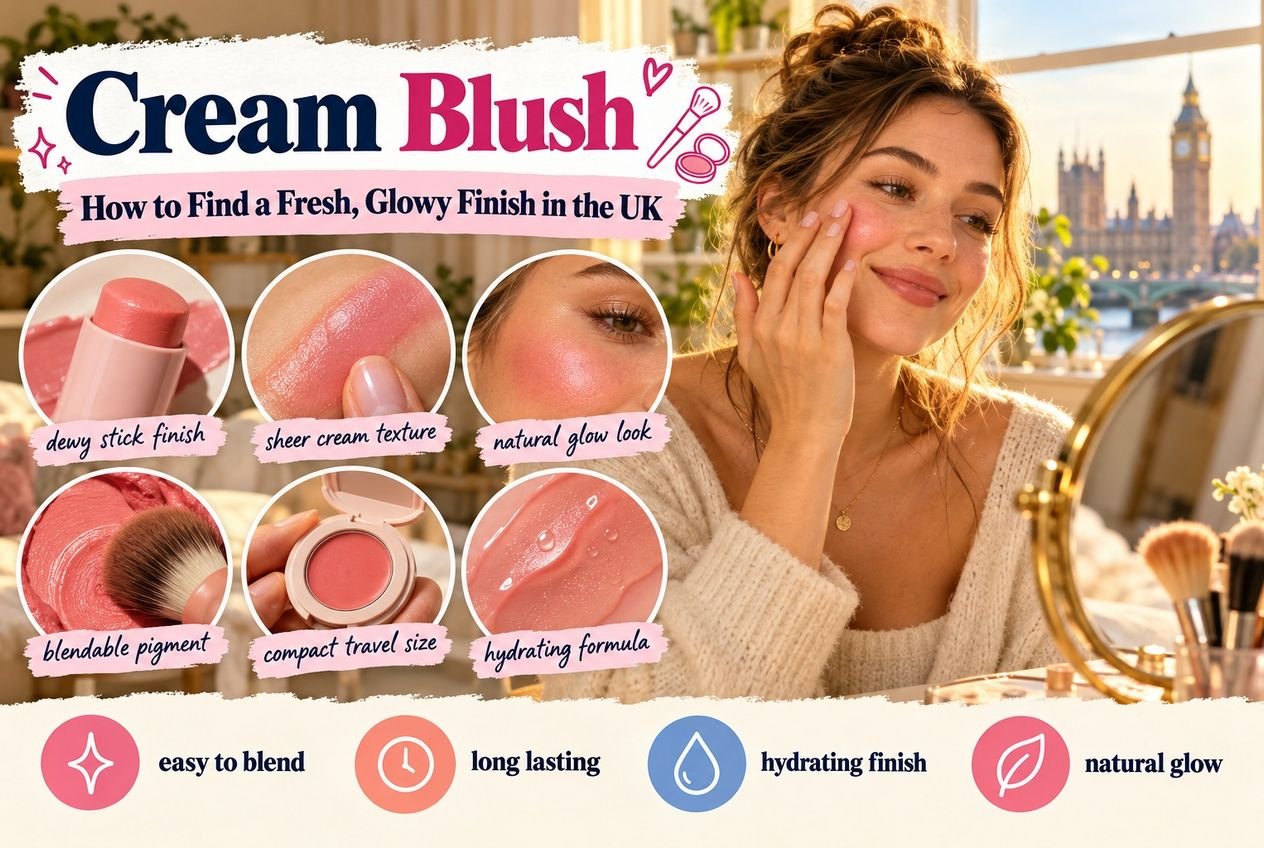
Bathroom lighting lied to me for years.
I would blend my blush at the sink, feel quite pleased, and then step outside to find one cheek bright and the other barely there. That is why I now say one thing before anything else about cream blush: check it in daylight. Everything else in this guide, from price to packaging to finish, comes second to whether the colour actually suits your face when you walk out of the door.
Cream blush can make skin look fresh and softly luminous, even on a grey UK morning when you look a bit flat. The right formula and shade depend on your skin, your habits and the finish you want, not on how pretty the product looks in a photo.
There are no product picks here. Instead you get ways to judge what is on the shelf or already in your basket, so you can shop at your own pace.
Put the colour where your cheeks lift
Start with moisturised skin and let your skincare settle before any makeup goes on. If you wear foundation, blend it first, then add blush in small amounts. A sticky base grabs pigment unevenly, so a short pause between layers can save you from patches.
Fingers, brush or sponge? There is no single correct tool. Fingers warm the formula and suit a quick, sheer wash. A brush softens edges and spreads colour more evenly, while a damp sponge presses product into the base for a subtle finish. Pick whatever gives you control, not whatever looks most impressive in a tutorial.
Place the colour where your cheeks naturally rise when you smile, or a touch higher if you like a lifted look. Blend outward. Check both sides in daylight. Add more only once the first layer looks even, which keeps the finish fresh and avoids a harsh patch.
To help it last, work in thin layers and avoid rubbing your face afterwards. If you like setting powder, press a little over areas that crease or turn shiny, but leave the high points of your cheeks alone if you want visible dew. A light mist can make makeup look less powdery, though it will not make every formula waterproof or transfer-proof.
Removal is simple: your usual cleanser, with extra care around the hairline and nose where colour tends to linger. If a formula stings, wash it off and stop using it. Pretty colour is not worth irritated cheeks.
What can you really expect under £10?
A low-cost blush makes a lovely everyday buy, especially if you are testing a new colour or want something for your work bag. But the price alone tells you nothing about how a drugstore cream blush will sit on your skin. Texture, colour payoff and packaging matter more than a bargain label.
First, find out whether the formula is sheer or strongly pigmented. Sheer colour forgives mistakes because you can build it slowly, which helps if cream textures are new to you or you tend to rush. A highly pigmented formula needs only a speck, yet it is harder to blend evenly. In a shop, begin with the smallest dab you can manage (cheeks take colour more easily than they give it back).
Packaging counts too. A compact with a secure lid travels better than an open pot, and a tube is more hygienic if you would rather not dip your fingers in. Sticks are quick, but test whether the lid feels snug enough to survive the bottom of a handbag. A good formula with a cap that keeps popping off gets old fast.
For a sensible budget buy, choose a shade you will wear often and a texture that works with your usual tools. Fingers may be all you need. A dense brush or damp sponge helps if you prefer a more diffused edge. Cheaper formulas can vary in wear and packaging, so swatch the colour and leave it for a few minutes before you decide.
Is premium cream blush worth the extra?
Higher-priced blushes tend to attract people who care about fine texture, elegant packaging or one particular finish. That does not mean premium lasts longer or suits everybody. It just hands you a different set of details to weigh before you spend more.
Look closely at how the product dries down. Some formulas stay dewy, while others settle to a soft, almost satin finish. A lasting wet sheen looks gorgeous on dry or normal skin, but it can feel tacky if you dislike the sensation of makeup on your cheeks. A softer finish is easier to wear through a long day, although it might not give you the juicy glow you pictured.
Shade range is another useful measure. A blush that looks bright in the pan can turn delicate once blended, while a muted one may look far more vivid against your skin. Shopping online? Compare swatches on skin tones close to yours and look for examples shot in natural light. Studio lighting makes colours look smoother and more luminous than they will on a rainy Tuesday commute.
Think about how you will use it. If blush is part of your daily routine, a compact that opens easily and stays clean may matter most. If you only wear it for evenings out, a more dramatic finish could earn its place. I will admit one reservation: premium packaging is lovely, but it cannot justify the splurge if the shade just sits untouched in your drawer.
Sticks: fast, portable, a bit fiddly
A blush stick lets you apply colour without setting out a brush and palette. Swipe it over the cheeks, then blend with fingertips or a tool. For a quick face before heading out, that simplicity is a real plus.
Placement matters. Rather than dragging the stick straight across your cheek, tap colour onto the area you want to lift, then blend the edges. You can also warm a little product on the back of your hand first, which gives you more control and avoids a stripe on your face. If the stick feels firm, gentle tapping is kinder to your base than rubbing.
Sticks can be awkward over foundation. A direct swipe may shift the makeup underneath, especially if your base is still tacky or you press hard. Use clean fingers or a brush with light taps instead. Keep the stick clean as well: never touch it to irritated skin, and wipe the surface if it picks up foundation or powder.
Choose this format if speed and portability rank high for you. It suits less well if you want very sheer, precise colour straight from the packaging, or if solid formulas feel waxy to you. Texture varies, so test the blend where you can. A stick should glide without tugging, and you should not have to wrestle it into place.
Korean blush and the soft, dewy look
Korean blush is often linked with fresh, delicate colour and a softly dewy finish, though brands and formulas differ. If you like makeup that looks light on the skin rather than sharply sculpted, this style is a good place to explore. The useful question is whether the finish and intensity suit your routine. A trend telling you that you need it is not a reason.
Look for words like sheer, buildable or water-like, then check swatches to see what they mean in practice. A translucent-looking shade can be subtle on one complexion and much brighter on another. If your cheeks flush easily, a light hand keeps the result from competing with your natural redness. On deeper skin tones, pay attention to pigment and undertone so the shade shows up clearly instead of vanishing after blending.
Dewy finishes make skin look fresh. They can also highlight texture or turn shiny in warm weather. If that worries you, put the colour on the upper cheek and keep the centre of the face less glossy. Set only the areas that tend to get oily, rather than dusting powder over the whole cheek and losing the glow you wanted.
One small downside: very soft, sheer colour can fade into the background if you like a bold blush look. Build it in thin layers and give each one a moment to settle. You will judge the final colour far better than if you pile on a large amount at once.
Pick the one you will reach for
The best cream blush a UK shopper can choose is the one that fits their skin, preferred finish and real routine. A sheer pot, a portable stick or a polished dewy formula can all work, and none is automatically right for everyone. Check the undertone, test the texture, and ask how much blending you are happy to do on a busy morning.
My view? Buy the shade you will actually wear, use less than you think you need, and build slowly.
Hey savvy shoppers! When the items in our articles catch your eye and you decide to buy through our links, we may earn a small commission at no extra cost to you. Think of it as a way of supporting us in bringing you the best content!
Frequently Asked Questions
Is a cheap cream blush worth buying?
Yes, often. A drugstore formula is a low-risk way to try a new shade or texture. Check how pigmented it is, swatch it if you can, and make sure the packaging closes securely.
Can I apply cream blush over foundation?
Yes. Blend the foundation first, let it settle for a moment, then tap the blush on in small amounts. A tacky base grabs pigment unevenly, so a short pause helps.
Should I use fingers, a brush or a sponge?
Any of them. Fingers give a quick sheer wash, a brush softens edges, and a damp sponge presses colour into the skin for a subtle finish.
How do I stop dewy blush looking shiny?
Keep the colour on the upper cheek and set only the areas that get oily. Leave the high points unpowdered if you want to keep the glow.
 No products in the cart.