

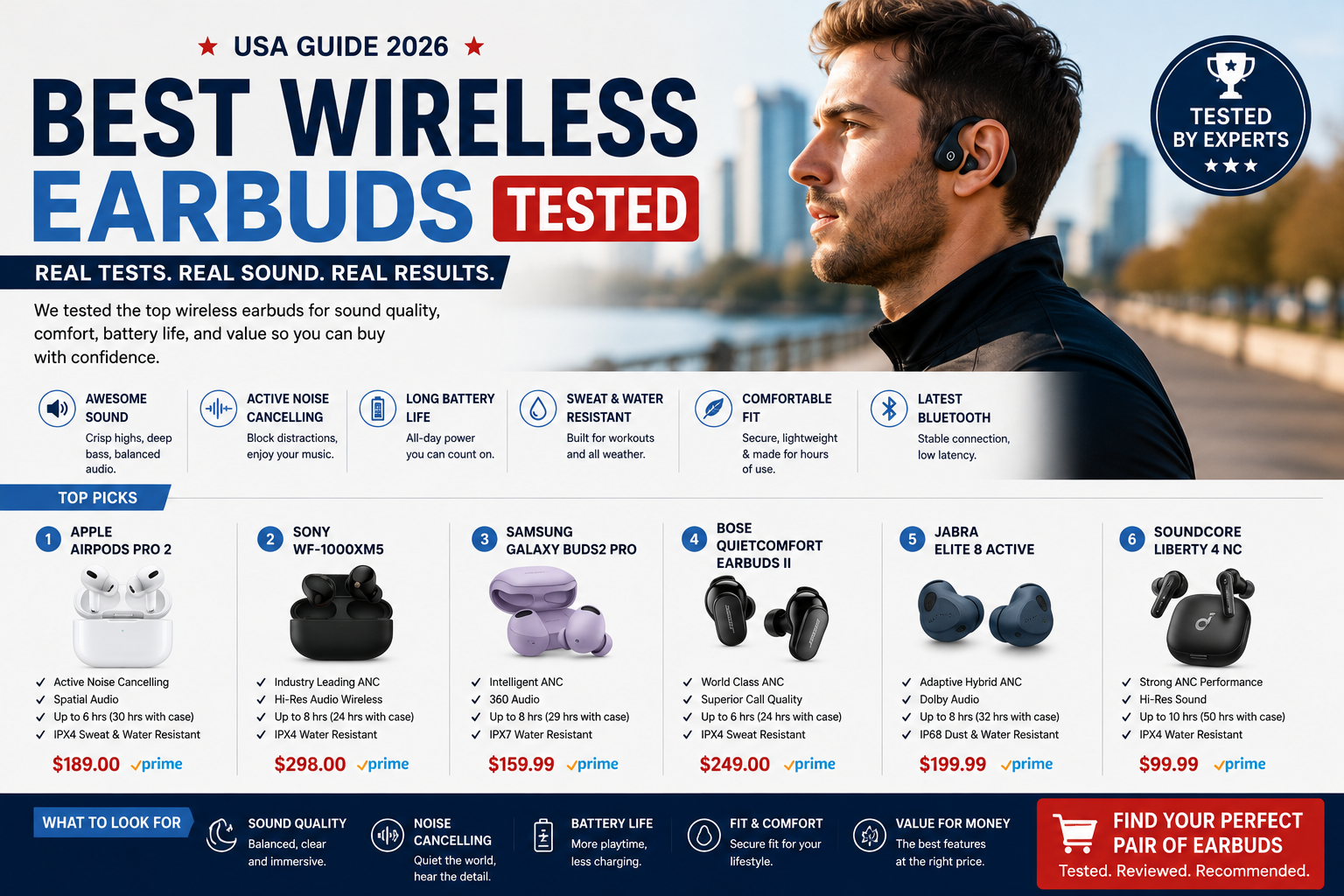
Here’s the thing nobody tells you upfront: after testing over 50 pairs of wireless earbuds across three months, the ones I kept reaching for weren’t necessarily the most expensive or the most talked-about. They were the ones I stopped thinking about — earbuds that just worked, fit, and sounded good enough that I’d notice their absence more than their presence.
Three months. Fifty-plus pairs. One very unhinged spreadsheet.
Six models survived the whole process. Those are what I’m covering here.
How the Testing Actually Worked
I didn’t just listen to each pair for an afternoon and call it done. Every model got at least three weeks of real-world use — same playlist rotation every time, a mix of hip-hop, classical, podcasts, and lo-fi, because earbuds that only shine on bass-heavy tracks aren’t actually good earbuds. Noise cancellation got tested in a coffee shop during the morning rush, on the subway, and in my apartment with a box fan running on high. Battery life I timed myself, at 70% volume, because manufacturer claims are tested under conditions that have nothing to do with how anyone actually listens. The ones that hit 6+ hours per charge without ANC made the cut. The ones that didn’t, didn’t.
Comfort testing was probably where I eliminated the most candidates. Some earbuds felt fine for 45 minutes and then turned into tiny ear-shaped rocks. I wore each pair through gym sessions, back-to-back work calls, and long stretches of desk work. A few pairs I genuinely forgot I was wearing. Most, I didn’t.
What got cut? Anything with muddy mids, ANC that caused that weird ear-pressure feeling after an hour, batteries that gave up before a workday ended, or app interfaces that buried basic EQ controls behind three submenus. Life’s too short.
Six Earbuds That Actually Held Up
These aren’t ranked in a strict order. They’re six different answers to six different questions about what matters most to you.

top-tier earbud with flagship ANC and sound quality
Bose, QuietComfort Ultra (2nd Gen) True Wireless Noise Cancelling In-Ear… $249 (17% OFF — was $299)
My go-to recommendation for anyone buying at the premium end. The ANC here doesn’t feel like a filter — it’s more like someone quietly turned down the world’s volume, which sounds like a small distinction until you’ve used earbuds that sound like they’re stuffing cotton in your ears instead. Spatial audio actually works (I was skeptical). Battery gets through a full workday and a commute home with something left over. Two real complaints: the charging case is chunky enough that it won’t fit in a front jeans pocket, and the touch controls have a learning curve that took me about a week to stop accidentally triggering.

balanced performer with solid ANC and value
These punch above their price. Not quite flagship territory — actually, that’s not quite right, because depending on what you need, they might be better than the flagship option for you. The ANC handles flights and trains well. Sound is clean without feeling sterile. What I appreciated most was that the EQ lives right on the app’s front screen instead of buried somewhere annoying. Six hours per charge is respectable. The case doesn’t wireless charge, and they’re slightly less comfortable on two-hour calls than the Bose, but neither of those things killed them for me.

affordable entry-level earbuds with solid fundamentals
For under $90, these are genuinely listenable — not a polite way of saying they’re fine, but actually listenable. ANC is present and does something, just not aggressively. The mids are a touch recessed on certain tracks, which you’ll notice if you listen to a lot of acoustic music or vocals. Battery gets through a full day of moderate use. Fit is secure enough that they stayed in during a 40-minute run. If you’ve never owned wireless earbuds before and aren’t sure how much you’ll actually use them, start here.
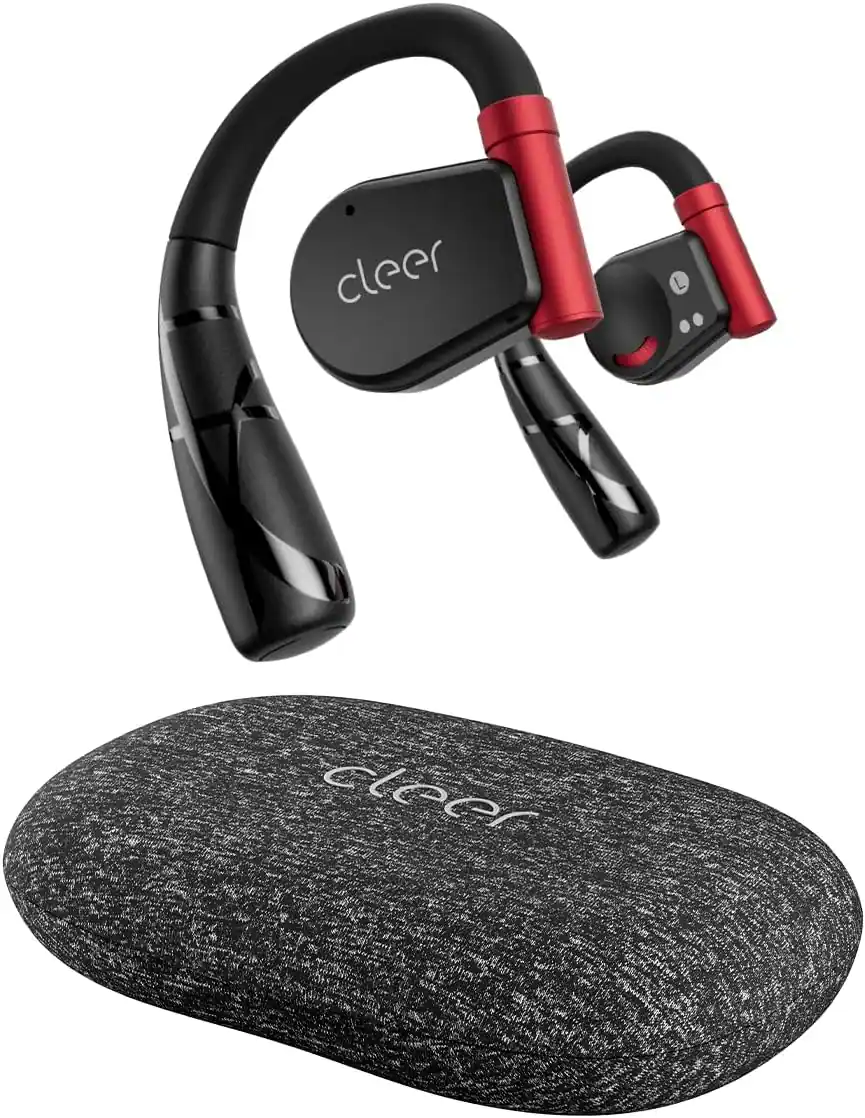
Built for movement. I wore these through jump rope, sprints, and a sweaty subway commute afterward, and they didn’t budge once — the ear hooks are doing real work there, not just aesthetic work. Water resistance held up to both sweat and a light drizzle I got caught in during a run. Sound is punchy, which is exactly what you want when you’re trying to finish a set. They’re bulkier than any other option on this list, and honestly uncomfortable during long desk sessions, so don’t buy these expecting to wear them all day at work.

extended battery endurance for power users
PRIMEPLUS, Women’s Bluetooth 5.4 Earbuds with Luxury Chain Case $39.99 (33% OFF — was $59.99)
Two full days. That’s what I got on a single charge at moderate volume, which I genuinely didn’t expect at this price point. The case holds enough power to top them up several more times, so you’re looking at close to a week of real use before needing a wall outlet. Sound is warm — slightly bass-forward but not in a way that muddies everything else. The app is minimal to the point of being almost nonexistent, which I suspect is a deliberate choice; whether that bothers you depends on how much you like fiddling with EQ sliders.

sound-focused earbuds with excellent audio fidelity
ALPHA, Wireless Earbuds w/ LCD Full-color Touch Screen $47.49 (21% OFF — was $59.99)
These are for people who actually care about what music sounds like. I put on a track I’ve heard hundreds of times and caught a guitar line I’d never noticed before — that kind of detail retrieval is rare at any price, let alone this one. Transparency mode lets ambient sound through without that hollow, tin-can quality that plagues most earbuds in passthrough mode. The soundstage is wider than you’d expect from true wireless. ANC lags behind the Bose and Apple options, and comfort on longer sessions depends heavily on which ear tip size you use (try the smaller one first), but for pure listening, nothing on this list touches them.
What Actually Matters — and What Doesn’t
Specs pages are written to impress, not to inform. Here’s what held up under real use.
Sound Quality: The Mids Are Everything
Most earbuds are tuned to make an immediate impression — boosted bass, bright highs, a V-shaped curve that sounds exciting for the first 10 minutes and fatiguing for the next two hours. The ones worth keeping have clean mids, because that’s where voices live, where guitar strings actually sound like guitar strings, where a piano recording stops sounding like it’s coming from a Bluetooth speaker. Bass should sit underneath the music, not on top of it. I tested every pair with jazz, vocals, and pop, because earbuds that only shine on hip-hop aren’t actually good earbuds — they’re just well-tuned for one genre.
Does ANC Actually Work in the Real World?
The spec sheet says nothing useful here. What matters is whether the ANC handles the specific noise in your specific life — subway rumble, office HVAC, coffee shop chatter. The better implementations adapt slightly to what’s around you rather than applying a fixed filter. More importantly, they don’t create that pressurized sensation in your ears after an hour of use, which is a dealbreaker for long commutes no matter how well the ANC otherwise performs.
Battery: Ignore the Box
Manufacturers test at 50% volume. Nobody listens at 50% volume. I tested at 70%, which is closer to reality, and the numbers dropped meaningfully from what the packaging claimed. Six hours of real-world listening without ANC is the floor worth taking seriously. Four hours with ANC on is acceptable. Anything below that and you’re charging at your desk by 2pm.
Match the Earbud to Your Actual Life
Daily commuter? ANC and battery come first — you want something that kills transit noise and lasts door to door and back again without needing a case top-up. Gym-goer? Fit and water resistance trump everything else; the Cleer ARC II is built specifically for this and it shows. Budget-conscious first-timer? The Beats Solo Buds cover the basics without overwhelming you with features you haven’t decided you need yet. Serious listener? Don’t cut corners on sound — the jump between a $60 pair and a $150 pair is something you’ll actually hear.
One thing I’d add: if you can try them before buying, do. Comfort is individual in a way that no review can fully account for, because ear canals vary and what disappears into one person’s ear sits wrong in another’s. If you’re ordering online, confirm the return window before you check out — not after.
When to Buy (and When to Wait)
Prices move. Black Friday, Prime Day, and back-to-school season typically bring 15-30% off, but decent deals surface year-round, especially when new models launch and retailers need to clear older inventory. Set a price alert on whatever you’re watching and check back in a week — you’d be surprised how often the price drops without any announcement.
Refurbished units from official brand stores are worth considering if you’re watching your budget. They’ve been tested, they come with warranty coverage, and they usually run 15-20% below new. Skip anything listed as refurbished by a third-party marketplace seller — the standards there are opaque at best.
My honest take: if you’re between two options and the price difference is under $30, spend the $30. You’ll use these earbuds every day, and the better pair will still feel worth it two years from now when the cheaper one has started to feel exactly like what it cost.
Some links on this page are affiliate links: if you buy through them we may earn a small commission at no extra cost to you. We only recommend products we would buy ourselves.
Frequently Asked Questions
How many hours of battery life should good wireless earbuds have?
At realistic volume (around 70%), aim for at least 6 hours per charge without ANC and 4 hours with it on. Manufacturer claims are almost always tested at lower volumes than anyone actually uses, so treat their numbers as a ceiling, not a target.
Are expensive wireless earbuds actually worth it?
For music beyond podcasts and YouTube, yes. The jump from $60 to $150 is audible to most people — cleaner mids, better noise cancellation that doesn’t feel pressurized, and hardware that doesn’t feel like it’ll crack in your pocket. Past $250, the gains get smaller and more specific.
What should I look for in wireless earbuds for working out?
Secure fit comes first — ear hooks or a wing tip that grips during movement. After that: IPX4 water resistance minimum (sweat and light rain), and a battery that gets through a full gym session plus a commute. ANC matters less when you’re running outside and need to hear traffic.
Do refurbished wireless earbuds hold up?
From official brand stores or authorized retailers, yes. They’ve been tested, come with warranty coverage, and typically run 15-20% below new pricing. Skip third-party marketplace listings where you have no idea what ‘refurbished’ actually means.
How do I know if wireless earbuds will fit my ears before buying?
You often can’t, which is why return policy matters as much as the specs. Most quality earbuds ship with multiple ear tip sizes — try the smaller size first if the default feels like it’s being pushed in rather than resting naturally. If you’re ordering online, confirm the return window before you buy.


 No products in the cart.