

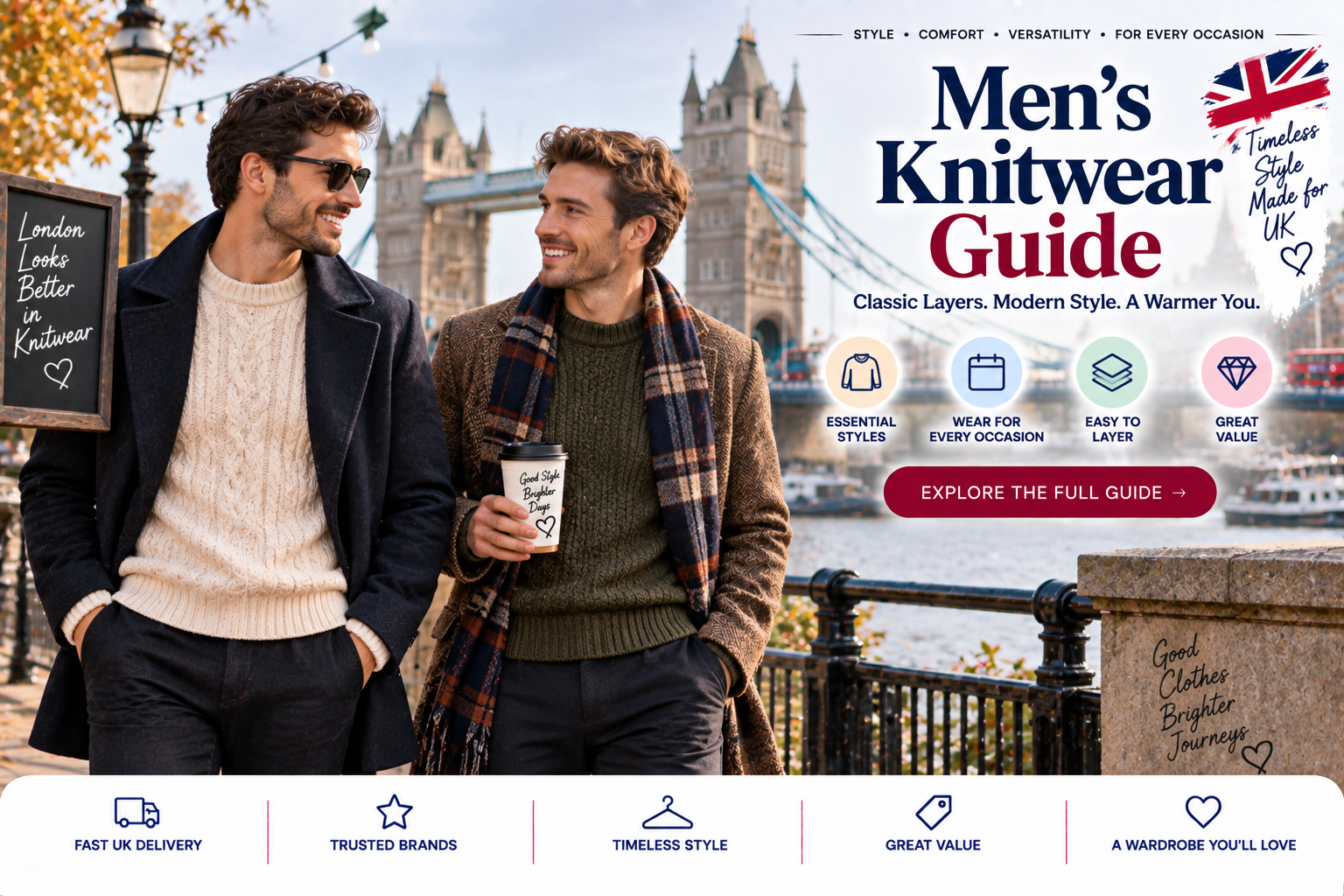
Most blokes approach knitwear the same way: grab whatever’s on the sale rail, wear it until it pills beyond recognition, and repeat. I know because I did exactly that for years — and then I bought one decent merino crew neck, wore it for three seasons without it losing its shape, and quietly rethought everything. The difference between knitwear that works and knitwear that doesn’t comes down to understanding what you’re actually buying.
This men’s knitwear guide runs through fabrics, styles, layering, seasonal wear, and how to keep pieces going for years rather than months. Not complicated. Just useful.
What You’re Actually Buying
Fabric is where it starts. Before style, before colour, before price — fabric determines how a knit feels on day one and whether it still looks decent after fifty wears.
Merino wool is the workhorse choice. It’s naturally temperature-regulating, pulls moisture away from your skin, and — this still surprises people — genuinely doesn’t smell after multiple days of wear. If you’re spending real money on a single jumper, merino is where to spend it. The catch is that cheaper merino blends can feel scratchy, so always check the percentage and, ideally, feel it before you buy.
Cotton knits breathe well, wash easily, and won’t cook you in May. They wrinkle faster than wool and don’t last quite as long, but for spring and summer they’re the obvious call. Wool blends — merino or lambswool mixed with synthetic fibres — land somewhere practical in the middle: warmer than cotton, more affordable than pure merino, and generally more hardwearing. Most high-street knitwear sits in this category, and honestly, that’s not a problem.
Cashmere is soft, warm, and genuinely lovely to wear. It’s also expensive, pills if you’re careless, and needs hand washing every time. Save it for pieces you’ll actually treat properly. Then there are acrylic and polyester blends, which are budget-friendly and machine-washable but don’t breathe well and tend to feel synthetic against the skin — fine for basics, less ideal for anything you’ll wear daily.

Premium fabric foundation for understanding quality knitwear
Belstaff, Men’s Belstaff Kerrigan Merino Wool Crew Neck Jumper £110

Breathable warm-weather knitwear option
Paul James Knitwear, Neutrals Mens Lightweight Cotton Allen Striped Breton Sweater £70

Versatile mid-range fabric choice
Magliano, Striped Mohair Wool Blend Cardigan £474 (40% OFF — was £790)
Crew Neck or V-Neck?
Both are classics. Both work. But they work differently depending on your build and what you’re pairing them with, so it’s worth thinking about before you buy.
Crew necks are the reliable choice — timeless, forgiving to style, and they sit comfortably with jeans and trainers or chinos and loafers without needing much thought. The one downside worth mentioning: if you’ve got a shorter neck, a high crew can make it look shorter. Not a dealbreaker, but worth knowing before you commit to a whole wardrobe of them.
Does your collar need to show? Then reach for a V-neck. They elongate the neck and torso, which is why they’re particularly good if you’re carrying weight around the middle or you want an outfit that looks put-together without much effort — a V-neck layered over a collared shirt with the collar peeking out does a lot of work for very little styling input. They’re slightly less casual than crew necks, though, so weekend wear can feel a touch overdone if you’re not careful.
The mock neck sits between the two: more elevated than a crew, less full-on than a turtleneck. If you want something with a bit of personality but you’re not ready to commit to the full roll, it’s a good middle ground.

Classic versatile neckline style
U.S. Polo Assn, Mens Crew Neck Knit Sweater Classic Fit £122 (17% OFF — was £147)


Modern alternative neckline option
Paul James Knitwear, Neutrals Mens Extra Fine Merino Maco Narrow Mock Turtleneck Jumper £125
Layering Is a Skill. Here’s How It Works.
Start thin. A slim-fit tee or a fitted long-sleeve underneath, your knit on top, and then an outer layer if the temperature calls for it — each piece should be slightly looser than the last, so you’re not pulling at bunched fabric every time you move. The formula sounds simple because it is, but most layering mistakes come from ignoring it.
For work, a V-neck over a collared shirt is your lowest-effort, highest-return combination. Leave the collar sitting neatly above the neckline and you’ve got something that reads polished without being overdressed. Add a blazer on top when it’s cold and you can go from a morning meeting to after-work drinks without changing anything.
Casual layering is simpler: crew neck over a plain tee, denim jacket if you need it. Done.
One thing to avoid: two thick knits on top of each other. It bunches at the shoulders, looks heavy, and the moment you walk indoors you’ll be sweating through both of them. If you need extra warmth under a jumper, a thin thermal base layer does the job without the bulk.

Foundation layer for knitwear layering

Outer layer to pair with knits

Smart outer layer for office layering
KOY Clothing, Men’s Blue Classic Navy Wool Blazer 42″/107Cm/52 Eu Chest Koy… £295
Cardigans, Sweater Vests, Turtlenecks — the Styles Worth Knowing
Cardigans are having a moment right now. Not your granddad’s shapeless button-up (well, unless your granddad has excellent taste) — a well-fitted cardigan with clean lines works both as a standalone piece and as a layer, and it has one practical advantage over a jumper: you can actually take it off when you’re warm without making a scene.
Sweater vests are the unexpected one.
Actually, that’s not quite right — they’re not unexpected so much as underused. A sweater vest over a collared shirt is a genuinely easy way to look like you’ve thought about your outfit, and in those in-between weeks when a full jumper feels like too much, they’re hard to beat. The styling rule is simple: pair them with something textured underneath — a checked shirt, something with a bit of collar structure — and they land well. Pair them with a blank white tee and the whole thing can look a bit flat and try-hard at the same time.
Turtlenecks are bold. Not for everyone, not for every occasion. But a fitted turtleneck with tailored trousers is one of those combinations that genuinely works when you commit to it — the problem is most men either avoid turtlenecks entirely or wear them slightly too loose, which kills the effect. If you’ve got a shorter neck, skip it.
Half-zip jumpers are the practical option — you get the warmth without being locked in, and they cross over between gym wear and casual Fridays without looking like you’ve made a mistake. Cable knits add texture and visual weight, and they tend to look more expensive than they are, which is never a bad thing. They’re harder to care for and feel heavy in summer, so treat them as an autumn and winter piece.

Versatile layering piece
Eight X, Men’s Blue Eight X Varsity Knit Long Sleeve Button-Up Cardigan Xxl… £157

Sophisticated layering option

Practical functional style

Bold sophisticated statement style
Knitwear Isn’t Just for Winter
Spring and autumn belong to the cardigan. Lightweight wool blends and cotton options are perfect for those weeks where the morning is cold and the afternoon isn’t — you can layer up and peel off without looking overdressed at either end of the day.
Summer knitwear is underrated. Most men put their jumpers away in May and don’t see them again until October, which means they’re missing out on one of the most useful warm-weather layers there is — a loose cotton or linen-blend crew neck on a cool summer evening does exactly what you need it to do, without the weight of anything heavier. Keep the knit lightweight, keep the fit relaxed, and avoid anything too densely woven.
Winter is when you go thick. Merino, heavier wool blends, chunky cable knits.
The UK’s weather means you genuinely need knitwear across all four seasons. The wardrobe that works year-round has at least two or three knits in rotation at any given time — the only thing that changes is the weight and the fibre.
Care Routine: Make Your Knits Last
A £30 jumper that’s hand washed and laid flat to dry will outlast a £200 one that gets tumble dried every week. That’s not an exaggeration.
Washing is where most people go wrong, and the fix is straightforward: hand wash good knits in cool water with a gentle detergent, and use a delicate machine cycle (low temperature, mesh bag) for everyday pieces. Never hot water — it shrinks fibres and you won’t get the shape back. When it comes to drying, lay the knit flat on a clean towel rather than hanging it, which pulls the shoulders out of shape over time. The tumble dryer is off the table unless the care label says otherwise.
Store knits folded, not hung. A couple of cedar balls in the drawer keeps moths away — and moths are not a small problem if you’ve got wool pieces sitting unworn for a season.
Pilling is normal, not a sign of bad quality. A fabric shaver sorts it out quickly. Don’t pick at the pills with your fingers; you’ll pull the weave apart and make it worse. For stains, blot rather than rub, use a gentle stain remover tested on a hidden area first, and if it’s a piece worth keeping, take it to a dry cleaner rather than gambling with it at home.
One thing most people don’t do: rotate. Wearing the same jumper five days running doesn’t give the fibres time to recover their shape. Give each piece a rest between wears and they’ll hold up far longer.
Five Pieces. That’s Enough to Start.
Building a solid knitwear wardrobe doesn’t require a big investment all at once — it requires buying the right things in the right order, and resisting the urge to fill gaps with pieces that don’t actually work with what you already own.
Start with a merino wool crew neck in navy, grey, or black — this is your most-worn piece and it justifies spending more on it. Add a cotton cardigan for spring and autumn wear, a lightweight knit for summer evenings, and a cable or textured option for when you want something with a bit more character. A sweater vest rounds things out as a layering piece that earns its place all year. That’s four items. Add a half-zip if you want something that crosses between casual and gym wear, and you’ve got everything covered without overcomplicating it.
Buy neutrals first. The interesting colours and patterns can come later, once you know what actually gets worn.
The whole point of a men’s knitwear guide isn’t to make you buy more — it’s to help you buy better. One well-made merino jumper that you wear for five years is worth more than a drawer full of cheap ones you replace every season. Start there, treat them properly, and the rest follows naturally.
Hey savvy shoppers! When the items in our articles catch your eye and you decide to buy through our links, we may earn a small commission at no extra cost to you. Think of it as a way of supporting us in bringing you the best content!
Frequently Asked Questions
What is the best fabric for men’s knitwear?
Merino wool is hard to beat for year-round versatility — it regulates temperature, resists odour, and holds its shape well. That said, cotton knits are better for spring and summer, and a wool blend hits a practical middle ground if you want warmth without the premium price tag.
How should men layer knitwear?
The basic rule is to make each layer slightly looser than the one underneath. A slim-fit tee or long-sleeve base, then your knit on top, then a jacket or coat if needed. Avoid stacking two heavy knits — you’ll look bulky and overheat the moment you’re indoors.
How do you stop knitwear from pilling?
Pilling is mostly caused by friction during washing and wear. Hand washing in cool water, laying knits flat to dry, and using a fabric shaver when pilling appears will all help. Avoid rubbing fabric against rough surfaces like rucksack straps where possible.
Can men wear knitwear in summer?
Yes — the key is fabric weight. A lightweight cotton or linen-blend knit in a relaxed fit works well on cooler summer evenings. Most men ignore knitwear between June and August, which is a mistake. A thin cotton crew neck over a tee is genuinely useful when the temperature drops after dark.
What knitwear styles should every man own?
Start with a merino wool crew neck in a neutral colour, one cotton cardigan, and a sweater vest for layering. A textured cable knit adds visual interest, and a half-zip covers casual and gym use. Five or six pieces, bought well and cared for properly, is more than enough.



 No products in the cart.