

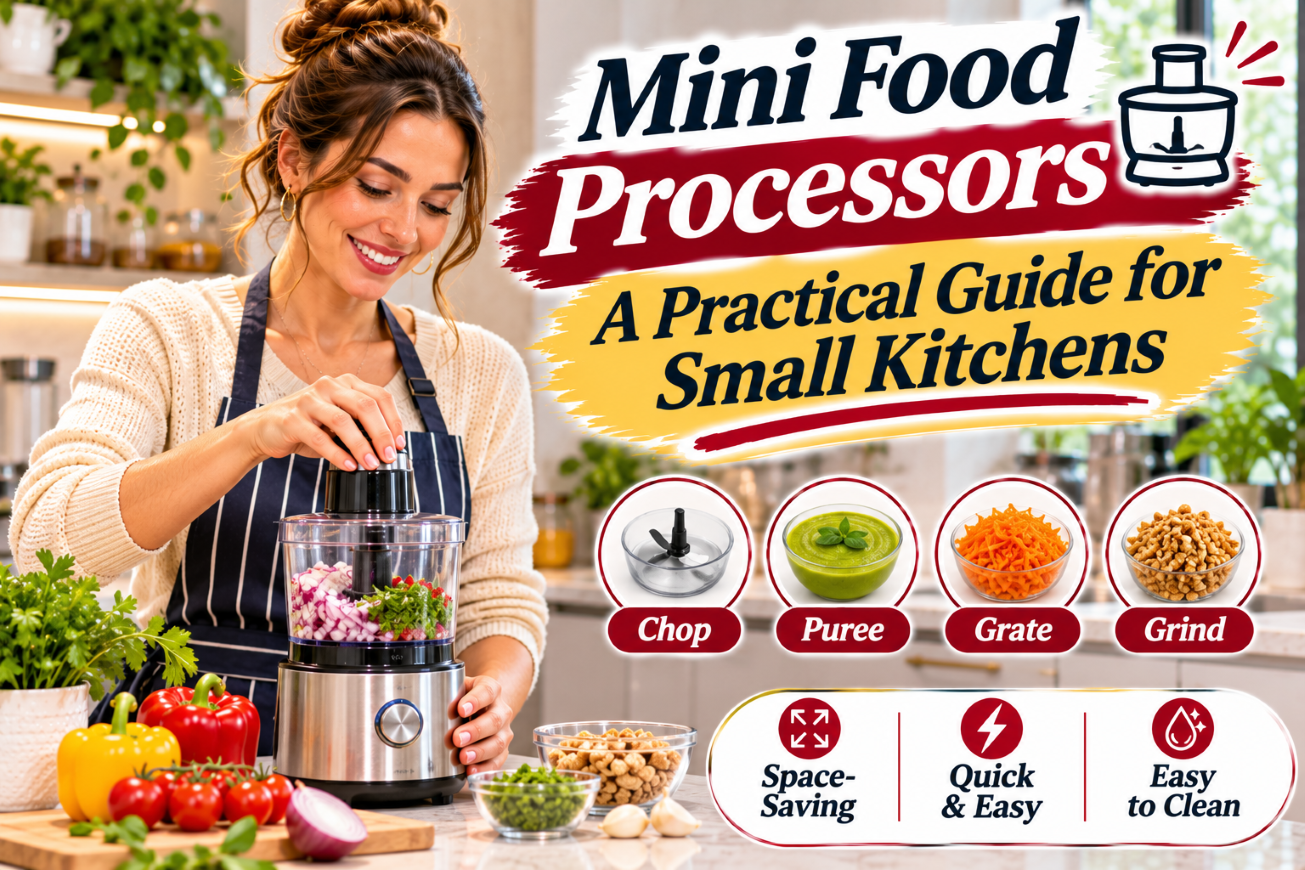
A mini food processor is the appliance that fits when your counter already belongs to a kettle, a coffee maker and a cutting board you keep meaning to put away.
Here is the thing I wish someone had told me earlier. The right one earns its cabinet space, and the wrong one is just one more thing to wash. That’s the whole decision.
Does a small kitchen really need one?
A full-size processor is a chore to haul out for one clove of garlic or a small bowl of dressing. Minis store easily and usually have fewer parts, so they suit short, specific jobs. If you cook for one or two, or prep in small batches, that convenience can matter more than a big work bowl.
Picture an ordinary weeknight. You want minced onion for a skillet, a quick salsa for tacos, or chopped nuts for oatmeal. A compact machine handles those portions without making you dirty a chef’s knife and a large bowl. I like that kind of low-friction prep, because a small cooking task stays small instead of turning into a project.
There is a trade-off. Mini bowls fill fast, and many are built to chop or pulse rather than knead, shred or handle a family-sized batch. If you cook for a crowd, make big tubs of hummus, or want one machine to replace several tools, go bigger. For a tight kitchen, though, a compact unit pays off when it gets used often and tucks away without a fight.
Bowl size is not what the box says
Capacity is one of the first things to check, but the printed number is not the amount you can process comfortably. Food needs room to move around the blade. Pack the bowl to the brim and the chop goes uneven, with pulp at the bottom while larger pieces ride along above it.
Start with your usual portions. Someone making a single serving of vinaigrette has different needs from someone chopping vegetables for a couple of lunches. Take the recipe you make most, then leave some headroom above that amount so everything can circulate. For a chunky salsa, a few short pulses give you far more control than filling the bowl and holding the button down.
Look at the shape too. A broad, shallow bowl makes it easier to scrape the sides, while a taller, narrow one may suit smaller quantities. Useful capacity is whatever gets processed evenly. If there is a fill line, treat it as a real limit and not a challenge.
Where will it live?
Measure the shelf or drawer before you buy, and count the lid and any removable parts. A machine that fits on the counter but won’t slide under an upper cabinet becomes a daily annoyance (I have owned exactly that gadget, and it ended up in a closet). Tiny kitchens punish awkward storage.
Controls, locks and the motor myth
Controls should be simple enough that you can change texture without decoding a menu. A pulse button matters most with small quantities, since short bursts let you mince garlic finely while leaving visible pieces of tomato in a sauce.
Check how the bowl, lid and blade lock together. They should feel secure without a wrestling match. A clear safety interlock keeps the blade from running when parts sit wrong. One speed is fine for plain chopping, though it gives you less control over delicate mixtures.
Motor power is easy to obsess over, and it doesn’t tell the whole story. Blade design, bowl shape and how much you load all change the result. A mini may handle soft herbs and cooked vegetables easily but struggle with dense, sticky mixtures or big quantities, so read the care and use guidance before asking it to grind anything hard or run for long stretches.
Cleaning deserves equal attention. Look for parts that come apart without fuss and rinse soon after use. Some pieces may be dishwasher-safe, but check the instructions instead of assuming every plastic part can go in. The blade needs the most care, so hold it by the hub and never the edge. A tiny brush helps with bits stuck near the blade mount.
Noise and cord storage are small details that show up fast in a compact apartment. No processor is silent, and even a short burst can wake someone in the next room. If you cook early, pulse in brief intervals and set the unit on a stable surface, because a slippery counter makes a small appliance feel shaky.
Sauces, dips and other small jobs
Sauces ask a processor to handle both texture and quantity. For a little pesto, salsa or dressing, pulse first and scrape down the bowl as needed. Add liquid gradually if the recipe calls for it. That way you don’t end up with thin puree when you wanted something spoonable.
Minis also chop garlic, shallots, herbs and nuts well. They can turn crackers or bread into crumbs, as long as the pieces don’t go in as one big lump. Break larger ingredients into manageable chunks first. It’s a bit of prep up front, but the blade works more evenly.
Know the limits. Very small amounts of liquid can sit below the blade and never blend smoothly. Thick mixtures cling to the bowl or move as a single mass, so stop, scrape the sides and check the texture. If the motor sounds strained, switch it off instead of pushing through. A compact processor helps with modest jobs. It is not a stand-in for a high-powered blender.
For sticky foods like dates or soft dried fruit, read the manual first. Some machines manage small pieces, while others clog or overheat. Same caution for ice and hard spices. I would rather use the right tool than spend a Saturday prying stubborn paste out of a blade assembly.
Match it to how you actually cook
If you mostly chop aromatics and herbs, put easy pulsing, a stable base and quick cleanup first. If you make dips or sauces, think harder about bowl shape and whether the blade reaches small amounts. For the occasional handful of nuts, confirm the instructions allow it and work in short pulses. No single setup fits every kitchen, so let your regular tasks drive the choice.
Families can still use a mini for small jobs, but it probably won’t replace a larger machine when you’re prepping a big dinner. A small-batch cook may value quick setup over a long list of attachments. And if you rarely cook from scratch, a manual chopper or a sharp knife takes up less room and may be all you need.
Before deciding, list the jobs you’d do with it in a normal month. Be honest. If you can name several recurring tasks, it may earn its spot. If you can only picture one recipe you might make someday, wait. Cupboard space is too precious for appliances that live at the back.
Once you own one, use modest batches and pause to scrape the bowl when food collects on the sides. Unplug it before touching the blade. Rinse parts soon after cooking, especially after garlic or sticky sauces, and let them dry fully before storing. Small habits like these keep cleanup quick.
My view: buy the smallest machine that does your two or three most frequent jobs well, and skip anything promising to do everything.
Some links on this page are affiliate links: if you buy through them we may earn a small commission at no extra cost to you. We only recommend products we would buy ourselves.
Frequently Asked Questions
Are mini food processors worth it for small kitchens?
Yes, if you do small jobs often, like mincing garlic, chopping herbs or making a little dressing. If you rarely cook from scratch, a good knife or a manual chopper may serve you better.
What can a mini food processor not do well?
Large batches, kneading, shredding for a crowd, and very thick or sticky mixtures. Hard ingredients like ice can also be a problem, so check the manual first.
How do I get an even chop from a small bowl?
Do not overfill it. Cut big pieces down first, use short pulses, and scrape the sides when food collects there.
Can I put the parts in the dishwasher?
Some parts may be dishwasher-safe, but check the manufacturer’s instructions. Handle the blade by its hub, never the cutting edge.



 No products in the cart.