

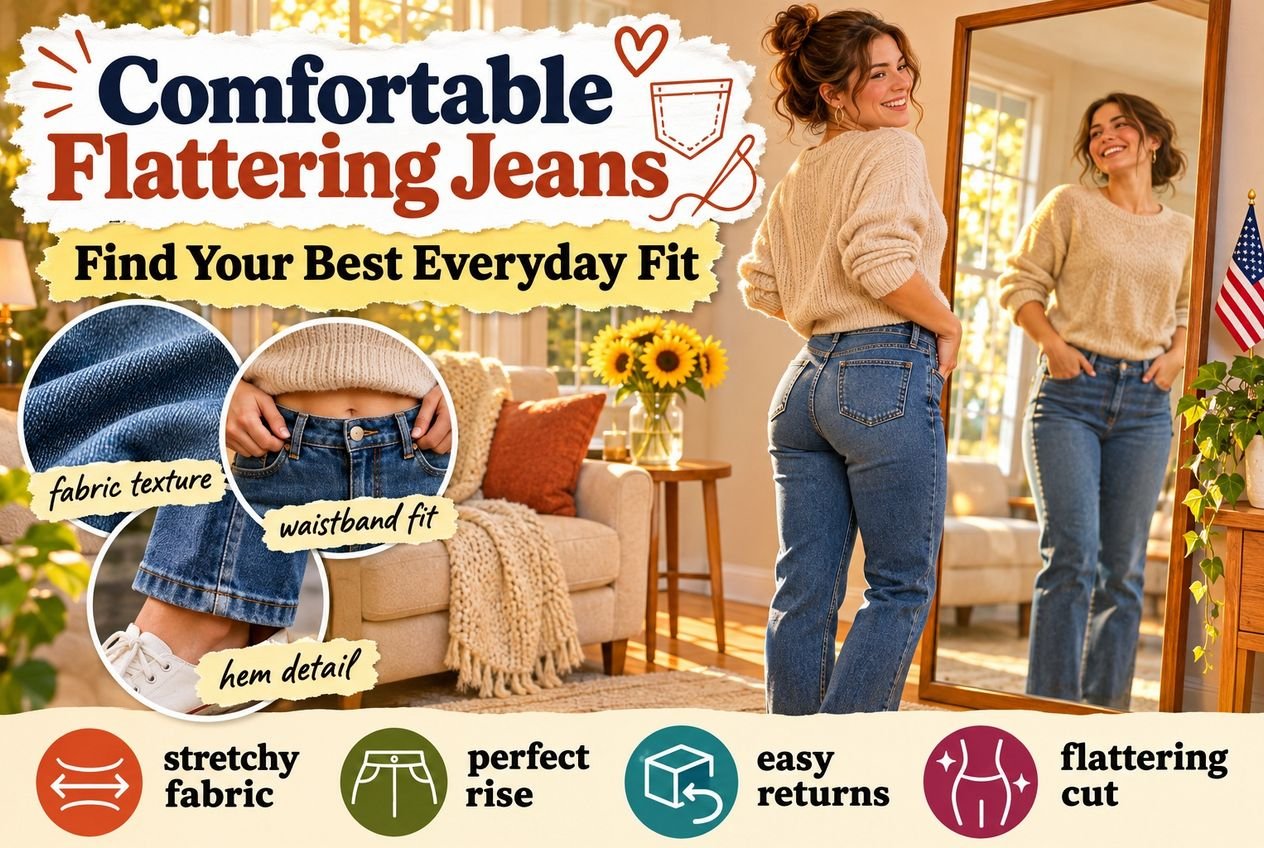
Last spring I bought a pair of jeans I loved for exactly eleven minutes, which was how long it took me to sit down in the car.
That small disaster taught me more than any size chart ever did. A number on a tag tells you very little about how denim will behave on your body, so the useful question is not which cut is best. It is which details you notice at 3 p.m., when the novelty has worn off.
Does your waistband survive lunch?
Rise decides where the waistband sits. Low-rise pairs rest near the hips, mid-rise usually lands around the natural waist, and high-rise covers more of the torso. None of them is automatically more flattering. The right one feels secure without pinching when you bend, sit or reach for something on a high shelf.
Try a pair standing, then sit for a full minute. Watch for rolling, gaping at the back, or pressure on your stomach. Shopping online? Read the fit notes, because a phrase like ‘contoured waistband’ can promise a different feel than a straight, rigid top edge. A very snug waist can seem fine in a quick try-on and turn irritating by the end of a long commute.
Measurements help, but treat them as a starting point. Denim varies by cut and fabric, even inside one retailer, so compare garment measurements with a pair you already like when that information is listed. If your waist and hip land in different size ranges, look for some give or a shaped waist instead of sizing down and hoping the fabric cooperates.
Pockets matter too. Higher or closer-set back pockets change how the seat looks, and large or widely spaced ones do something else entirely. Those are personal preferences, not rules about which bodies get which jeans. I trust the mirror and my comfort over a chart claiming one pocket shape suits everyone.
Stretch is a trade-off, not a upgrade
Fabric can make one silhouette feel like two different garments. Rigid denim has little give and often feels structured, which some people love for its clean shape. Stretch denim moves more easily, and blends with more elastic fiber may feel especially flexible. Comfort depends on the fabric, the cut and how much movement your day demands.
Spend time in them. Sit, walk, crouch (I once tested a pair by tying my shoe in the fitting room, and it was the most honest ten seconds of the whole trip). Soft fabric might bag out at the knees after a few hours. Firm denim, on the other hand, can feel restrictive if you are used to something softer. Test that trade-off rather than guessing from a product photo.
Read the fabric description and care guidance. A note on stretch recovery suggests the jeans are meant to bounce back after wear, though it cannot promise how they will fit you. If you cannot try them on, check the return window before ordering several sizes. Free returns are handy. Final-sale terms can turn a small fit gamble into a frustrating closet lesson.
Wash counts for everyday use. Darker washes dress up easily, while faded or lighter ones read relaxed and casual. Whiskering, distressing and heavy fading are style choices, not fit features, and they can limit a pair if you want one option for the casual office and weekend errands. My practical move is to pick the wash that already matches at least four things in my closet.
Leg shapes without the body labels
Think in fit needs, not body types. A straight leg keeps an even line from hip to hem. A wide leg gives more room through the lower leg. Bootcut and flare widen below the knee, and a tapered cut narrows toward the ankle. Any of them can look great, and any can feel wrong if the proportions fight your shoes or your preferred waist fit.
Between sizes at the waist and hips? Try a curved or contoured waistband, or stretch that absorbs the difference. The honest downside is that a more fitted waist can still need tailoring, which adds time and cost. A small hem adjustment, though, can fix jeans that bunch under your shoes.
Want a straighter silhouette? A relaxed straight leg or a wider cut that skips the thigh might suit you. Prefer a defined waist? A higher rise and a tucked top bring attention there. Need room through the calves? Avoid sharp tapering at the ankle. These are experiments, not instructions for hiding anything. Your jeans do not need to ‘fix’ your shape.
Length deserves its own try-on. An ankle-length cut shows a bit of shoe, while a full-length leg may skim the floor with a low heel or sneaker. Check the inseam and the model’s height online, but know that neither guarantees the same result on you. If you wear several shoe heights, hem for the pair you wear most. A very long inseam is a nuisance on rainy sidewalks.
Does an unfamiliar mirror image mean no?
Not necessarily. Walk around, wear your usual shoes and watch how the jeans move. But give yourself permission to stop if you are tugging at the waistband every few minutes. A flattering fit lets you get on with your day.
Sales are a trap if you shop without a list
Denim sales in the USA can make a new pair more affordable, but a markdown never makes a poor fit worthwhile. Before browsing, write down the rise, leg shape, wash and fabric feel you want. That short list keeps sale pages from becoming a cart full of ‘maybe’ jeans.
Check the final price after any automatic discount and read the fine print on returns. Some promotions exclude certain styles or apply only at checkout, and final-sale denim is risky when you have never tried the cut. I think a modest discount with a clear return window usually beats a deeper markdown on a pair you cannot send back.
Timing affects selection. Seasonal clearances may bring lower prices, but popular sizes and lengths vanish first. Holiday promotions often offer more choice, though not every deal is the best price a style will ever see. If a retailer offers price alerts or a wish list, use it for a cut you have already tried on. That beats buying because a countdown clock is flashing.
Compare like with like. Look at fabric blend, inseam, rise and return terms instead of judging two pairs by original price alone. A cheaper pair may use stiffer fabric or a cut you will need to alter. Cost per wear is a decent gut check: estimate how often you will wear them, but do not let it talk you into something uncomfortable.
Buying online? Scan reviews for repeated fit notes rather than one dramatic opinion. Comments about waist gaping, stretch relaxing or a short inseam beat generic praise. Still, reviews reflect other people’s preferences and measurements, not a promise about yours. Save the order confirmation and try the jeans on indoors before removing tags.
Wearing them on an ordinary Tuesday
Comfortable jeans earn their place when they work with your actual week. A straight or dark-wash pair feels polished with a tucked-in shirt and simple flats. Wide-leg denim looks balanced with a closer-fitting top, though you may need a few hem lengths to keep the fabric off the ground. For weekend errands, a relaxed cut and a soft knit are easy without looking like you gave up.
Use proportions as a guide, not a formula. A roomy top works with wide legs if you add a front tuck or show some ankle, and a slim top feels great with a relaxed leg. If belts bother you, choose a waistband that stays put without one. Tucking can make a waistband more noticeable, so test it before committing to a full day.
Shoes change a hem completely. Sneakers keep cropped denim casual, while loafers or ankle boots can make a darker wash office-ready. If your jeans are long, make sure the hem does not catch beneath your heel. For a rainy commute, a shorter hem beats dragging a favorite pair through puddles.
Care helps denim keep its shape. Follow the label and wash only as often as the fabric and your day require. Turning jeans inside out may reduce fading, and air-drying avoids dryer heat. Laundry advice varies by fabric and finish, though, so the care instructions come first. There is no prize for preserving jeans if the routine makes your life harder.
When a pair feels close but not right, name the exact problem before replacing it. A tailor may shorten a hem or adjust a waistband, but changes to rise or leg shape are bigger jobs. Get an estimate first. Sometimes a small fix is worth it, and sometimes returning them is smarter.
My bet: the best jeans are the ones you forget you are wearing, and no sale price is worth a waistband you fight all day.
Some links on this page are affiliate links: if you buy through them we may earn a small commission at no extra cost to you. We only recommend products we would buy ourselves.
Frequently Asked Questions
How do I know if a rise is right for me?
Stand, then sit for a full minute. If the waistband rolls, gaps at the back or presses into your stomach, try a different rise or a contoured waistband.
Is stretch denim always more comfortable?
Not always. Stretch moves easily but can loosen at the knees after a few hours, while rigid denim feels structured. Test both while walking and sitting.
Are denim sales worth it?
They can be, if the fit matches your list and the return window is clear. A modest discount with easy returns often beats a deep markdown on final-sale jeans.
How should jeans be hemmed?
Aim for a hem that works with the shoes you wear most. Check the inseam and model height online, then try them on with your usual pair.



 No products in the cart.