

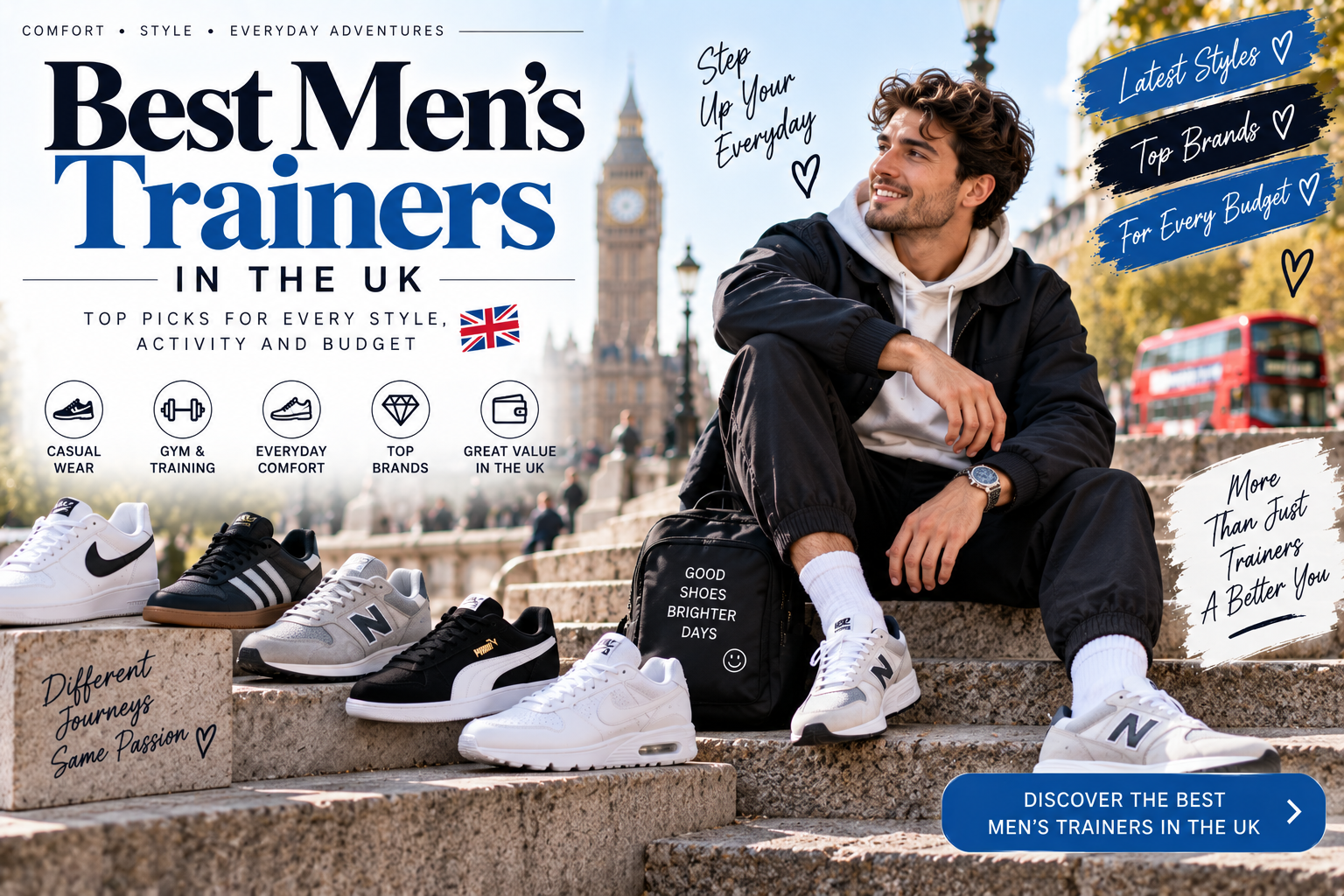
Most men either own six trainers that all do the same job, or one battered pair that’s been through the washing machine one too many times. That’s the real problem with trainer buying — not finding good options, but knowing what gap you’re actually filling. The best men’s trainers UK market has to offer right now spans everything from a solid £35 leather casual to a £130 investment piece that’ll outlast three cheaper pairs, and the trick is building a small rotation that genuinely covers different situations rather than duplicating the same shoe in different colours.
Here’s what most trainer guides won’t tell you upfront: fit matters more than brand, and the most expensive option is almost never the right answer.
The Ones You’ll Actually Wear Every Day
I’ve gone through more ‘all-rounder’ trainers than I care to admit — buying something that looked perfect in photos, only to find it felt stiff after two hours of walking around London. The pairs that stuck all had the same qualities: clean silhouette, neutral colour, and a sole that didn’t compress into a flat disc after three months. White, black, and grey are the obvious choices because they genuinely disappear into your outfit rather than competing with it, which is exactly what a daily trainer should do. Leather and canvas uppers age better than most synthetics — they develop a kind of character where cheaper materials just look worn out. You also want minimal branding; a trainer that screams its own name gets tired faster than one that stays quiet.

Classic white leather trainer that works with almost everything — the foundation of any rotation

Understated grey option for when you want to blend in; pairs perfectly with joggers or tailored trousers

The dark horse of any wardrobe — goes with everything from shorts to smart casual
Asics, Japan S St Mens Black Trainers £72.99 (19% OFF — was £89.99)
Do You Actually Need a Dedicated Running Shoe?
Short answer: yes, if you run more than twice a week.
The difference between a real running trainer and something that just looks athletic is immediate once you’re a few miles in. Responsive midsoles that spring back rather than just absorbing impact, mesh uppers that stop your feet from overheating, heel counters that actually hold your foot in place on uneven ground — none of this sounds glamorous, but you feel it. Running shoes also have a lifespan measured in miles rather than years; somewhere around 400–500 miles before the cushioning is effectively spent, even if the upper still looks fine. That’s worth knowing before you wonder why your knees hurt six months in.

Daily trainer for road running — comfortable enough for long distances but responsive enough to feel quick
Saucony, Ride 19 Running Shoes Cobalt / Slime UK 8 Men £99.49

Built for off-road grip and stability; if your runs venture onto uneven ground, this is your pick
Nike React Vision, Men’s Nike Reactx Pegasus Trail 5 Mens Running Trainers DV3864 102 £114.99
Smart Casual Is Harder Than It Looks
There’s a version of smart casual that works brilliantly and a version that looks like you couldn’t decide what to wear. The difference usually comes down to the trainer itself — specifically, whether it has any design restraint. Suede or premium leather uppers, a sole that isn’t trying to launch you into orbit, proportions that sit closer to a dress shoe than a chunky running shoe. These are trainers with a bit of personality: a colour that’s interesting without being loud, a material that rewards a closer look. They work with chinos and relaxed knitwear in a way that a heavily branded performance trainer simply doesn’t, and they photograph well if that matters to you (it probably does, even if you won’t admit it).
The danger zone is paying too much attention to what’s trending. A trainer that’s everywhere right now will look exhausting in eighteen months. Quieter choices age better.

Elevated option with suede uppers — works brilliantly with chinos and makes weekend dressing feel effortless

Understated earth-tone trainer that bridges casual and smart; pairs with almost any weekend outfit
Under £100 Doesn’t Mean Settling
Cheap trainers have a reputation problem they don’t entirely deserve.
The gap between a £65 trainer and a £130 one is real, but it’s not always where you’d expect. Sometimes it’s materials. Sometimes it’s construction. Quite often, though, it’s just brand tax — you’re paying for the name on the side rather than anything you’d actually feel on your foot. Budget trainers work best when you’re buying them for a specific job rather than asking them to do everything: a clean white casual option, a no-frills gym shoe, a pair you don’t mind getting dirty. Where they do tend to fall short is longevity, so treat them as rotation pieces rather than the only pair you own.

Solid everyday trainer that won’t break the bank — perfect for when you want a backup pair or your first proper trainer
Hugo Boss, Bottled Men’s Eau de Toilette Spray 100ml £68.1 (9% OFF — was £75)
Spending More Is Sometimes Just Correct
The £120–£200 range is where paying up actually makes sense — softer materials, better construction, designs that don’t look dated after one season. Go above £200 and you’re mostly buying into heritage or hype rather than anything that performs better under your feet. The practical case for an investment trainer is simple: if you wear trainers five or six days a week (and most of us do), cost-per-wear on a £150 pair that lasts four years beats a £60 pair you replace every eighteen months. Actually, that’s not quite right — it only beats it if you actually wear the expensive ones enough, which means buying something versatile rather than something you love in the shop but never quite know how to dress around.

Investment piece with exceptional materials and construction — the kind of trainer that improves with age and wear

Premium option for when you want something that feels special; refined design that works across seasons
Hugo Boss, Mens Bottled Parfum For Men £46.55 (34% OFF — was £70)
Fit First. Everything Else Second.
Start with your all-rounder — one pair that handles most of your week. Wear it for a few days, see what it can’t do, and fill that gap next. A running trainer when you actually run. Something smarter when your current rotation lets you down on a night out. You do not need seven pairs.
The best men’s trainers UK shoppers should be looking for aren’t the ones with the most reviews or the biggest discount — they’re the ones that fit your foot, suit your life, and don’t spend three weeks untouched at the bottom of your wardrobe. Buy for the gap you actually have, not the one that sounds good on a list.
When items in our articles catch your eye and you buy through our links, we may earn a small commission at no extra cost to you — it helps us keep producing this kind of content.
Frequently Asked Questions
How many pairs of trainers does a man actually need?
Honestly, three covers most situations: one versatile everyday pair, one dedicated running shoe if you train, and one smarter option for evenings out or casual dinners. More than that and you’re just rotating through guilt about the ones you never wear.
Are expensive trainers actually worth the money?
Sometimes. The £120–£200 range tends to offer genuine improvements in materials and construction. Above £200, you’re largely paying for brand heritage or hype. Below £80, quality varies wildly — some are brilliant, some fall apart in six months.
Can I use running trainers as everyday shoes?
You can, but you probably shouldn’t. Running shoes are engineered for forward motion and tend to look bulky with anything other than gym kit. More importantly, wearing them daily burns through the cushioning faster, which defeats the purpose of having a proper running shoe.
What trainer colours are most versatile for men?
White, grey, and black cover virtually everything in a typical wardrobe. White leather in particular pairs with jeans, chinos, and even relaxed tailoring. Avoid anything too bright or heavily branded if versatility is the goal.
How do I know if a trainer fits properly?
Your heel should sit firmly without slipping, and you need about a thumb’s width of space in front of your longest toe. Sizing varies considerably between brands — New Balance tends to run wide, while some European brands run narrow. If buying online, check the returns policy before committing.


 No products in the cart.