

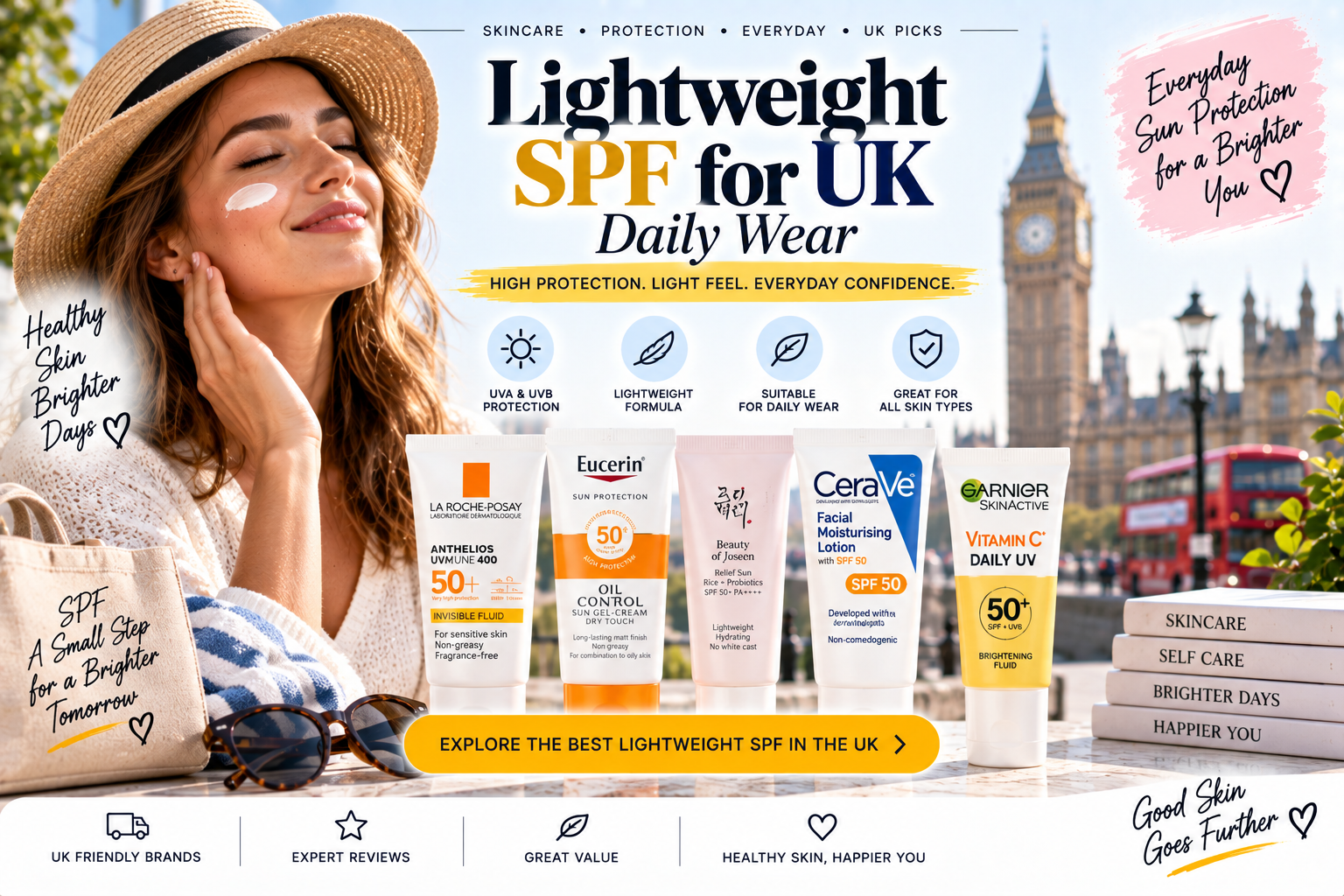
Three weeks after switching to a lightweight daily SPF, I noticed something odd: I was the only one in my friend group who hadn’t gone pink during a long Sunday in the park. Nobody had planned on it being a sunny day. That’s exactly why the formula you’ll actually put on every morning matters more than any SPF number on a bottle you never open.
The sunscreen you’ll wear consistently beats the one gathering dust in your cabinet. Full stop.
Why does texture make or break daily SPF?
Thick, greasy sunscreen isn’t a requirement — it’s a design flaw. Good lightweight formulas use UV filters and skin-smoothing ingredients that sit on your face without that suffocating, cling-film feeling, and they dry down fast enough that you’re not standing in your bathroom waiting for your skin to stop looking like a glazed doughnut before you can get dressed. For UK skin especially, where most of us don’t wake up expecting strong sun, the formula needs to feel like nothing at all or we simply won’t bother. I tried probably six different SPFs over two years before I found one that didn’t make me feel vaguely sticky by 10am — and the moment I did, daily application stopped feeling like a chore and started feeling like just… getting dressed. Lightweight also doesn’t mean stripped-back: many of these formulas include hydrating ingredients or antioxidants, they’re just not piling everything on at once in a way that overwhelms skin.

A barely-there formula that protects without the heavy feel
CeraVe, Invisible Hydrating Sunscreen for Face and Body 75mL SPF30 £9.15 (7% OFF — was £9.79)

Perfect for oily or combination skin that needs weightless protection
Beauty of Joseon, Rice & Prebiotic Sunscreen SPF 50+ 50ml £13.5 (13% OFF — was £15.5)
Drugstore picks that actually deliver
Spending more doesn’t automatically mean lighter. Some of the most genuinely weightless SPFs on the UK market cost under £15, and — crucially — they’re cheap enough that you won’t ration them. Using too little sunscreen is one of the most common mistakes people make, so being able to apply it generously without mentally calculating cost-per-use matters more than most people admit.

Affordable daily SPF that feels invisible and won’t break the bank
CeraVe, Invisible Hydrating Sunscreen SPF 30 sunscreen lotion for face and… £10.5

High protection at a price that makes reapplication guilt-free
Ultrasun, UV Face & Scalp Mist SPF 50 £16.49 (25% OFF — was £22)

A two-in-one base that’s affordable enough to use daily
Premium formulas are worth it — sometimes
Higher-end lightweight SPFs tend to use newer-generation UV filters that are genuinely better at spreading evenly and leaving a cleaner finish. Whether that’s worth paying double (or triple) depends on how much you care about the experience of applying it versus just getting the job done. For a special occasion or a holiday where you’ll be photographed in bright light and want zero white cast? Yes, spend the money. For a grey Tuesday commute? Honestly, the drugstore options are fine. (Actually, that’s not quite right — the real answer is that the best SPF is the one you’ll reapply, and if a premium texture makes you more likely to do that, it’s worth every penny regardless of the day.)

High-end SPF with innovative filters and skincare benefits
CeraVe, Invisible Hydrating Sunscreen for Face and Body 177mL SPF50+ £16.23 (7% OFF — was £17.36)


Combines protection with skincare actives for extra benefits
Caudalie, Vinosun Protect Invisible Stick SPF50 £12.79 (20% OFF — was £16)
SPF moisturiser or standalone SPF — which actually works?
SPF moisturisers are genuinely convenient. One fewer product, one fewer step, potentially one fewer thing to forget. But there’s a real catch that the packaging never mentions clearly: to get the SPF number on the label, you have to apply the amount specified in the testing protocol, which for most face products works out to roughly a quarter teaspoon. Most people use about half that when moisturising, which means the actual protection is closer to SPF 15 when the label says SPF 30. That’s not nothing, but it’s not what you paid for either.
A standalone lightweight SPF applied over your regular moisturiser removes that guesswork entirely. You get your full hydration, then your full protection, with no dilution happening between the two.

A two-in-one that actually feels like a moisturiser
CeraVe, Invisible Hydrating Sunscreen for Face and Body 75mL SPF50+ £9.15 (7% OFF — was £9.79)

Hydration, protection, and a hint of colour in one formula
How to apply it without wrecking your makeup
Amount first. You need about a quarter teaspoon for face and neck — two generous finger-lengths of product. Most people use half that and wonder why they still burn.
Apply lightweight SPF as the final step of your skincare, then wait. Not long — 60 to 90 seconds is usually enough for most lightweight formulas to set — but skipping this is why foundation pills up and slides around before you’ve even left the house. Once it’s dry, primer goes on smoothly, foundation sits flat, and you’re done. For reapplication during the day (which, yes, you should be doing every couple of hours if you’re outside), a setting spray with SPF or a powder SPF pressed over makeup works well enough to maintain protection without disturbing your base. And cloudy days aren’t an excuse to skip it — UVA radiation, the kind that ages skin rather than just burning it, passes through overcast skies without much reduction at all.
The right lightweight SPF UK formula is the one that disappears on your skin so completely that you stop thinking about wearing sunscreen and just wear it. That’s not a small thing. That’s the whole point.
Hey savvy shoppers! When the items in our articles catch your eye and you decide to buy through our links, we may earn a small commission at no extra cost to you. Think of it as a way of supporting us in bringing you the best content!
Frequently Asked Questions
Does lightweight SPF actually protect as well as thick sunscreen?
Yes. SPF protection comes from the active UV filters in a formula, not how heavy it feels. A well-formulated lightweight SPF can deliver full UVA and UVB protection — the texture is down to the base ingredients, not the protective ones.
How much lightweight SPF should I apply to my face?
About a quarter teaspoon, which is roughly two finger lengths of product. Most people apply far less than this, which means they get significantly less protection than the SPF number on the bottle suggests. A truly lightweight formula should still feel comfortable at the right amount.
Can I wear lightweight SPF under makeup?
Absolutely — it’s one of the main reasons people prefer lightweight formulas. Let it dry down for a minute or two before applying primer or foundation to avoid pilling. Many lightweight SPFs are specifically designed to work as a makeup base.
Is an SPF moisturiser good enough, or do I need a standalone sunscreen?
Both can work, but there’s a catch with SPF moisturisers: you need to apply the full recommended amount to get the protection listed on the label. Most people under-apply moisturiser, so they end up with less SPF than they think. A standalone SPF applied over your regular moisturiser is more reliable.
Do I need lightweight SPF on cloudy days in the UK?
Yes. UVA rays — the ones linked to premature ageing and long-term skin damage — pass through cloud cover without much trouble. The UV index in the UK is high enough to warrant daily SPF from around March through October, regardless of whether it looks sunny outside.

 No products in the cart.