


Here is what nobody tells you when you start building a skincare routine: the sunscreen you actually enjoy wearing will protect you far better than the “best” one you keep skipping. That sounds obvious. But it took me embarrassingly long to stop reaching for a flat, chalky SPF just because a dermatologist mentioned the brand once, and start using a glowy sunscreen I genuinely looked forward to putting on every morning.
Glowy sunscreens — formulated to give skin that dewy, light-catching finish rather than a mattified wall of protection — have genuinely changed how people think about daily SPF. This isn’t a marketing gimmick. The ingredients behind that luminous effect (glycerin, hyaluronic acid, finely milled minerals, certain silicones) often mean the formula is actively supporting your skin barrier rather than just sitting on top of it. Better texture, better compliance, better skin. That’s the whole case for this category, made simple.
Matte vs. Dewy: Which Finish Actually Works for You?
Not all sunscreens sit the same way on skin, and the difference matters more than most product descriptions admit. Matte formulas typically contain silica or similar oil-absorbing ingredients that flatten shine and blur pores — genuinely useful if your skin turns glossy by mid-morning, but deadening if you want any radiance at all. Dewy formulas lean into hydration and light reflection instead, using ingredients like glycerin, hyaluronic acid, or specific silicones to give skin that fresh, plump look. The catch that most guides gloss over: dewy doesn’t automatically mean greasy, and matte doesn’t automatically mean dull.
A poorly formulated dewy sunscreen can feel like you’ve applied cooking oil to your face, while a well-made matte one can still look healthy and natural. What actually determines this is the base formula — the carrier ingredients around the UV filters — and that’s where the quality differences between products become obvious. If you’re mostly indoors, work in air conditioning, or have dry or normal skin, a dewy formula will almost certainly work better for you. If you’re outside for long stretches or your skin tends to produce a lot of oil, a matte or hybrid formula prevents that uncomfortable mid-afternoon shine buildup that makes you want to wipe your face on your sleeve.

A hydrating sunscreen with a dewy finish that keeps skin looking luminous while providing daily UV protection.
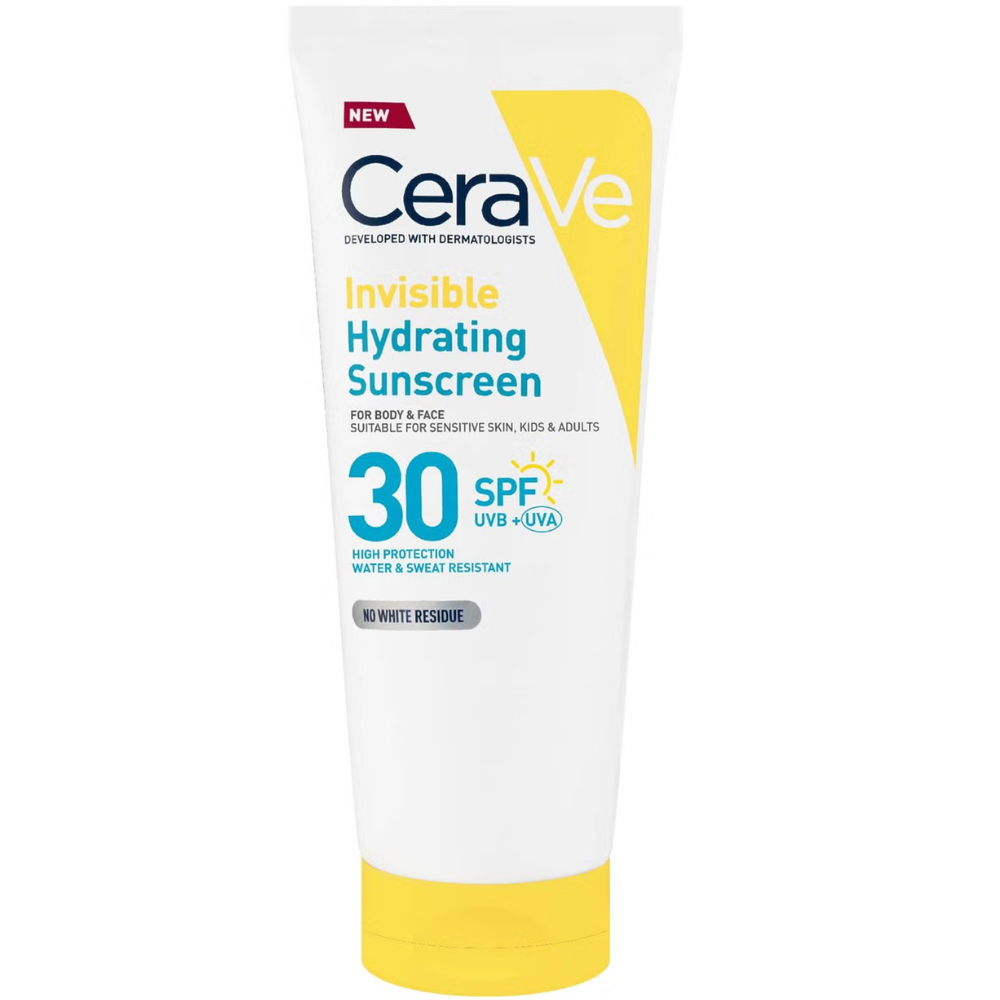
CeraVe, Invisible Hydrating Sunscreen for Face and Body 177mL SPF50+ £16.05
A lightweight mineral sunscreen option for those preferring natural filters without the heavy feel.
CeraVe, Invisible Hydrating Sunscreen for Face and Body 75mL SPF30 £9.05
Why People Actually Skip Sunscreen (And What Fixes It)
For years the problem wasn’t awareness. Everyone knows sun protection matters. The problem was that most sunscreens felt awful — thick, white-casting, pore-clogging formulas that turned a five-step morning routine into a greasy ordeal. So people skipped reapplication. Or skipped sunscreen altogether on days that didn’t feel “sunny enough.” Glowy sunscreens solve this by making the product itself worth using, which sounds trivial but actually changes behaviour in a way that no amount of skin cancer statistics quite manages to.
Worth noting: reapplication every two hours in direct sun isn’t optional if you want real protection. A sunscreen you’ll reapply is always better than a technically superior formula that stays in your bag.

A gentle, lightweight sunscreen formulated for sensitive skin that provides protection without irritation.
Eucerin, Unisex Hydro Protect Sun Face Spf 50 £19.3 (4% OFF — was £20)

A tinted sunscreen that evens out skin tone while delivering a natural, glowing finish.
9 Glowy Sunscreens Worth Your Money
1. Hydrating Daily Glow Sunscreen SPF 50
This one earns its place as a daily workhorse. Hyaluronic acid and glycerin keep skin plump throughout the day, and the texture is closer to a lightweight serum than any traditional sunscreen cream. The finish is genuinely dewy — not sticky, not greasy, just that fresh-faced look you’d normally credit to good sleep. I noticed a visible difference in how my skin looked in morning meetings once I switched to a formula like this versus my old matte SPF. Fair warning for oilier skin types: by mid-afternoon this might feel a touch too glossy, but for most people it’s the easiest possible daily sunscreen habit to build.

A hydrating daily-use sunscreen that keeps skin plump and glowing while providing SPF 50 protection.
CeraVe, Invisible Hydrating Sunscreen for Face and Body 75mL SPF50+ £9.05
2. Mineral Glow SPF 40
Mineral sunscreens have a reputation problem they don’t entirely deserve anymore. Yes, older zinc oxide formulas left a white cast thick enough to double as face paint. This one doesn’t. The minerals are finely milled, there’s a touch of mica for luminosity, and the whole thing sits beautifully under makeup or on bare skin. If you prefer physical UV filters over chemical ones for any reason — sensitivity, personal preference, reef safety — this is the mineral option that won’t make you look like a Victorian ghost.

A pure mineral sunscreen using zinc oxide and titanium dioxide for those who prefer natural UV filters.
3. Lightweight Tinted Glow Sunscreen SPF 50+
A tinted sunscreen is a cheat code for low-effort mornings. The light coverage here evens out redness without looking like you’ve applied anything at all — it reads as your skin, just better. SPF 50+ gives you serious protection, and the niacinamide helps with pore appearance over time. One honest caveat: the shade range is limited, so check whether your undertone is actually catered for before you buy. Nothing worse than ordering something that ships in one shade and it’s three tones too light for you.

A tinted sunscreen that provides light coverage and a glowing finish while protecting skin from UV damage.
CeraVe, Invisible Hydrating Sunscreen SPF 50+ sunscreen lotion for face and… £17.5
4. Gel-Cream Glow Sunscreen SPF 50
Combination skin people: this one’s for you. The texture sits right between a gel and a cream — absorbs fast, feels weightless, but still delivers enough hydration that skin doesn’t feel tight. Vitamin E and green tea extract add antioxidant support beyond the UV protection, and crucially it doesn’t cause flashback in photos (a real problem with some SPF formulas, especially mineral ones). The finish is polished rather than shiny. It also doesn’t pill under makeup, which is a harder thing to achieve than brands make it sound.

A fast-absorbing gel-cream sunscreen that provides hydration and a polished glow without heaviness.
Eucerin, Oil Control Sun Gel-Cream Dry Touch SPF 50+ 50ml £19
5. Radiant Finish Sunscreen SPF 30
Do you actually need SPF 50 every single day?
Probably not, if you’re spending most of your time indoors. This SPF 30 formula exists for exactly that reality — lighter than high-SPF alternatives, still solid protection, and a naturally radiant finish from light-reflecting particles that works across skin tones. It’s also one of the more affordable options here. Sometimes the unglamorous practical choice is just the right one.

An affordable daily sunscreen with SPF 30 and a radiant finish for year-round protection.
6. Dewy Shield Sunscreen SPF 50 for Sensitive Skin
Sensitive skin and glowy sunscreens don’t always play well together. Fragrances, essential oils, and alcohol — all common in “luxury feel” SPF formulas — are exactly the ingredients that trigger reactions on reactive skin. This one skips all of them. Centella asiatica and panthenol handle the soothing and barrier-repair work, and the finish is dewy without tipping into oily, which is genuinely difficult to pull off in a fragrance-free formula. Reef-safe too, if that factors into your choices.

A gentle, reef-safe sunscreen formulated for sensitive skin with soothing ingredients and a dewy finish.
7. Luminous Hydrating Sunscreen SPF 50+
Think of this as the dry-skin specialist of the group. Hyaluronic acid, glycerin, and aloe vera together create a formula that’s almost indistinguishable from a rich moisturiser — except it’s also SPF 50+. For anyone dealing with dehydration, flakiness, or wind-stripped skin (particularly relevant if you live somewhere with harsh weather rather than consistent Mediterranean sunshine), this level of hydration in a sunscreen makes a real difference to how skin feels by end of day. Still remember to reapply every two hours when you’re outside, same as any other SPF.

A deeply hydrating sunscreen with hyaluronic acid and aloe vera for protection and skin comfort.
8. Matte-Glow Hybrid Sunscreen SPF 50
Hybrid finishes are harder to get right than either pure matte or pure dewy, and most attempts land somewhere unsatisfying in the middle. This one actually works. It applies with a slight matte quality that keeps shine from building up, then settles into something that looks polished and luminous rather than flat — a distinction that’s hard to describe but immediately obvious when you see it. The pore-blurring effect is subtle but real, making it a good base layer before foundation. Combination skin people who’ve been unable to commit to either finish category should try this first.

A hybrid sunscreen that balances matte and dewy finishes for combination skin types.
9. Lightweight Clear Gel Sunscreen SPF 50
Zero tint. No white cast. Zero finish on any skin tone. The gel formula is completely transparent and dries down to something that feels like nothing at all — just a faint luminosity that comes from the formula rather than any added colour or shimmer. It’s ideal if you’re layering over actives or multiple serums and don’t want anything interfering with how those show through. One thing to be careful about: the lightweight texture means it’s easy to apply unevenly without realising, so take an extra moment to check coverage, especially around the hairline and jaw.

A completely transparent gel sunscreen with no white cast, ideal for layering under other products.
How to Apply It Without Ruining Everything Underneath
Application technique matters more than most people realise, and it’s where a lot of otherwise good sunscreens get unfairly blamed for pilling, patchiness, or looking cakey. Start with less than you think you need. A quarter teaspoon for your face sounds like a lot when you measure it out, but applying it all at once tends to look heavy — two thinner passes gives you the same coverage with a much better finish.
Sunscreen goes on last in your skincare routine, after serums and any moisturiser. Wait a minute between your previous layer and your SPF — 60 seconds is genuinely enough for most formulas to set. Pat rather than rub, especially around the eye area where dragging can cause pilling. If you want to maximise the glow effect, let your sunscreen settle for a minute before applying a dewy primer or a light mist on top. The layers catch light differently and the result looks more dimensional than any single product alone.
Powder sunscreens deserve a mention here too. They’re not a replacement for your morning application, but for touching up over makeup at lunchtime without disturbing your base, they’re genuinely useful. Spray sunscreens are convenient but uneven — better as a quick top-up than your primary protection.
Don’t Forget Below the Jaw
Body sunscreen has caught up with face sunscreen, finally. The same luminous, non-greasy textures are available for the rest of your skin, and if you’re going for a cohesive glowy look from neck downwards, they’re worth using. Spray formulas are quick but not reliable for even coverage — use them as a supplement, not your sole protection. The spots people consistently miss: tops of ears, the part line in your hair, décolletage, and tops of feet. These areas get substantial sun exposure and show damage early.
Layering a body sunscreen under a luminising body oil can give you a really nice finish for bare-skin summer days — the SPF handles the protection, the oil handles the glow, and neither product has to do more than its job.
The honest bottom line: pick a glowy sunscreen that feels good enough to use every single day without thinking about it. Consistency beats perfection here, every time.
Hey savvy shoppers! When the items in our articles catch your eye and you decide to buy through our links, we may earn a small commission at no extra cost to you. Think of it as a way of supporting us in bringing you the best content!
Frequently Asked Questions
Can glowy sunscreen replace moisturiser?
Many hydrating glowy sunscreens contain enough humectants and emollients to work as a moisturiser-sunscreen combo, especially if your skin isn’t very dry. That said, if your skin needs extra hydration, layering a light serum underneath won’t hurt — just let it absorb fully before applying SPF.
Will a dewy sunscreen make oily skin worse?
Not necessarily. Dewy doesn’t always mean oil-heavy — some formulas use light-reflecting particles and silicones to create luminosity without adding oil. If your skin runs oily, look for a gel-cream or water-based dewy sunscreen rather than one with heavy emollients.
How much sunscreen should I actually apply to my face?
Dermatologists typically recommend around a quarter teaspoon for the face alone. Most people apply far less than this, which reduces the effective SPF protection significantly. Build up in two thin layers if a full application at once feels too heavy.
Is SPF 30 enough for daily use, or do I need SPF 50?
SPF 30 blocks roughly 97% of UVB rays, while SPF 50 blocks about 98%. For daily indoor-mostly use, SPF 30 is generally fine. If you’re spending extended time outside, swimming, or at high altitude, SPF 50 or higher gives you a more useful buffer — especially since most people under-apply anyway.
Can I apply glowy sunscreen over serums and actives?
Yes, sunscreen should always go on last in your skincare routine, after serums and moisturisers. Wait about a minute for your previous layers to absorb before applying SPF — this stops pilling and ensures the sunscreen spreads evenly rather than balling up on top of other products.

 No products in the cart.
Comments (8)